A derecho is not an ordinary thunderstorm. It's a fast-moving, widespread windstorm — officially defined as producing wind gusts exceeding 58 mph across a path of at least 240 miles — and Northern Virginia sits squarely in the primary Mid-Atlantic derecho corridor. The June 29, 2012 derecho left 4.2 million people without power across the Mid-Atlantic, with Northern Virginia among the hardest-hit areas. When these storms pass, the electrical damage they leave behind is often invisible, potentially deadly, and requires a systematic approach to identify and address safely.
Key Takeaways
- Do not restore power to your home after a derecho until you've completed a systematic check of your service entrance, panel, and visible wiring — storm damage is often hidden and restoring power to a damaged system can cause fires.
- Downed power lines remain energized until Dominion Energy confirms otherwise — stay at least 30 feet away and never assume a line on the ground is safe.
- The most common post-derecho electrical damage is surge damage to appliances and electronics, service entrance cable damage from falling trees or branches, and water intrusion into electrical components.
- After the 2012 derecho, some Northern Virginia homeowners waited 10 days for power restoration — a whole-home generator or transfer switch eliminates this vulnerability.
- AJ Long Electric provides post-storm electrical damage assessment and repair throughout all of Northern Virginia — call (703) 997-0026 for emergency response.
Before You Go Outside: Immediate Safety Steps
In the immediate aftermath of a derecho, before any assessment of your property, complete these safety steps in order. First, do not assume the storm is over — derechos travel in bow-echo formations, and the primary bow is sometimes followed by secondary wind events. Confirm with National Weather Service alerts (weather.gov or the NOAA Weather Radio frequency 162.550 MHz for the Sterling, VA office, which covers Northern Virginia) that the storm has fully passed. Second, if you're without power, unplug major appliances — refrigerators, washing machines, HVAC systems — before power is restored. This prevents damage from the power surge that typically accompanies restoration of utility power after an outage. Third, check your smoke detectors with a manual test — some detectors have battery backup that silently failed during the power outage. If detectors don't respond, replace batteries immediately before any other assessment.
The 2012 derecho produced the largest non-hurricane power outage in American history at the time. In Northern Virginia, some customers waited 10 days for power restoration. During extended outages, the temptation to connect temporary power solutions — portable generators, extension cords running to neighbors' outlets — creates significant electrical hazards that post-storm electrical inspections routinely identify as secondary damage sources.
Exterior Electrical Assessment Checklist
Once it's safe to go outside, conduct a systematic exterior inspection before entering the home's electrical system. Work through this checklist in order:
A professional electrical inspection identifies hidden hazards before they become emergencies. Our licensed electricians provide thorough safety inspections throughout Northern Virginia. Call (703) 997-0026 to schedule yours.
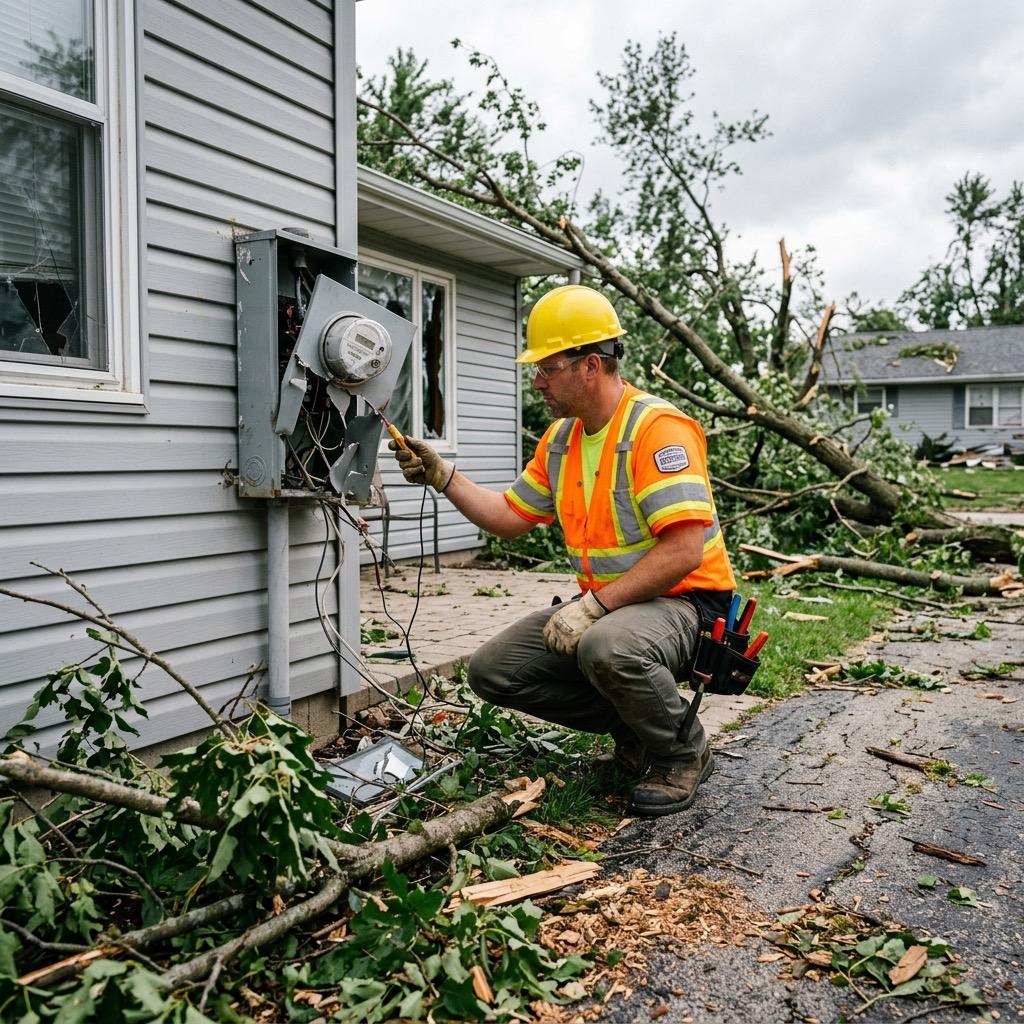
Service entrance and meter base: Look at the cable running from the utility pole to your meter base (or from the meter base through your exterior wall if you have underground service). Look for: physical damage to the cable jacket, visible conductor exposure, the cable being pulled away from the meter base connection, or the meter base itself being physically damaged or displaced by an impact. If you see damage here, do not attempt to restore power — call Dominion Energy to report damage at 1-866-DOM-HELP and call AJ Long Electric for assessment of the customer-side damage. Do not approach a damaged service entrance cable; it may be energized.
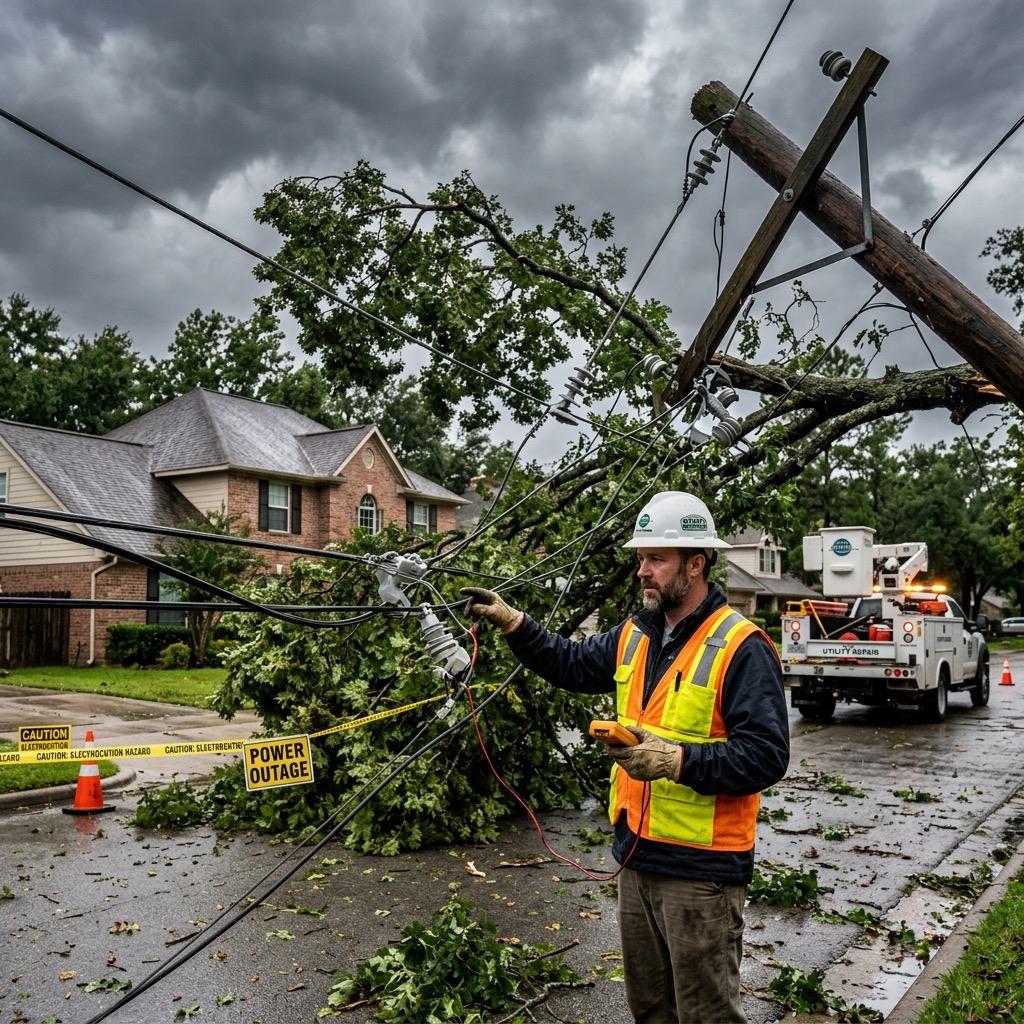
Downed power lines: Any wire on the ground anywhere on or near your property should be treated as energized until Dominion Energy explicitly confirms otherwise. Stay at least 30 feet away. Do not touch, drive over, or attempt to move any downed wire. If a line has fallen on a vehicle with occupants, instruct them to stay inside the vehicle until utility workers arrive — exiting a vehicle with an energized line touching it can be fatal. If a line is on your house, call 911 and Dominion Energy simultaneously.
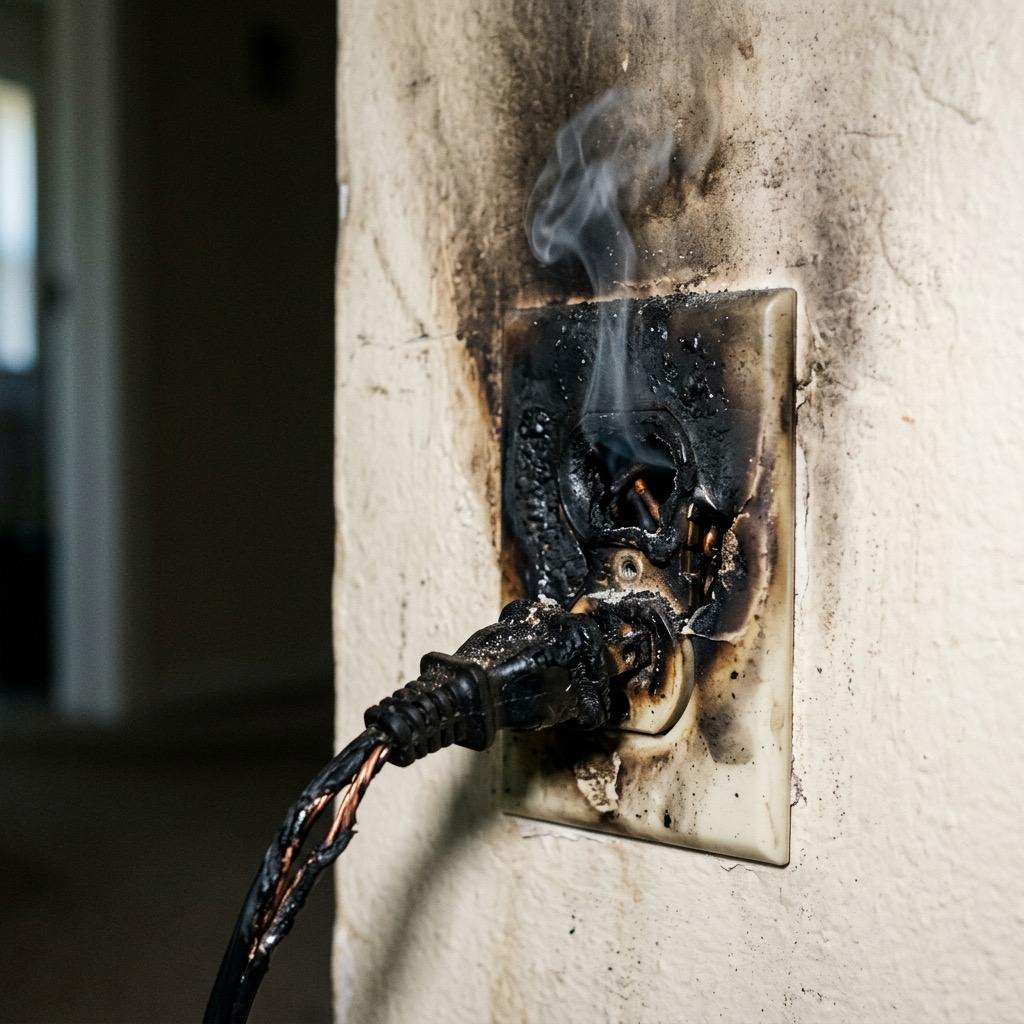
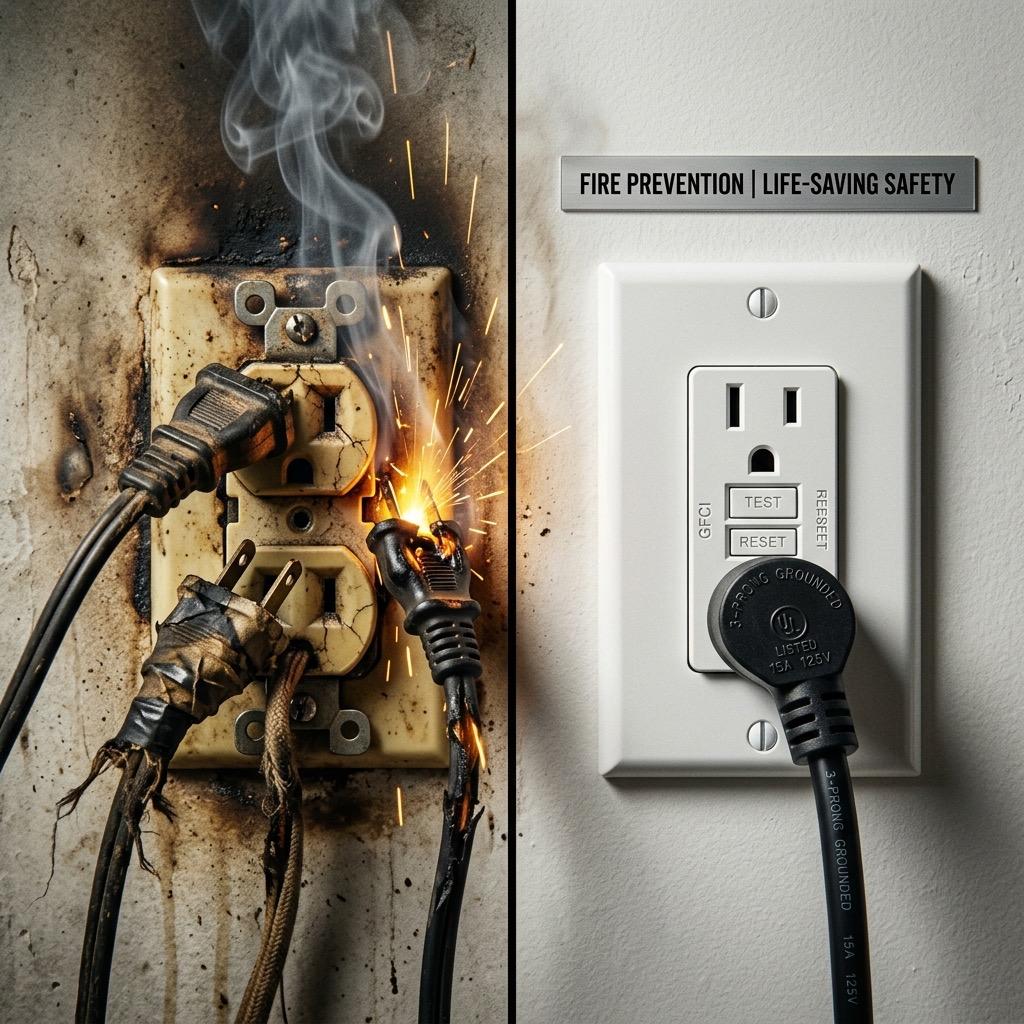
Outdoor electrical fixtures: Check exterior outlets, landscape lighting transformers, and any exterior electrical fixtures for physical damage, water intrusion, or debris impact damage. GFCI outlets that have been hit with debris may fail to reset properly — this is a sign the device needs replacement, not that you need to push harder on the reset button.
The "Dead Wire" Assumption Is Dangerous: After a derecho, well-intentioned homeowners sometimes move downed wires from driveways or walkways with wooden poles, assuming a dead-looking wire is de-energized. Utility wires are de-energized and re-energized repeatedly during restoration — a wire that appeared dead can become live without warning. Never touch downed wires under any circumstances.
Interior Electrical Assessment Checklist
Inside the home, conduct this inspection with a flashlight before restoring power. Panel inspection: Open the panel door and look for signs of surge damage — scorch marks on the interior panel surfaces, melted or discolored wiring, or an unusual smell from inside the panel box. Look for breakers that have tripped (center position). If you see scorch marks or smell burning from inside the panel, do not restore power — call AJ Long Electric for emergency assessment. If the panel looks undamaged and breakers are in normal positions, you can restore power from the panel. If breakers are tripped, wait until you've completed the full interior inspection before resetting them.
Basement and crawl space inspection: After a derecho, water intrusion is common in Northern Virginia's abundant finished basements. Check for standing water or water infiltration near any electrical components — panels in utility rooms, outlets in finished basement spaces, sump pumps, and dehumidifiers. Any electrical component that has been submerged or soaked must be inspected by an electrician before use, even if it appears dry after the water recedes. Water infiltration into electrical components causes corrosion that develops over days and weeks after the initial event — apparent normalcy immediately after drying does not mean the component is safe.
Attic inspection (if accessible): Derechos frequently damage roof structures, and damaged roofing can allow water infiltration into attic electrical components — junction boxes serving attic fans, wiring runs through attic spaces, and recessed lighting fixtures. If your roof took visible damage, have an electrician inspect attic wiring before assuming interior circuits are unaffected.
Appliance and Electronics Damage Assessment
Surge damage from a derecho is often insidious — appliances may appear functional immediately after the storm but fail within days or weeks as surge-damaged components degrade. The most vulnerable devices: smart thermostats and HVAC control boards (frequently destroyed by surges, often without tripping any breaker); refrigerators and dishwashers with electronic control boards; televisions, computers, and audio-video equipment; variable-speed pool and spa pumps; and EV charging equipment. Before assuming an appliance escaped damage, test it through a complete cycle — don't just confirm it powers on.
Document any non-functioning appliances immediately after the storm, before any repair attempts. Insurance adjusters need documentation that damage was sudden and coincident with the storm — if you repair or discard a damaged appliance before the adjuster visits, you may forfeit the insurance claim for that item. Photograph the appliance, note when you discovered it was damaged, and keep the serial number and purchase documentation if available. The average homeowner's insurance claim for surge damage after a major storm is $4,000–$8,000 — documentation is what makes that claim successful.
Surge Protector Sacrifice: A properly functioning whole-home surge protector absorbs a surge by sacrificing itself — it may show a status light change, an indicator flag, or simply stop providing surge protection without being obviously damaged. After any significant storm event, check your whole-home surge protector's status indicator (usually visible through the panel door) and replace it if the status shows it has operated. A spent surge protector provides no protection and should be replaced before the next storm.
Northern Virginia-Specific Derecho Risks
Northern Virginia's geography creates specific post-derecho electrical risks that aren't common in other Mid-Atlantic regions. The tree canopy — Northern Virginia has some of the highest urban forest coverage in the country, particularly in Fairfax County, Arlington, and the City of Alexandria — means falling trees and large branches are the primary driver of both service entrance damage and extended utility outages. The I-95/Route 1 corridor in Prince William County and southern Fairfax has overhead distribution infrastructure that's particularly vulnerable to the tree canopy around it. Fairfax County's stream valleys — Difficult Run, Long Branch, Accotink Creek — concentrate both wind and post-storm flooding that affect homes in adjacent neighborhoods. Loudoun County's semi-rural western areas rely on overhead distribution lines that traverse forested terrain with limited clearing easements, making post-derecho restoration among the slowest in the region.
For extended post-derecho outages — which realistically can run 7–10 days for some Northern Virginia addresses after a major event — the safe approach to temporary power matters. If you use a portable generator: place it outdoors, at least 20 feet from any opening into the house (windows, doors, vents), and connect appliances directly via outdoor-rated extension cords. Never connect a portable generator to your home's wiring without a properly installed transfer switch or interlock kit — backfeed from a generator can energize utility lines and kill lineworkers trying to restore service. AJ Long Electric installs transfer switches and interlock kits for exactly this purpose — call to schedule this installation before the next storm season, not during it.
Post-Derecho Electrical Inspection and Repair
After completing the checklists above, call AJ Long Electric for a formal post-storm electrical inspection if you experienced: any service entrance damage, power surge symptoms in any appliances, water intrusion into any electrical area, or any breaker that tripped during the storm and was reset without investigation. Our post-storm inspection covers: service entrance and meter base condition, panel interior inspection with thermal imaging, circuit-by-circuit testing, visible wiring inspection in basement and accessible areas, and a written report suitable for insurance documentation. For genuine emergency conditions found during inspection, repairs begin immediately. For non-urgent findings, you receive a prioritized repair recommendation with cost estimates.
After major derecho events, our call volume spikes dramatically — AJ Long Electric pre-stages additional technicians when the Storm Prediction Center issues derecho watches for the Northern Virginia area. Even so, response times for non-emergency post-storm inspections may extend to several days during major events. Emergency conditions — active sparking, burning smells, damaged service entrance — always receive same-day response. Call (703) 997-0026 as soon as the storm passes to get in the queue for assessment service, and describe any emergency conditions clearly so we can prioritize appropriately.
Tags:

Written by
Matt Long
Master Electrician
Our team of licensed electricians brings over 40 years of combined experience serving Northern Virginia. We're committed to providing expert electrical solutions with a focus on safety, quality, and customer satisfaction.
Reviewed by AJ Long Electric Master Electricians · VA License #2705031092 · View Credentials