Electrical fires are the second leading cause of residential fire deaths in the United States, accounting for approximately 500 fatalities and $1.3 billion in property damage annually according to the National Fire Protection Association. In Northern Virginia — where housing stock spans from pre-war bungalows in Arlington to 1970s colonials in Fairfax to new construction in Loudoun — the risk profile varies enormously by home age and condition. This guide gives you the specific knowledge to assess your home's risk and take targeted action.
Key Takeaways
- Electrical fires most commonly originate in four locations: the electrical panel, wiring within walls, outlets and switches, and lamp or appliance cords.
- Homes built before 1973 in Northern Virginia may have aluminum branch circuit wiring — a documented fire hazard that requires professional remediation.
- Arc-fault circuit interrupters (AFCIs) prevent the most common cause of electrical fires and are required by code in bedrooms and most living areas of new construction.
- Smoke detectors prevent roughly 50% of home fire deaths — but only if they're working. Test monthly and replace units older than 10 years.
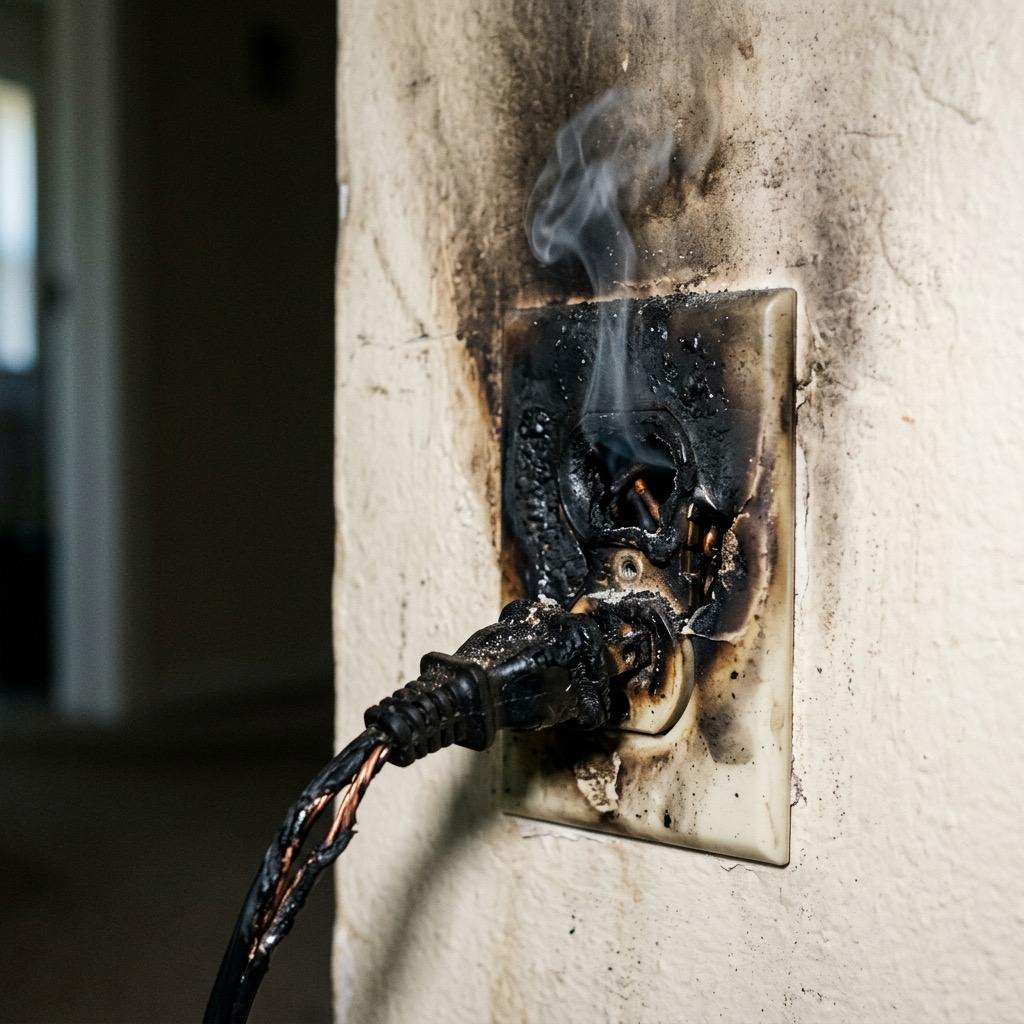
- Electrical fires often smolder inside walls for hours before becoming visible — the burning smell is your first and most critical warning sign.
Where Electrical Fires Start in NoVA Homes
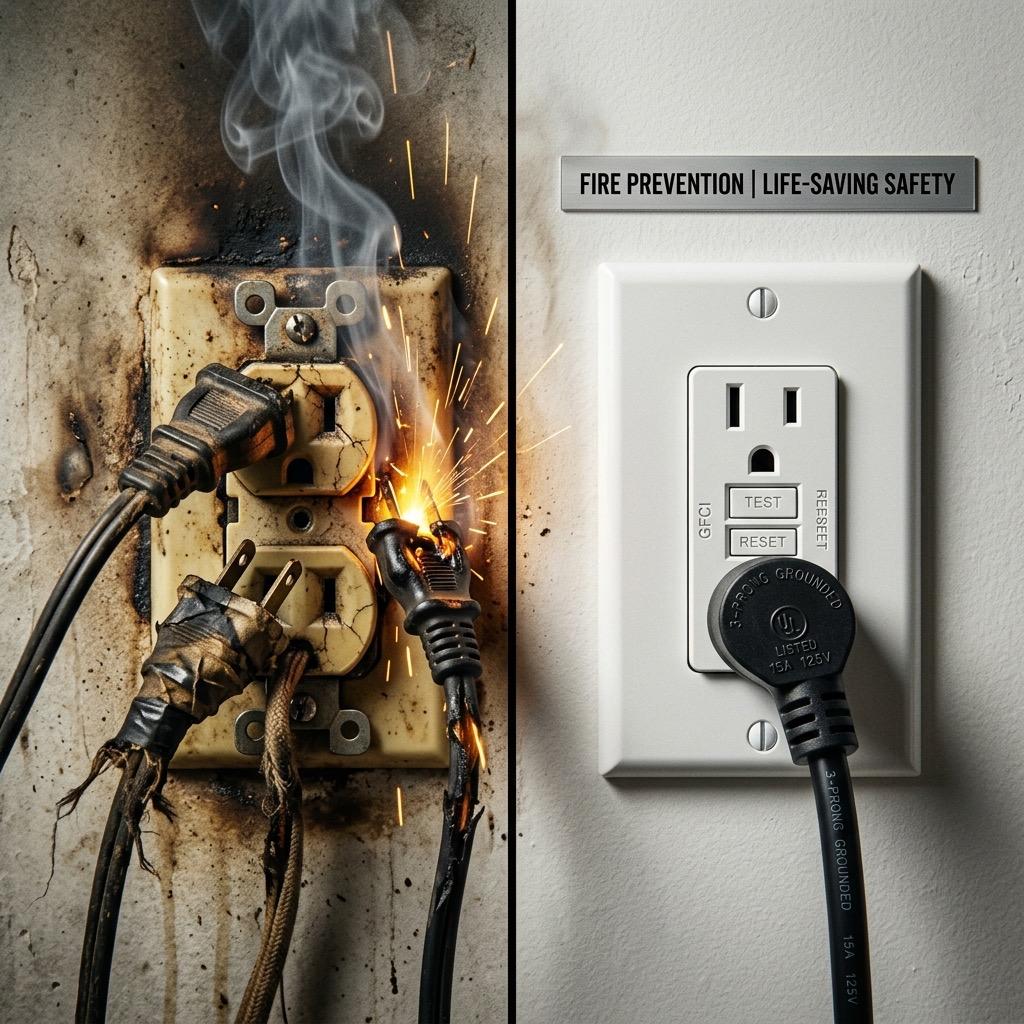
Understanding the four most common fire origins lets you focus your prevention efforts where they matter most. Fixed wiring — the wiring inside walls, ceilings, and attic spaces — causes the largest share of electrical fires at approximately 40%. This category includes loose connections at junction boxes that arc and heat over time, insulation that has degraded, and aluminum branch circuit wiring that has oxidized at connections. Lighting equipment — fixtures, lamps, and bulbs — accounts for roughly 16% of electrical fires, most caused by exceeding the fixture's maximum wattage rating or using incandescent bulbs in enclosed fixtures not rated for them. Outlet and switch failures contribute about 15%, primarily from loose backstab connections on older outlets that arc as connections loosen. Cord and plug failures — frayed appliance cords, damaged extension cords, and overloaded power strips — make up another 12%.
The remaining fires originate at the electrical panel itself, typically from failing or counterfeit breakers that don't trip when they should, or from overloaded panels that have been jury-rigged with doubled-up breakers (two wires on one breaker terminal — never acceptable).
The Aluminum Wiring Risk in Northern Virginia Homes
Between 1965 and 1973, aluminum was widely used for branch circuit wiring in residential construction throughout the United States, including extensively in Northern Virginia. During this period, Fairfax County, Arlington, Prince William, and Loudoun saw significant housing growth that often incorporated aluminum wiring. The problem: aluminum expands and contracts more than copper with heating and cooling cycles, causing connections at outlets, switches, and panel lugs to loosen over time. Loose connections arc. Arcing generates heat. Heat ignites adjacent wood framing.
Our licensed electricians have installed hundreds of EV chargers across Northern Virginia. We handle everything from panel evaluation to permit filing. Call (703) 997-0026 or request your free estimate online.
The Consumer Product Safety Commission (CPSC) has documented that homes with aluminum branch circuit wiring are 55 times more likely to have connections reach fire-hazard temperatures than homes with copper wiring. If your home was built between 1965 and 1973, have a licensed electrician inspect for aluminum wiring. The solution is not necessarily a complete rewire — CPSC-approved options include replacing all devices with CO/ALR-rated outlets and switches, or installing AlumiConn or Ideal In-Sure connectors at every connection point. Complete rewiring is the most permanent solution but also the most expensive. An electrician can assess which approach is right for your home.
How to Identify Aluminum Wiring: Look in your electrical panel or at accessible junction boxes in the basement or attic. Aluminum wiring is silver-colored (copper is orange/gold) and may be marked "AL" or "ALUMINUM" on the cable jacket. If you see silver-colored wires, call AJ Long Electric for a full assessment before treating this as a minor issue.
Arc-Fault Circuit Interrupters: The Most Important Prevention Technology
Arc-fault circuit interrupters (AFCIs) are circuit breakers that detect the specific electrical signature of arcing — loose connections, damaged wiring sparking inside a wall — and shut down the circuit before that arc can start a fire. Standard circuit breakers only trip on overcurrent (too much current) — they provide no protection against the arcing faults that cause the majority of electrical fires. The National Electrical Code has required AFCIs in bedrooms since 1999, expanding to nearly all living areas in successive code cycles. Most Northern Virginia jurisdictions have adopted the 2017 or 2020 NEC, which requires AFCI protection in virtually every living space.
Existing homes are not required to retrofit AFCIs unless doing substantial renovation work — but upgrading to AFCI protection is one of the highest-value electrical safety investments available to homeowners. At $35–$60 per breaker plus installation, AFCI protection for a typical home costs $800–$1,500 — a fraction of what an electrical fire costs. If your panel is a Federal Pacific Stab-Lok or Zinsco — both of which have documented failure rates and cannot properly accommodate AFCI breakers — the conversation becomes urgent. AJ Long Electric can assess your current panel and provide a clear recommendation.
Practical Fire Prevention in Daily Use
Beyond systemic electrical system upgrades, daily habits significantly affect fire risk. Never daisy-chain power strips — plugging one strip into another can easily double or triple the current load on a single outlet beyond its safe capacity. Use extension cords only as temporary solutions; permanent loads on extension cords are a code violation and a fire hazard. Check the wattage rating on every lamp before inserting a bulb — a 75-watt incandescent in a 60-watt fixture doesn't just waste energy; it overheats the socket and can melt the socket liner or ignite adjacent materials. Unplug small appliances — especially those with heating elements — when not in use; standby current draw isn't the risk, but appliance malfunction is substantially more likely when units are left plugged in continuously.
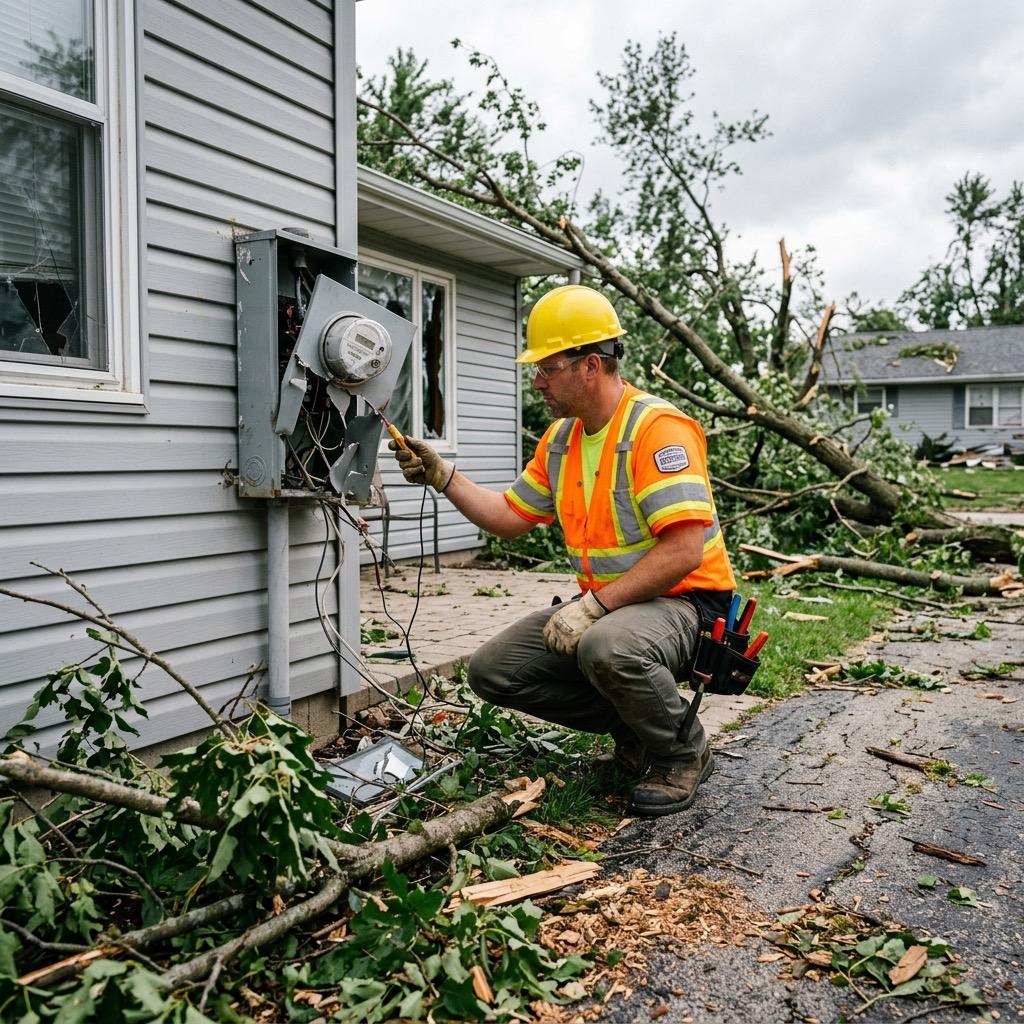
For Northern Virginia homeowners with older homes: have your panel inspected every 10 years and your visible wiring inspected after any water intrusion event. The humid Virginia summers, combined with the freeze-thaw cycles of Northern Virginia winters, accelerate insulation degradation in older wiring in crawl spaces and attics. After the significant flooding events that periodically affect communities along Difficult Run, Four Mile Run, and other Northern Virginia waterways, water-soaked wiring should be inspected before restoring power — never assume floodwater didn't reach electrical components just because outlets appear dry.
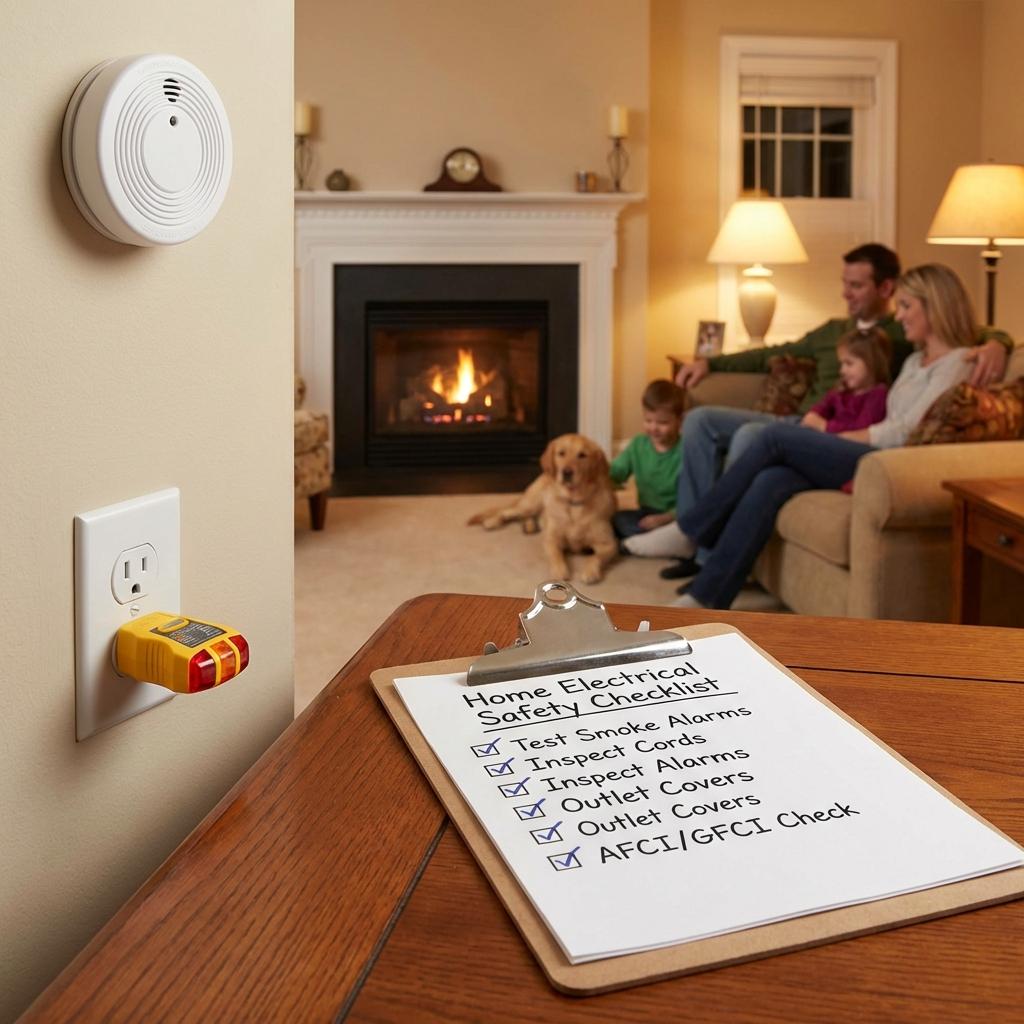
Smoke Detector Placement for Electrical Fires: Electrical fires often smolder in walls for extended periods before producing visible smoke. Interconnected smoke detectors throughout the home — all sounding simultaneously when any one triggers — provide the best early warning. The NFPA recommends smoke detectors on every level, inside every bedroom, and outside each sleeping area. Replace all detectors older than 10 years regardless of battery condition — the sensing element degrades over time.
What to Do If an Electrical Fire Starts
If you discover an electrical fire, the response priorities are: alert everyone in the home immediately, call 911, and evacuate — in that order. Do not attempt to fight an electrical fire with water; water conducts electricity and can cause electrocution. If the fire is very small and confined to a specific appliance, a Class C fire extinguisher (rated for electrical fires) may allow you to contain it — but only if you can do so without entering a smoke-filled room and while maintaining a clear path to an exit. If there is any doubt, evacuate first.
If you can safely reach your main electrical panel while evacuating, turning off the main breaker removes power from the building and may help limit fire spread — but do not delay evacuation to reach the panel. Once outside, stay out. Northern Virginia's Fairfax County Fire and Rescue, Arlington County Fire, Loudoun County Fire and Rescue, and Prince William County Fire Rescue all respond to electrical fires with equipment and training specifically for energized-structure fires. Let them do their job.
Schedule an Electrical Fire Risk Assessment
AJ Long Electric offers comprehensive electrical safety inspections that specifically evaluate fire risk: aluminum wiring identification and remediation options, AFCI and GFCI coverage assessment, panel condition evaluation (including identification of known-defective panels like Federal Pacific and Zinsco), and arc-fault inspection of accessible wiring. Our licensed Northern Virginia electricians serve Fairfax, Arlington, Loudoun, Prince William, and Alexandria. Call (703) 997-0026 to schedule — and don't wait until something smells like smoke. Prevention is always cheaper than restoration.
Tags:

Written by
Matt Long
Master Electrician
Our team of licensed electricians brings over 40 years of combined experience serving Northern Virginia. We're committed to providing expert electrical solutions with a focus on safety, quality, and customer satisfaction.
Reviewed by AJ Long Electric Master Electricians · VA License #2705031092 · View Credentials