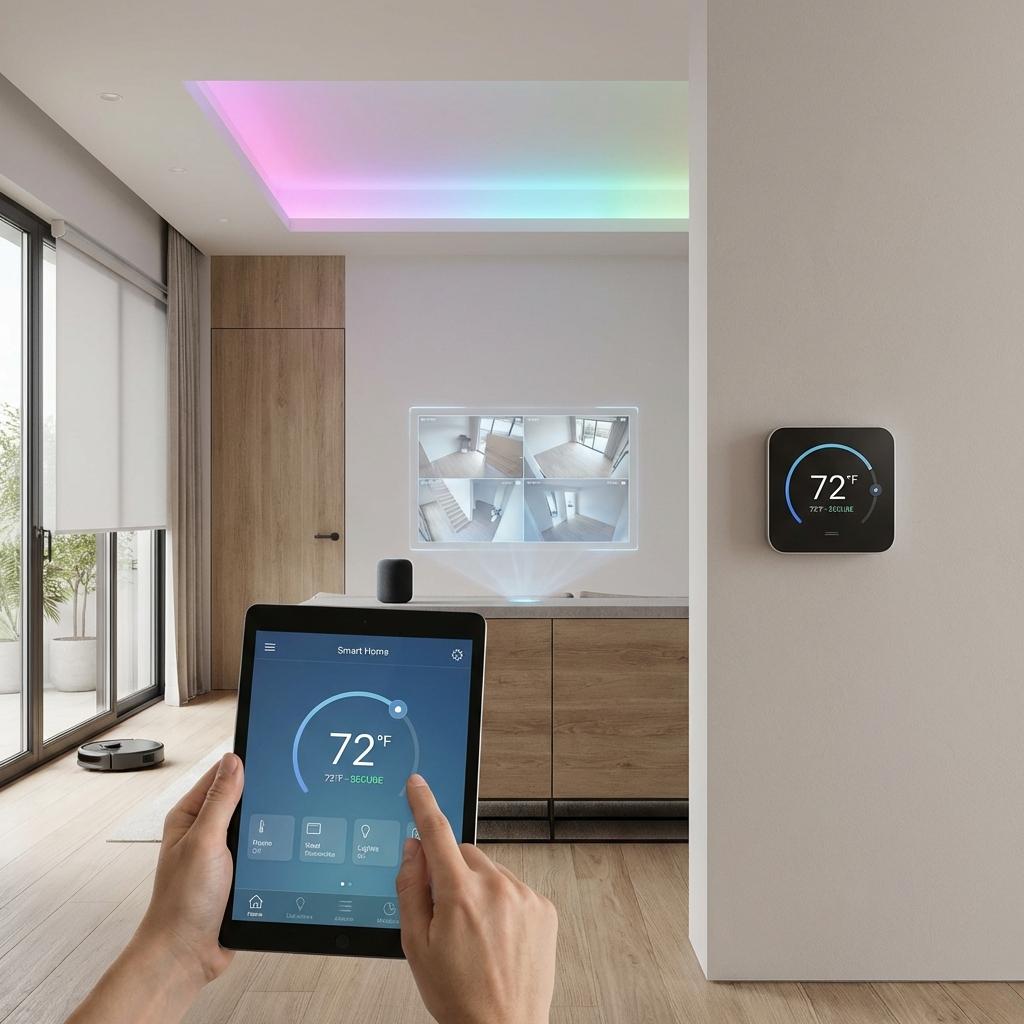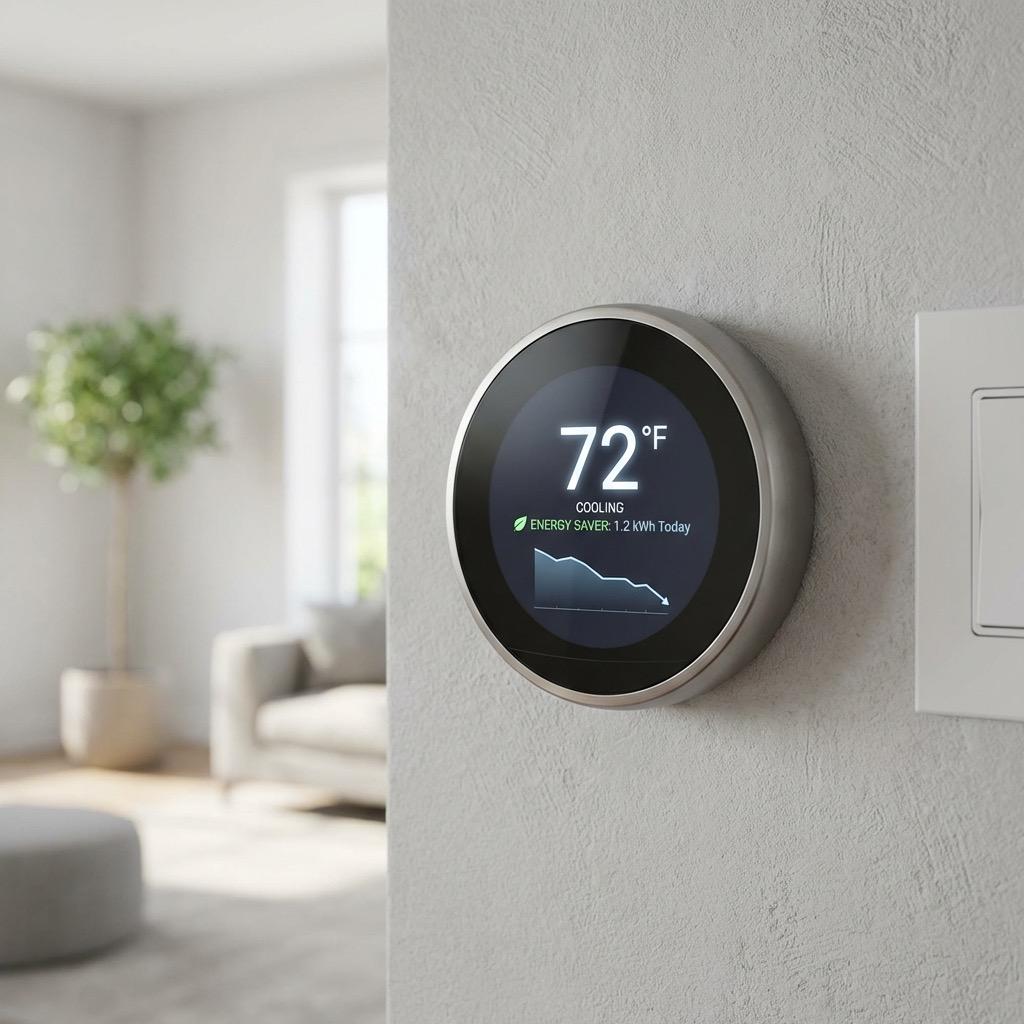
The foundation of every reliable smart home is the wiring behind the walls. Wireless technology has come a long way, but the most dependable, responsive, and future-proof smart home installations in Northern Virginia still start with a well-planned wiring infrastructure. Whether you are building a new home in Loudoun County, renovating a colonial in Fairfax, or retrofitting a townhome in Arlington, the structured wiring decisions you make today will determine what your home can do for the next 20 to 30 years. This guide covers everything from choosing cable types to planning your central distribution point and budgeting for smart home infrastructure.
Key Takeaways
- Structured wiring creates a centralized distribution point for all low-voltage systems including network, audio, video, security, and smart home controls.
- Cat6a ethernet cable is the recommended standard for new installations, supporting 10-gigabit speeds for future-proofing.
- Pre-wiring during construction costs 50 to 70 percent less than retrofitting the same infrastructure later.
- Every room should have at least two ethernet drops, and exterior locations need dedicated runs for security cameras.
- A dedicated wiring closet with proper ventilation, power, and cable management is essential for long-term reliability.
What Is Structured Wiring and Why Does It Matter
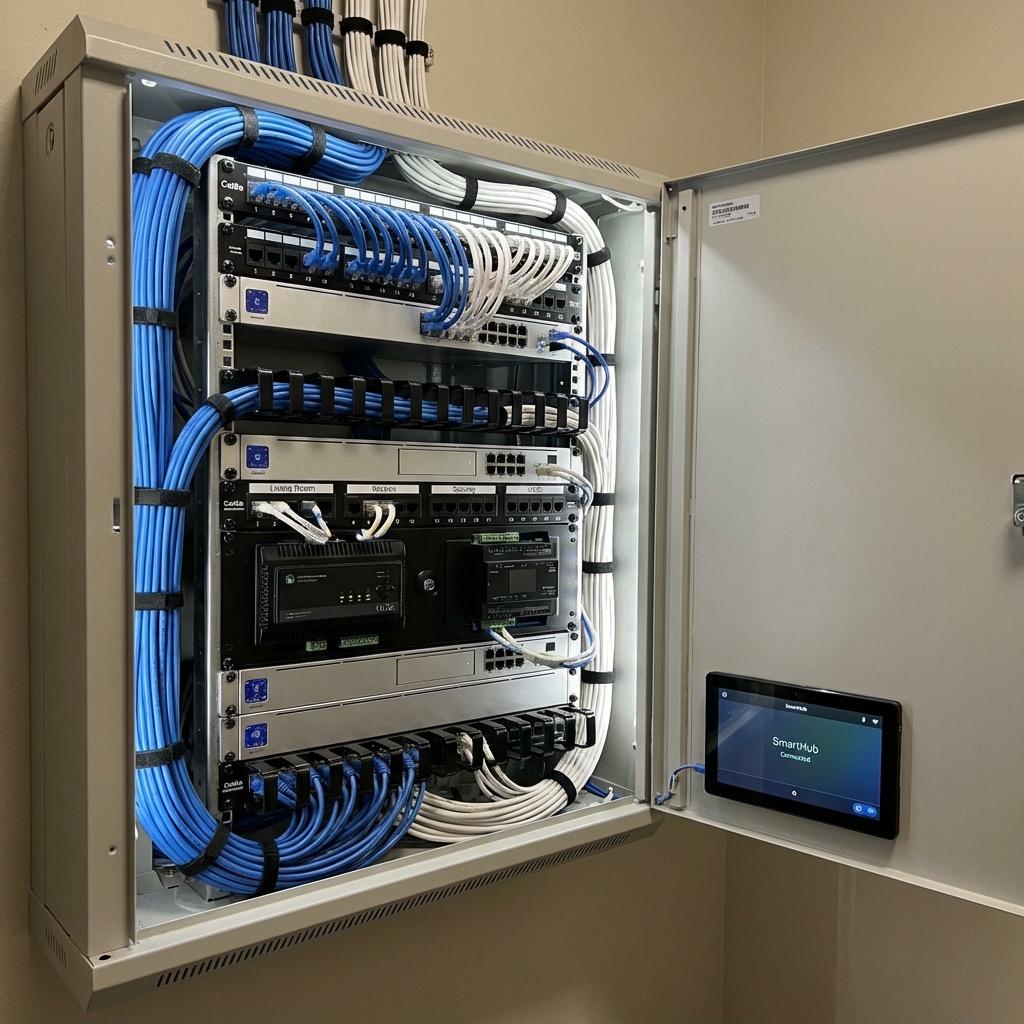
Structured wiring is a standardized approach to running all of your home's low-voltage cabling from a single centralized location, typically called a structured media panel or wiring closet. Instead of having cables running haphazardly from device to device, every cable in the house originates from or terminates at this central hub. This star topology makes it easy to reconfigure, upgrade, and troubleshoot your systems.
Think of it like the electrical panel for your data and communication systems. Just as every electrical circuit in your home runs back to the main panel, every network cable, speaker wire, and control wire runs back to the structured wiring panel. This approach provides maximum flexibility because you can change what each cable does at the central location without touching the wiring in the walls.
The Central Distribution Point
Your central distribution point should be located in a climate-controlled space with easy access. Popular locations in Northern Virginia homes include basement utility rooms, dedicated closets on the main level, or a section of the garage (though temperature extremes make garages less ideal). The space needs a dedicated 20-amp circuit for networking equipment, adequate ventilation since routers and switches generate heat, and enough wall space for a structured media panel and patch panels.
Essential Cable Types for Smart Homes
Different smart home systems require different cable types. Planning for all of them during the rough-in phase saves enormous time and money compared to adding them later.
Whether it is a simple repair or a major electrical project, our licensed team is ready to help. Serving all of Northern Virginia with transparent pricing and expert workmanship. Call (703) 997-0026 today.
Cat6a Ethernet Cable
Cat6a is the current sweet spot for residential installations. It supports 10-gigabit speeds up to 328 feet, which covers any residential run with margin to spare. While Cat6 is adequate for current gigabit needs, the cost difference between Cat6 and Cat6a is minimal when you factor in labor, and the performance headroom of Cat6a means your wiring will not become a bottleneck for decades. Run at least two ethernet drops to every room, including bedrooms, and add drops at exterior locations where you might mount security cameras.
Coaxial Cable
While streaming has reduced the need for coax, it remains useful for cable TV connections, over-the-air antenna distribution, and some security camera systems. Run RG6 quad-shield coax to the main TV locations in your home.
Speaker Wire and Audio Cable
For whole-home audio, run 16-gauge or 14-gauge speaker wire from each speaker location back to the central distribution point. In-ceiling speakers in kitchens, living rooms, covered porches, and patios are popular in NoVA homes. For zones where you plan in-wall subwoofers, run a dedicated cable with appropriate gauge for the longer distance and higher power requirements.
HDMI and Video Conduit
Rather than running HDMI cables in walls (which becomes outdated as HDMI standards evolve), install one-inch or larger conduit between entertainment center locations and the central distribution point. This allows you to pull new cables as standards change without opening walls.
Pro Tip: Always pull a pull string through every conduit run during installation. When it is time to run a new cable years later, you will be able to pull it through easily without a fishing rod or wall cuts.
Planning for New Construction
If you are building a new home in communities like Brambleton, Stone Ridge, or any of the new developments across Loudoun and Prince William Counties, the construction phase is your single best opportunity to install smart home infrastructure. The walls are open, the electrician is already on site, and adding low-voltage runs is a fraction of what it would cost after drywall goes up.
Working With Your Builder
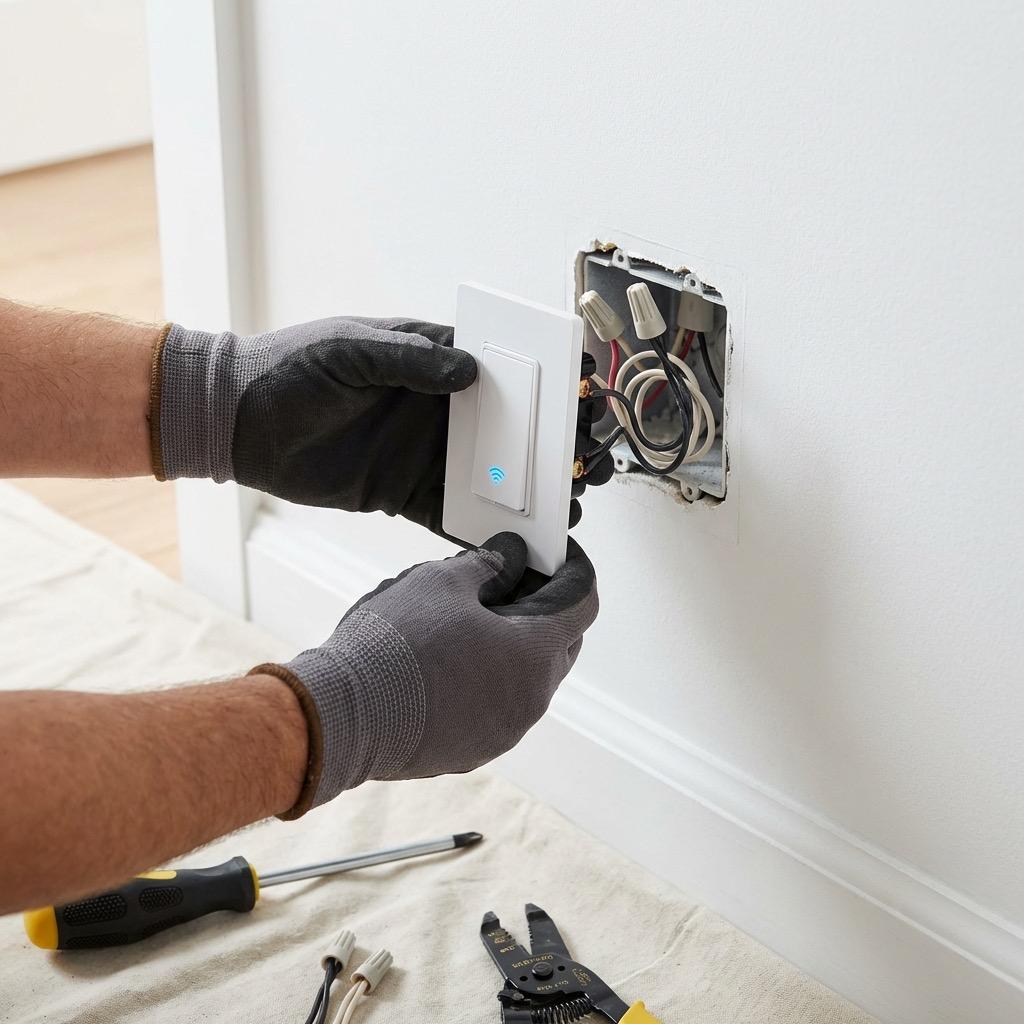
Most production builders in Northern Virginia offer basic structured wiring packages, but these are often minimal. Work with your builder to allow an independent low-voltage contractor or electrician to enhance the wiring plan. Request deep electrical boxes (at least 22 cubic inches) at switch locations to accommodate smart switches, and ask for conduit in walls where you anticipate future needs.
Room-by-Room Planning
Walk through each room and consider current and future technology needs. Kitchens benefit from under-cabinet outlet placement for smart displays. Home offices need multiple ethernet drops and dedicated circuits. Media rooms require conduit for video distribution and pre-wire for surround sound. Outdoor living spaces, which are increasingly popular in Northern Virginia homes, need weatherproof ethernet runs for cameras and access points, along with speaker wire for outdoor audio zones.
Retrofit Strategies for Existing Homes
Retrofitting structured wiring into an existing home is more challenging but absolutely achievable. Many of the older homes in McLean, Vienna, Great Falls, and Reston were built decades before smart home technology existed, but their layouts often provide workable pathways for new cabling.
Using Existing Pathways
Accessible attics and unfinished basements are your best friends during a retrofit. Cables can be run vertically through wall cavities from the attic or basement to individual rooms. Where vertical access is limited, low-voltage cables can sometimes be run through existing conduit or alongside existing cable TV or phone wiring pathways.
When Wireless Makes Sense
In retrofit situations, wireless technology fills gaps where running new cable is impractical or prohibitively expensive. Modern WiFi 6E and WiFi 7 access points deliver reliable connectivity for most smart home devices. However, always wire what you can and use wireless only where wiring is not feasible. The backbone of your network, including access points themselves, should always be hardwired for maximum reliability.
Note: Fairfax County and other Northern Virginia jurisdictions typically do not require permits for low-voltage wiring installations. However, any work involving line voltage, such as adding dedicated circuits for equipment closets, does require a permit and must be performed by a licensed electrician.
Power and Backup Considerations
Your smart home infrastructure needs reliable power. The central wiring closet should have a dedicated circuit, and critical equipment should be protected by an uninterruptible power supply. A UPS rated for 30 to 60 minutes of runtime keeps your network, smart home hub, and security system operational during brief power outages, which are not uncommon in areas of NoVA affected by summer storms.
Generator Integration
For complete protection, a whole-home generator ensures your smart home systems operate through extended outages. When paired with a smart transfer switch, your generator can start automatically and power critical circuits including your networking equipment, security system, and essential lighting.
Budget Planning for Smart Home Wiring
During new construction, structured wiring typically adds 5 to 10 percent to the electrical budget. For a typical new-construction home in Northern Virginia, that translates to $3,000 to $8,000 depending on the scope. Retrofitting the same infrastructure into an existing home can cost two to three times as much due to the labor involved in fishing cables through finished walls. The key insight is that wiring is permanent infrastructure while devices are replaceable. Invest in the best cabling you can afford and prioritize coverage over individual device choices.
Planning a smart home build or renovation in Northern Virginia? AJ Long Electric specializes in structured wiring design and installation for both new construction and retrofit projects across the DMV area. Our licensed electricians work with your builder, architect, or directly with you to create a wiring infrastructure that supports today's technology and tomorrow's innovations. Call us today to schedule a planning consultation.
Tags:

Written by
Matt Long
Master Electrician
Our team of licensed electricians brings over 40 years of combined experience serving Northern Virginia. We're committed to providing expert electrical solutions with a focus on safety, quality, and customer satisfaction.
Reviewed by AJ Long Electric Master Electricians · VA License #2705031092 · View Credentials