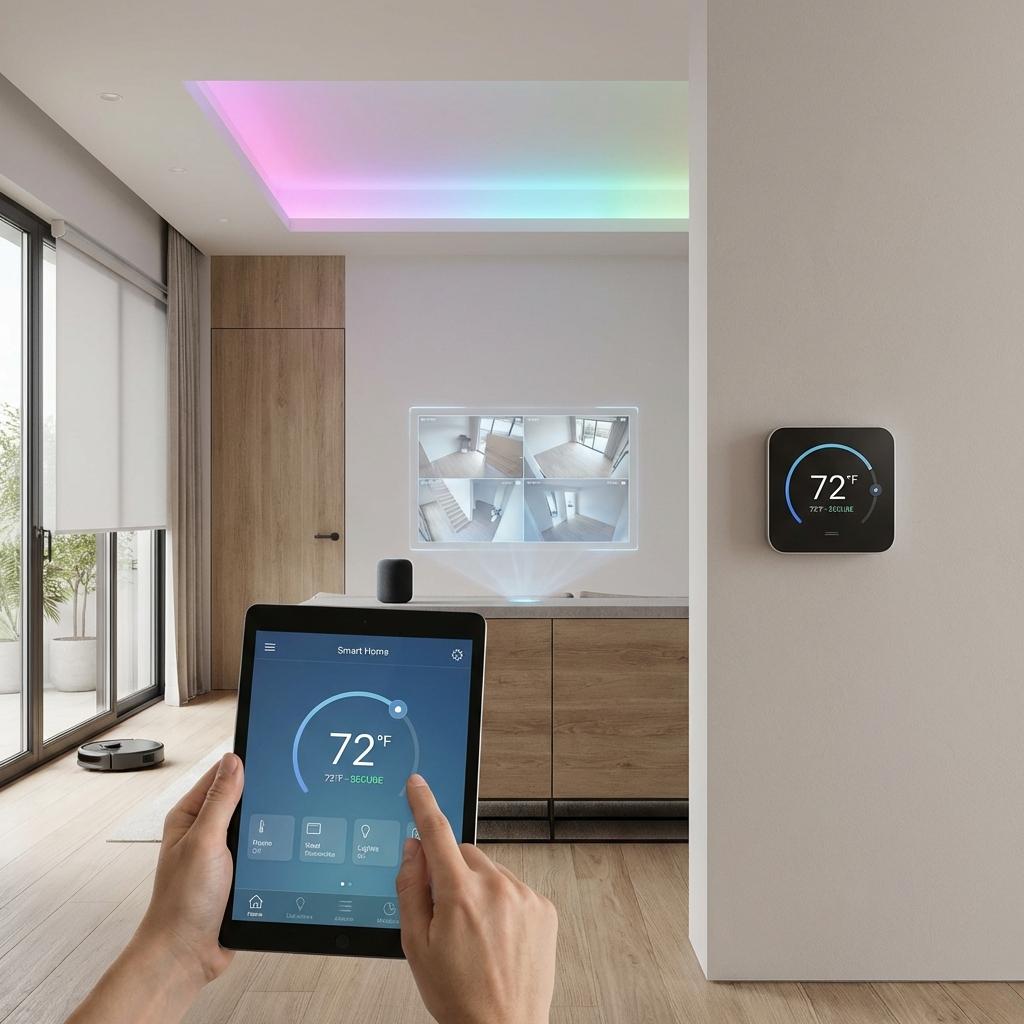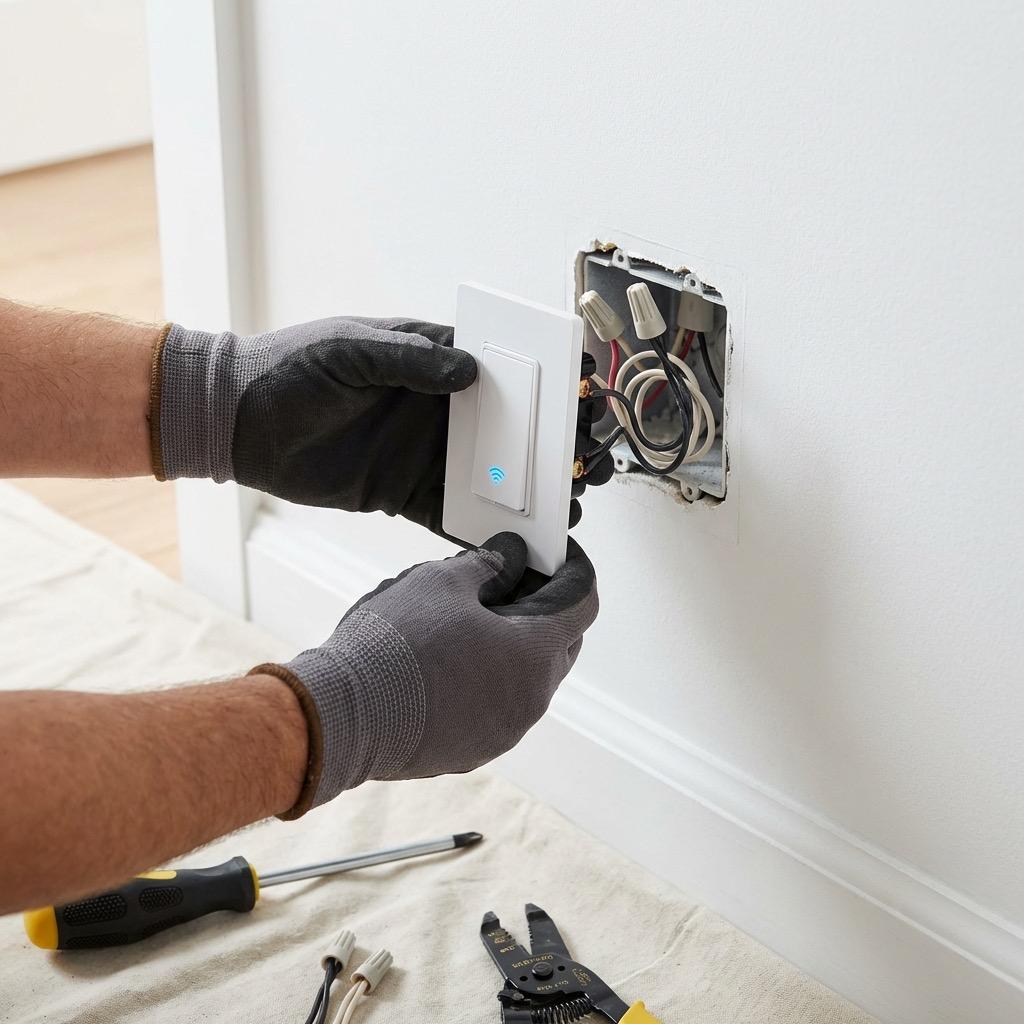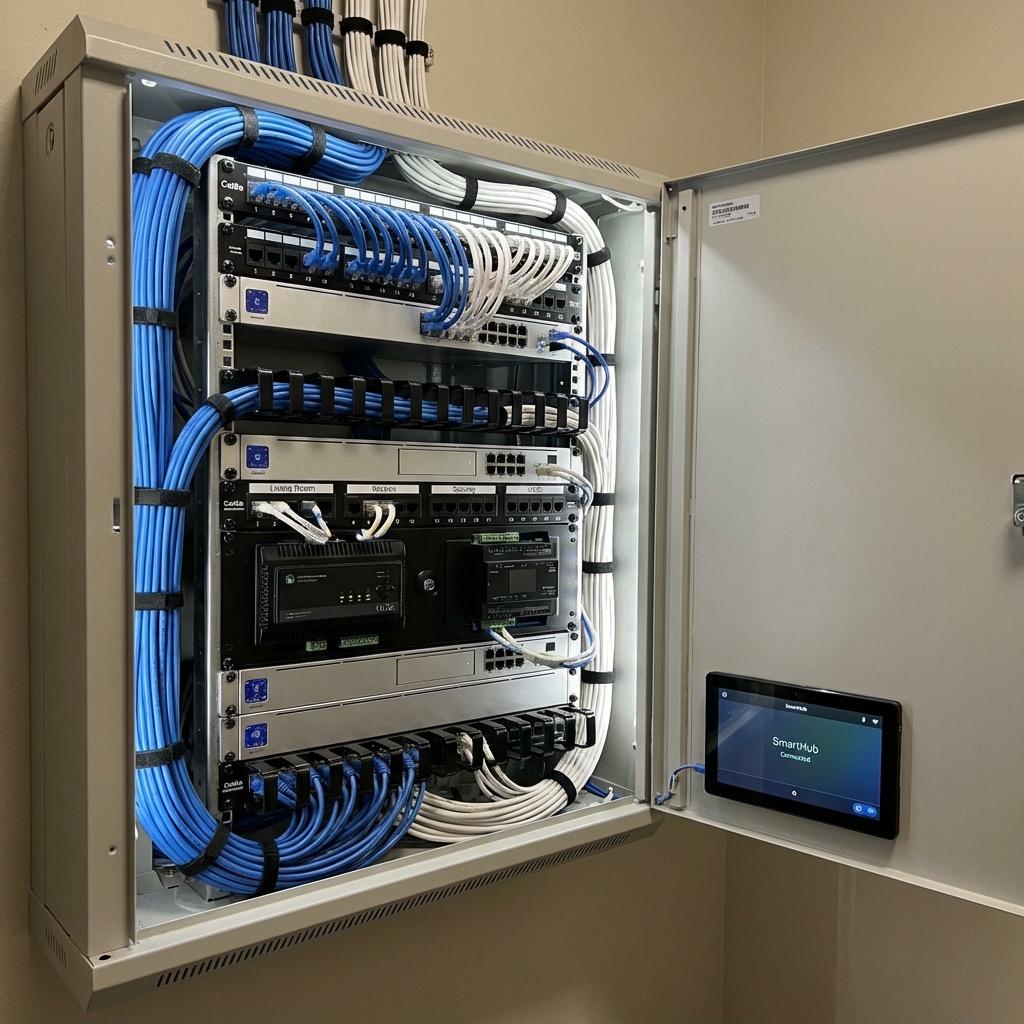
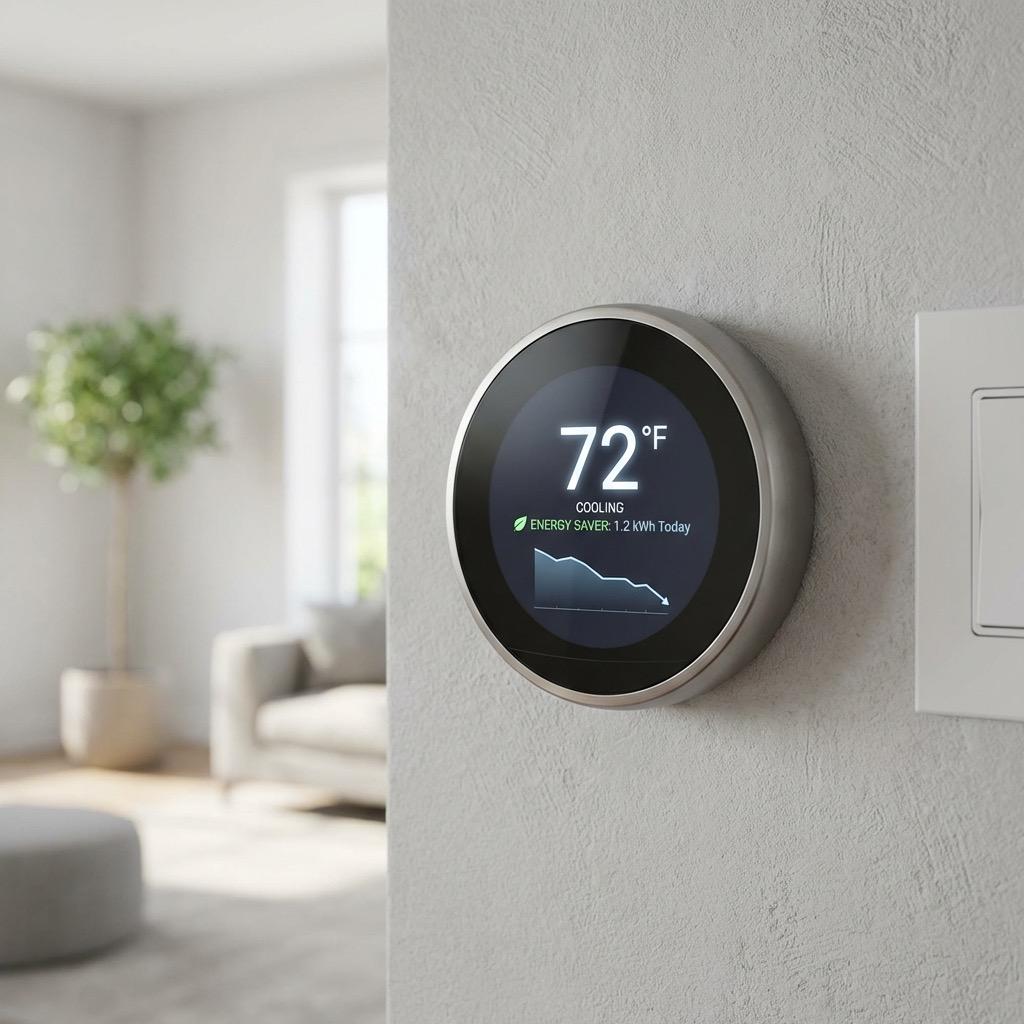
Smart thermostats like the Nest Learning Thermostat, Ecobee Premium, and Honeywell Home T9 promise energy savings of 10 to 15 percent on heating and cooling bills, which is significant for Northern Virginia homeowners facing hot, humid summers and cold winters. But before you can enjoy those savings and the convenience of remote temperature control, you need to understand the electrical requirements behind the wall. The most common installation challenge we encounter in homes across Fairfax, Loudoun, and Prince William Counties is the missing C-wire, but that is far from the only consideration. This guide explains everything you need to know about smart thermostat wiring and when professional installation makes sense.
Key Takeaways
- The C-wire (common wire) provides 24V continuous power and is required by most smart thermostats for reliable operation.
- Homes built before 2000 in Northern Virginia often lack a C-wire at the thermostat location.
- Solutions for missing C-wires include adapter kits, running new thermostat cable, or choosing a thermostat that works without one.
- Multi-stage HVAC systems and heat pumps require specific thermostat compatibility and wiring configurations.
- Professional installation ensures proper wiring, system compatibility, and avoids potential HVAC damage.
Understanding Thermostat Wiring Basics
Traditional thermostats act as simple switches. They connect two wires to turn your heating or cooling on and off. Smart thermostats are miniature computers that need constant power to run their displays, maintain WiFi connections, run scheduling algorithms, and communicate with voice assistants and phone apps. This continuous power requirement is where the C-wire comes in.
Common Thermostat Wire Colors and Functions
Thermostat wires follow a general color convention, though colors can vary by installer. The R wire (red) carries 24V power from the transformer. The W wire (white) controls the heating system. The Y wire (yellow) controls the cooling compressor. The G wire (green) controls the fan. The C wire (blue or brown, when present) is the common wire that completes the 24V circuit, providing continuous power. Some systems also have an O/B wire (orange) for heat pump reversing valves and auxiliary heat wires for second-stage heating.
The C-Wire Challenge in Northern Virginia Homes
When we visit homes in established neighborhoods like Burke, Springfield, Centreville, and Manassas for thermostat installations, the most common issue we encounter is a thermostat cable with only four wires: R, W, Y, and G. These four wires were sufficient for traditional thermostats, but smart thermostats need that fifth C-wire for reliable operation.
Whether it is a simple repair or a major electrical project, our licensed team is ready to help. Serving all of Northern Virginia with transparent pricing and expert workmanship. Call (703) 997-0026 today.
Why the C-Wire Was Often Omitted
Older thermostats were entirely mechanical or used such minimal power that they could operate without a dedicated common wire. Builders and HVAC installers ran the minimum number of wires needed, which saved a small amount on materials. Unfortunately, this shortcut now creates headaches for homeowners wanting to upgrade to smart thermostats decades later.
How to Check Your Existing Wiring
Turn off your HVAC system at the thermostat. Remove the thermostat from its wall plate (most pop or slide off). Look at the wires connected to the terminal block. Count the wires and note their colors and terminal labels. If you see a wire connected to the C terminal, you have a C-wire. If you count five or more wires but only four are connected, check if the extra wire is tucked into the wall unused. It may be a C-wire that was run but never connected, which is a quick fix.
Pro Tip: Even if you see a blue wire connected to the C terminal, verify it is actually connected at the HVAC equipment end as well. We occasionally find wires that are connected at the thermostat but disconnected or incorrectly wired at the furnace or air handler.
Solutions for Missing C-Wire
If your thermostat location lacks a C-wire, you have several options ranging from simple to involved.
Option 1: C-Wire Adapter Kit
Products like the Venstar Add-A-Wire (ACC0410) use the existing four-wire cable to provide power by repurposing one of the existing wires and using the adapter to maintain all functions. The adapter installs at the HVAC equipment end. This is the least invasive solution and typically costs $25 to $40 for the part. An electrician or HVAC technician can install it in about 30 minutes.
Option 2: Run New Thermostat Cable
Running a new 18/5 or 18/8 thermostat cable from the HVAC equipment to the thermostat location provides the most robust solution. In homes with accessible basements or attics, this is often straightforward. In homes with finished basements and limited access, it can be more involved. We recommend running 18/8 cable (eight conductors) even if you only need five today, since it provides spare wires for future HVAC upgrades.
Option 3: Choose a Thermostat That Works Without C-Wire
The Google Nest Thermostat uses a technique called power stealing, drawing small amounts of current through the heating and cooling wires to charge an internal battery. This works in many installations but can cause issues with certain HVAC systems, including short cycling (the system turning on and off rapidly) or the thermostat losing power and going offline. The Ecobee thermostats include a Power Extender Kit in the box that functions similarly to a C-wire adapter.
HVAC System Compatibility
Beyond wiring, your HVAC system type determines which smart thermostats will work and how they need to be configured.
Standard Single-Stage Systems
The simplest systems have one stage of heating and one stage of cooling. The furnace is either on or off, and the AC compressor is either on or off. Nearly all smart thermostats work with single-stage systems.
Multi-Stage Systems
Many newer homes in Northern Virginia have two-stage furnaces and air conditioners that run at a lower capacity for mild conditions and ramp up to full capacity when demand is higher. These systems require a thermostat that supports multi-stage operation and have additional wires for the second stage. The Ecobee Premium and Honeywell T9 handle multi-stage systems well.
Heat Pump Systems
Heat pumps are increasingly common in the DMV area, especially in newer construction and as replacements for aging HVAC systems. Heat pump wiring includes an O/B wire that controls the reversing valve, switching the system between heating and cooling modes. Make sure your chosen smart thermostat explicitly supports heat pumps, and configure the O/B setting correctly during setup. Getting this wrong can result in the system heating when it should cool and vice versa.
Important for Heat Pump Owners: If your heat pump system includes auxiliary or emergency heat strips, your thermostat wiring will include additional wires (W1, W2, or AUX). Configure these correctly to prevent the system from running expensive electric resistance heat unnecessarily, which can significantly increase your Dominion Energy bill during winter months.
Professional Installation Benefits
While smart thermostat installation is often marketed as a simple DIY project, we regularly get calls from Northern Virginia homeowners who attempted self-installation and ran into problems. Common issues include incorrectly identified wires causing HVAC system damage, blown fuses on the HVAC control board from wiring mistakes, and thermostats that intermittently lose power because of C-wire workarounds that are not compatible with their specific HVAC system.
What a Professional Installation Includes
When our electricians install a smart thermostat, we test the existing transformer output to confirm adequate voltage, verify all wiring at both the thermostat and equipment ends, check system operation in all modes (heating, cooling, fan only), configure the thermostat for your specific HVAC system, and run new wiring if needed. We also set up the app, connect it to your WiFi network, and walk you through scheduling and features.
Maximizing Energy Savings
A smart thermostat only saves energy if it is configured and used properly. The biggest savings come from scheduling setbacks during times when no one is home or everyone is sleeping. In Northern Virginia, where summer cooling can account for 40 percent or more of your electricity bill, even modest adjustments of two to three degrees during work hours add up quickly.
Ready to upgrade to a smart thermostat? AJ Long Electric provides professional thermostat installation throughout Northern Virginia, including wiring upgrades and C-wire solutions for any home. Our licensed electricians ensure your new thermostat is properly wired, correctly configured, and delivering the comfort and savings you expect. Contact us to schedule your installation.
Tags:

Written by
Matt Long
Master Electrician
Our team of licensed electricians brings over 40 years of combined experience serving Northern Virginia. We're committed to providing expert electrical solutions with a focus on safety, quality, and customer satisfaction.
Reviewed by AJ Long Electric Master Electricians · VA License #2705031092 · View Credentials