Smart outlets are the Swiss Army knife of home automation. While smart switches control hardwired fixtures, smart outlets bring intelligence to everything you plug in: lamps, fans, coffee makers, space heaters, seasonal decorations, and more. They come in two forms, plug-in modules that require no installation and in-wall receptacles that replace your existing outlets, and each serves different use cases. For Northern Virginia homeowners who want to dip into smart home technology without a major investment or who need to automate specific devices that are not controlled by wall switches, smart outlets provide an accessible and versatile entry point. This guide covers both plug-in and in-wall options, load safety considerations, installation procedures, and the best ways to leverage smart outlets throughout your home.
Key Takeaways
- Plug-in smart outlets require no installation and are ideal for lamps, fans, and seasonal decorations.
- In-wall smart outlets replace standard receptacles for a clean, permanent installation that does not block adjacent outlets.
- Always check the amperage rating of smart outlets before connecting high-draw devices to prevent overheating and fire hazards.
- Never use smart plugs to control space heaters, as the combination creates a significant fire risk.
- Smart outlets with energy monitoring features help identify power-hungry devices and track operating costs.
Plug-In Smart Outlets vs In-Wall Smart Outlets
Understanding the difference between these two product categories helps you choose the right solution for each application in your home.
Plug-In Smart Outlets
Plug-in smart outlets, often called smart plugs, are small modules that plug directly into your existing wall outlet. The connected device then plugs into the smart plug. Setup is as simple as plugging in the module, downloading the manufacturer's app, connecting to WiFi, and naming the device. No tools, no wiring, no electrician needed.
Smart plugs are ideal for table lamps and floor lamps that do not have wall switch control, window air conditioner units in older NoVA homes without central air, holiday and seasonal decorations, fans and portable devices in bedrooms and living rooms, and any device you want to control remotely or on a schedule. The main drawback is physical size. Many smart plugs are bulky enough to partially or completely block the adjacent outlet on a duplex receptacle. Mini smart plugs from TP-Link, Meross, and others address this by using a more compact form factor, though they may sacrifice features like energy monitoring.
In-Wall Smart Outlets
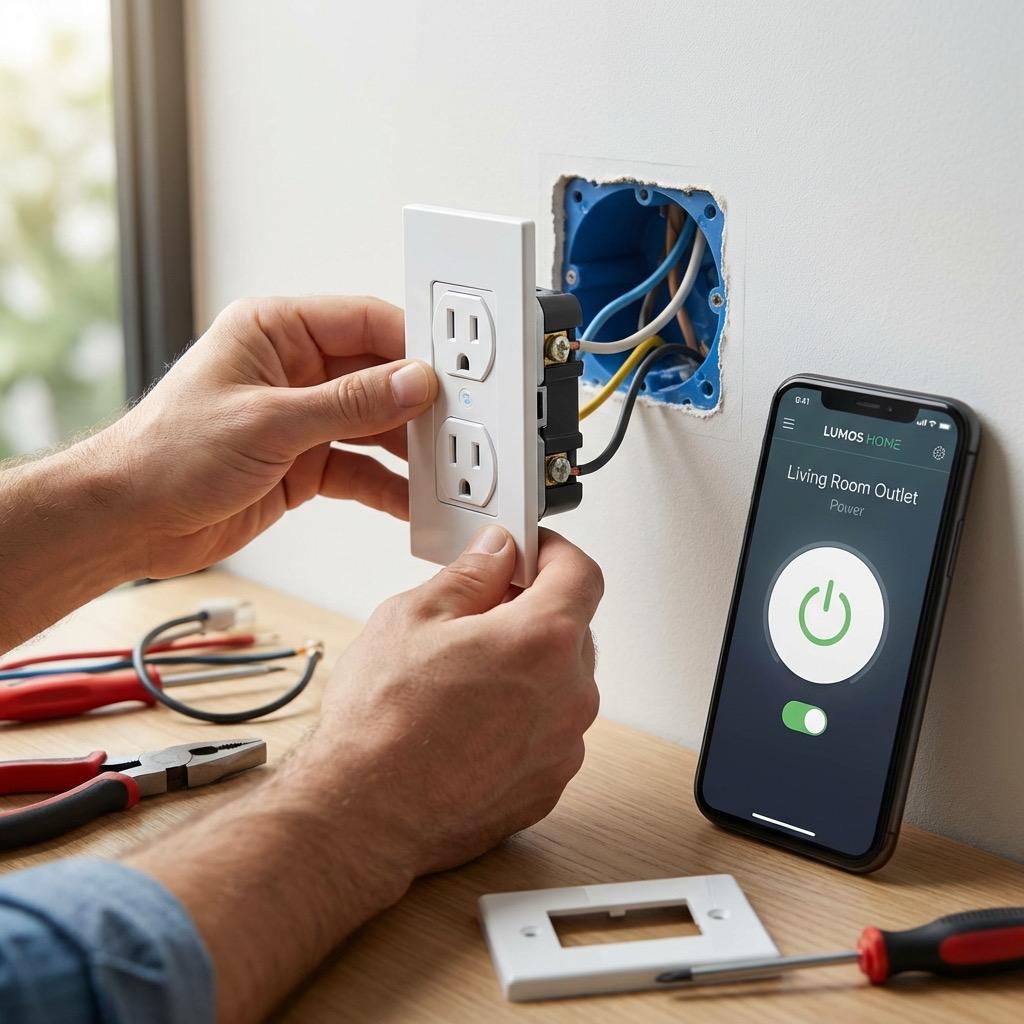
In-wall smart outlets replace your existing wall receptacle entirely. The result is a clean installation that looks nearly identical to a standard outlet but with smart capabilities built in. Most in-wall smart outlets provide one smart-controlled outlet and one always-on outlet, or two independently controlled outlets. Some include USB charging ports.
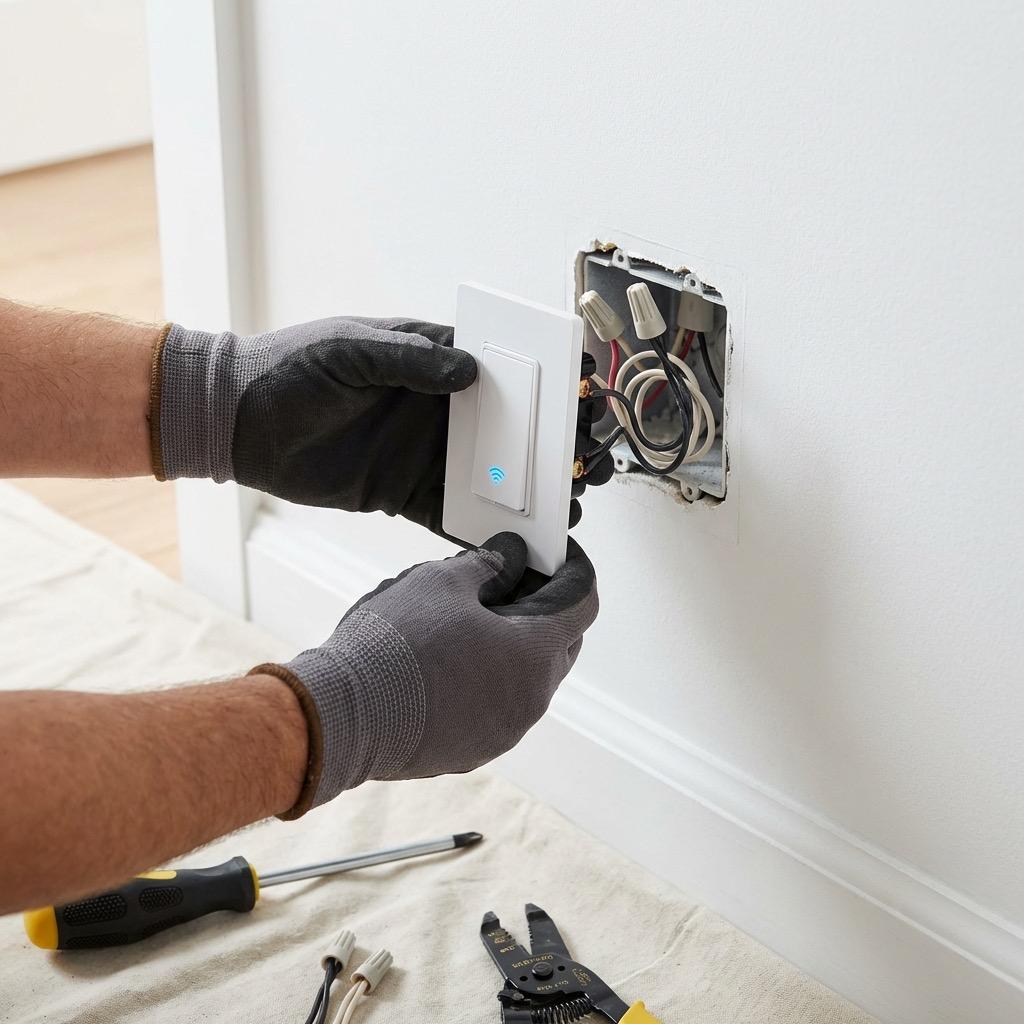
In-wall installation requires electrical work: turning off the breaker, removing the existing outlet, connecting the smart outlet to your wiring, and mounting it in the electrical box. This is more involved than a plug-in module but provides a permanent, aesthetically clean solution. In-wall smart outlets are particularly popular in Northern Virginia homes where visible smart plugs clash with the home's interior design.
Load Safety and Amperage Ratings
This is the single most important consideration when using smart outlets, and it is the area where we see the most dangerous mistakes.
Whether it is a simple repair or a major electrical project, our licensed team is ready to help. Serving all of Northern Virginia with transparent pricing and expert workmanship. Call (703) 997-0026 today.
Understanding Amperage Limits
Every smart outlet has a maximum amperage rating, typically 15 amps for residential models. This means the total current draw of all devices plugged into the smart outlet must not exceed 15 amps. For most household devices like lamps, chargers, TVs, and small fans, this is more than adequate. But high-draw appliances can push the limits quickly.
Devices You Should Never Control With a Smart Plug
Space heaters are the number one device we warn homeowners against using with smart plugs. A standard 1,500-watt space heater draws 12.5 amps, which is within the 15-amp rating but leaves almost no margin. More critically, the combination of high heat generation near a plastic smart plug creates a fire risk, especially if the plug develops a loose connection over time. The Consumer Product Safety Commission has warned against this practice, and we echo that warning strongly.
Other devices to avoid include portable radiators and oil-filled heaters, high-wattage power tools, window air conditioners above 10,000 BTU, and any device with a motor that has high startup current draw. When in doubt, check the device's wattage label and divide by 120 to calculate the amperage draw. Keep total connected load well below the smart outlet's maximum rating.
Safety Warning: If a smart plug feels warm or hot to the touch during normal use, disconnect it immediately. Excessive heat indicates either an overloaded connection or a failing component. Replace the smart plug and evaluate whether the connected device exceeds the plug's safe operating capacity.
In-Wall Smart Outlet Installation Guide
If you are comfortable with basic electrical work and have verified your home's wiring is in good condition, in-wall smart outlet installation follows standard outlet replacement procedures. If you encounter any uncertainty during the process, stop and contact a licensed electrician.
Tools and Materials Needed
Gather a non-contact voltage tester, a Phillips screwdriver and flathead screwdriver, wire strippers, the smart outlet and its included hardware, and a flashlight or headlamp for visibility inside the electrical box. Some smart outlets include wire nuts, but having extras on hand is a good practice.
Step-by-Step Process
Turn off the breaker controlling the outlet you are replacing. Use the non-contact voltage tester to confirm power is off at the outlet. Test the tester on a known-live outlet first to ensure it is functioning. Remove the outlet cover plate and the screws holding the existing outlet to the electrical box. Gently pull the outlet out and take a photo of the wiring connections before disconnecting anything.
Disconnect the wires from the existing outlet. For most smart outlets, you will connect the hot wire (black) to the brass or hot terminal, the neutral wire (white) to the silver or neutral terminal, and the ground wire (bare copper or green) to the green ground terminal. Smart outlets require a neutral connection to function, which is present in virtually all outlet boxes in homes built to modern code.
After making all connections, carefully fold the wires and push the smart outlet into the electrical box. Secure with screws, install the cover plate, and restore power at the breaker. Download the manufacturer's app and follow the on-screen instructions to connect the outlet to your WiFi network and configure controls.
Pro Tip: Before purchasing in-wall smart outlets, check the depth of your electrical boxes. Older homes in Arlington, Falls Church, and other established Northern Virginia neighborhoods sometimes have shallow boxes that cannot accommodate the bulkier body of a smart outlet. A licensed electrician can replace a shallow box with a deeper one if needed.
Energy Monitoring Features
Many smart outlets include built-in energy monitoring that tracks the power consumption of connected devices. This feature transforms a simple remote-control device into a diagnostic tool that reveals exactly how much electricity each plugged-in device uses.
Practical Applications
Use energy monitoring smart outlets to measure the actual consumption of your entertainment center to see if standby power draw justifies putting devices on a smart plug schedule, track the energy cost of a chest freezer or garage refrigerator to determine if an older appliance is costing more in electricity than a replacement would cost, monitor a home office setup to estimate the electrical cost of working from home, and verify that a new energy-efficient appliance is actually delivering the consumption savings promised by its Energy Star rating.
Smart Outlet Automation Ideas
Beyond simple remote on and off control, smart outlets enable creative automations that save energy and add convenience throughout your Northern Virginia home.
Schedule-Based Automation
Holiday lights on smart plugs can turn on at sunset and off at 11 PM, adjusting automatically as sunset times change throughout the fall and winter. A coffee maker on a smart plug can activate 10 minutes before your morning alarm. A bathroom exhaust fan on a smart plug can run for 15 minutes after a humidity sensor detects shower steam.
Presence-Based Automation
Table lamps in the living room can turn on when your phone's GPS shows you arriving home. The home office equipment can power on when you enter the room (detected by a motion sensor) and power off 30 minutes after you leave.
Looking to add smart outlet control to your home? AJ Long Electric provides professional smart outlet installation throughout Northern Virginia, including in-wall receptacles, load assessments for safe operation, and integration with your existing smart home system. Whether you need a single outlet replaced or want comprehensive smart outlet coverage throughout your home, our licensed electricians ensure safe, code-compliant installation. Contact us today to get started.
Tags:

Written by
Matt Long
Master Electrician
Our team of licensed electricians brings over 40 years of combined experience serving Northern Virginia. We're committed to providing expert electrical solutions with a focus on safety, quality, and customer satisfaction.
Reviewed by AJ Long Electric Master Electricians · VA License #2705031092 · View Credentials