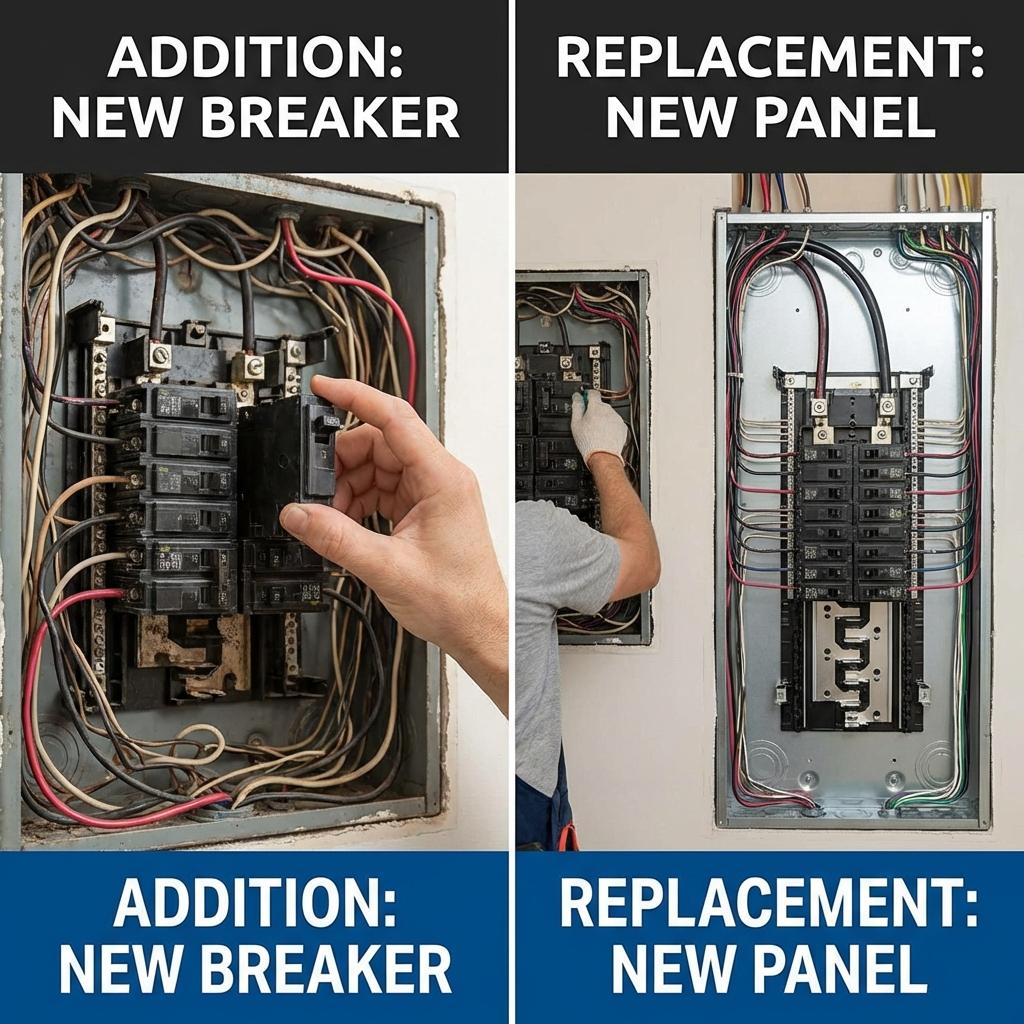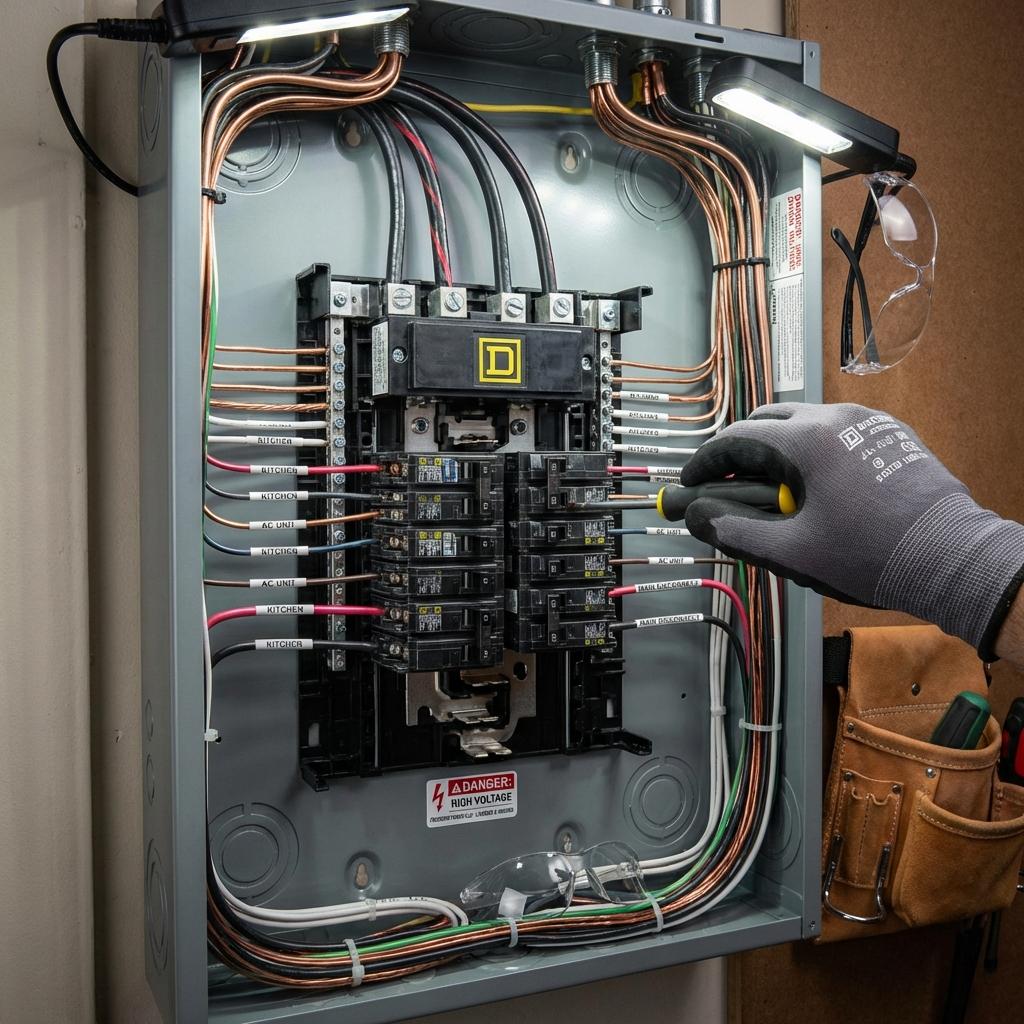
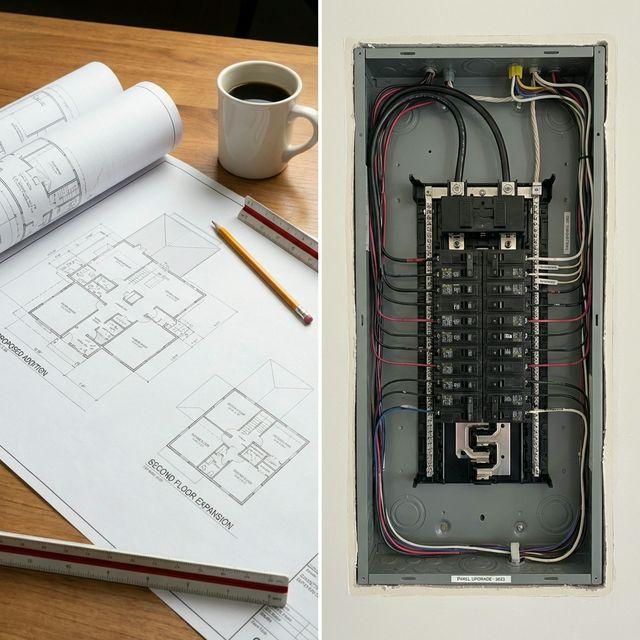
A home addition is an exciting project that adds living space and value to your property. However, most homeowners don't realize that their existing electrical panel often can't support the additional load. Understanding the electrical requirements for your addition early in the planning process prevents costly surprises and delays.
Key Takeaways
- Home additions typically require additional circuits that may exceed your current panel capacity.
- Building codes usually require panel upgrades when the existing system cannot accommodate the new load.
- Planning the panel upgrade at the beginning of the addition project prevents costly delays and rework.
- Consider future expansion when sizing the new panel -- add capacity for potential future needs.
Why Additions Usually Require Panel Upgrades
Every square foot you add to your home requires electrical power for:
- General lighting throughout the new space
- Convenience outlets every 12 feet (per code)
- Dedicated circuits for bathrooms
- Kitchen circuits if applicable
- HVAC for heating and cooling the new space
- Smoke detectors and other safety devices
Most older panels, especially 100 amp panels, simply don't have the capacity or available spaces for these additional circuits. Even if you have a 200 amp panel, it may be full or operating near capacity already.
Plan First: Include panel evaluation in your addition planning before construction begins. Discovering capacity issues mid-project causes expensive delays and may require changing your addition plans.
Common Addition Types and Electrical Needs
Finished Basement
Finishing a basement typically requires 4-8 new circuits:
Outdated or overloaded electrical panels are a safety risk. Our team specializes in 200-amp upgrades throughout Northern Virginia, with same-day panel assessments available. Call (703) 997-0026 to get started.
- General lighting circuits (1-2)
- Outlet circuits (2-4 depending on size)
- Bathroom circuit with GFCI (1)
- Sump pump dedicated circuit (1)
- HVAC circuit if adding independent system
- Home theater or entertainment circuits
Typical panel requirement: May need subpanel; 100 amp panels often need upgrade to 200 amp.
Room Addition (500-800 sq ft)
A typical room addition requires 4-6 new circuits:
- Lighting circuits (1-2)
- General outlet circuits (2-3)
- Bathroom if included (1)
- HVAC extension or mini-split
Typical panel requirement: 100 amp panels typically need upgrade; 200 amp may need subpanel.
Kitchen Addition or Major Remodel
Kitchens are electrically intensive, requiring 6-10 circuits:
- Small appliance circuits (2 minimum, code-required)
- Refrigerator dedicated circuit (1)
- Dishwasher circuit (1)
- Garbage disposal (often shared with dishwasher)
- Microwave dedicated circuit (1)
- Electric range (50 amp 240V)
- General lighting (1)
- Under-cabinet lighting (1)
Typical panel requirement: Almost always requires panel upgrade or major capacity available.
Accessory Dwelling Unit (ADU) or In-Law Suite
Self-contained living spaces need comprehensive electrical:
- Kitchen circuits (6-8)
- Bathroom circuits (1-2)
- Bedroom/living circuits (2-4)
- HVAC circuits (1-2)
- Water heater if electric (1)
- Laundry if included (2)
Typical panel requirement: Often requires 400 amp service or dedicated subpanel with separate meter.
Planning Your Electrical Expansion
Step 1: Engage Electrician Early
Don't wait until construction begins to think about electrical. Involve a licensed electrician during the design phase to:
- Assess your current panel and service
- Calculate the load requirements for your addition
- Determine if an upgrade is necessary
- Coordinate with your architect or builder
- Plan conduit and wire routing
Step 2: Consider Future Needs
While planning for your addition, think about:
- Electric vehicle charging in the future
- Additional additions you might want
- Hot tubs or pool equipment
- Workshop or garage improvements
- Backup generator installation
Sizing your upgrade for future needs now is much more cost-effective than upgrading again later.
Step 3: Coordinate with Other Trades
Electrical work intersects with:
- HVAC: Determine electrical requirements for heating/cooling
- Plumbing: Electric water heaters, pump circuits
- General contractor: Rough-in timing, wall placement
- Utility company: Service upgrades, meter placement
Subpanel vs. Main Panel Upgrade
For additions, you often have two options:
Subpanel Installation
A subpanel is a secondary panel fed from your main panel. Benefits include:
- Lower cost than main panel upgrade ($800-$1,500)
- Can be located in or near the addition
- Shorter wire runs to new circuits
- Maintains existing main panel
Best when: Your main panel has adequate amperage but limited spaces.
Main Panel Upgrade
Replacing or upgrading your main panel provides:
- Increased service capacity (e.g., 100 to 200 amp)
- Modern safety features throughout
- Ample space for current and future circuits
- Updated code compliance
Best when: Your current service is undersized or your panel is outdated.
Permitting for Addition Electrical Work
All addition electrical work requires permits and inspections. In Northern Virginia, this typically involves:
- Electrical permit separate from or included with building permit
- Rough-in inspection before walls are closed
- Final inspection after all work is complete
- Coordination with general contractor for timing
Panel upgrades as part of additions may require:
- Dominion Energy coordination for service upgrades
- Temporary power arrangements during construction
- Specific utility requirements for meter placement
Cost Considerations
Electrical work typically represents 10-15% of a home addition budget. For panel upgrades as part of additions:
- Subpanel for addition: $800-$2,000
- Panel upgrade (100 to 200 amp): $2,500-$4,500
- 400 amp service for large additions: $8,000-$15,000
- New circuits (per circuit): $150-$400
- Rough-in wiring for addition: $3,000-$10,000 depending on size
Working with AJ Long Electric
For addition projects, we offer:
- Free initial consultation during planning phase
- Coordination with your general contractor or architect
- Load calculations and panel sizing
- Complete electrical design for your addition
- All permits and inspections
- Rough-in and finish electrical work
- Panel upgrade or subpanel installation
We've worked on hundreds of additions throughout Northern Virginia and understand how to coordinate with other trades for smooth project completion.
Planning an addition? Contact AJ Long Electric at (703) 555-0123 for a consultation. We'll help you plan the electrical infrastructure your project needs.
Tags:

Written by
Matt Long
Master Electrician
Our team of licensed electricians brings over 40 years of combined experience serving Northern Virginia. We're committed to providing expert electrical solutions with a focus on safety, quality, and customer satisfaction.
Reviewed by AJ Long Electric Master Electricians · VA License #2705031092 · View Credentials