We understand the appeal of saving money. Hiring a licensed electrician costs more than having a handyman do the work or tackling it yourself. But electrical work is not like painting a room or fixing a leaky faucet. The stakes are higher, the code requirements are complex, and the consequences of mistakes can be devastating. Here is when professional electrical work is non-negotiable and when simpler solutions might suffice for Northern Virginia homeowners.
Key Takeaways
- Virginia law requires a licensed electrician for any work that needs a permit: new circuits, panel upgrades, EV chargers, generators, and all new wiring.
- Handyman or DIY work is acceptable only for like-for-like replacements: swapping outlets, switches, light fixtures, and ceiling fans on existing circuits.
- Unlicensed electrical work can void your homeowner's insurance, create sale complications, result in fines, and pose serious fire and shock hazards.
- The cost difference between licensed and unlicensed work is typically 30-50%, but the risk of remediation costs from bad work can be 3-5 times the original savings.
- Always verify credentials through the Virginia DPOR website, request a Certificate of Insurance, and confirm that your contractor pulls permits in their name.
What Defines a Licensed Electrician in Virginia?
Journeyman Electrician Requirements
- Four years (8,000 hours) of supervised electrical work experience
- Pass the Virginia journeyman electrician examination
- Complete continuing education requirements
- Work under a licensed electrical contractor
Master Electrician Requirements
- Additional experience beyond journeyman level
- Pass the Virginia master electrician examination
- Can supervise journeymen and apprentices
Electrical Contractor Requirements
- Hold a business license and maintain liability insurance ($500,000+ coverage)
- Carry workers' compensation insurance
- Post surety bonds in most jurisdictions
- Pull permits and schedule inspections
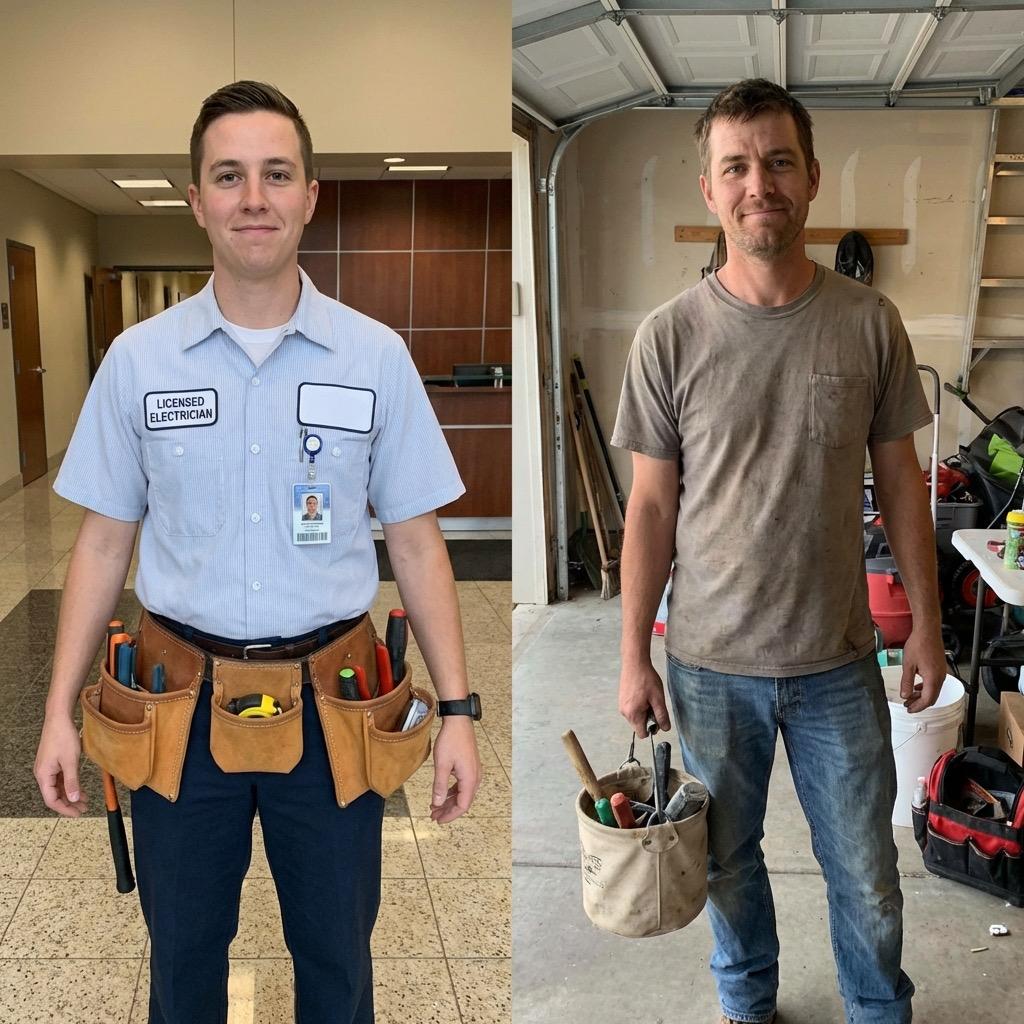
Licensed Electrician vs Handyman: What Each Can Do
| Task | Licensed Electrician | Handyman / DIY | Permit Required? |
|---|---|---|---|
| Replace outlet or switch (like-for-like) | $75-$150 | $40-$75 | No |
| Install light fixture (existing circuit) | $100-$200 | $50-$100 | No |
| Replace ceiling fan (rated box exists) | $150-$250 | $75-$150 | No |
| Add new circuit and outlet | $350-$500 | Not legal | Yes |
| EV charger installation | $800-$1,500 | Not legal | Yes |
| Panel upgrade | $2,500-$4,500 | Not legal | Yes |
| Generator installation | $12,000-$20,000 | Not legal | Yes |
| Run new wiring of any kind | Varies | Not legal | Yes |
Virginia Law: In Virginia, any electrical work that requires a permit must be performed by or under the direct supervision of a licensed electrician working for a licensed electrical contractor. Fairfax County, Loudoun County, Prince William County, and all incorporated cities in the DMV enforce this requirement. Violations can result in fines, mandatory remediation, and legal liability.
A professional electrical inspection identifies hidden hazards before they become emergencies. Our licensed electricians provide thorough safety inspections throughout Northern Virginia. Call (703) 997-0026 to schedule yours.
The Hidden Costs of Unlicensed Electrical Work
Fire Risk
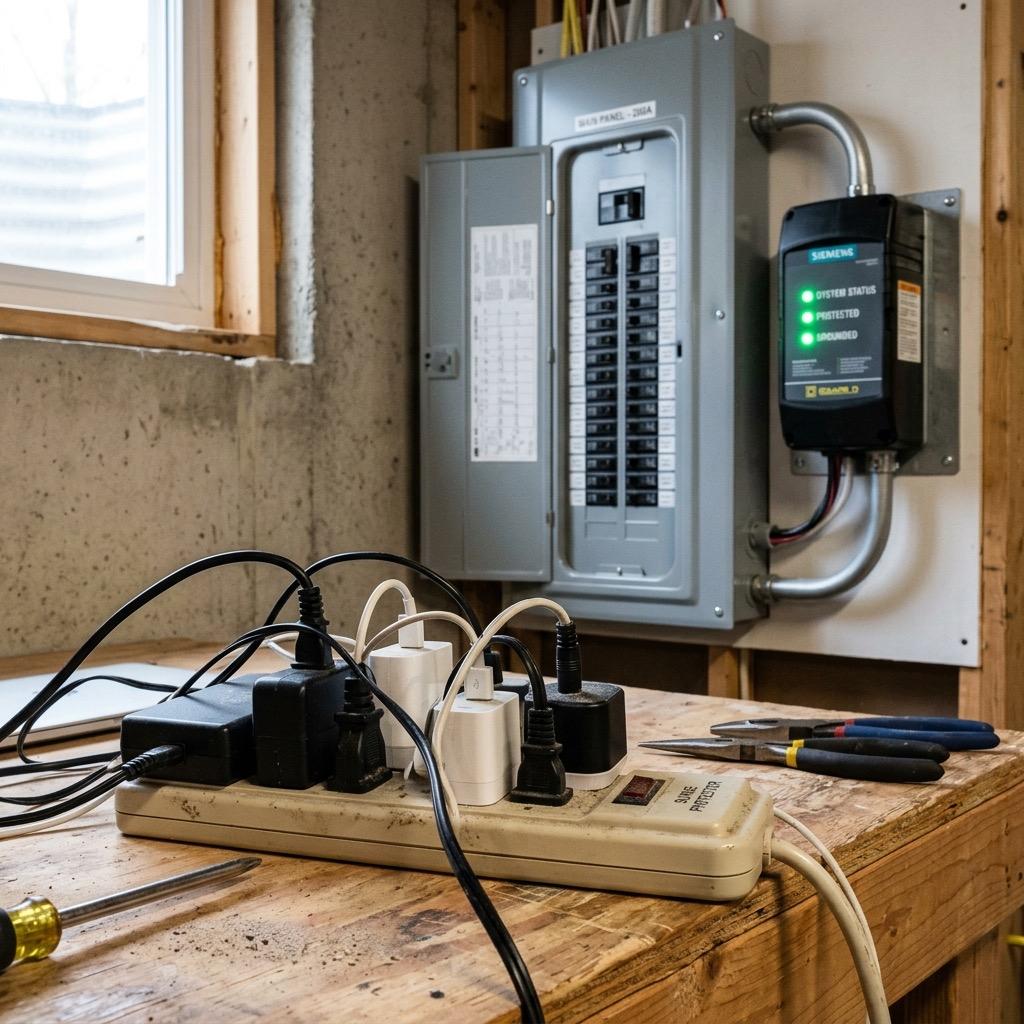
Electrical fires cause an estimated $1.5 billion in property damage annually. The leading causes, faulty wiring, overloaded circuits, and improper connections, are exactly the mistakes untrained individuals make. A handyman might save you $200 today; a house fire costs everything.
Insurance Issues
Most homeowner's insurance policies require electrical work to be performed by licensed professionals. If an unlicensed installation causes a fire or injury, your claim may be denied. You could be personally liable for all damages.
Home Sale Complications
When selling your home, inspectors and buyers scrutinize electrical work. Unpermitted or non-code-compliant work must be disclosed and often remediated before closing. In the competitive Northern Virginia real estate market, this can delay or derail a sale.
Code Violations and Fines
If discovered, unpermitted electrical work can result in fines from the building department, required removal of non-compliant work, mandatory professional re-installation, and multiple inspection fees.
Real-World Examples from Our Service Area
The "Simple" Outlet Addition
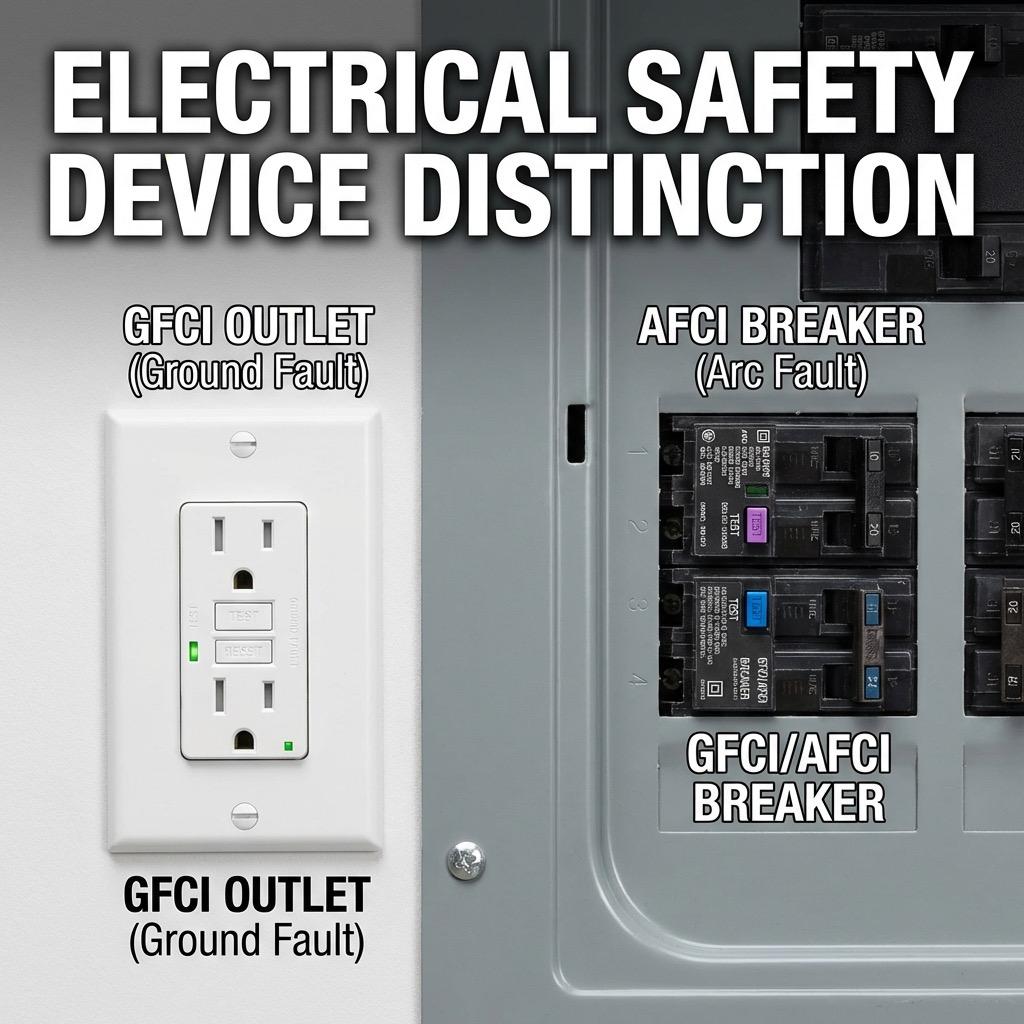
A homeowner had a handyman add an outlet in the garage for a freezer. The handyman tapped into an existing circuit without calculating loads, used incorrect wire gauge, and failed to install GFCI protection required for garages. The circuit overheated under load, melting wire insulation inside the wall. Remediation cost: $2,800 versus the $400 saved initially.
The DIY EV Charger
A Tesla owner in Fairfax installed their own Wall Connector after watching YouTube videos, using incorrect wire size and improper conduit. During a home sale, the inspector flagged the installation. The seller paid for complete removal and professional installation plus delayed closing costs: $3,500 total.
The Panel "Upgrade"
A handyman replaced a homeowner's 100-amp panel with a 200-amp panel without coordinating with Dominion Energy, without upgrading the service entrance cable, and without pulling permits. A fire department inspection discovered the work. The county required complete removal and professional installation plus fines: $12,000 total versus the $2,000 paid to the handyman.
Pro Tip: Before hiring any electrician in Northern Virginia, verify their credentials on the Virginia DPOR (Department of Professional and Occupational Regulation) website, request a Certificate of Insurance showing general liability and workers' compensation, and confirm they will pull permits in their name, not yours. A legitimate contractor will gladly provide all of this documentation.
When Handyman or DIY Work Is Acceptable
Not every electrical task requires a licensed professional. Safe DIY/handyman tasks include:
- Replacing outlets/switches: Like-for-like replacement of functional devices
- Installing light fixtures: Where an existing electrical box and circuit exist
- Replacing ceiling fans: If the electrical box is properly rated for fan weight and motion
- Changing cover plates: Purely cosmetic changes
- Replacing doorbells: Low-voltage systems with existing transformers
Safety Rules for DIY Work
- Always turn off power at the breaker and verify with a non-contact tester
- Never work on circuits while energized
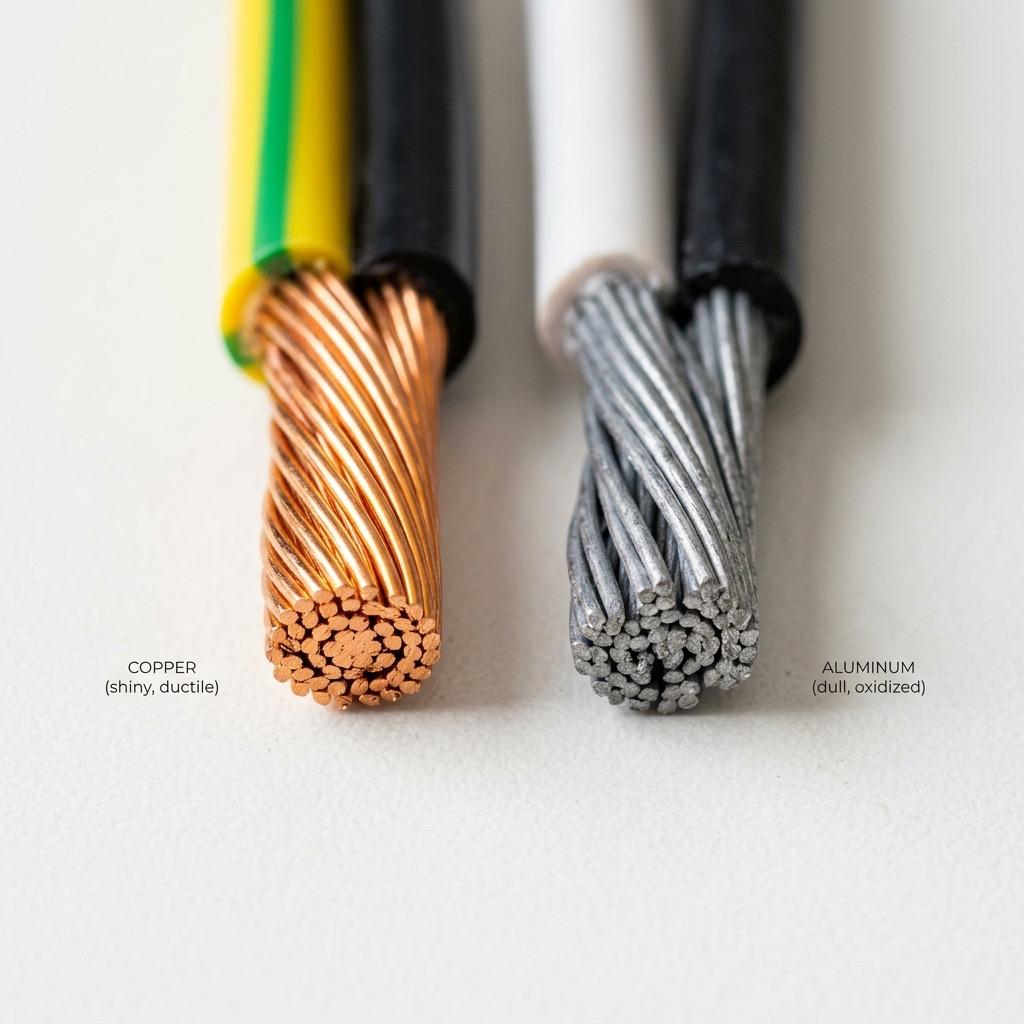
- Use the same wire gauge as existing wiring
- Follow manufacturer instructions exactly
- If anything seems wrong or confusing, stop and call a professional
The Bottom Line
For simple device replacements and fixture swaps, a capable handyman or DIY approach can work fine. But for anything involving new wiring, new circuits, panel work, or permit-required installations, a licensed electrician is not optional. It is essential. The cost difference typically runs 30-50%, but consider what you are paying for: code-compliant safe installation, permit and inspection documentation, liability coverage, warranty backing, and peace of mind.
AJ Long Electric is fully licensed, bonded, and insured for all residential and commercial electrical work in Northern Virginia. We pull proper permits, pass inspections, and stand behind our work with written warranties. Contact us for a free estimate on your electrical project and the confidence of knowing it is done right.
Tags:

Written by
Matt Long
Master Electrician
Our team of licensed electricians brings over 40 years of combined experience serving Northern Virginia. We're committed to providing expert electrical solutions with a focus on safety, quality, and customer satisfaction.
Reviewed by AJ Long Electric Master Electricians · VA License #2705031092 · View Credentials