If you own or are buying a home in Northern Virginia built between 1965 and 1975, there is a real chance it contains aluminum branch circuit wiring. This is not an immediate emergency, but it is a fact that shapes your insurance options, affects home resale, and carries specific safety implications if unaddressed. Virginia's electrical code, the DMV real estate market, and CPSC guidance all weigh in differently. This guide cuts through the confusion with clear, current information for Northern Virginia homeowners.
Key Takeaways
- The Consumer Product Safety Commission found homes with aluminum branch wiring are 55 times more likely to have fire-condition hazards at outlets than homes with copper — but this risk is manageable with proper remediation.
- Virginia law requires disclosure of known aluminum wiring in residential real estate transactions. Many Fairfax, Prince William, and Arlington County homes built 1965–1975 are affected.
- The three CPSC-approved remediation approaches are: COPALUM crimp connectors ($3,000–$8,000), AlumiConn connectors ($2,000–$5,000), and complete rewire ($15,000–$30,000+). CO/ALR device replacement alone is not considered a complete repair.
- Modern aluminum alloy wiring (AA-8000 series) used in service entrance conductors and large feeders is safe and code-compliant — the concern applies only to older single-strand branch circuit aluminum wire.
- Virginia's 2023 USBC (adopting the 2020 NEC) permits aluminum conductors of appropriate gauge throughout, but all connections must use listed devices rated for aluminum or use approved pigtailing methods.
The History: Why Aluminum Wiring Exists in Northern Virginia Homes
Between 1965 and 1973, copper prices increased dramatically — roughly 65% in real terms — driven by Vietnam War-era industrial demand and commodity market volatility. Builders and electrical contractors responded by using single-strand aluminum wire for residential branch circuit wiring. It was cheaper, universally available, and approved under the codes of the time. An estimated 2 million American homes were wired with aluminum during this period.
Northern Virginia was a booming suburb throughout this era. Established neighborhoods in Springfield, Burke, Annandale, Woodbridge, Dale City, and older sections of Herndon, Reston, and Centreville contain substantial aluminum-wired housing stock. By the mid-1970s, fire investigation data was showing a troubling pattern at connection points, and the CPSC undertook the study that produced the now-famous 55-times-higher fire hazard finding at outlets and switches.
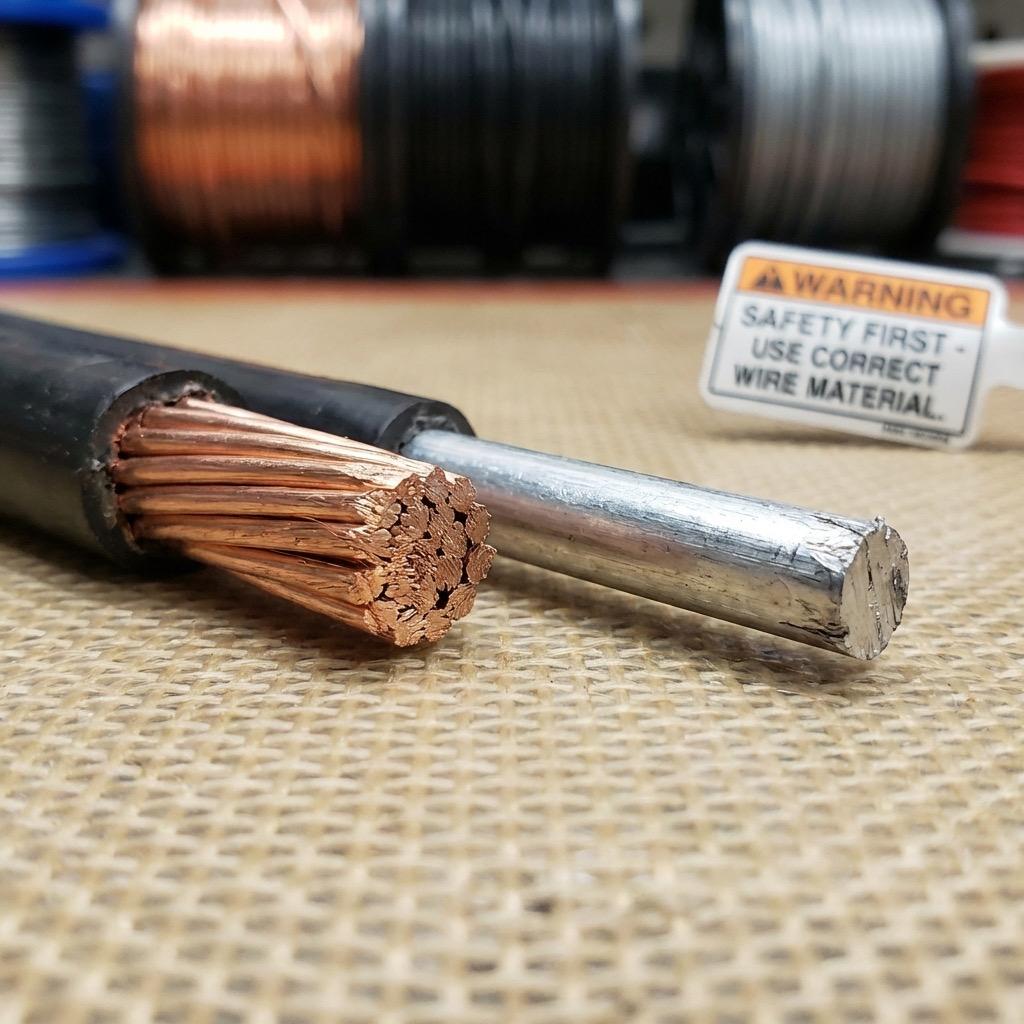
It is important to understand what the data shows and what it does not: the hazard is concentrated at connection points — outlets, switches, junction boxes — not in the wire runs themselves. Aluminum wire running through walls is not inherently dangerous. The danger emerges where the aluminum wire terminates at a device or splice designed for copper.
Copper vs Aluminum Branch Circuit Wiring: Technical Comparison
| Property | Copper | Aluminum (1965–1973 vintage) |
|---|---|---|
| Electrical conductivity | Reference standard (100%) | ~61% of copper |
| Wire gauge for 15A circuit | 14 AWG | 12 AWG (larger to compensate) |
| Connection stability over time | Excellent | Poor without remediation |
| Oxide layer conductivity | Good (copper oxide conducts) | Poor (aluminum oxide insulates) |
| Coefficient of thermal expansion | 17 × 10⁻⁶/°C | 23 × 10⁻⁶/°C (loosens connections) |
| Galvanic compatibility with copper | N/A (self) | Poor — causes corrosion at mixed contacts |
| CPSC fire hazard finding | Baseline | 55× higher at outlets (un-remediated) |
| Device compatibility | All devices, all terminals | Requires CO/ALR or pigtail to copper |
| Insurance impact | None | Potential premium increase or denial |
| Virginia disclosure required | No | Yes (known condition) |
Critical Distinction — Service Entrance vs Branch Circuit Aluminum: Modern aluminum alloy conductors (AA-8000 series, typically used in 2 AWG and larger) are routinely used for service entrance cables, meter feeds, and large feeder conductors in Virginia residential and commercial construction. They are code-compliant, have different metallurgical properties than the problematic 1960s–70s branch circuit aluminum, and do not present the same hazard. The specific concern in this guide is single-strand, pre-1973 aluminum used in 15-amp and 20-amp branch circuits.
A professional electrical inspection identifies hidden hazards before they become emergencies. Our licensed electricians provide thorough safety inspections throughout Northern Virginia. Call (703) 997-0026 to schedule yours.
How to Identify Aluminum Wiring in Your Northern Virginia Home
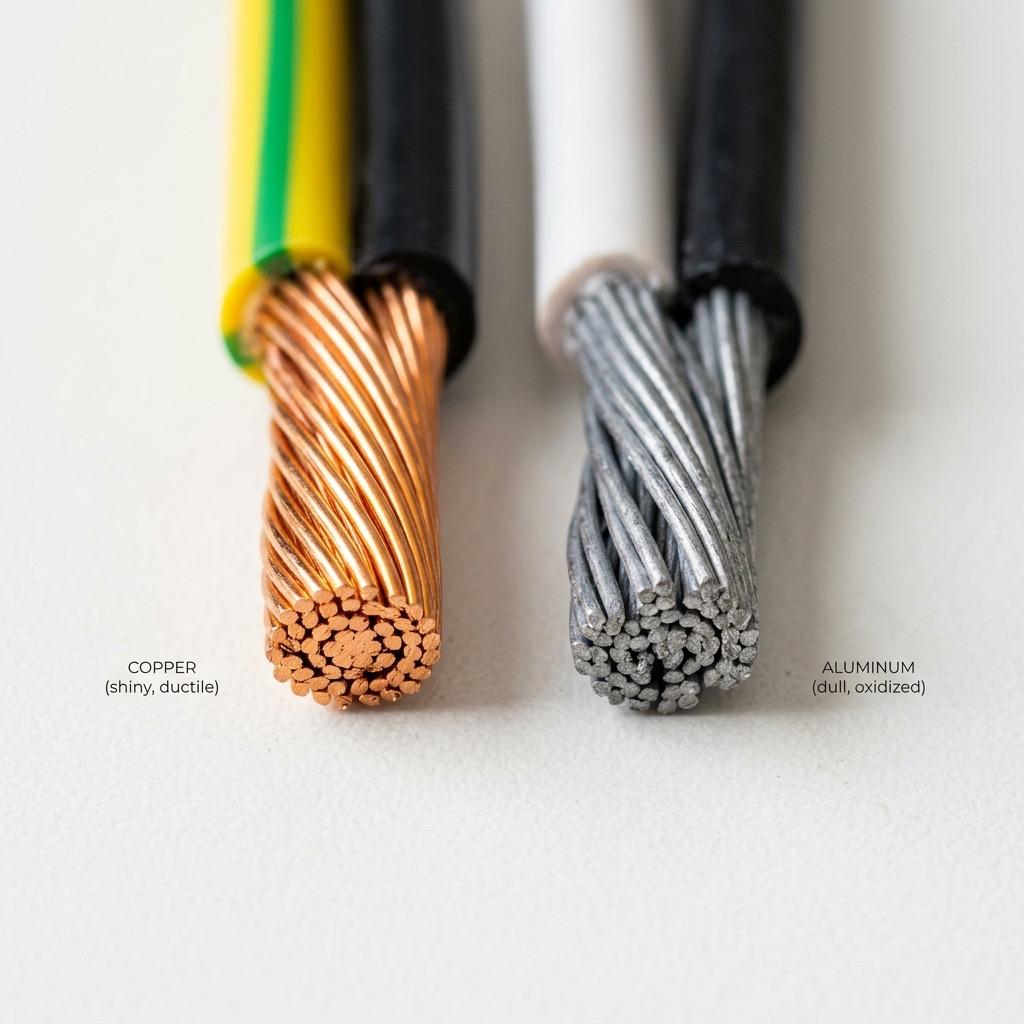
You can often identify aluminum wiring without opening walls. Check your electrical panel: aluminum wiring often appears silver-colored at the panel (copper is orange-red). Look for outlets or switch plates that feel warm to the touch, circuit breakers that trip without obvious cause, or lights that flicker for no apparent reason — all can indicate problematic aluminum connections. The most reliable identification method is having a licensed electrician open several outlet and switch boxes to visually inspect the wiring.
Home inspectors are required to note visible aluminum wiring under Virginia real estate disclosure rules, but they cannot evaluate connection quality or remediation adequacy. Only a licensed electrician can assess the actual condition of aluminum connections throughout your home. We recommend this assessment for any home built between 1965 and 1975 in Northern Virginia before purchase or sale.
Warning Signs Requiring Immediate Action: Certain conditions indicate active hazards from problematic aluminum connections: warm or discolored outlet or switch faceplates; a burning plastic or electrical smell near outlets; lights that flicker without apparent cause; circuit breakers that trip repeatedly on circuits with low apparent load. If you observe any of these in an aluminum-wired home, call a licensed electrician immediately. Do not delay.
Virginia Code Requirements for Aluminum Wiring
The 2023 Virginia Uniform Statewide Building Code incorporates the 2020 NEC with Virginia-specific amendments. Key code provisions affecting aluminum wiring in Northern Virginia homes include:
NEC 310.106(B): Aluminum conductors of 12 AWG and larger are permitted for branch circuits, but only with listed terminals and devices. Devices not marked "CO/ALR" or "AL/CU" are not approved for direct aluminum termination.
NEC 110.14: Electrical connections shall be made in a manner that does not cause deterioration of the connection over time. The code specifically addresses the need for anti-oxidant compound or listed connectors when joining aluminum to copper.
Virginia USBC Enforcement: All remediation work on aluminum wiring — including pigtailing, device replacement, and connector installation — requires a permit in Fairfax County, Loudoun County, Prince William County, and all Northern Virginia jurisdictions. Unpermitted aluminum wiring work is a red flag that can surface during home sales and complicate transactions.
Remediation Options and True Costs in Northern Virginia
If your home has aluminum branch circuit wiring, you have four remediation paths ranging from comprehensive to minimal:
Complete rewire (most thorough): Replacing all aluminum branch circuit wiring with copper wire. Eliminates the issue permanently. Cost in Northern Virginia: $15,000–$35,000 for a 2,000–4,000 sq ft home depending on construction type, number of circuits, and access conditions. Required in some jurisdictions after fire damage. Provides the highest property value uplift and insurance relief.
COPALUM crimp connectors (CPSC-preferred permanent repair): A trained technician uses a specialized hydraulic crimping tool to permanently attach a copper pigtail to each aluminum wire at every connection point throughout the home. The CPSC describes this as a complete and permanent repair. Cost in Northern Virginia: $3,000–$8,000 depending on home size and number of connections. Requires a technician certified in the COPALUM method. AJ Long Electric maintains COPALUM certification.
AlumiConn connectors (widely available alternative): UL-listed set-screw connectors that safely join aluminum and copper at each connection point without specialized tooling. Slightly more accessible than COPALUM but not classified by CPSC as a permanent repair in the same category. Cost in Northern Virginia: $2,000–$5,000. Most commonly used alternative to COPALUM.
CO/ALR device replacement (minimum acceptable): Replacing all outlets and switches with devices specifically rated for aluminum termination (marked CO/ALR). This addresses the device-to-wire interface but does not repair splice connections or address existing oxidation in junction boxes. Cost: $800–$2,500. This approach alone is generally not sufficient to fully satisfy insurance requirements or prospective buyer concerns.
| Remediation Method | NoVA Installed Cost | CPSC Classification | Insurance Relief |
|---|---|---|---|
| Complete rewire | $15,000–$35,000 | Complete solution | Full relief — treated as copper |
| COPALUM crimp | $3,000–$8,000 | Permanent repair approved | Typically full relief with documentation |
| AlumiConn connectors | $2,000–$5,000 | UL-listed; not CPSC "permanent" | Partial to full — insurer dependent |
| CO/ALR devices only | $800–$2,500 | Minimum — not complete | Limited; most insurers still flag |
Insurance and Real Estate Implications in Northern Virginia
The DMV real estate market is highly competitive, and aluminum wiring disclosure creates real transaction friction. Virginia requires sellers to disclose known material defects including aluminum wiring. Buyers' agents in Fairfax, Loudoun, and Prince William counties are sophisticated about this issue and will frequently request either a price reduction or written remediation as a condition of purchase.
From an insurance perspective, many carriers writing homeowner's policies in Virginia — including major names active in Northern Virginia — either require documentation of remediation or surcharge policies for unremediated aluminum wiring. Some specialty carriers have exited this segment entirely. If you have aluminum wiring and are shopping for homeowner's insurance, proactively provide documentation of whatever remediation exists. Professional assessment letters and permitted work completion records are the most useful documents.
Pro Tip for Buyers: If you are purchasing a Northern Virginia home built between 1965 and 1975, request that the seller provide a licensed electrician's written assessment of any aluminum wiring — not just a general home inspection notation. Specifically ask for: confirmation of whether all connections have been remediated (CO/ALR, COPALUM, or AlumiConn), a list of any un-remediated junction boxes, and documentation of permit records if remediation work was performed. This assessment typically costs $200–$400 and is worth every dollar given potential remediation costs.
Our Recommendation for Northern Virginia Homeowners
If your home has aluminum branch circuit wiring, take these steps in order: get a professional assessment from a licensed electrician who will open representative outlet boxes throughout your home and evaluate actual connection conditions; choose a remediation method appropriate to your budget and plans (COPALUM or AlumiConn for most homeowners, complete rewire if you are doing a major renovation anyway); document all work with permits and completion records for insurance and future sale purposes; and notify your homeowner's insurance carrier of remediation completion.
Do not ignore aluminum wiring or assume it is safe without assessment. Do not panic — millions of homes have it and it is fully manageable. Take measured, informed action with a licensed electrician who knows Virginia code and the specific requirements of Northern Virginia jurisdictions.
AJ Long Electric performs aluminum wiring assessments and all remediation methods throughout Northern Virginia, including Fairfax, Loudoun, Prince William, and Arlington counties. We are certified in COPALUM installation and carry the documentation your insurer and future buyer will need. Call (703) 997-0026 to schedule your assessment.
Tags:

Written by
Matt Long
Master Electrician
Our team of licensed electricians brings over 40 years of combined experience serving Northern Virginia. We're committed to providing expert electrical solutions with a focus on safety, quality, and customer satisfaction.
Reviewed by AJ Long Electric Master Electricians · VA License #2705031092 · View Credentials