If your home was built before 1950, there is a good chance it originally had knob and tube wiring -- an electrical system that was standard for its time but is now considered obsolete and potentially hazardous. Understanding the risks and your options is crucial for older home owners.
Key Takeaways
- Knob and tube wiring has deteriorating rubber insulation, no grounding, and was designed for minimal electrical loads.
- Blown-in attic insulation over K&T wires is a major fire hazard because K&T relies on air circulation for cooling.
- Many insurance companies refuse coverage for homes with K&T wiring; some lenders will not approve mortgages.
- Complete rewiring is the recommended solution, though partial rewiring in phases can manage costs.
What Is Knob and Tube Wiring?
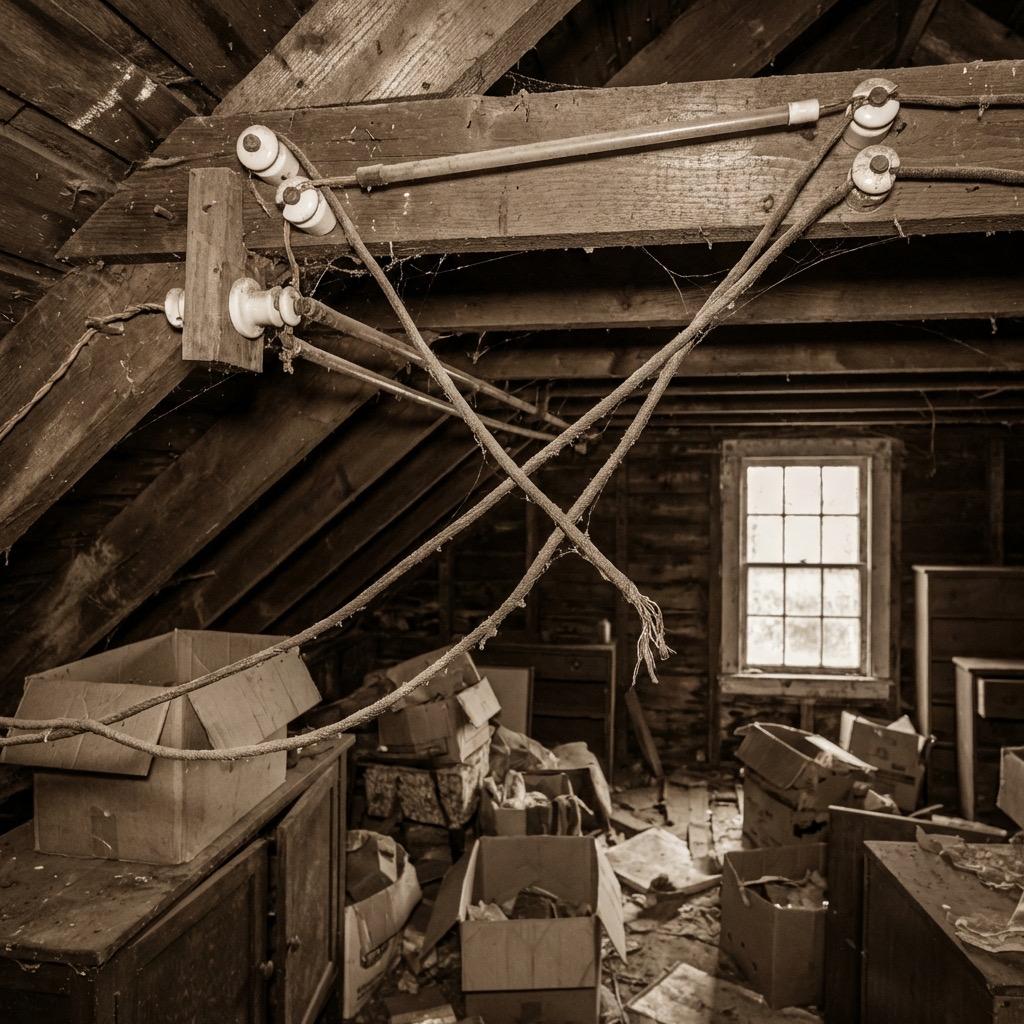
Knob and tube (K&T) wiring was the standard electrical wiring method from about 1880 through the 1940s. The system consists of:
- Ceramic knobs: Insulating supports that hold wires along framing members
- Ceramic tubes: Protective sleeves that allow wires to pass through framing
- Rubber-insulated conductors: Individual hot and neutral wires run separately, not in cables
The wires are run through open air, relying on air circulation for cooling. This was acceptable when electrical loads were minimal - perhaps a few lights and a radio.
Why Knob and Tube Wiring Is Dangerous Today
Insulation Deterioration
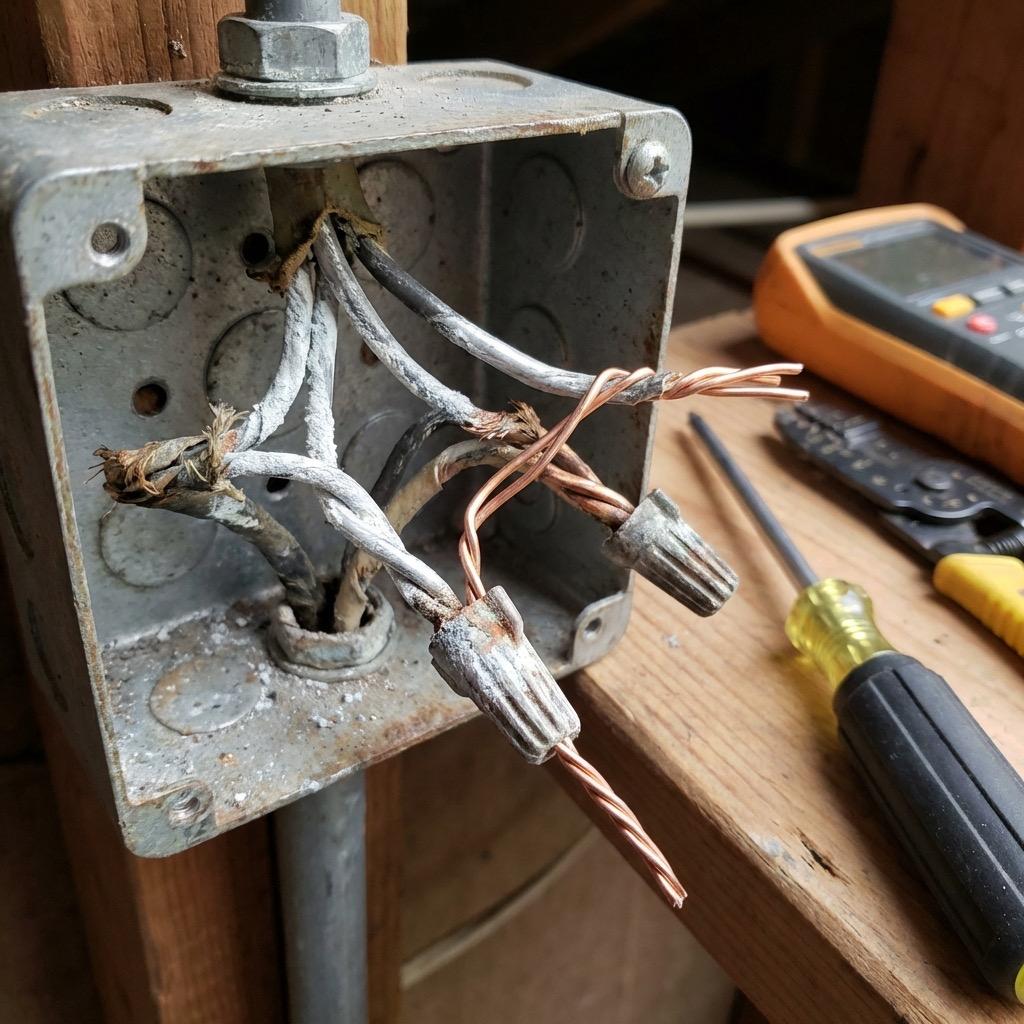
The rubber insulation used on K&T wiring becomes brittle with age, cracking and falling away to expose bare conductors. This creates shock and fire hazards wherever wires are accessible.
A professional electrical inspection identifies hidden hazards before they become emergencies. Our licensed electricians provide thorough safety inspections throughout Northern Virginia. Call (703) 997-0026 to schedule yours.
No Grounding
K&T systems have no ground wire - only hot and neutral. This means:
- No protection from faulty appliances
- Two-prong outlets only (unless illegally modified)
- Cannot safely power modern electronics and appliances
- Higher shock risk
Insufficient Capacity
K&T circuits were designed for minimal electrical loads. Modern homes use vastly more electricity:
- Original loads: A few lights, maybe a radio
- Modern loads: Computers, TVs, HVAC, kitchen appliances, chargers
Overloaded K&T circuits run hot, accelerating insulation breakdown and increasing fire risk.
Insulation Coverage Problems
K&T wiring requires air circulation for cooling. When modern insulation is blown over K&T wires in attics - as often happens during energy efficiency upgrades - the wires overheat. This is a major fire hazard.
Warning: If you are planning energy efficiency upgrades like blown-in attic insulation, have your wiring inspected first. Covering knob and tube wiring with insulation is a leading cause of fires in older homes and violates electrical code.
Improper Modifications
Over decades, K&T systems are often improperly modified:
- Connections spliced without junction boxes
- Modern cable connected to K&T wiring
- Circuits overloaded with additional outlets
- Fuses replaced with oversized fuses or bypassed entirely
These modifications compound the inherent risks.
Insurance and Financing Complications
Insurance Challenges
Many insurance companies have policies regarding K&T wiring:
- Some refuse to insure homes with K&T wiring
- Others require inspection and remediation
- Premiums may be significantly higher
- Claims may be denied if K&T wiring contributed to a loss
Mortgage Issues
K&T wiring can affect your ability to buy or sell a home:
- Some lenders will not approve mortgages for homes with K&T
- FHA and VA loans may require remediation
- Buyers may walk away due to insurance or safety concerns
- Sale prices may be reduced to account for rewiring costs
How to Identify Knob and Tube Wiring
Visual Identification
Look in accessible areas like attics, basements, and crawl spaces for:
- Ceramic knobs mounted on framing with wires running across them
- Ceramic tubes where wires pass through framing
- Individual wires (not cables) with rubber or cloth insulation
- Black rubber-coated wires that may be cracked or deteriorating
Other Indicators
- Home built before 1950
- Two-prong outlets throughout the home
- Fuse panel rather than circuit breaker
- Round push-button light switches
Professional Inspection
A licensed electrician can thoroughly assess your wiring and identify K&T throughout your home, including hidden areas.
Options for Addressing Knob and Tube Wiring
Complete Rewiring (Recommended)
Replacing all K&T wiring with modern cable is the safest approach:
- Eliminates all K&T-related hazards
- Provides grounded circuits throughout
- Allows adequate capacity for modern needs
- Resolves insurance and financing issues
- Adds home value
Complete rewiring involves opening walls, which is often combined with other renovations.
Partial Rewiring
In some cases, K&T can be addressed in phases:
- Replace K&T in high-use areas first (kitchen, bathrooms)
- Add new circuits for modern loads
- Disconnect unused K&T circuits
This approach may satisfy insurance requirements while spreading costs over time.
What Is Not Acceptable
- Ignoring the problem - risks increase with time
- Adding grounded outlets to ungrounded circuits
- Extending K&T circuits
- Covering K&T with insulation
Cost Considerations
Complete rewiring is a significant investment, but consider:
- Reduced insurance premiums over time
- Increased home value
- Safety for your family
- Ability to use modern appliances safely
- Peace of mind
Many homeowners combine rewiring with other renovations to minimize wall repair costs.
Get a Professional Assessment
If you own an older home, knowing the condition of your wiring is essential. AJ Long Electric provides comprehensive electrical inspections and rewiring services for older homes throughout Northern Virginia.
We can assess your current wiring, explain your options, and provide a detailed quote for bringing your electrical system up to modern safety standards.
Budget Strategy: Complete rewiring is a significant investment, but many homeowners combine it with other renovations to minimize wall repair costs. You can also phase the work -- rewire high-use areas first, then address remaining circuits over time.
Contact us today to schedule your electrical inspection.
Tags:

Written by
AJ Long Electric Team
Licensed Electricians
Our team of licensed electricians brings over 40 years of combined experience serving Northern Virginia. We're committed to providing expert electrical solutions with a focus on safety, quality, and customer satisfaction.
Reviewed by AJ Long Electric Master Electricians · VA License #2705031092 · View Credentials