If your home was built between 1965 and 1973, there's a significant chance it contains aluminum branch circuit wiring--a cost-saving measure from that era that has since been recognized as a serious fire hazard. Understanding the risks and available solutions is essential for protecting your home and family.
Key Takeaways
- Homes with aluminum wiring are 55 times more likely to have fire-hazard conditions at outlets and switches compared to copper-wired homes.
- Aluminum oxidizes, expands more than copper, and "creeps" under pressure -- all of which loosen connections and create heat.
- COPALUM crimp connectors (CPSC recommended) and AlumiConn connectors are the approved remediation methods.
- Many insurance companies refuse coverage or charge higher premiums for homes with unremediated aluminum wiring.
- Complete rewiring to copper is the most thorough solution but can be combined with renovations to manage costs.
The History of Aluminum Wiring
During the mid-1960s, copper prices skyrocketed due to high demand. Builders turned to aluminum as an economical alternative for residential branch circuit wiring (the wiring that runs to outlets, switches, and light fixtures). An estimated 1.5 to 2 million homes were wired with aluminum during this period.
By the mid-1970s, problems with aluminum wiring began to emerge. Studies by the U.S. Consumer Product Safety Commission (CPSC) found that homes wired with aluminum were 55 times more likely to have fire-hazard conditions at outlets and switches compared to copper-wired homes.
Why Aluminum Wiring Is Dangerous
Aluminum itself is a good conductor of electricity. The problems arise from how aluminum behaves differently than copper:
A professional electrical inspection identifies hidden hazards before they become emergencies. Our licensed electricians provide thorough safety inspections throughout Northern Virginia. Call (703) 997-0026 to schedule yours.
Oxidation
When aluminum is exposed to air, it forms aluminum oxide on its surface. Unlike the protective patina that forms on copper, aluminum oxide is a poor conductor. This creates resistance at connection points, generating heat.
Thermal Expansion
Aluminum expands and contracts significantly more than copper when heated and cooled. Over countless heating/cooling cycles (every time current flows), connections loosen. Loose connections create even more heat.
Galvanic Corrosion
When aluminum contacts copper or brass (common in outlets and switches), galvanic corrosion occurs. This deteriorates the connection over time, increasing resistance and heat.
Softness and Creep
Aluminum is softer than copper and tends to "creep" or deform under pressure. When wire nuts or screws are tightened on aluminum wire, the wire slowly deforms, loosening the connection.
How to Identify Aluminum Wiring
Here's how to check if your home has aluminum wiring:
Check the Electrical Panel
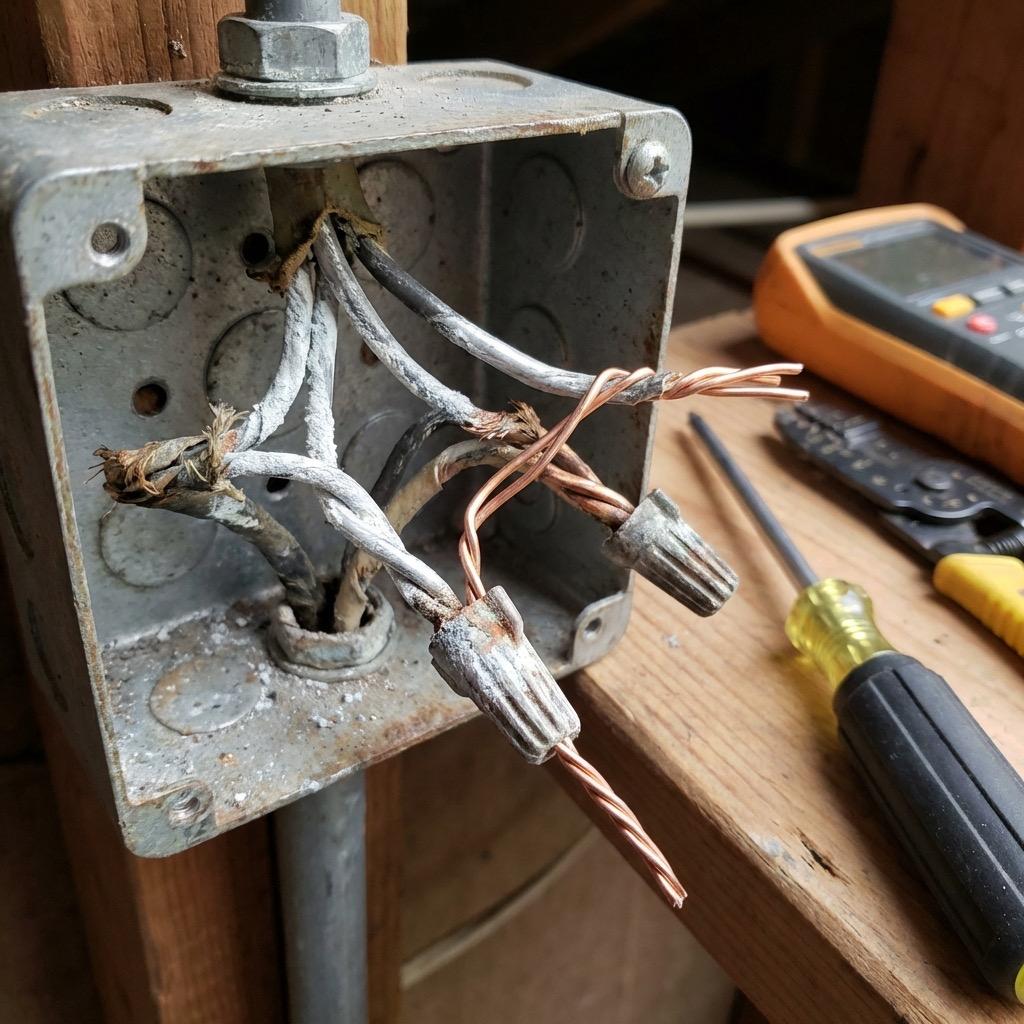
Look at the wires entering your breaker panel. Aluminum wire is silver-colored (copper is orangish-brown). You might also see "AL" or "ALUMINUM" printed on the wire jacket.
Check an Outlet or Switch
Turn off the power to a circuit at the breaker. Remove an outlet or switch cover and carefully pull the device out of the box. Look at the wires connected to it. Silver-colored wire is aluminum.
Check Your Home's Age
Aluminum branch circuit wiring was primarily used from 1965-1973. If your home was built during this period and hasn't been rewired, there's a good chance it has aluminum wiring.
Professional Inspection
A licensed electrician can definitively identify aluminum wiring and assess its condition throughout your home.
Warning Signs of Aluminum Wiring Problems
If you have aluminum wiring, watch for these warning signs of developing hazards:
- Warm or hot outlet covers or switch plates
- Flickering lights
- Circuits that stop working intermittently
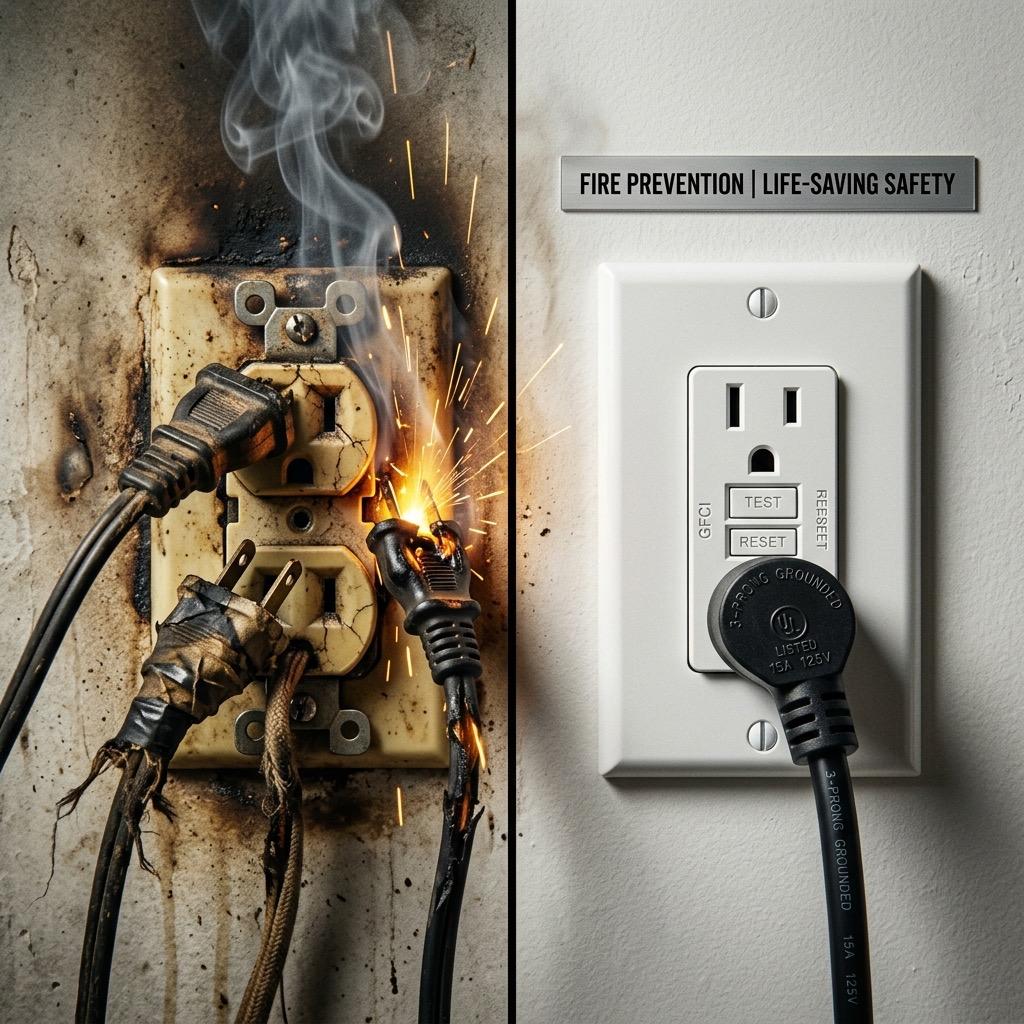
- Strange smells (like burning plastic) near outlets
- Sparking when plugging in devices
- Discolored outlet covers (brown or black marks)
- Smoke or sparks from an outlet or switch
How to Check: Turn off power to a circuit at the breaker, remove an outlet cover, and carefully look at the wires. Silver-colored wire is aluminum; orangish-brown wire is copper. You can also check the electrical panel or look for "AL" or "ALUMINUM" printed on wire jackets.
Solutions for Aluminum Wiring
Several solutions exist for addressing aluminum wiring hazards:
Complete Rewiring (Best Solution)
Replacing all aluminum branch circuit wiring with copper is the most thorough solution. This involves:
- Running new copper wiring throughout the home
- Installing new outlets, switches, and devices
- Often combined with panel upgrade
Pros: Eliminates all aluminum wiring risks permanently
Cons: Most expensive option, involves opening walls
COPALUM Crimp Connectors (CPSC Recommended)
COPALUM is a specialized crimping system that attaches a short piece of copper wire to each aluminum wire end. The connection is then treated with an anti-oxidant compound.
- Must be installed by specially trained and certified electricians
- Requires special crimping tool
- Creates permanent, reliable aluminum-to-copper transition
Pros: CPSC-recognized repair, highly reliable
Cons: Requires certified installer, not always available
AlumiConn Connectors (Alternative)
AlumiConn connectors are set-screw type connectors approved for aluminum-to-copper connections. They're more widely available than COPALUM but still require careful installation.
- Each wire is secured independently under its own set screw
- Anti-oxidant compound is applied
- Must be properly torqued to manufacturer specifications
Pros: More accessible than COPALUM, reliable when properly installed
Cons: Requires professional installation for reliability
CO/ALR Devices (Partial Solution)
Outlets and switches rated "CO/ALR" (Copper-Aluminum Revised) are designed for direct connection to aluminum wire. However:
- They only address connections at devices, not throughout wiring
- Quality and reliability vary
- Not considered a complete solution by CPSC
Note: Standard devices marked "AL-CU" are NOT safe for aluminum wiring—only use CO/ALR rated devices.
What NOT to Do
Some "solutions" are inadequate or dangerous:
- Standard wire nuts: Regular wire nuts are not safe for aluminum-to-copper connections
- Push-in connections: Never use backstab/push-in connections with aluminum wire
- "Anti-oxidant compound only": Anti-oxidant alone doesn't solve the thermal expansion problem
- Ignoring the problem: Aluminum wiring issues worsen over time
Insurance Considerations
Many insurance companies have policies regarding aluminum wiring:
- Some won't insure homes with aluminum wiring
- Others require inspection and remediation
- Premiums may be higher for homes with aluminum wiring
- Remediation documentation may be required
Check with your insurance company about their requirements. Professional remediation often satisfies insurance requirements and may reduce premiums.
Get a Professional Assessment
If you suspect your home has aluminum wiring, don't wait for problems to develop. AJ Long Electric provides comprehensive aluminum wiring inspections and remediation services throughout Northern Virginia.
We can assess your wiring's condition, recommend the most appropriate solution for your home and budget, and perform professional repairs that protect your family and satisfy insurance requirements.
Insurance Note: Before starting any remediation, contact your insurance company to understand their requirements. Professional remediation documentation often satisfies insurance requirements and may reduce your premiums.
Contact us today to schedule your aluminum wiring inspection.
Tags:

Written by
AJ Long Electric Team
Licensed Electricians
Our team of licensed electricians brings over 40 years of combined experience serving Northern Virginia. We're committed to providing expert electrical solutions with a focus on safety, quality, and customer satisfaction.
Reviewed by AJ Long Electric Master Electricians · VA License #2705031092 · View Credentials