
Knob and Tube Wiring: Dangers, Insurance Issues, and Replacement Options
Knob and tube wiring in older homes creates fire hazards and insurance complications. Learn how to identify this...
4 min read
Read 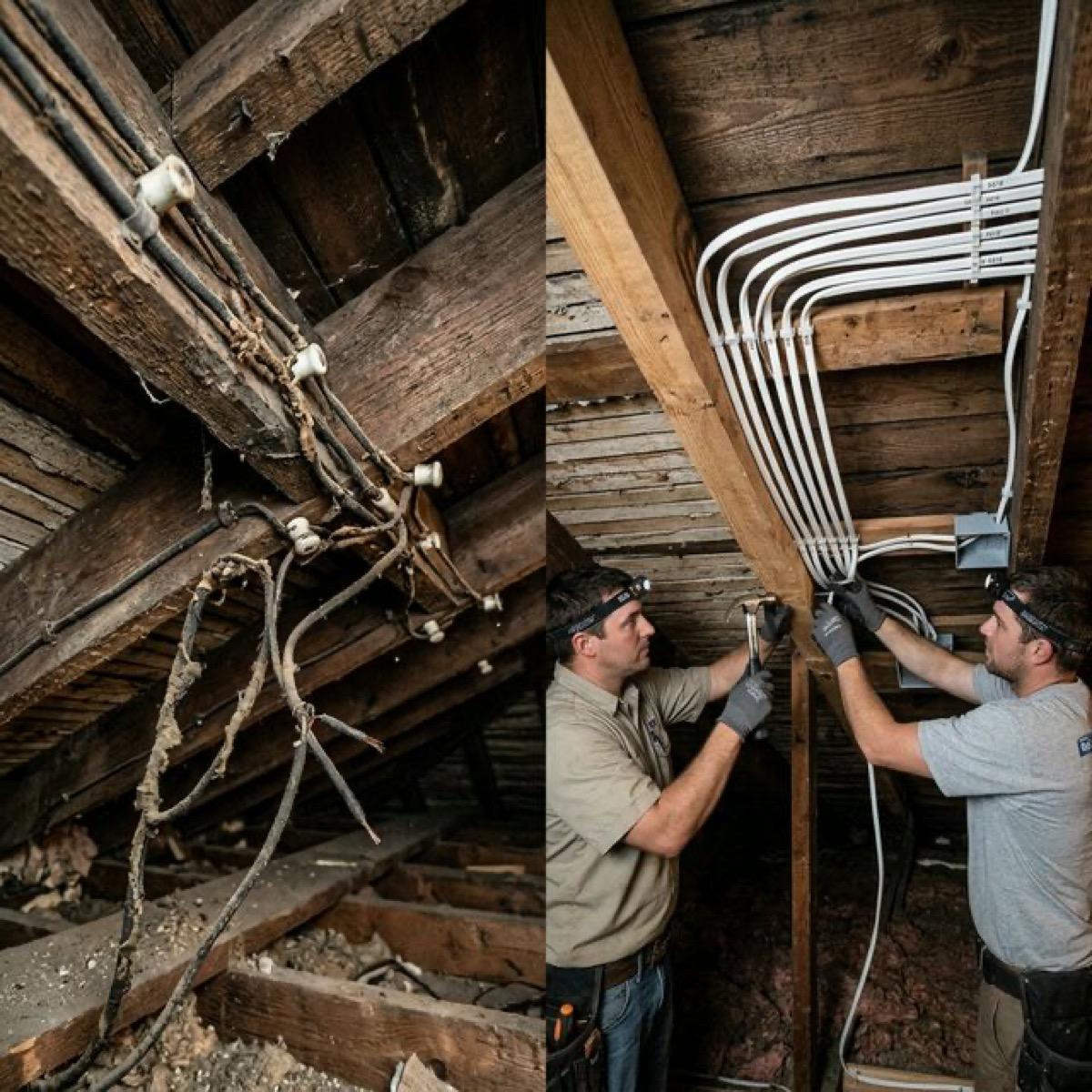
Replace outdated knob-and-tube wiring to eliminate fire hazards and meet modern standards.
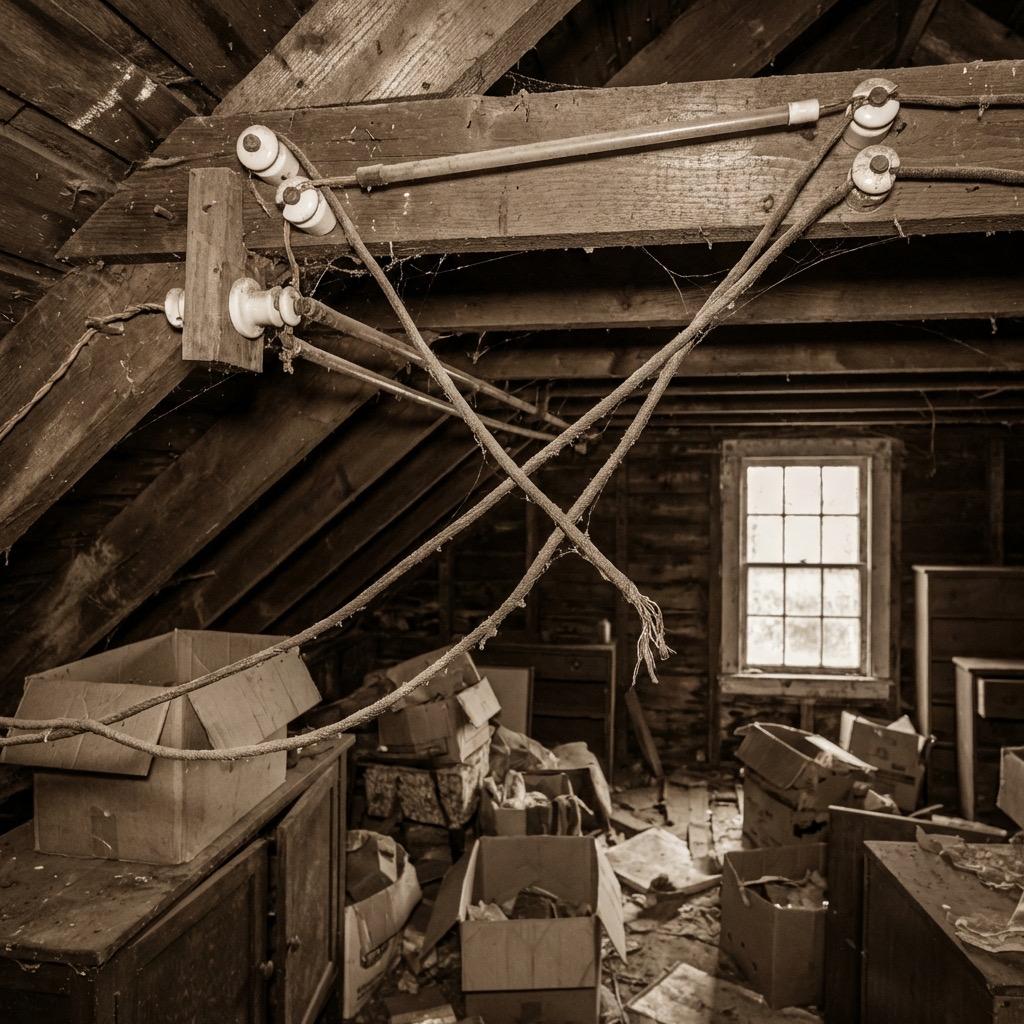
Knob-and-tube (K&T) wiring was the standard electrical wiring method used in homes built from the 1880s through the 1940s. While it was adequate for the minimal electrical demands of that era, knob-and-tube wiring is completely inadequate and potentially dangerous for modern electrical loads. The insulation on K&T wiring is typically rubber or cloth that becomes brittle and crumbles after decades, exposing bare conductors. The system lacks a ground wire, cannot support modern three-prong outlets, and was never designed for the amperage demands of today's appliances. Most critically, K&T wiring becomes a serious fire hazard when it contacts insulation -- a common problem in homes where blown-in or batt insulation has been added over the wiring. AJ Long Electric provides professional knob-and-tube wiring replacement throughout Northern Virginia, particularly in older homes in Arlington, Alexandria, Falls Church, and Fairfax City. Our electricians systematically replace K&T wiring with modern Romex copper wiring, adding proper grounding, AFCI protection, and sufficient circuits for modern electrical demands. We work carefully through attics, walls, and basements to remove old wiring with minimal disruption to your home's plaster walls and historic character. Every project includes full permitting, inspection, and detailed documentation for your insurance company.
Eliminate the fire hazard of degraded insulation, ungrounded circuits, and overloaded K&T wiring.
Most insurance companies refuse coverage or charge extreme premiums for homes with active knob-and-tube wiring.
Replace inadequate K&T circuits with properly sized wiring that supports modern appliances and devices.
Add the equipment ground wire that K&T wiring lacks, enabling safe use of three-prong outlets.
Once K&T is removed, you can safely add wall and attic insulation for energy efficiency without fire risk.
Our licensed electricians are ready to assist you in Northern Virginia.
Serving Fairfax, Arlington, Alexandria, Loudoun, and Prince William Counties.
Fairfax, Arlington, Alexandria, Loudoun & Prince William Counties
Northern Virginia's inventory of pre-1940 homes with knob-and-tube wiring is concentrated in the region's oldest communities. Arlington County, with its building boom of the 1920s through 1940s driven by federal government expansion, has thousands of homes that may still contain original K&T wiring in neighborhoods like Lyon Park, Clarendon, Cherrydale, and Ashton Heights. Alexandria's Old Town and Del Ray neighborhoods contain row houses and bungalows from the same era, many with K&T wiring hidden behind layers of renovation. Falls Church City's compact residential core includes pre-war homes that frequently surface during renovation with active K&T wiring. Inner Fairfax County communities including Vienna, Annandale, and McLean have pockets of pre-war housing stock as well. The challenge is particularly acute in Northern Virginia because the region's hot, humid climate accelerates the degradation of the rubber and cloth insulation used on K&T wiring. The area's competitive real estate market means K&T wiring is consistently flagged during home inspections, and most insurance carriers in Virginia either refuse to cover homes with active K&T or impose steep surcharges. Energy efficiency is another driver: homeowners cannot safely insulate attics and walls until K&T wiring is replaced, making replacement a prerequisite for the weatherization improvements that the region's extreme summers and winters demand.
See how we have helped homeowners across Northern Virginia with their knob & tube replacement needs.
Challenge
The homeowners purchased a beautifully maintained 1925 colonial only to discover during renovation that the entire second floor and attic still had active knob-and-tube wiring buried under blown-in insulation. The insurance company refused to renew the policy, and the degraded cloth insulation was crumbling off the conductors in the attic, leaving bare wire resting against the insulation.
Solution
AJ Long Electric systematically replaced all K&T wiring over five days, fishing new 12-gauge Romex through the walls from attic and basement access points to minimize damage to the original plaster. We installed a new 200-amp panel, added AFCI protection on all bedroom and living area circuits, and ran dedicated 20-amp circuits for the kitchen and bathrooms.
Result
The homeowners obtained standard insurance coverage and could safely add attic insulation for the first time. The project preserved the home's original plaster walls with only four small patches needed, each restored to match the existing surfaces.
Challenge
The owner of a 1935 row house in the Del Ray neighborhood needed to refinance but the lender's inspection found active knob-and-tube wiring in the attic and second floor. The ground-floor circuits had been updated in the 1980s, but the upper levels still relied on original K&T wiring with severely degraded rubber insulation. Budget constraints made a full rewire impractical.
Solution
We performed a targeted replacement of all active K&T circuits on the second floor and attic, replacing them with modern Romex copper wiring with grounding. The abandoned K&T on the first floor was verified as fully de-energized and labeled. We added GFCI protection in the bathroom and AFCI breakers for the bedrooms, and upgraded the fuse panel to a modern 150-amp breaker panel.
Result
The partial replacement satisfied the lender's requirements and brought insurance premiums back to standard rates. The homeowner plans to complete the remaining first-floor circuits during a future kitchen renovation.
Challenge
The homeowner wanted to add blown-in insulation to improve energy efficiency but was told by two insulation contractors that they could not insulate over the active knob-and-tube wiring visible in the attic and exterior wall cavities. The home had a mix of original 1938 K&T wiring and some 1960s updates, creating a confusing patchwork that no one had fully mapped.
Solution
AJ Long Electric traced and mapped every circuit in the home, identifying which were K&T and which had been updated. We replaced all remaining active K&T circuits with modern Romex, routed through the attic and crawl space to minimize wall penetrations. The original fuse box was replaced with a 200-amp breaker panel with a detailed circuit directory.
Result
With all K&T wiring removed, the homeowner safely added blown-in insulation throughout the attic and walls, reducing their annual energy costs by an estimated 25%. The complete rewiring also enabled them to use three-prong grounded outlets throughout the home for the first time.
Challenge
The new owners of a 4,800 sq ft historic estate were planning a major renovation and discovered that roughly 60% of the home still operated on original knob-and-tube wiring from 1920. The K&T circuits were overloaded with modern appliances, the cloth insulation had disintegrated in many locations, and previous owners had made dangerous splices connecting modern Romex directly to K&T wiring without proper junction boxes.
Solution
Working with the renovation contractor, AJ Long Electric performed a complete whole-house rewire during the renovation when walls were opened. We installed a 400-amp service with dual 200-amp panels to support the planned addition of a chef's kitchen, home theater, and geothermal HVAC system. Every circuit was designed to modern standards with dedicated circuits for all major appliances and AFCI/GFCI protection throughout.
Result
The estate's electrical system was transformed from a century-old hazard into a modern, high-capacity installation. The coordinated approach with the renovation contractor minimized costs by eliminating redundant wall openings and allowed for optimal wire routing through newly exposed cavities.
Permit requirements for knob & tube replacement vary by county. We handle the entire permitting process for you.
Permit Process
Fairfax County requires an electrical permit for all knob-and-tube replacement work. Applications are submitted through the Land Development Services online portal, and residential rewiring permits are typically issued within 3-5 business days. The county is familiar with K&T replacement projects in older areas like McLean, Vienna, and Falls Church.
Inspection Notes
Inspectors verify that all new wiring meets current NEC standards including proper grounding, AFCI protection for habitable rooms, and correct wire sizing. They confirm that decommissioned K&T wiring has been properly disconnected at the panel and at all junction points.
Special Requirements
Permit Process
Loudoun County requires permits for K&T replacement through the Department of Building and Development. While fewer homes in Loudoun have K&T wiring compared to inner NoVA jurisdictions, older homes near Leesburg and Waterford may contain original wiring. Permits are typically processed in 2-4 business days.
Inspection Notes
Loudoun inspectors verify grounding and bonding on all new circuits and confirm that K&T wiring has been properly decommissioned. They check that new wiring installations include equipment grounding conductors and meet current NEC ampacity requirements.
Special Requirements
Permit Process
Prince William County issues electrical permits through Development Services for all rewiring projects. Online applications are available, and residential permits typically process in 2-3 business days. The county requires a licensed contractor for all K&T replacement work.
Inspection Notes
Prince William inspectors focus on proper wire sizing, connection quality, and NEC compliance. They verify that all K&T wiring designated for removal has been fully disconnected and that no active K&T remains in contact with building insulation.
Special Requirements
Permit Process
Arlington County has the highest concentration of pre-1940 homes in Northern Virginia and significant experience with K&T replacement projects. Permits are processed through the Inspections Services Division, typically within 1-3 business days. Arlington's historic preservation requirements may apply in designated historic districts.
Inspection Notes
Arlington inspectors are experienced with K&T replacement and verify complete decommissioning of old wiring, proper installation of new circuits, and compliance with AFCI requirements. They may require additional documentation in historic districts.
Special Requirements
Transparent pricing with options to fit your budget and project scope. Every tier includes our quality guarantee.
$3,000-$8,000
Partial knob-and-tube replacement targeting the most critical circuits -- typically attic, kitchen, and bathroom circuits where K&T wiring poses the greatest fire and safety risk.
$8,000-$16,000
Complete knob-and-tube replacement for an average-sized home, including panel upgrade, full rewiring with modern copper Romex, and wall restoration.
$16,000-$25,000
Comprehensive rewire for larger or complex historic homes requiring extensive K&T removal, panel upgrades, and careful preservation of original plaster and finishes.
Prices may vary based on the specific requirements of your project, the condition of existing electrical systems, and your home's unique characteristics. Contact us for a free, no-obligation estimate tailored to your needs.
Different home styles have unique electrical characteristics. Select your housing type to see specific considerations.
Colonial homes from the 1920s and 1930s in Arlington, Old Town Alexandria, and Falls Church are prime candidates for K&T replacement. The balloon-frame construction common in this era allows wiring to be fished through wall cavities from attic to basement access points, minimizing damage to original plaster walls. Two-story colonials require careful circuit planning to provide adequate modern capacity on each floor while preserving the home's historic character.
We follow a proven process to ensure your project is completed safely, on time, and to your complete satisfaction.
We trace all K&T wiring throughout the home, identifying active circuits, junction points, and areas of concern.
We design the new wiring layout with modern circuits, grounding, and AFCI protection to replace K&T circuits.
You receive an itemized quote covering all rewiring, panel work, permits, and wall restoration.
We obtain all required permits from your jurisdiction and schedule inspections.
Working area by area, we replace K&T circuits with modern Romex copper wiring, adding grounding and AFCI protection.
We patch and restore any wall openings made during the wiring process to match existing surfaces.
We schedule the final inspection and provide detailed documentation for your insurance company.
Get answers to common questions about our knob & tube replacement services.
Knob-and-tube wiring itself was well-designed for its era, but after 80-140 years, the rubber or cloth insulation degrades, cracks, and falls off, exposing bare conductors that can arc and cause fires. The bigger danger is K&T wiring buried in insulation, which traps heat and creates fire conditions. Active K&T wiring is considered a significant safety hazard.
Complete K&T replacement typically costs $8,000-$25,000 depending on home size, accessibility, and the extent of K&T wiring present. Partial replacements (addressing specific circuits) run $3,000-$8,000. Older homes in Arlington and Alexandria with complex layouts may be at the higher end. We provide detailed quotes after a thorough inspection.
Yes, partial replacement is possible and we prioritize the most dangerous circuits first -- typically those in attics with insulation contact, kitchens, and bathrooms. However, insurance companies may still require full replacement. We work with you and your insurer to develop a practical remediation plan.
We minimize wall damage using fishing techniques through attic and basement access points, and we carefully route wiring to reduce the number of wall openings needed. Some wall patching is typically necessary, but we restore openings to match existing surfaces. Historic homes require extra care that our experienced electricians provide.
You should not insulate over active K&T wiring. The wiring was designed to dissipate heat in open air, and covering it with insulation traps heat and creates a fire hazard. Once K&T is replaced with modern wiring, you can safely add insulation. This is a major energy efficiency benefit of K&T replacement.
Many insurance companies in Virginia refuse coverage for homes with active K&T wiring, and those that do often charge significantly higher premiums. After replacement, we provide documentation that enables you to obtain standard-rate insurance. Some insurers even offer credits for rewired homes.
Complete K&T replacement typically takes 3-7 days depending on home size and complexity. We work systematically through the home, one area at a time, to minimize disruption to your daily life. Power outages to specific areas are necessary during the work but we keep them as short as possible.
Active (energized) K&T wiring must be replaced. Abandoned K&T wiring that has been fully disconnected at both ends can remain in place if it does not contact insulation. We clearly label all abandoned wiring and ensure it is fully de-energized and isolated from the electrical system.
Every home is different. Here are the factors that influence pricing for knob & tube replacement services.
Get Your Free Estimate
Contact us for a no-obligation quote tailored to your specific needs. We provide upfront, transparent pricing with no hidden fees.
3-7 days (complete replacement)
$8,000-$25,000 (complete); $3,000-$8,000 (partial)
All knob-and-tube replacement work includes a 1-year workmanship warranty covering all new wiring, connections, and wall restoration. New wiring carries manufacturer warranty. We provide complete documentation for insurance purposes.
Explore other electrical services that complement knob & tube replacement.
Upgrade your home's electrical capacity with safe, modern panel installations.
Detailed safety audits for home buyers and regular maintenance.
Eliminate the fire hazard of aluminum branch circuit wiring with professional remediation.
Bring your home's electrical system up to current NEC code standards.
AJ Long Electric specializes in knob-and-tube wiring replacement in Northern Virginia's oldest homes, bringing the technical skill and historic-home sensitivity that these projects demand. Our electricians are experienced with the plaster walls, balloon-frame construction, and tight spaces found in pre-war homes throughout Arlington, Alexandria, Falls Church, and inner Fairfax County. We use wire-fishing techniques that route new wiring through existing wall and ceiling cavities from attic and basement access points, preserving your home's original plaster and character. Where wall openings are unavoidable, we make precise cuts and restore surfaces to match existing finishes. We handle every aspect of the project including circuit design, panel upgrades, permit applications, inspections, and insurance documentation so you have a single point of contact from start to finish. Our approach is systematic: we trace and map every existing circuit before work begins, develop a comprehensive replacement plan, and execute room by room so you always know what to expect. We work closely with homeowners who are balancing safety needs with budget constraints, offering phased replacement plans that prioritize the highest-risk circuits first. Every project includes detailed documentation that satisfies insurance companies and adds value when you sell your home.
Virginia Licensed Electricians
Fully Bonded & Insured
Serving Northern Virginia
On All Workmanship
We proudly provide knob & tube replacement services across Northern Virginia, Washington DC, and Maryland. Click on your area to learn more.
Learn more about knob & tube replacement from our team of licensed electricians in Northern Virginia.
Knob and tube wiring in older homes creates fire hazards and insurance complications. Learn how to identify this...
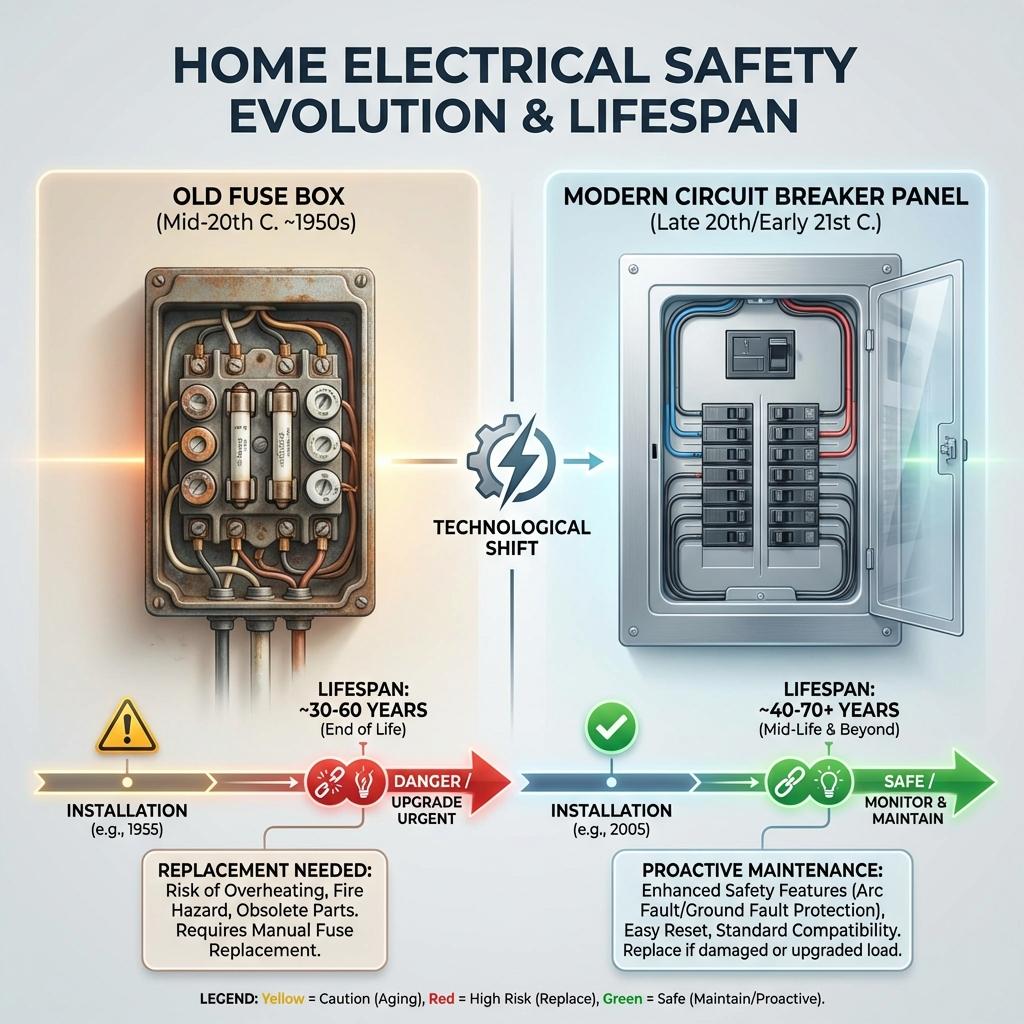
Electrical panels typically last 25-40 years, but many factors affect lifespan. Learn when replacement is needed.
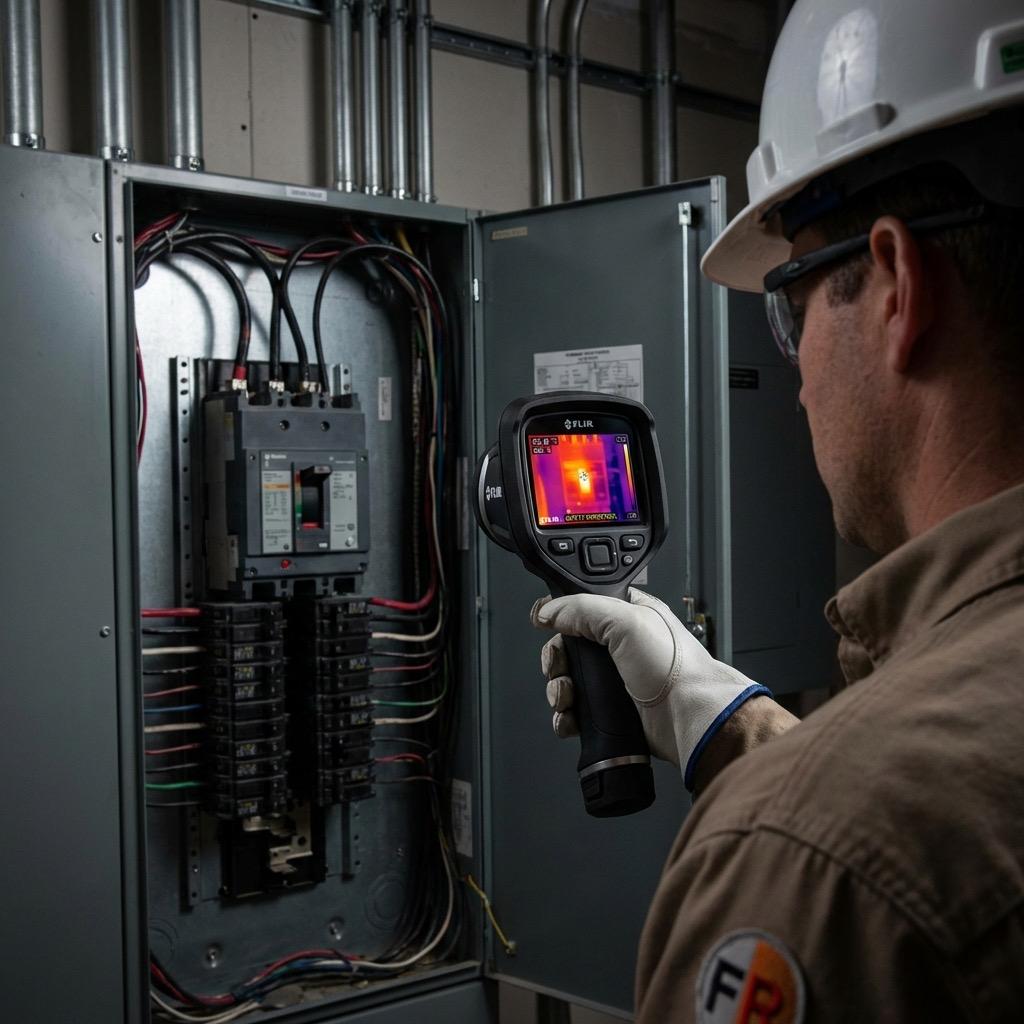
Your electrical panel is the heart of your home electrical system. Learn the warning signs of panel problems, dangerous...