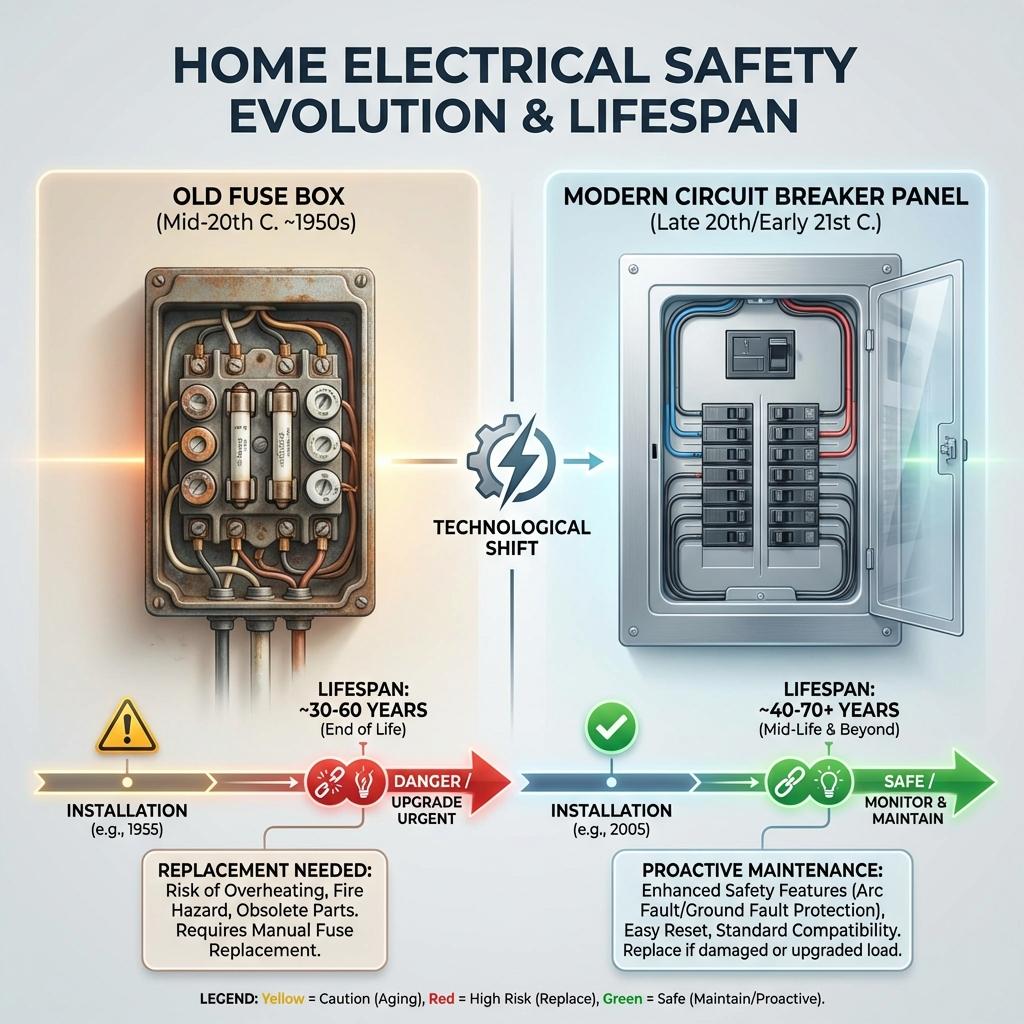
Your electrical panel is the central hub of your home's entire electrical system, directing power from the utility to every circuit, outlet, and fixture in the building. Like any piece of critical infrastructure, it does not last forever. Most electrical panels have a functional lifespan of 25 to 40 years, but age alone does not determine when replacement is necessary. Factors including the panel's manufacturer, how heavily it has been loaded over the years, the environment it operates in, and whether it has been properly maintained all play important roles. Knowing when your panel is nearing the end of its useful life can save you from inconvenient failures, costly damage, or dangerous fire hazards.
Key Takeaways
- Most quality electrical panels last 25 to 40 years under normal conditions.
- Federal Pacific, Zinsco, and Pushmatic panels should be replaced regardless of age due to documented safety defects.
- Signs like frequent tripping, burning smells, or warm breakers indicate the panel needs attention now.
- A panel upgrade typically increases your home's capacity from 100 to 200 amps, supporting modern electrical demands.
- Panel replacement often qualifies for insurance premium reductions.
What Determines a Panel's Lifespan
An electrical panel is fundamentally a metal enclosure containing a set of bus bars, a main breaker, and branch circuit breakers. The bus bars are copper or aluminum conductors that distribute power from the main breaker to each branch breaker. Over time, heat cycling from daily load variations causes metal components to expand and contract, gradually loosening connections. Moisture exposure, even from normal humidity, can accelerate corrosion on contacts and bus bars. The cumulative effect of thousands of breaker operations wears down the mechanical components inside the breakers themselves.
Quality and Brand Differences
Not all panels are created equal. Premium manufacturers like Square D, Eaton, and Siemens build panels with tighter tolerances, better materials, and more robust breakers that tend to last longer. A well-made panel installed in a dry, climate-controlled space can easily last 40 years or more. Conversely, budget panels installed in damp basements or exposed garages may show significant wear within 20 years.
Panels That Should Be Replaced Immediately
Certain panel brands manufactured during the mid-20th century have well-documented safety defects that make them hazardous regardless of their apparent condition. If your home has any of the following panels, replacement should be a top priority.
Outdated or overloaded electrical panels are a safety risk. Our team specializes in 200-amp upgrades throughout Northern Virginia, with same-day panel assessments available. Call (703) 997-0026 to get started.
Federal Pacific Electric (FPE) Stab-Lok Panels
Federal Pacific panels with Stab-Lok breakers were installed in millions of American homes from the 1950s through the 1980s. Testing has shown that a significant percentage of these breakers fail to trip during overcurrent conditions, meaning they do not provide the fire protection they are supposed to deliver. The Consumer Product Safety Commission investigated FPE extensively, and independent testing by multiple engineering firms confirmed failure rates as high as one in four breakers. We encounter these panels regularly in older Northern Virginia homes, particularly in neighborhoods built during the 1960s and 1970s in areas like Springfield, Burke, and parts of Fairfax.
Zinsco and GTE-Sylvania Panels
Zinsco panels, later sold under the GTE-Sylvania and Sylvania brand names, suffer from a design flaw where the breakers can melt and fuse to the bus bar. Once fused, the breaker cannot trip even during a dead short, allowing wires to overheat and potentially start a fire. These panels were popular from the 1970s into the early 1980s and are found in many homes throughout the DMV area.
Pushmatic Panels
Pushmatic panels use a push-button design rather than the toggle-style breakers common today. While not as universally dangerous as FPE or Zinsco, Pushmatic breakers are no longer manufactured, making replacement parts unavailable. Worn Pushmatic breakers may not trip reliably, and the inability to source replacements means any breaker failure requires a complete panel replacement.
If you are unsure what brand of panel you have, look for a label on the panel door or inside the panel cover. If you see the names Federal Pacific, FPE, Stab-Lok, Zinsco, GTE-Sylvania, or Pushmatic, contact a licensed electrician to discuss replacement options. Many insurance companies in Virginia now require replacement of these panels as a condition of coverage.
Signs Your Panel Needs Replacement
Frequent Breaker Trips
If breakers trip regularly even when circuits are not overloaded, the breakers or bus bar connections may be failing. While individual breaker replacement is possible, frequent trips across multiple breakers suggest a systemic panel issue.
Burning Smell or Scorch Marks
Any burning smell coming from your panel is an emergency. It typically indicates arcing at a loose connection or a failing breaker. Scorch marks or melted plastic on or near the panel confirm that dangerous overheating has occurred. Turn off the main breaker and call an electrician immediately.
Buzzing, Crackling, or Humming Sounds
A properly functioning panel operates silently. Buzzing or crackling sounds indicate arcing, loose connections, or failing breakers. Humming can indicate an overloaded transformer or issues with the utility supply. Any of these sounds warrant professional investigation.
Warm Panel or Breakers
The panel enclosure and breaker handles should be at or near room temperature. If the panel door feels warm, or if individual breakers are noticeably warm to the touch, excessive resistance is generating heat somewhere in the system. This is a fire risk.
Rust or Corrosion
Moisture damage degrades the panel's structural integrity and creates dangerous conditions on the bus bars and breaker contacts. Rust on the exterior suggests worse conditions inside. Panels with significant corrosion should be replaced.
No Room for Additional Circuits
While not a safety issue per se, a full panel with no available breaker slots limits your ability to add circuits for new appliances, EV chargers, home additions, or other improvements. A panel upgrade solves this while also providing an opportunity to bring your electrical system up to current code.
The Panel Upgrade Process
Assessment and Load Calculation
A panel upgrade begins with a thorough assessment of your current system and a load calculation to determine the appropriate service size. Most modern homes in Northern Virginia benefit from 200-amp service, which provides ample capacity for current and future electrical demands including EV charging, home offices, and modern HVAC systems.
Permitting and Utility Coordination
Panel upgrades require permits in all Northern Virginia jurisdictions, including Fairfax County, Loudoun County, Arlington County, and the City of Alexandria. The electrician handles the permit application and coordinates with Dominion Energy for the service disconnect and reconnection. The utility typically needs to disconnect power at the meter during the swap, and a final inspection is required before permanent reconnection.
Installation Timeline
A straightforward panel swap from a 100-amp panel to a 200-amp panel in an existing location typically takes one full day. If the service entrance cables or the meter base also need upgrading, the project may extend to two days. Your power will be off for most of the installation day, so plan accordingly.
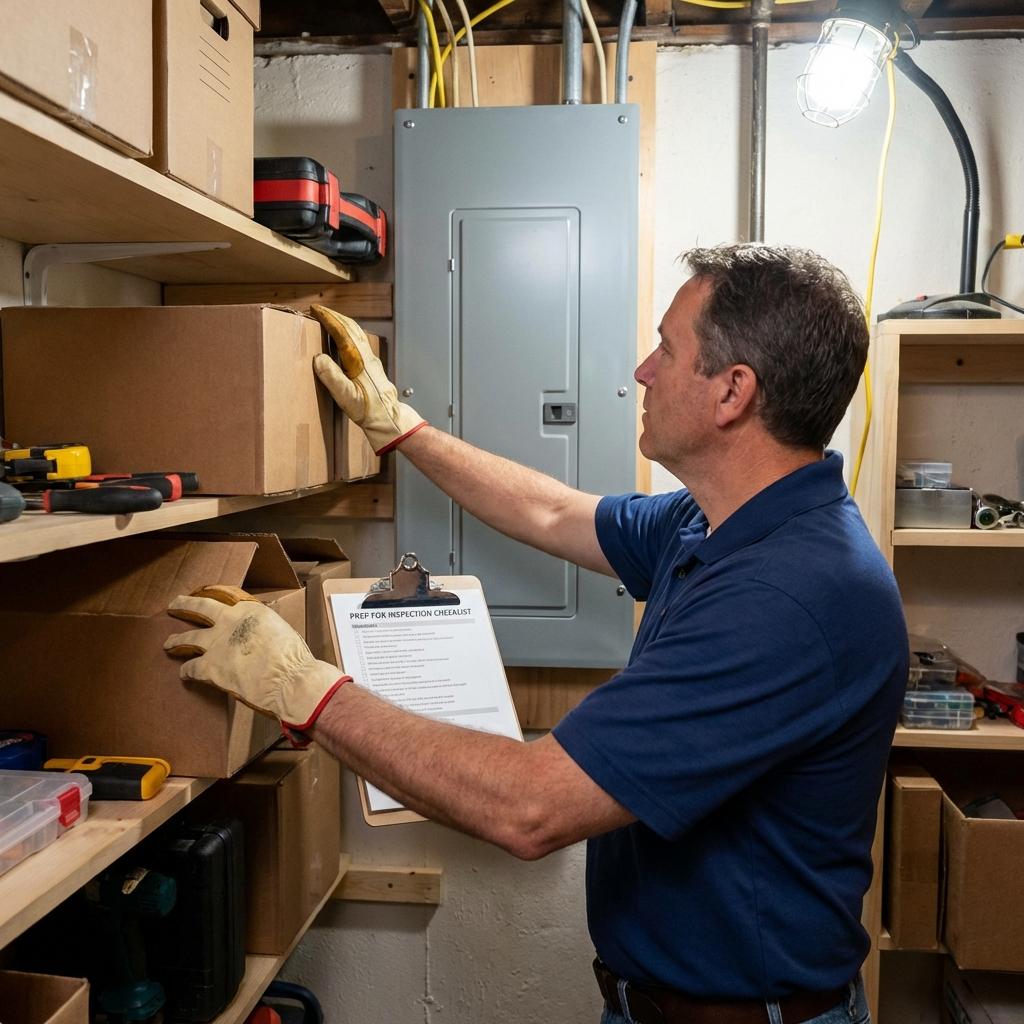
If your panel is more than 25 years old, schedule a professional panel inspection even if you are not experiencing problems. An electrician can assess the condition of the bus bars, breakers, and connections, giving you an honest evaluation of remaining useful life. This is especially important if you are planning major electrical additions like an EV charger or home generator.
Benefits of a Modern Panel
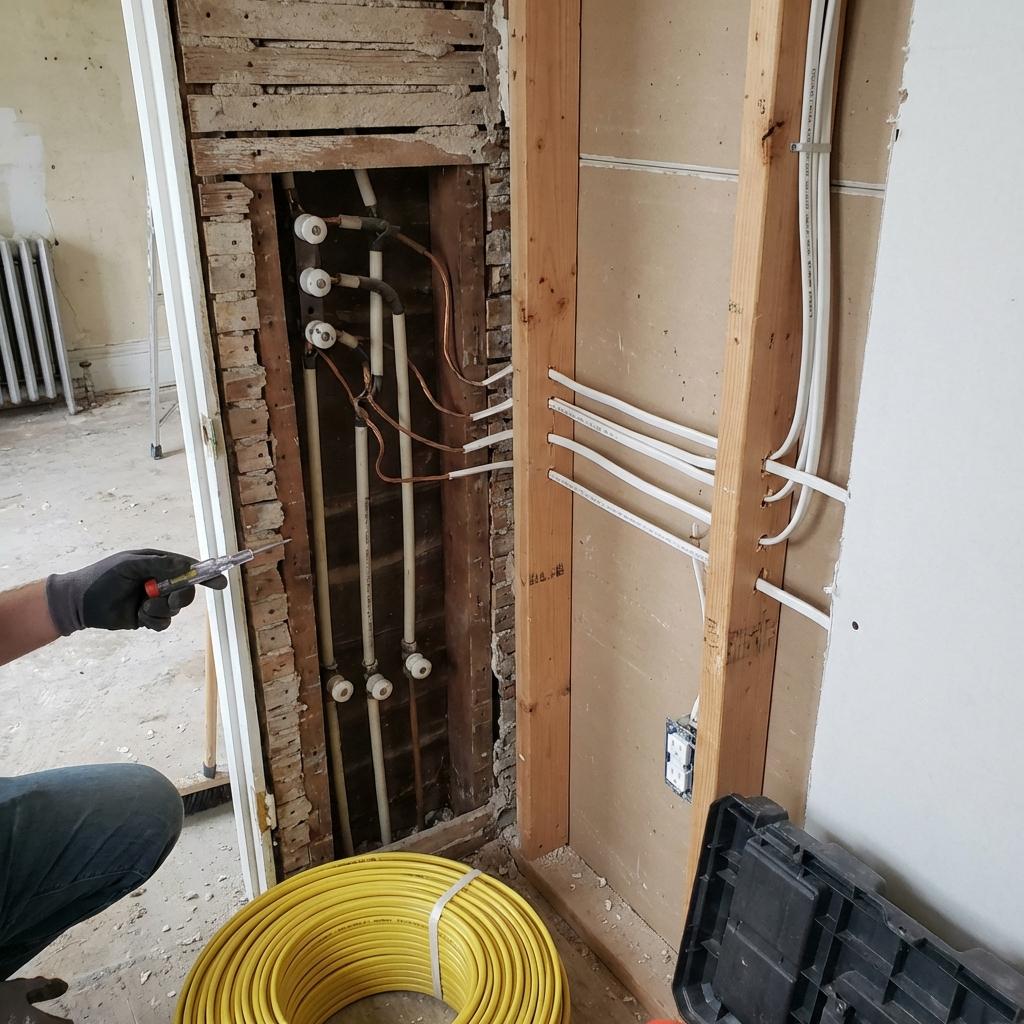
Upgrading to a new panel provides benefits beyond simple reliability. Modern panels accommodate AFCI and GFCI breakers required by current code, providing fire and shock protection that older panels cannot deliver. Increased capacity eliminates the overloading that causes chronic breaker trips. New panels come with lifetime warranties from reputable manufacturers. And many homeowners insurance providers offer premium reductions for homes with updated electrical panels, particularly when replacing a known-hazardous brand.
Your electrical panel works quietly behind the scenes every day, but it deserves attention before it fails. If your panel is aging, belongs to a recalled brand, or is showing any warning signs, the team at AJ Long Electric is here to help. We have performed hundreds of panel upgrades for homeowners throughout Northern Virginia and will guide you through every step from assessment to final inspection. Call us at (703) 997-0026 to schedule your panel evaluation.
Tags:

Written by
AJ Long Electric Team
Licensed Electricians
Our team of licensed electricians brings over 40 years of combined experience serving Northern Virginia. We're committed to providing expert electrical solutions with a focus on safety, quality, and customer satisfaction.
Reviewed by AJ Long Electric Master Electricians · VA License #2705031092 · View Credentials