The electrical code is the comprehensive set of rules that governs how electrical systems are designed, installed, and maintained in buildings. For homeowners, the code can seem like an impenetrable wall of technical jargon, but its purpose is straightforward: to prevent electrical fires, electrocution, and property damage. Whether you are planning a renovation, adding circuits, or simply trying to understand what your electrician means when they say something is not up to code, a working knowledge of the key residential electrical code requirements empowers you to make informed decisions about your home's electrical system.
Key Takeaways
- Virginia adopts the National Electrical Code (NEC) with state-specific amendments, and local jurisdictions may add further requirements.
- GFCI protection is required in kitchens, bathrooms, garages, basements, outdoor areas, laundry rooms, and near any water source.
- AFCI protection is required in virtually all living spaces including bedrooms, living rooms, and hallways.
- Outlet spacing rules ensure no point along a wall is more than six feet from an outlet.
- Existing wiring does not have to be retroactively brought to current code unless you are performing new work on that circuit.
Understanding the Code Framework
The National Electrical Code, published by the National Fire Protection Association as NFPA 70, is the foundational document for electrical safety standards in the United States. It is updated on a three-year cycle, with the most recent editions being 2020 and 2023. Virginia adopts the NEC through the Virginia Uniform Statewide Building Code (VUSBC), sometimes lagging one cycle behind the latest NEC edition. Local jurisdictions in Northern Virginia, including Fairfax County, Loudoun County, Arlington, and the City of Alexandria, administer and enforce the code through their building departments.
When Code Applies
A common misconception is that older homes must be retroactively brought up to the current code. In general, this is not the case. Existing wiring that met the code in effect when it was installed can remain as-is. However, any new electrical work must comply with the current code, even when that new work is performed in an older home. If you add a new outlet in your 1960s-era kitchen, the new outlet must have GFCI protection even though the existing outlets do not. The code also applies when you are making modifications or extensions to existing circuits, not just when running entirely new ones.
GFCI Protection Requirements
What GFCI Protection Does
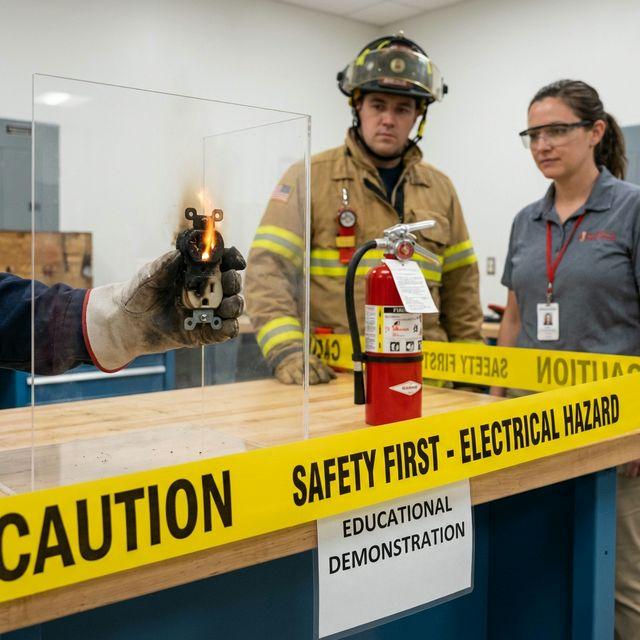
A ground fault circuit interrupter monitors the balance between current flowing on the hot conductor and current returning on the neutral conductor. If these two values differ by more than approximately 5 milliamps, the GFCI assumes that current is leaking through an unintended path, possibly through a person, and shuts off power in about one-fortieth of a second. This response time is fast enough to prevent electrocution in most circumstances.
A professional electrical inspection identifies hidden hazards before they become emergencies. Our licensed electricians provide thorough safety inspections throughout Northern Virginia. Call (703) 997-0026 to schedule yours.
Where GFCI Is Required
The NEC has progressively expanded GFCI requirements with each code cycle. Under current code, GFCI protection is required for all kitchen outlets serving countertop surfaces, all bathroom outlets, all garage outlets and accessory building outlets, all outdoor outlets, all basement and crawl space outlets, all laundry area outlets, all outlets within six feet of a sink in any location, pool and hot tub equipment, and boat house and boathouse outlets. GFCI protection can be provided by GFCI outlets (which protect downstream outlets on the same circuit), GFCI breakers (which protect the entire circuit), or a combination of both.
In many Northern Virginia homes built before the 2000s, GFCI protection is limited to bathrooms and possibly the kitchen. Garages, basements, outdoor outlets, and laundry areas often lack GFCI protection because it was not required when the home was built. While not legally required to retrofit, adding GFCI protection to these areas is one of the most cost-effective safety upgrades available. A GFCI outlet costs less than twenty dollars, and installation takes an electrician less than thirty minutes per outlet.
AFCI Protection Requirements
What AFCI Protection Does
Arc-fault circuit interrupters detect dangerous electrical arcing, the uncontrolled flow of electricity across a gap in a damaged conductor, loose connection, or pierced wire. Dangerous arcing generates intense heat that can ignite surrounding materials, causing fires. AFCI breakers analyze the electrical waveform for the unique signatures of dangerous arcs and trip the breaker when they detect one.
Where AFCI Is Required
Under current NEC, AFCI protection is required in virtually all habitable rooms. This includes bedrooms, living rooms and family rooms, dining rooms, hallways and foyers, closets, sunrooms, and recreation rooms. Kitchens, bathrooms, garages, and unfinished basements are excluded because they already require GFCI protection, and the GFCI provides a different but complementary type of protection in those areas. AFCI protection is typically provided by AFCI breakers installed in the electrical panel, though combination AFCI/GFCI outlets are also available.
Outlet Spacing and Placement Requirements
General Outlet Spacing
The NEC requires outlets to be spaced so that no point along a wall is more than six feet from an outlet, measured horizontally along the wall line. This effectively means an outlet every twelve feet along the wall, though doorways, fireplaces, and other wall interruptions affect the calculation. Any wall section two feet or wider is considered a wall space that requires an outlet. The purpose of this rule is to eliminate the need for extension cords, which are a significant fire and tripping hazard.
Kitchen Counter Outlets
Kitchen countertop outlets follow tighter spacing rules. Outlets must be placed so that no point along the countertop is more than two feet from an outlet, measured horizontally. Any countertop space twelve inches or wider requires an outlet. Countertop outlets must be on dedicated 20-amp small appliance circuits, and a minimum of two such circuits is required. Island countertops also require at least one outlet.
Bathroom Outlets
Each bathroom requires at least one outlet, and it must be GFCI-protected. Outlets must be within three feet of the outside edge of the sink basin. Bathroom outlets must be on a dedicated 20-amp circuit that serves only bathroom receptacles.
Other Specific Requirements
At least one outlet is required in each hallway six feet or longer. Outdoor outlets are required at the front and back of the home. The garage requires at least one outlet. Unfinished basements require at least one outlet. And a dedicated outlet is required for the laundry area.
When planning a renovation or addition, ask your electrician to review the current code requirements for the spaces you are updating. Code requirements have expanded significantly over the past two decades, and work that was compliant when your home was built may not meet current standards for new work. Understanding the requirements upfront avoids surprises during the inspection process.
Kitchen Circuit Requirements
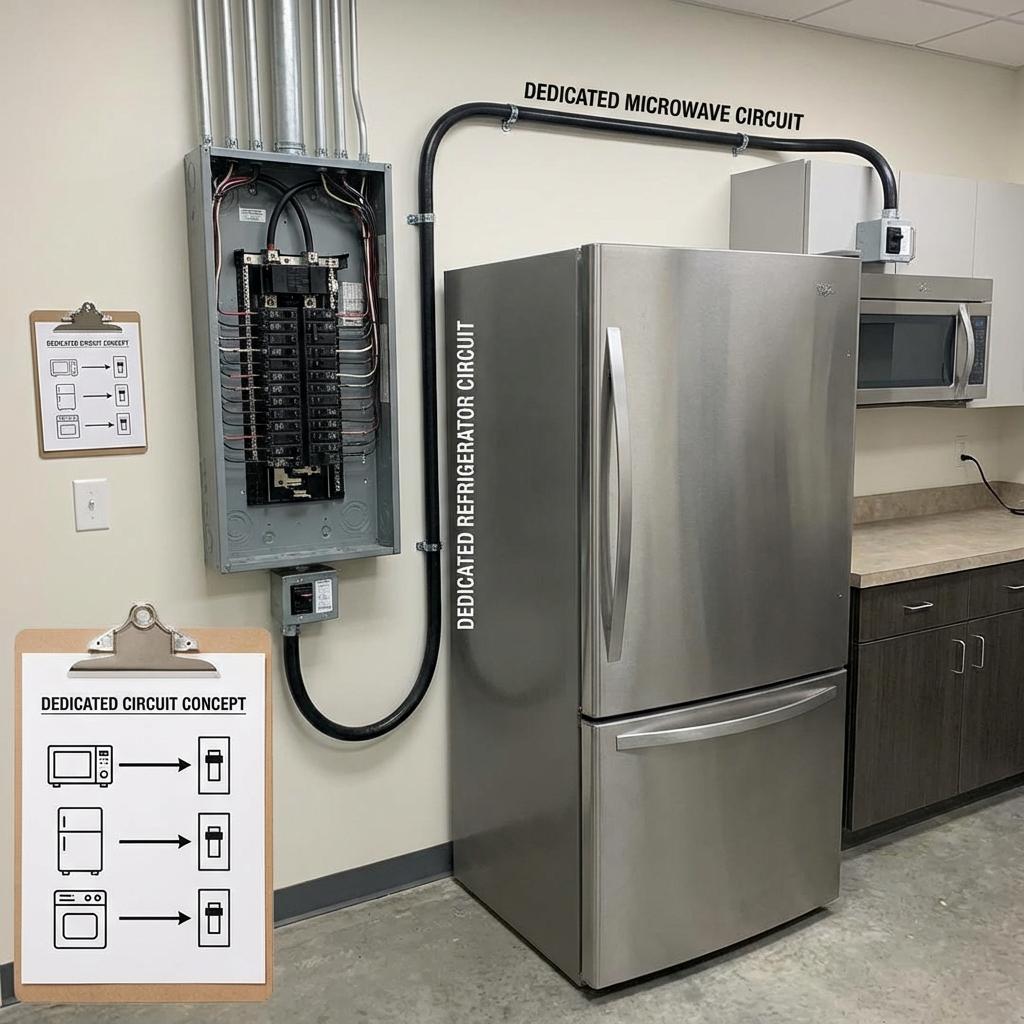
The kitchen has the most specific circuit requirements of any room. The current NEC requires a minimum of two 20-amp small appliance circuits for countertop outlets, a dedicated circuit for the refrigerator, a dedicated circuit for the dishwasher, a dedicated circuit for the garbage disposal, a dedicated circuit for any built-in microwave, and a dedicated 240V circuit for electric ranges or cooktops. Gas ranges still need a dedicated 120V outlet. The kitchen lighting can be on a general lighting circuit shared with other rooms, or on its own circuit. Under-cabinet lighting, if hardwired, is typically on the lighting circuit.
Bathroom Circuit Requirements
Bathrooms require a dedicated 20-amp GFCI-protected circuit for outlets. This circuit can serve outlets in multiple bathrooms but cannot serve lighting or outlets in other rooms. Bathroom lighting can be on a separate lighting circuit. Exhaust fans can be on the lighting circuit or on a separate circuit depending on their power requirements. Whirlpool tubs and heated floors typically require their own dedicated circuits.
Panel and Service Requirements
The electrical panel must be installed in an accessible location with a minimum of 36 inches of clear working space in front of it, 30 inches wide and extending from floor to ceiling or 78 inches high, whichever is less. All breakers must be clearly labeled with the areas they serve. The main breaker must be accessible and operable without tools. Panel covers must be intact with no open or missing knockouts. Modern code also requires a service disconnect accessible from outside the building, typically at the meter, to allow firefighters to shut off power without entering the structure.
Code Updates and Future Changes
The NEC continues to evolve with each three-year cycle. Recent and upcoming changes include expanded requirements for surge protection, provisions for EV charging infrastructure in new construction, enhanced requirements for energy storage systems, and expanded tamper-resistant outlet requirements. Staying current with these changes ensures your home benefits from the latest safety advancements.
Understanding electrical code requirements helps you make informed decisions about your home's electrical system and communicate effectively with your electrician. At AJ Long Electric, we stay current with every code change and ensure that all work we perform meets or exceeds the applicable requirements. Whether you need a code compliance assessment of your existing system or are planning work that needs to meet current code, call us at (703) 997-0026. We serve homeowners throughout Northern Virginia with expert, code-compliant electrical service.
Tags:

Written by
AJ Long Electric Team
Licensed Electricians
Our team of licensed electricians brings over 40 years of combined experience serving Northern Virginia. We're committed to providing expert electrical solutions with a focus on safety, quality, and customer satisfaction.
Reviewed by AJ Long Electric Master Electricians · VA License #2705031092 · View Credentials