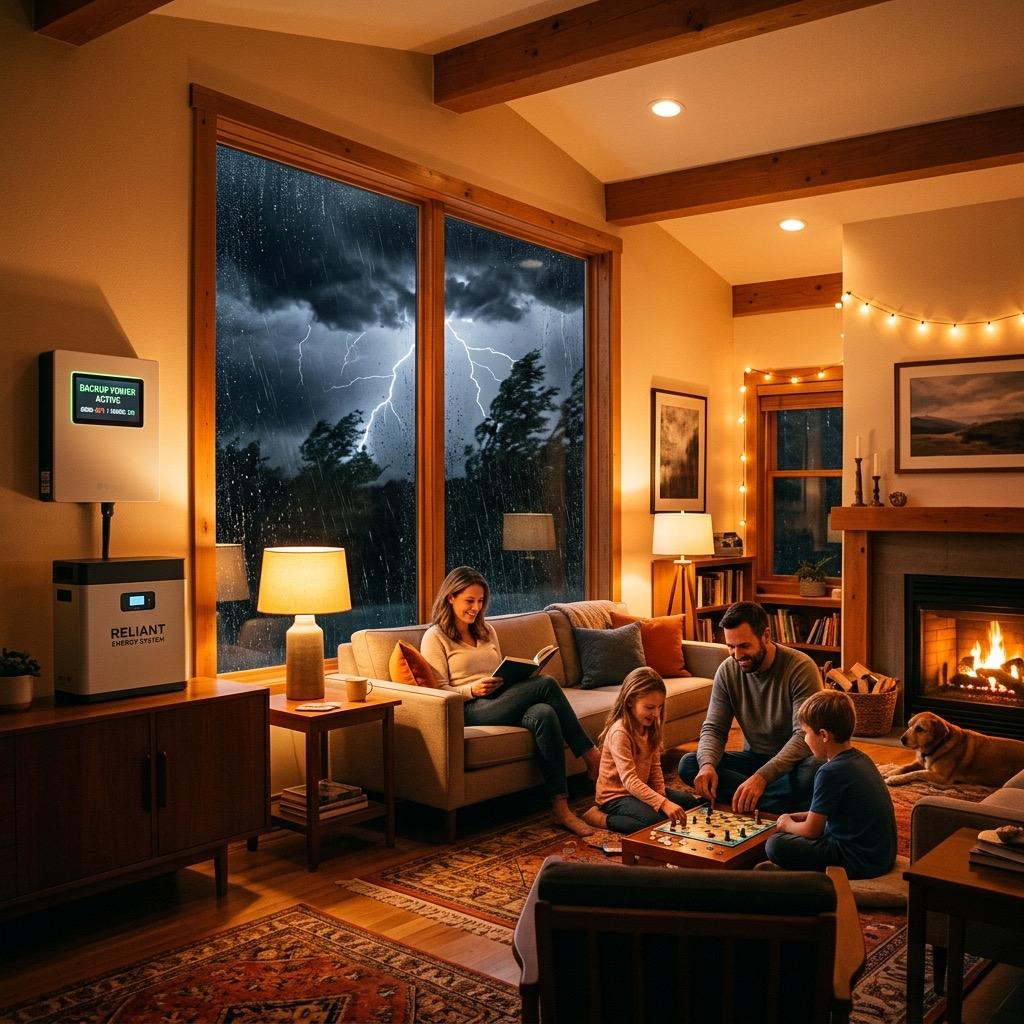
Power outages in Northern Virginia are more common than many homeowners realize. From summer thunderstorms and hurricanes to winter ice storms and the occasional grid failure, losing electricity can disrupt your life for hours or even days. For many DMV area homeowners, a whole-home standby generator has become an essential investment in comfort, safety, and peace of mind.
Key Takeaways
- Standby generators automatically detect outages and restore power within 10-30 seconds, unlike portable generators that require manual setup
- Most Northern Virginia homes in the 2,000-3,500 sq ft range need a 20-22 kW generator for full whole-home coverage including AC
- Natural gas is the preferred fuel for homes with gas service; propane is ideal for rural areas without gas lines
- Total installation costs range from $8,000 to $25,000+ depending on generator size and site requirements
- Annual professional maintenance (starting at $250/year) is essential to ensure your generator performs when needed
At AJ Long Electric, we've installed hundreds of generators throughout Fairfax, Loudoun, Arlington, and Prince William counties. In this comprehensive guide, we'll share everything you need to know about choosing, installing, and maintaining a whole-home backup power system for your Virginia home.
Why Install a Whole-Home Generator?
Before diving into the details, let's consider why a standby generator is worth the investment for Northern Virginia homeowners:
Uninterrupted Comfort and Safety
- Climate Control: Maintain heating in winter and air conditioning during brutal DMV summers
- Food Preservation: Keep refrigerators and freezers running, protecting hundreds of dollars in food
- Medical Equipment: Essential for homes with CPAP machines, oxygen concentrators, or other medical devices
- Security Systems: Maintain home security, cameras, and lighting
- Sump Pumps: Critical in areas prone to basement flooding
- Remote Work: Stay connected and productive during outages
Property Value
A properly installed standby generator adds significant value to your home. In the competitive Northern Virginia real estate market, a generator can be a compelling selling point that sets your home apart from others.
Insurance Benefits
Some insurance companies offer premium discounts for homes with standby generators, as they reduce the risk of damage from extended outages (frozen pipes, sump pump failures, etc.).
Types of Generators
Understanding the different types of generators helps you choose the right solution for your needs and budget.
Never lose power again. We are authorized Generac installers serving all of Northern Virginia. From sizing to installation to maintenance, we handle every step. Call (703) 997-0026 for a free in-home assessment.
Portable Generators
Portable generators are smaller, mobile units that run on gasoline and must be manually started during outages.
Pros:
- Lower initial cost ($500 - $2,500)
- Can be used for camping, job sites, and other purposes
- No permanent installation required
Cons:
- Requires manual setup during each outage
- Limited power capacity (typically 3,000 - 10,000 watts)
- Must be stored and maintained
- Requires manual refueling during extended outages
- Creates carbon monoxide risks if used improperly
- Cannot power entire homes effectively
Safety Tip: Never operate a portable generator inside your home, garage, or any enclosed space. Carbon monoxide from generator exhaust is odorless and deadly. Always place portable generators at least 20 feet from your home with the exhaust directed away from windows and doors. Install carbon monoxide detectors on every level of your home.
Standby Generators (Whole-Home)
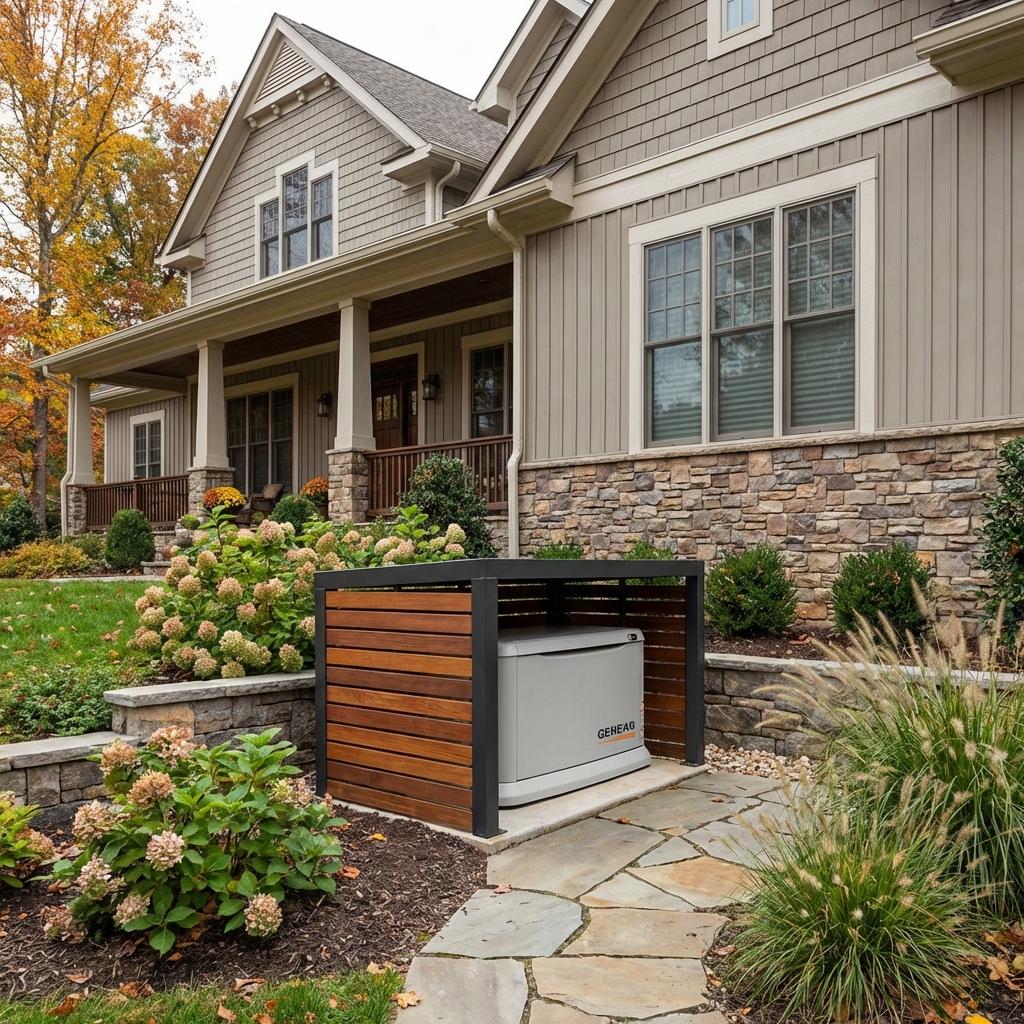
Standby generators are permanently installed outside your home and connected directly to your electrical panel. They automatically detect power outages and start within seconds.
Pros:
- Automatic operation, no manual intervention needed
- Can power entire home including HVAC, appliances, and all circuits
- Connected to permanent fuel source (natural gas or propane)
- Professional installation ensures safety and code compliance
- Longer runtime, limited only by fuel supply
- Higher resale value
Cons:
- Higher initial investment ($5,000 - $20,000+ including installation)
- Permanent installation required
- Annual maintenance recommended
Battery Backup Systems
Systems like Tesla Powerwall and Generac PWRcell store electricity for use during outages.
Pros:
- Silent operation
- No fuel required
- Can integrate with solar panels
- No emissions
Cons:
- Limited capacity, typically 10-20 kWh per unit
- Cannot power entire home for extended periods
- High cost per kWh of storage
- May not handle high-demand appliances like HVAC
For most Northern Virginia homeowners seeking true whole-home backup power, a standby generator is the most practical and reliable choice. Battery systems can complement generators or serve specific limited-backup needs.
Sizing Your Generator
Proper sizing is crucial. An undersized generator won't power your needs; an oversized one wastes money and fuel. Here's how to determine the right size for your home:
Understanding Generator Sizing
Generators are rated in kilowatts (kW). Residential standby generators typically range from 10kW to 26kW, with larger units available for bigger homes or higher demands.
Calculating Your Power Needs
To properly size a generator, you need to identify what you want to power during an outage:
Essential Loads (Critical)
- Refrigerator: 200-400 watts running, 1,200-2,000 watts starting
- Sump pump: 800-1,200 watts running, 2,000+ watts starting
- Furnace/boiler: 500-700 watts
- Lighting: varies by bulb type and quantity
- Well pump (if applicable): 1,000-2,000 watts
Comfort Loads
- Central air conditioning: 3,000-6,000 watts depending on size
- Electric water heater: 4,000-5,000 watts
- Electric dryer: 4,000-5,000 watts
- Electric range: 3,000-8,000 watts
Convenience Loads
- Television: 100-400 watts
- Computer: 100-400 watts
- Microwave: 1,000-1,500 watts
- Garage door opener: 500-700 watts
Common Generator Sizes for Northern Virginia Homes
- 10-14 kW: Essential circuits only, small to medium homes, no central AC during outage
- 16-20 kW: Most circuits, medium homes, can run one HVAC zone
- 22-26 kW: Whole-home coverage, larger homes, full HVAC operation
- 30+ kW: Large luxury homes, multiple HVAC systems, pool equipment
For most Northern Virginia single-family homes in the 2,000-3,500 square foot range, a 20-22 kW generator provides comfortable whole-home coverage including air conditioning.
Fuel Options
Standby generators in Virginia typically run on natural gas or liquid propane (LP). Each has advantages:
Natural Gas
Advantages:
- Unlimited fuel supply during outages (pipes rarely affected by storms)
- No fuel storage required on your property
- Generally lower fuel cost than propane
- No need to monitor fuel levels or schedule deliveries
- Clean-burning fuel
Considerations:
- Requires natural gas service to your property
- May require gas line upgrade for larger generators
- Slightly lower BTU content than propane (larger generator may be needed)
Liquid Propane (LP)
Advantages:
- Available anywhere, including rural Loudoun and Prince William counties without natural gas
- Higher BTU content than natural gas
- Long shelf life when stored properly
- Independent of utility infrastructure
Considerations:
- Requires propane tank (typically 250-1,000 gallons for whole-home generators)
- Tank must be installed by propane company
- Must monitor fuel levels and schedule deliveries
- Higher fuel cost than natural gas
- Tank installation adds to project cost and timeline
Fuel Recommendations for Northern Virginia
If your home has natural gas service (common in Fairfax, Arlington, and established Loudoun areas), natural gas is typically the best choice due to unlimited supply during outages and lower operating costs.
For homes without natural gas (common in western Loudoun, rural Prince William, and Fauquier), propane is the practical choice. We recommend at least a 500-gallon tank for generators 20kW and larger to ensure adequate runtime during extended outages.
Good to Know: When choosing between natural gas and propane, keep in mind that natural gas generators produce roughly 10% less power than their propane-fueled equivalents due to lower BTU content. A generator rated at 22kW on propane may produce approximately 20kW on natural gas. Your electrician should account for this when sizing your unit.
The Installation Process
Professional generator installation involves several steps and typically takes 1-3 days of on-site work, plus additional time for permits and inspections.
Step 1: Site Assessment and Planning
A qualified electrician evaluates your home to determine:
- Optimal generator location (considering setbacks, noise, aesthetics)
- Electrical panel capacity and condition
- Gas line routing and sizing requirements
- Any site preparation needed (concrete pad, grading)
- Local code requirements
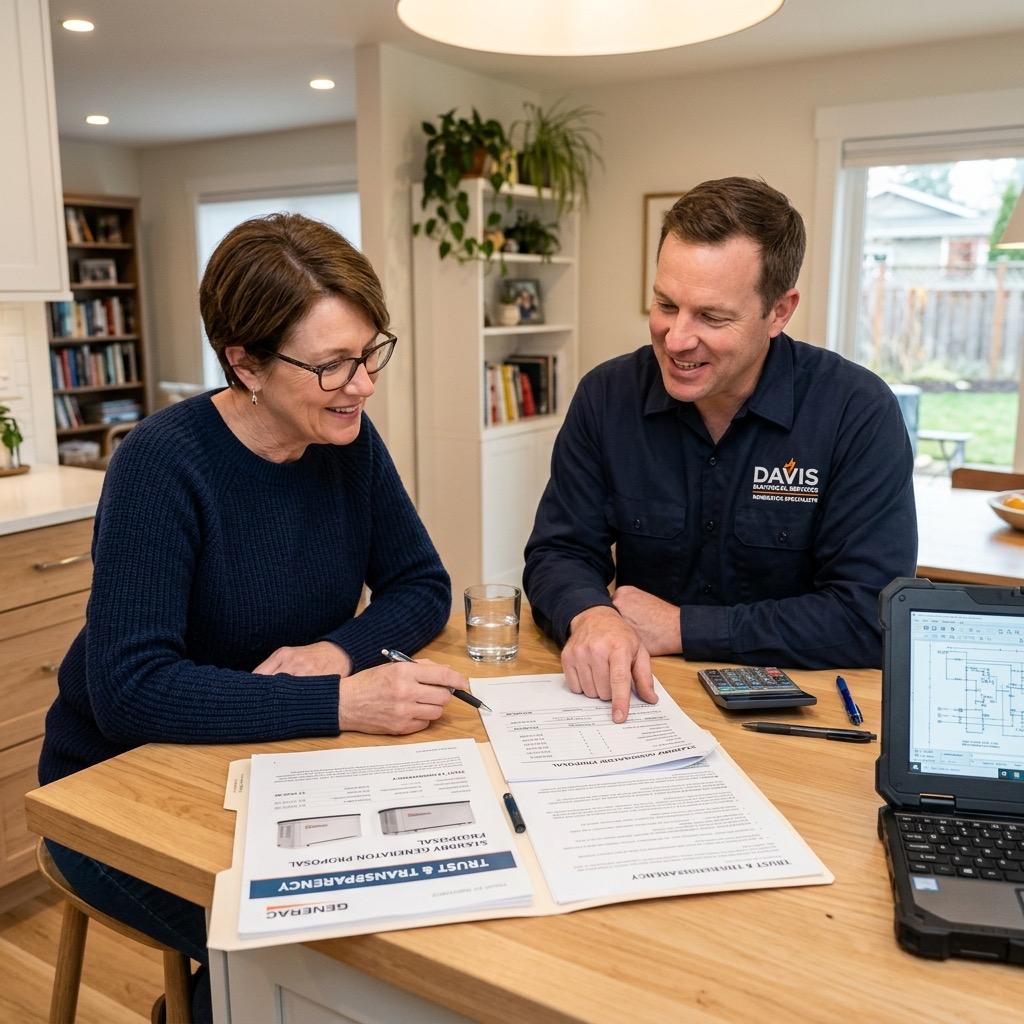
At AJ Long Electric, we provide comprehensive site assessments and detailed proposals before any work begins.
Step 2: Permits
Generator installation requires permits in all Northern Virginia jurisdictions. Typical permits needed include:
- Electrical permit: For transfer switch and generator electrical connections
- Gas permit: For natural gas or propane line installation
- Building permit: Sometimes required for concrete pad or placement
Permit requirements by jurisdiction:
- Fairfax County: Electrical and gas/mechanical permits required; setback requirements from property lines
- Loudoun County: Similar requirements; HOA approval may be needed in many communities
- Arlington County: Compact lots may have placement challenges; noise ordinances apply
- Prince William County: Standard permit requirements; many rural properties have more flexibility
We handle all permit applications and coordinate inspections as part of our installation service.
Step 3: Concrete Pad Installation
Generators must sit on a level, stable surface. Options include:
- Poured concrete pad (most common and recommended)
- Pre-cast concrete pad
- Gravel pad with composite base (in some situations)
The pad must be properly sized for the generator and allow adequate clearance for maintenance access.
Step 4: Automatic Transfer Switch Installation
The automatic transfer switch (ATS) is the critical component that:
- Monitors utility power continuously
- Signals the generator to start when utility power fails
- Safely disconnects your home from the utility grid
- Transfers your home's circuits to generator power
- Reverses the process when utility power returns
The ATS is installed at your electrical panel and must be properly sized and configured by a licensed electrician.
Step 5: Gas Line Installation
A new gas line is run from your meter (natural gas) or propane tank to the generator. This work requires:
- Proper pipe sizing for the generator's fuel demand
- Pressure regulation
- Shut-off valves
- Leak testing
- Compliance with all gas codes
Step 6: Generator Installation and Connection
The generator unit is placed on the pad and connected to:
- Electrical supply through the ATS
- Fuel supply line
- Battery for starting
Step 7: Testing and Commissioning
After installation, comprehensive testing ensures everything works correctly:
- Startup testing
- Load testing
- Transfer switch operation
- Automatic exercise cycle programming
- Homeowner training
Step 8: Inspections
County inspectors verify the installation meets all code requirements. Typical inspections include:
- Electrical inspection
- Gas line inspection
- Final inspection
Generator Costs in Northern Virginia
Generator installation is a significant investment. Here's what to expect in the Northern Virginia market:
Equipment Costs
- 10-14 kW generator: $3,000 - $5,000
- 16-20 kW generator: $4,500 - $6,500
- 22-26 kW generator: $5,500 - $8,000
- Automatic transfer switch: $500 - $1,500 (often bundled with generator)
Installation Costs
- Basic installation (gas available at generator location): $3,000 - $5,000
- Standard installation (new gas line required): $5,000 - $8,000
- Complex installation (long gas runs, panel upgrades): $8,000 - $12,000
Additional Costs
- Propane tank installation: $1,500 - $3,500 (if not using natural gas)
- Concrete pad: $500 - $1,200
- Electrical panel upgrade (if needed): $2,000 - $4,000
- Permits: $200 - $600
Total Investment
For a typical Northern Virginia home, expect total costs of:
- Partial-home coverage (16 kW): $8,000 - $12,000
- Whole-home coverage (22 kW): $12,000 - $18,000
- Large home with all features (26+ kW): $18,000 - $25,000+
Generator Maintenance
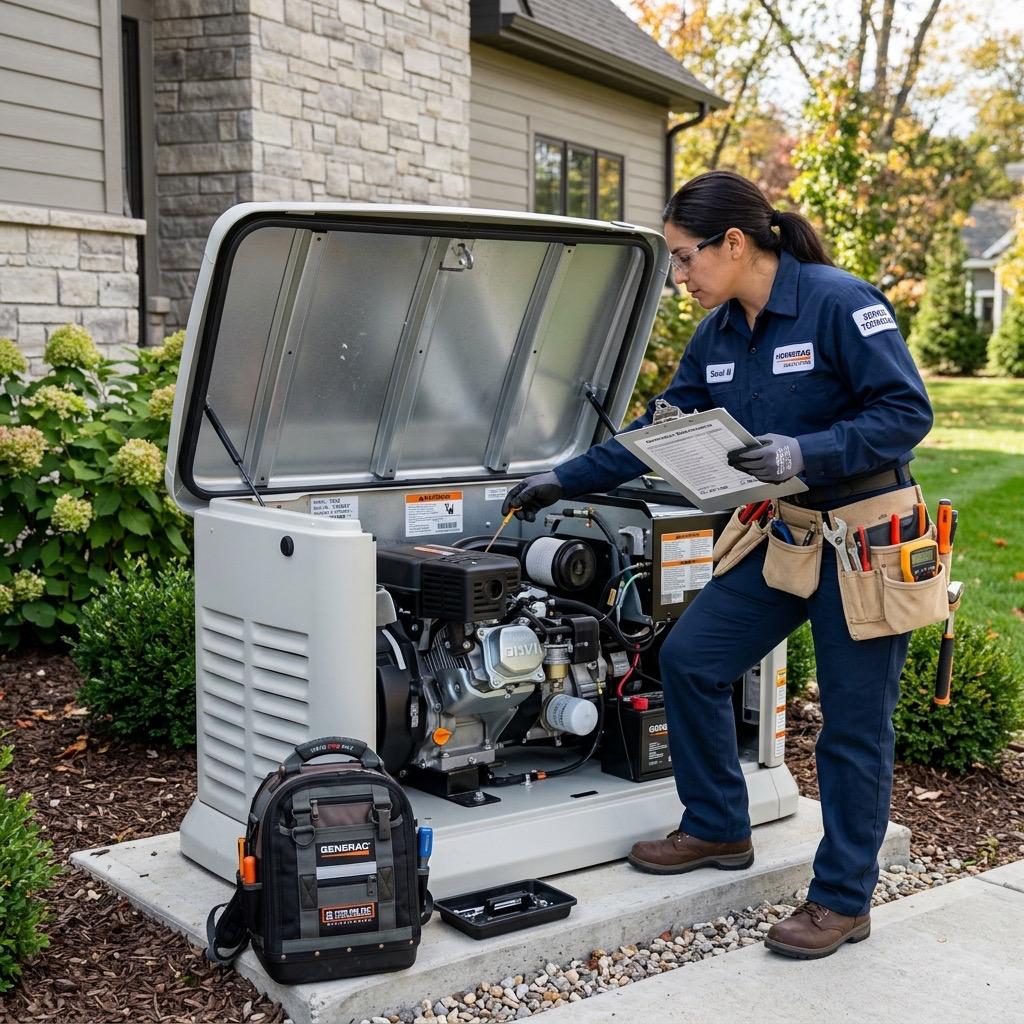
Proper maintenance ensures your generator performs when you need it most. Modern generators are designed to run self-tests weekly, but professional maintenance is still essential.
Weekly (Automatic)
Modern generators run automatic exercise cycles weekly, typically for 10-20 minutes. This keeps the engine lubricated and ensures everything functions properly.
Monthly (Homeowner)
- Visual inspection for debris, damage, or pests
- Check for oil leaks
- Verify the area around the generator is clear
Annual (Professional)
Professional maintenance should include:
- Oil and filter change
- Air filter inspection/replacement
- Spark plug inspection/replacement
- Battery testing
- Full load testing
- Transfer switch inspection
- Fuel system inspection
- Electrical connection inspection
AJ Long Electric offers annual maintenance plans starting at $250/year to keep your generator ready for any outage.
Choosing a Generator Brand
Several reputable manufacturers offer quality residential standby generators:
Generac
The market leader in residential standby generators, Generac offers a wide range of sizes and features. Known for reliability and extensive dealer network. We install and service Generac generators throughout Northern Virginia.
Kohler
Premium option with excellent build quality and quieter operation. Slightly higher cost but known for longevity.
Briggs & Stratton
Good mid-range option with competitive pricing and solid reliability.
Cummins
Commercial-grade quality in residential packages. Excellent for larger homes with demanding power needs.
Frequently Asked Questions
How loud is a standby generator?
Modern generators operate at 60-70 decibels, similar to a central air conditioning unit. Placement away from bedroom windows and neighbors is still important.
How fast does the generator start during an outage?
Most standby generators detect outages and transfer power within 10-30 seconds. This is fast enough that you may barely notice the brief interruption.
Can I install a generator myself?
No. Generator installation requires electrical and gas permits, must meet local codes, and should only be performed by licensed professionals. Improper installation can result in fire, carbon monoxide poisoning, or electrocution. It will also void warranties and may violate insurance requirements.
Will my generator work during a natural gas outage?
Natural gas infrastructure is highly resilient and rarely fails during power outages. However, if you're concerned, propane provides complete independence from utility infrastructure.
How long can my generator run continuously?
With adequate fuel supply, standby generators can run indefinitely. Natural gas provides unlimited fuel during outages. Propane runtime depends on tank size, typically 24-72 hours for smaller tanks, or 5-7 days for larger installations.
Do I need a permit for generator installation?
Yes. All Northern Virginia jurisdictions require electrical and gas permits for standby generator installation. We handle all permitting as part of our service.
Get Your Free Generator Assessment
Ready to protect your home with reliable backup power? AJ Long Electric provides comprehensive generator installation services throughout Northern Virginia, including Fairfax, Loudoun, Arlington, Prince William, and Fauquier counties.
Call AJ Long Electric today at (703) 997-0026 to schedule your free generator assessment. Our team will evaluate your home's needs, recommend the right size generator, and provide a detailed proposal with transparent pricing. Don't wait for the next outage to leave your family in the dark. Contact us today and enjoy the peace of mind that comes with whole-home backup power.
From assessment through installation and ongoing maintenance, AJ Long Electric is your trusted partner for generator installation in Virginia. Call (703) 997-0026 or contact us online to get started!
Tags:

Written by
Matt Long
Master Electrician
Our team of licensed electricians brings over 40 years of combined experience serving Northern Virginia. We're committed to providing expert electrical solutions with a focus on safety, quality, and customer satisfaction.
Reviewed by AJ Long Electric Master Electricians · VA License #2705031092 · View Credentials