Not every Northern Virginia homeowner needs a whole-house generator — but more do than realize it. The decision turns on five practical questions about your home, your household, and your local power reliability history. If you answer "yes" to three or more, a standby generator almost certainly pays for itself over a 10–15 year ownership period. If you answer "yes" to all five, it's a straightforward decision.
Key Takeaways
- Households with medical equipment, sump pumps, or home-based businesses face the clearest financial case for standby generators.
- Outage frequency varies significantly across Northern Virginia — Dominion Energy customers in wooded Fairfax County suburbs average 1.4 outages/year; NOVEC customers in Loudoun County average 0.9.
- A single 72-hour summer outage can cost $1,500–$4,000 in spoiled food, hotel costs, and lost work — enough to justify a generator at typical payback rates.
- Renters cannot install standby generators; portable generators are an alternative but not a substitute for whole-home protection.
- If your answer to Question 3 (sump pump) is yes, prioritize quickly — basement flooding during a power outage is the leading cause of major home insurance claims in NoVA.
Question 1: Does Anyone in Your Home Depend on Powered Medical Equipment?
If your household includes anyone using a CPAP machine, home oxygen concentrator, electric wheelchair, dialysis equipment, or insulin refrigeration, a standby generator is not optional — it's a safety requirement. These are the clearest-cut generator installations we do at AJ Long Electric, and in every case, the family tells us they wish they'd done it sooner.
In Northern Virginia, approximately 85,000 households include someone with a medically necessary power dependency (based on Dominion Energy's medical baseline enrollment data). Many of these households rely on Dominion's outage priority list, which expedites restoration — but doesn't guarantee it during major multi-county events. The February 2021 ice storm left 25,000 Dominion customers without power for more than 48 hours despite priority restoration protocols. A generator provides certainty that no utility priority list can match.
CPAP Users: Your Equipment Risk Is Real: A CPAP machine running on battery backup lasts 1–3 nights depending on the model and whether heated humidification is active. For users with severe sleep apnea, going without CPAP for several nights carries documented cardiovascular risks. Most CPAP manufacturers explicitly recommend a standby power source for extended outages. A 16kW generator sized to cover your home's essential circuits costs less than one hospitalization event.
Question 2: Do You Work from Home More Than 3 Days Per Week?
Remote work has fundamentally changed the calculus of power outages in Northern Virginia. Pre-2020, a two-day outage was an inconvenience; today, it's a business disruption. A software engineer in Reston losing internet and power for 48 hours during a storm could miss two full days of billable work — at $300–$600/day for many NoVA knowledge workers, that's $600–$1,200 lost. Experienced over the lifetime of a generator, even infrequent outages accumulate into a compelling ROI case.
Never lose power again. We are authorized Generac installers serving all of Northern Virginia. From sizing to installation to maintenance, we handle every step. Call (703) 997-0026 for a free in-home assessment.
The calculation changes further if you have clients who require uptime or if your employer tracks remote work availability. Many Northern Virginia federal contractors are required to demonstrate reasonable business continuity; a documented generator installation can support that requirement. Home-based businesses — contractors, consultants, accountants, real estate agents — may also be able to deduct a portion of the generator installation as a business expense through IRS Schedule C or Form 8829 (consult your tax advisor for your specific situation).
Question 3: Does Your Home Have a Sump Pump?
If your answer is yes, a generator moves from "nice to have" to "strongly recommended" immediately. The Piedmont region of Northern Virginia — including large portions of Fairfax, Prince William, and Loudoun counties — has significant groundwater pressure, particularly in low-lying areas near the Occoquan, Bull Run, and Goose Creek watersheds. When power fails during a heavy rain event (the scenario that causes most basements to flood), a sump pump without backup power is effectively no sump pump.
Basement flooding during power outages is the most common major home insurance claim in Northern Virginia. A full basement flood — 4–8 inches of water — causes $20,000–$80,000 in structural and content damage. Even 2 inches of water destroys flooring, drywall, and stored items. A generator that costs $13,000 installed pays for itself after preventing a single significant flooding event. Battery backup sump pumps are an alternative but typically provide only 4–8 hours of runtime — insufficient for the multi-day outages that pose the highest flood risk.
Check Your Outage History Before Deciding: Dominion Energy's website allows customers to view their specific account's outage history for the past 24 months. If your address shows more than 2 outages exceeding 4 hours in the last two years, you're in a high-priority zone for generator ROI. NOVEC customers can request similar data by calling customer service. AJ Long Electric can also pull ZIP-code level outage frequency data to inform your decision.
Question 4: Do You Have Elderly Parents or Young Children in Your Household?
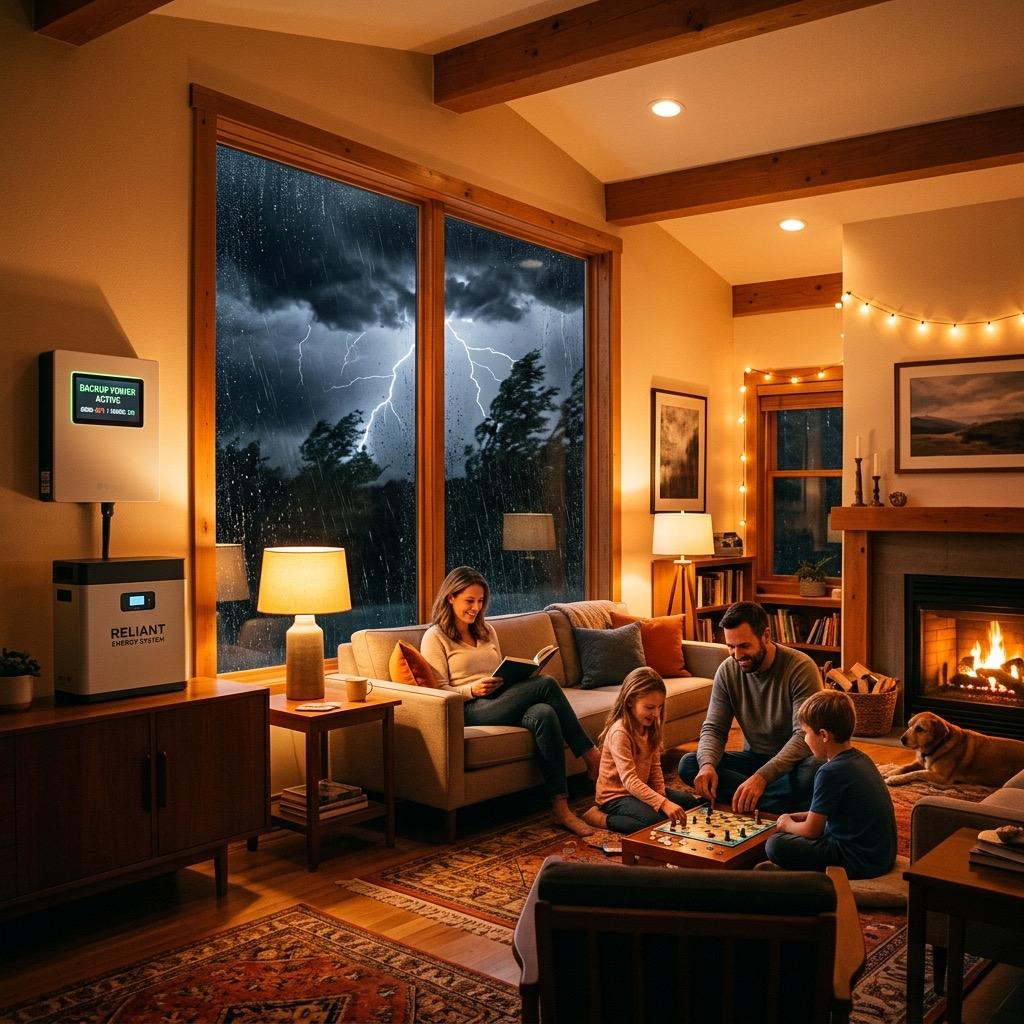
Temperature management during extended outages is a legitimate health concern, not mere discomfort. Northern Virginia's climate creates risk at both extremes. Summer heat: the DC metro area averages 37 days above 90°F per year, and heat indices above 100°F during July and August are common. A home without air conditioning during a July outage reaches dangerous indoor temperatures within 24–36 hours for elderly residents. Winter cold: ice storm outages in January and February can push unheated homes below 50°F within 24 hours, posing hypothermia risk for infants and elderly adults.
For households with adults over 70, children under 2, or anyone with heat-sensitive medical conditions, generator-powered climate control isn't a luxury — it's a health safeguard. The American Red Cross lists generator access as one of the top 5 emergency preparedness resources for vulnerable households. Fairfax County's Office of Emergency Management echoes this recommendation specifically for the county's large senior population in communities like Greenspring Village, Goodwin House, and the numerous assisted living facilities whose residents' families often live nearby in private homes.
Question 5: Would You Pay More Than $3,000 Out of Pocket During a 72-Hour Outage?
This is the break-even question. Add up what a 72-hour summer outage actually costs your household: food spoilage ($400–$800 for a stocked refrigerator and freezer), hotel costs (Fairfax County hotels run $150–$220/night, so 2–3 nights equals $300–$660), restaurant meals ($50–$100/day), lost work time (varies widely), and the psychological cost of managing a disrupted household. For many families, the honest total is $1,500–$3,000 for a single major outage.
A $14,000 installed generator depreciates over 20 years to an annual ownership cost of $700 (before considering resale value appreciation). Annual maintenance adds $250–$350. Total annual cost: approximately $1,000–$1,100. If your household experiences one 72-hour outage every 3–5 years — realistic for many Fairfax County addresses — the generator's cost per year of protection works out to $200–$300 in prevented costs per outage event. That's before considering the medical equipment, sump pump, or home-office arguments above.
The Insurance Comparison: Most Northern Virginia homeowners pay $1,200–$1,800/year for homeowner's insurance — protection against events that may never happen. A generator addresses an event that almost certainly will happen, likely multiple times, in any 10-year ownership window. Framed this way, the decision looks different than a simple cost comparison against the generator's purchase price.
What If I'm Not Sure Yet?
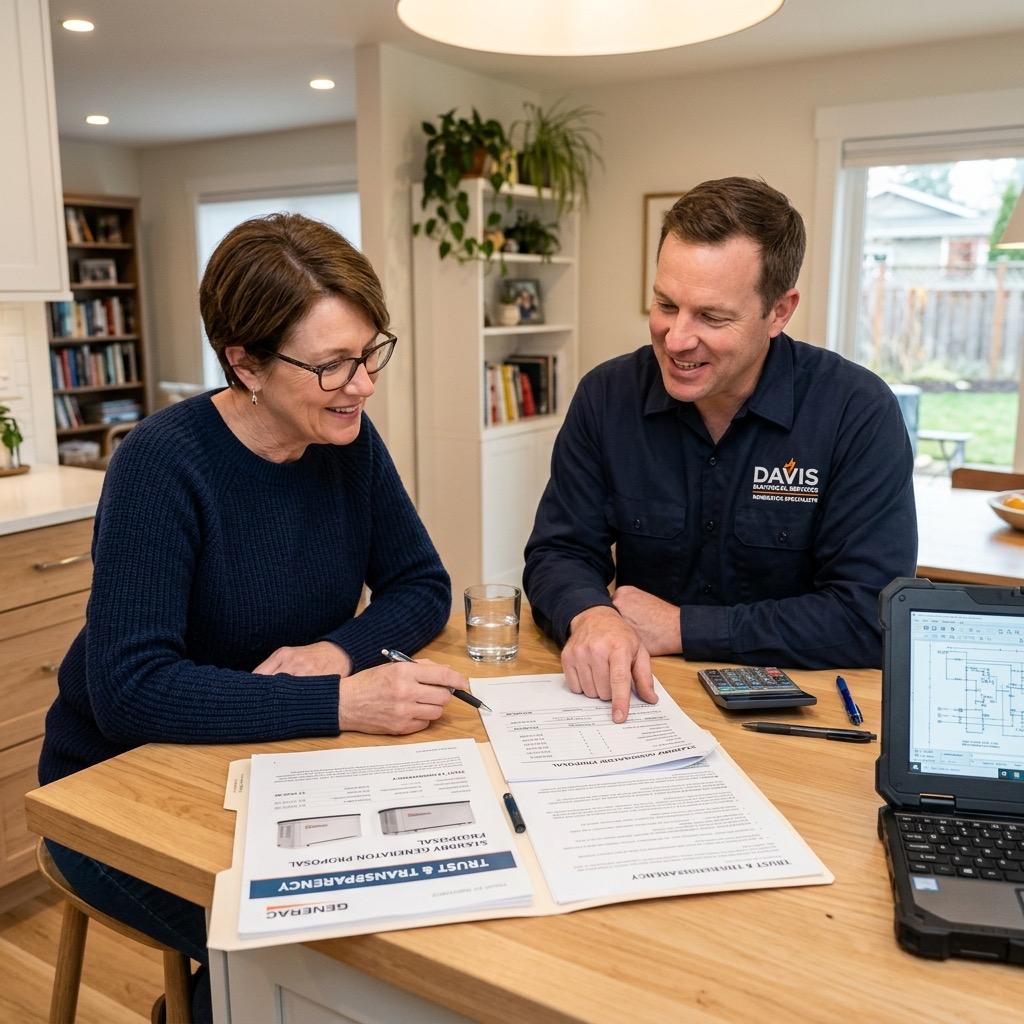
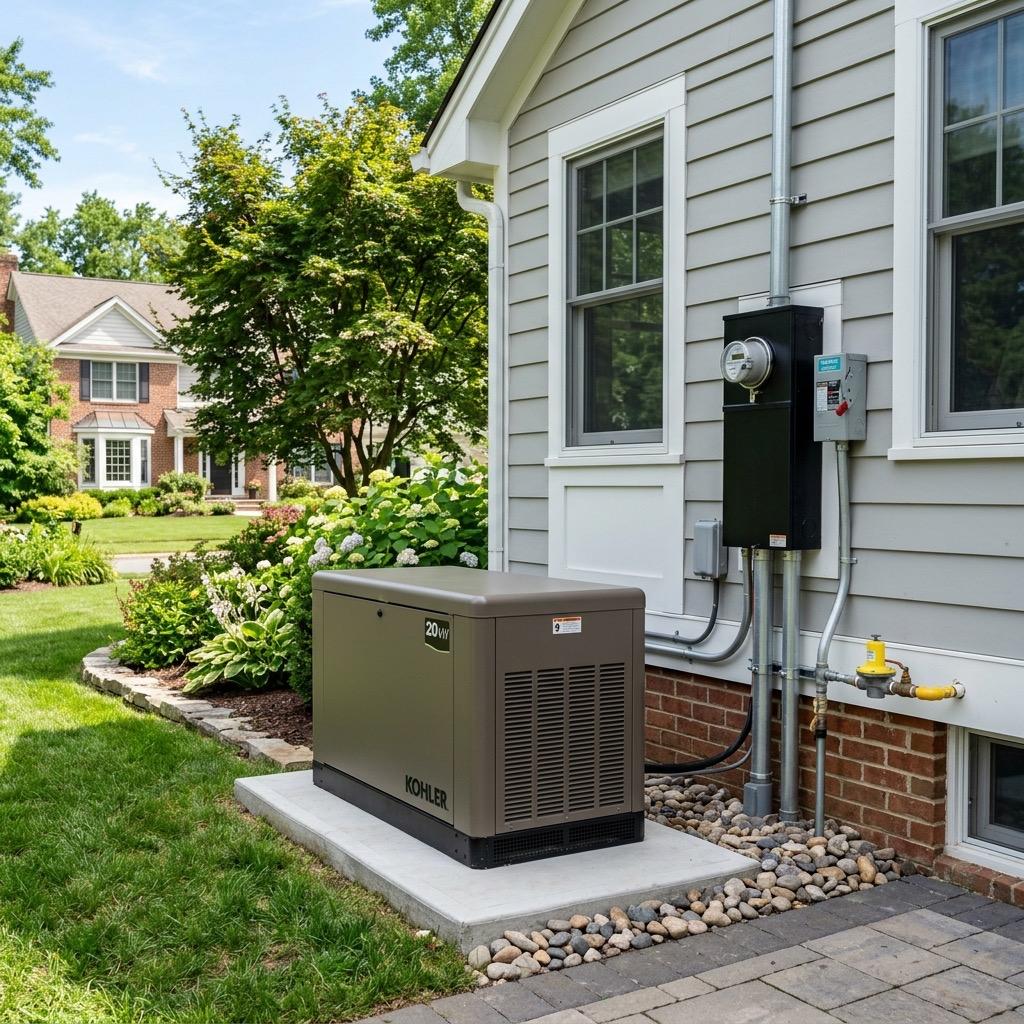
A free site assessment from AJ Long Electric doesn't commit you to anything. We'll visit your home, assess your electrical panel, gas line access, and ideal generator placement, and give you a written itemized quote. We'll also tell you honestly if a generator doesn't make sense for your situation — for example, a renter, someone in a condo building, or a homeowner who would be priced out of the market in 2 years. We'd rather lose a sale than oversell a product that isn't right for you.
If you answered "yes" to three or more of the questions above, call us at (703) 997-0026 to schedule your free assessment. We serve all of Northern Virginia — Fairfax County (Burke, Reston, McLean, Herndon, Centreville, Springfield, Great Falls), Loudoun County (Ashburn, Leesburg, Purcellville, Sterling), Arlington, Alexandria, and Prince William County.
Tags:

Written by
Matt Long
Master Electrician
Our team of licensed electricians brings over 40 years of combined experience serving Northern Virginia. We're committed to providing expert electrical solutions with a focus on safety, quality, and customer satisfaction.
Reviewed by AJ Long Electric Master Electricians · VA License #2705031092 · View Credentials