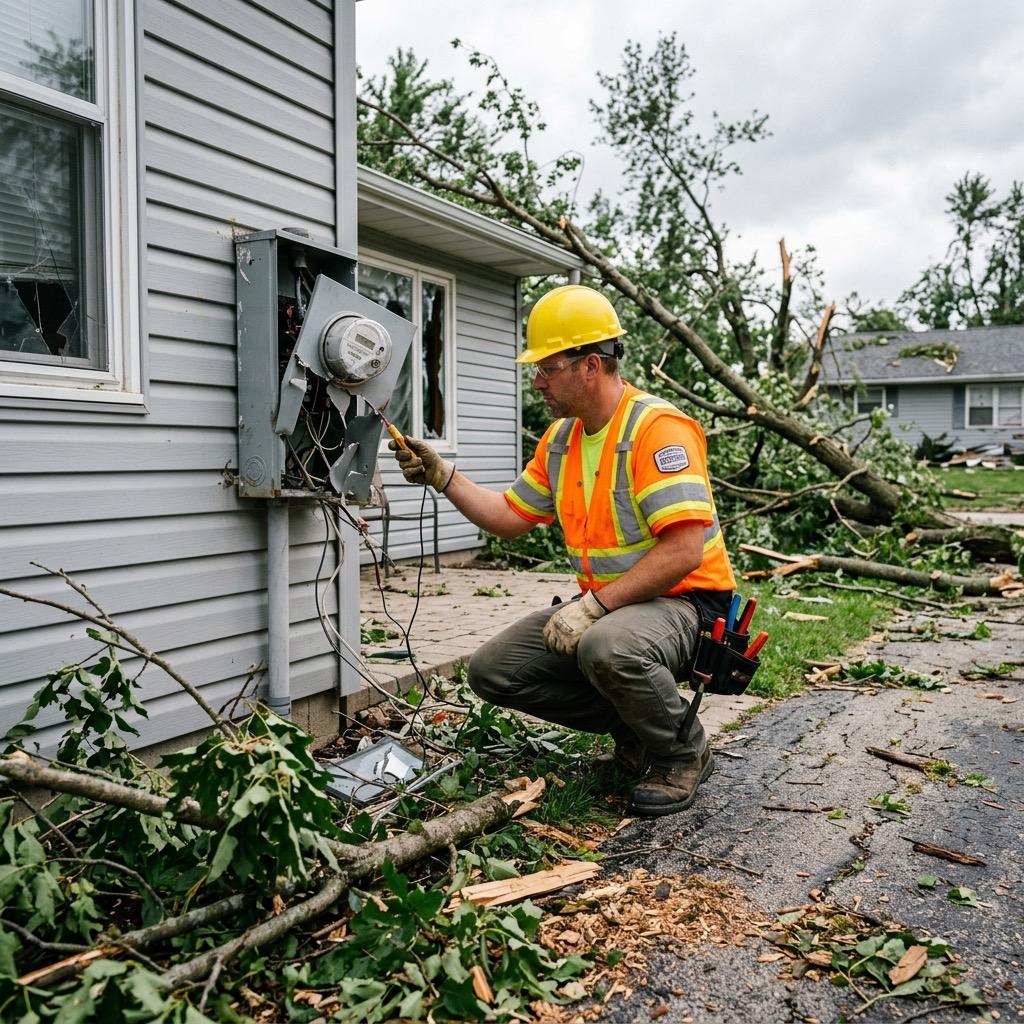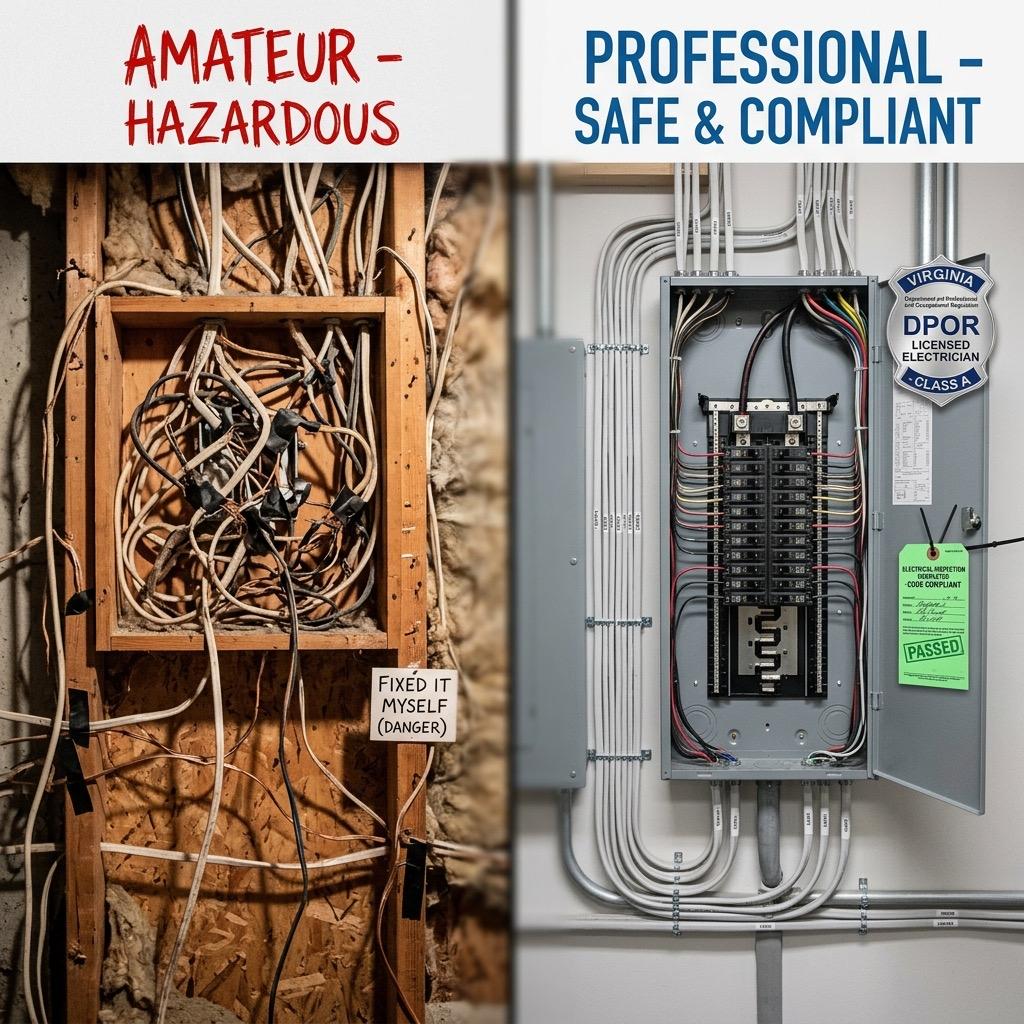
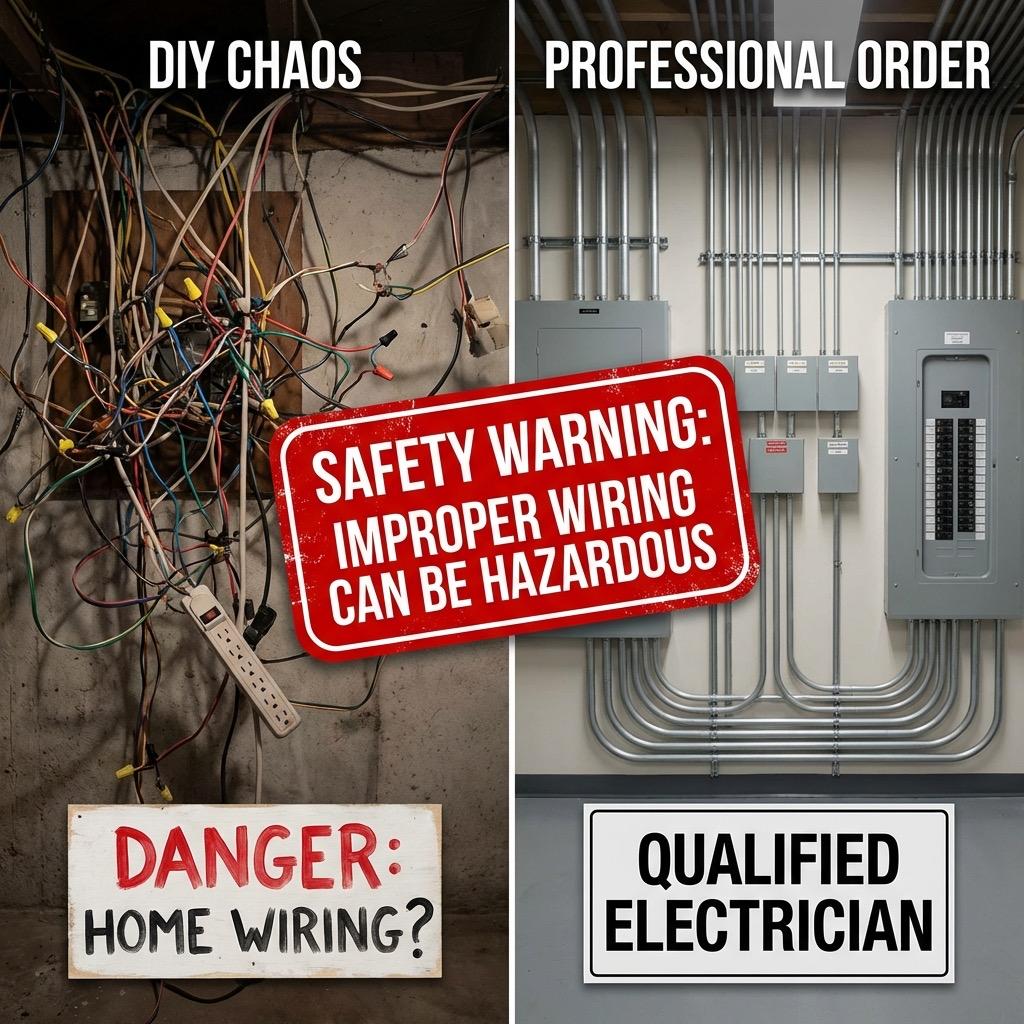
In an era of YouTube tutorials and home improvement shows, it is tempting to tackle electrical projects yourself. While changing a light bulb is perfectly safe, many homeowners underestimate where the line should be drawn. DIY electrical work gone wrong causes thousands of fires, hundreds of deaths, and countless code violations every year.
Key Takeaways
- DIY electrical mistakes can be instantly fatal -- 120-volt household current can deliver a lethal shock.
- Unpermitted electrical work may void your homeowner's insurance and create serious issues when selling your home.
- Safe DIY tasks are limited to changing bulbs, replacing covers, resetting breakers, and replacing lamp cords.
- Anything involving the panel, new circuits, outlet replacement, or running new wire requires a licensed electrician.
- Professional electrical work often costs less than homeowners expect -- get a quote before assuming DIY is the only option.
As licensed electricians, we have seen the aftermath of DIY electrical work - sometimes called in to fix problems, sometimes responding after fires or serious shocks. Here is an honest look at the risks and when to call a professional.
The Real Dangers of DIY Electrical Work
Electrocution and Shock
Electricity is unforgiving. Unlike other home repairs where mistakes result in cosmetic issues or minor inconveniences, electrical mistakes can be instantly fatal.
- 120-volt household current can deliver a lethal shock under the right conditions
- Even non-fatal shocks can cause falls, burns, and cardiac issues
- Arc flash (electrical explosion) can occur when working in electrical panels
- Many DIYers do not know how to verify that circuits are truly de-energized
Fire Hazards
Improper electrical work is a leading cause of house fires:
- Loose connections create heat and arcing that can ignite surrounding materials
- Overloaded circuits without proper protection can overheat
- Incorrect wire sizes for the load create fire hazards
- Improper junction boxes or missing covers allow fires to spread
- Fires from electrical issues may not manifest immediately - problems can smolder in walls for weeks or months
Code Violations
Electrical codes exist to protect lives and property. DIY work often violates code in ways that:
- Create immediate safety hazards
- Fail inspections when you try to sell your home
- Require expensive corrections by licensed electricians
- May require permits you did not obtain - creating legal issues
Important: Arc flash -- an electrical explosion that can occur when working in panels -- reaches temperatures of 35,000 degrees Fahrenheit. This is why panel work should only be performed by trained professionals with proper safety equipment.
Hidden Consequences of DIY Electrical Work
Insurance Issues
Your homeowner's insurance has provisions about DIY electrical work:
A professional electrical inspection identifies hidden hazards before they become emergencies. Our licensed electricians provide thorough safety inspections throughout Northern Virginia. Call (703) 997-0026 to schedule yours.
- Unpermitted electrical work may void coverage for electrical fires
- Claims may be denied if inspectors determine DIY work caused the damage
- You may be required to have all electrical work inspected before renewing coverage
- Premium increases can result if DIY work is discovered
Home Sale Problems
When you sell your home, DIY electrical work creates complications:
- Home inspectors often identify improper electrical work
- Buyers may demand repairs or price reductions
- Some buyers will walk away entirely
- You may need to obtain retroactive permits and inspections
- Failed inspections require professional correction
Liability
If your DIY electrical work causes injury or damage:
- You may be personally liable for injuries to family members or guests
- Damage to neighboring properties from a fire you caused creates liability
- Legal costs can be enormous
- Criminal charges are possible in extreme cases
Common DIY Electrical Mistakes
Wrong Wire Size
Using wire that is too small for the circuit amperage is dangerous. The wire overheats under normal use, creating a fire hazard inside your walls.
Overloaded Circuits
Adding outlets or fixtures to an already-loaded circuit, or increasing breaker size without upgrading wiring, creates overload conditions.
Improper Connections
Electrical connections must be made correctly:
- Wire nuts must be properly sized and installed
- Connections must be tight and secure
- All connections must be in approved electrical boxes
- Box fill calculations must be observed
Missing GFCI/AFCI Protection
Many DIYers do not know current code requirements for GFCI and AFCI protection, leaving circuits without required safety devices.
What DIYers CAN Safely Do
Some electrical tasks are appropriate for handy homeowners:
- Changing light bulbs
- Replacing outlet and switch covers
- Resetting tripped breakers and GFCI outlets
- Replacing lamp plugs and cords (while unplugged)
- Installing battery-operated devices like wireless doorbells
What Requires a Licensed Electrician
Leave these tasks to professionals:
- Any work inside the electrical panel
- Adding new circuits or outlets
- Replacing outlets, switches, or fixtures
- Running new wiring
- Installing ceiling fans, especially where no fixture exists
- EV charger installation
- Generator hookups
- Any work requiring a permit
The True Cost Comparison
DIY electrical work often does not save money when you consider:
- Tools and materials (professional electricians buy at wholesale)
- Time spent learning and performing the work
- Risk of having to hire a pro to fix mistakes
- Potential for insurance claim denial
- Possible fines for unpermitted work
- Reduced home value from code violations
Many electrical tasks cost less than homeowners expect when done professionally. Get a quote before assuming DIY is the only affordable option.
Choose Safety Over Savings
We understand the appeal of DIY - there is satisfaction in completing projects yourself and potential cost savings. But electrical work is one area where the risks simply outweigh the benefits of doing it yourself.
AJ Long Electric provides professional electrical services throughout Northern Virginia at fair, transparent prices. We are happy to provide free estimates so you can make an informed decision about your project.
The Real Cost: When you factor in tools, materials (at retail prices), time spent learning, risk of fixing mistakes, and potential insurance or resale complications, professional electrical work is often more affordable than DIY.
Contact us today to discuss your electrical needs safely and professionally.
Tags:

Written by
AJ Long Electric Team
Licensed Electricians
Our team of licensed electricians brings over 40 years of combined experience serving Northern Virginia. We're committed to providing expert electrical solutions with a focus on safety, quality, and customer satisfaction.
Reviewed by AJ Long Electric Master Electricians · VA License #2705031092 · View Credentials