If your home was built between 1965 and 1973, there is a significant chance it contains aluminum branch circuit wiring. While aluminum wiring is not inherently dangerous, it requires specific attention and maintenance that copper wiring does not. Understanding the differences can help you make informed decisions about your Northern Virginia home's electrical safety.
Key Takeaways
- Homes built between 1965-1973 may have aluminum branch circuit wiring, which the CPSC found to be 55 times more likely to have fire hazard conditions at outlets compared to copper.
- The main risks are oxidation (aluminum oxide is an insulator), thermal expansion causing loose connections, and galvanic corrosion where aluminum meets copper.
- COPALUM crimp connectors are the CPSC-approved permanent repair, costing $3,000-$8,000 for a whole home. AlumiConn connectors are a good UL-listed alternative at $2,000-$5,000.
- Aluminum wiring can affect insurance rates, coverage availability, and home resale value. Proactive remediation is the best approach.
- Modern aluminum alloy (AA-8000) used in service entrance cables is safe and code-compliant. The concern applies specifically to older branch circuit aluminum wiring.
A Brief History
During the mid-1960s to early 1970s, copper prices spiked dramatically due to the Vietnam War. Builders turned to aluminum as a cost-effective alternative for branch circuit wiring. An estimated 2 million homes were wired with aluminum during this period. By the mid-1970s, problems became apparent. The Consumer Product Safety Commission found that homes with aluminum wiring were 55 times more likely to have fire hazard conditions at outlets.
In Northern Virginia, many homes in established neighborhoods of Fairfax, Springfield, Burke, and Annandale were built during this era and may contain aluminum wiring. If your home falls in this age range, an inspection is worthwhile.
Why Aluminum Wiring Can Be Problematic
Oxidation
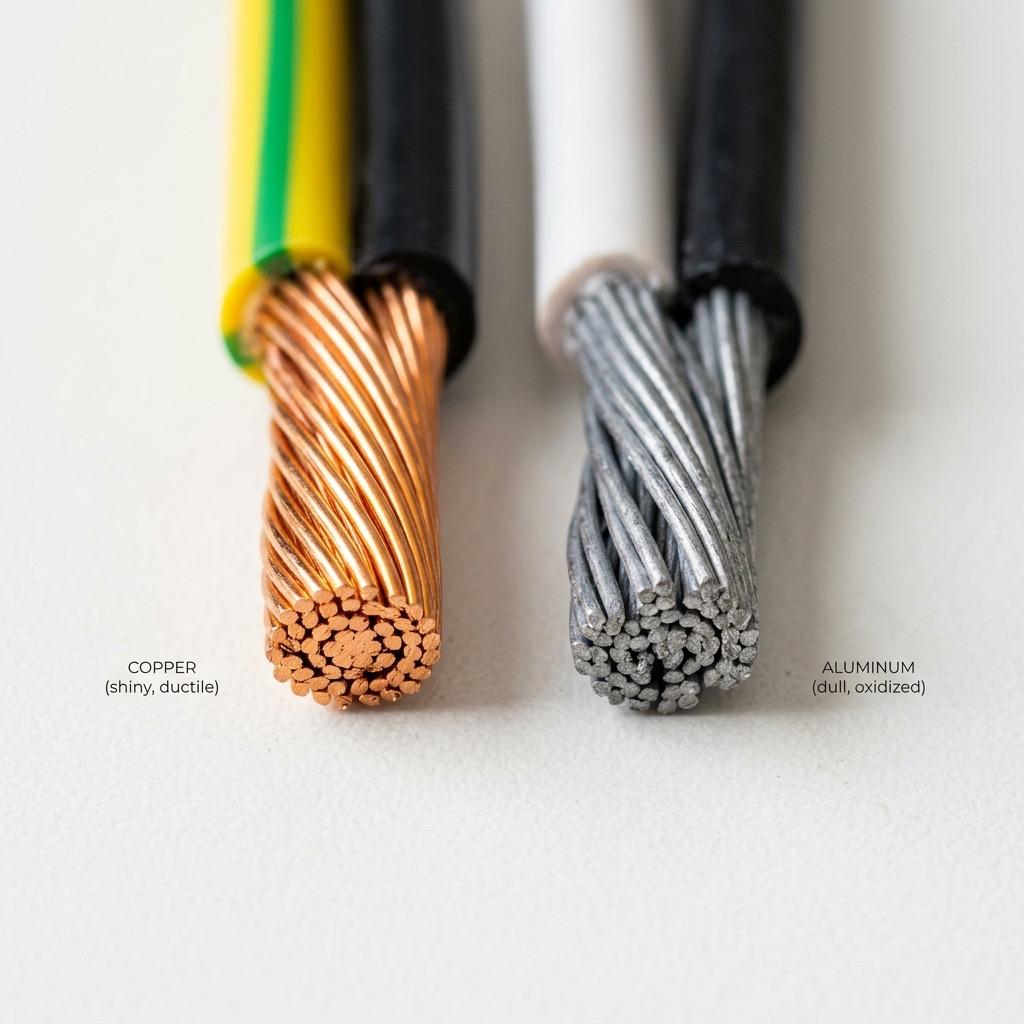
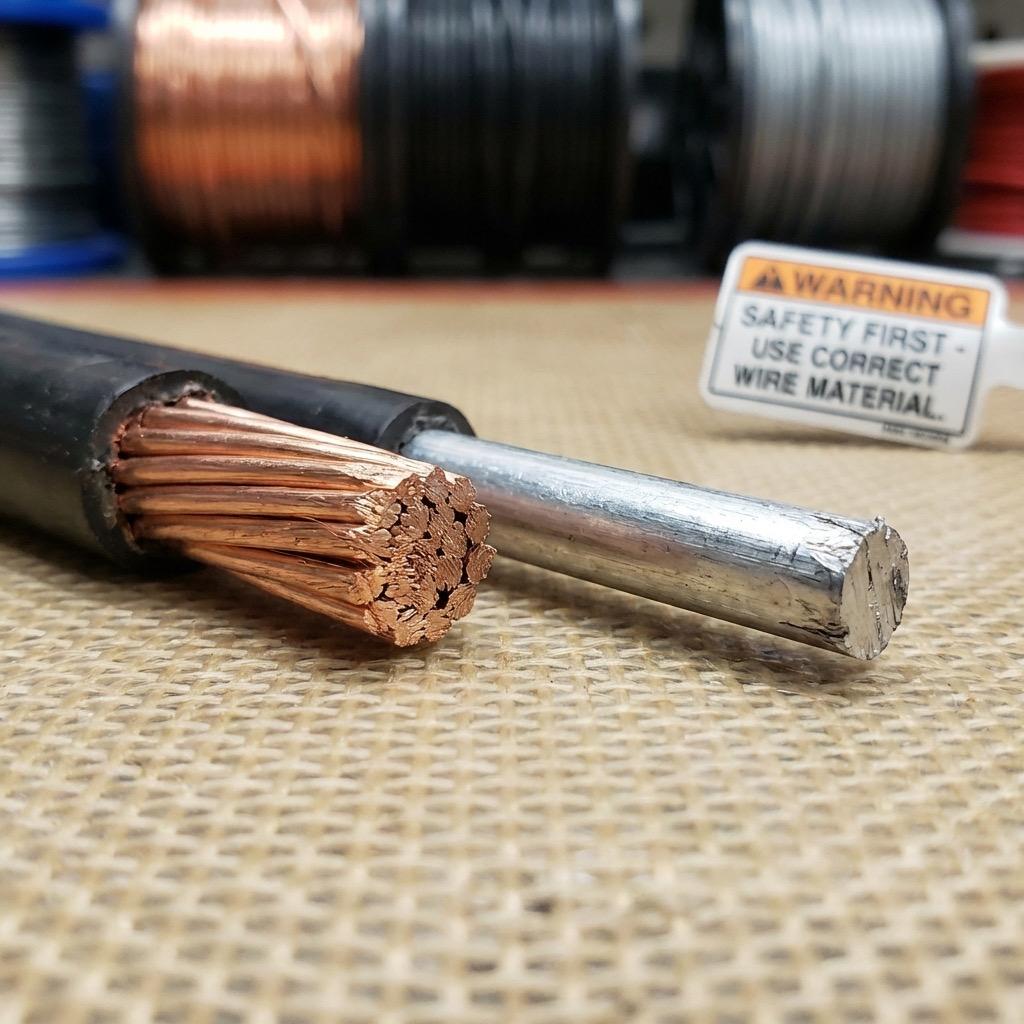
When aluminum is exposed to air, it forms aluminum oxide on the surface. Unlike copper oxide (which still conducts electricity), aluminum oxide is an insulator. This can create high-resistance connections that generate heat.
A professional electrical inspection identifies hidden hazards before they become emergencies. Our licensed electricians provide thorough safety inspections throughout Northern Virginia. Call (703) 997-0026 to schedule yours.
Thermal Expansion
Aluminum expands and contracts more than copper when heated. Each time current flows through the wire, it heats slightly. Over years of heating cycles, connections loosen, a process called "cold creep." Loose connections create arcing and heat.
Galvanic Corrosion
When aluminum contacts copper (as at switches and outlets designed for copper wire), a chemical reaction can occur in the presence of moisture. This galvanic corrosion degrades the connection over time.
Softness
Aluminum is softer than copper. Over-tightened connections can nick or deform the wire, creating weak points with higher resistance that generate more heat.
Copper vs Aluminum Wiring Comparison
| Property | Copper | Aluminum |
|---|---|---|
| Conductivity | Excellent (reference standard) | Good (60% of copper) |
| Connection stability | Excellent (stays tight for decades) | Poor (creeps / loosens over time) |
| Oxidation impact | Minimal (copper oxide conducts) | Significant (aluminum oxide insulates) |
| Fire risk | Low | Elevated without remediation |
| Maintenance needed | Minimal | Regular inspection required |
| Insurance impact | None | May affect coverage and rates |
| Home sale impact | None | May affect value and saleability |
| Device compatibility | Universal (all devices) | Requires CO/ALR rated devices |
| Wire gauge for 15A circuit | 14 AWG | 12 AWG (larger to compensate) |
Important Distinction: Modern aluminum alloy wire (AA-8000 series) used for service entrance cables, which are the large wires from your meter to your main panel, is perfectly safe and code-compliant. The safety concern applies specifically to older single-strand aluminum branch circuit wiring from the 1960s-70s that runs to outlets, switches, and lights.
Remediation Options
Option 1: Complete Rewire (Most Thorough)
Replacing all aluminum branch circuit wiring with copper completely eliminates the concern. Cost: $15,000-$30,000+ depending on home size. This is the most thorough but also most expensive and invasive solution.
Option 2: COPALUM Crimp Connectors (Preferred Repair)
COPALUM connectors permanently attach a short piece of copper wire to the aluminum wire using a specialized crimping tool. The copper pigtail then connects to outlets and switches. This method is approved by the CPSC as a permanent repair. Cost: $3,000-$8,000 for a whole home.
Option 3: AlumiConn Connectors (Good Alternative)
AlumiConn connectors are set-screw lugs that accept both aluminum and copper wires. They are UL-listed and provide a reliable connection when properly installed. Cost: $2,000-$5,000 for a whole home. More widely available than COPALUM.
Option 4: CO/ALR Devices (Minimum Solution)
Replacing outlets and switches with CO/ALR-rated devices designed for aluminum wire. Cost: $500-$1,500 for a whole home. This is the least expensive option but does not address underlying wire issues.
| Remediation Method | Cost (Whole Home) | CPSC Rating | Invasiveness |
|---|---|---|---|
| Complete rewire | $15,000-$30,000+ | Complete solution | High (wall/ceiling access) |
| COPALUM crimp | $3,000-$8,000 | Approved permanent repair | Low (at each connection) |
| AlumiConn connectors | $2,000-$5,000 | UL-listed (not CPSC "complete") | Low (at each connection) |
| CO/ALR devices | $500-$1,500 | Minimum acceptable | Low (device replacement) |
Pro Tip: If you are buying a home in Northern Virginia that was built between 1965 and 1973, always request an electrical inspection that specifically checks for aluminum wiring. Many home inspectors note its presence but do not evaluate connection conditions. A licensed electrician can assess the actual risk level and recommend the most cost-effective remediation for your situation.
Insurance and Real Estate Considerations
Insurance
Many insurance companies view aluminum wiring as an increased risk. Depending on your insurer, you may experience higher premiums, required remediation before coverage, exclusions for electrical fire coverage, or difficulty obtaining new policies. Documentation of professional remediation can often satisfy their concerns.
Selling Your Home
Aluminum wiring must be disclosed during home sales in Virginia. Buyers may request remediation as a condition of purchase, negotiate a lower price, or walk away. Proactively addressing aluminum wiring before listing can smooth the sale process and preserve your home's value in the competitive Northern Virginia real estate market.
Our Recommendation
If your home has aluminum branch circuit wiring, do not panic. Millions of homes have it. Awareness and appropriate action is the key. Get an inspection from a licensed electrician, consider COPALUM repair for permanent peace of mind, inform your insurer with documentation of remediation work, and plan ahead if selling within 5 years.
AJ Long Electric provides professional aluminum wiring inspections and remediation throughout Northern Virginia. We are trained in both COPALUM and AlumiConn installation methods and can recommend the right solution for your home. Contact us for a thorough evaluation and honest recommendations.
Tags:

Written by
Matt Long
Master Electrician
Our team of licensed electricians brings over 40 years of combined experience serving Northern Virginia. We're committed to providing expert electrical solutions with a focus on safety, quality, and customer satisfaction.
Reviewed by AJ Long Electric Master Electricians · VA License #2705031092 · View Credentials