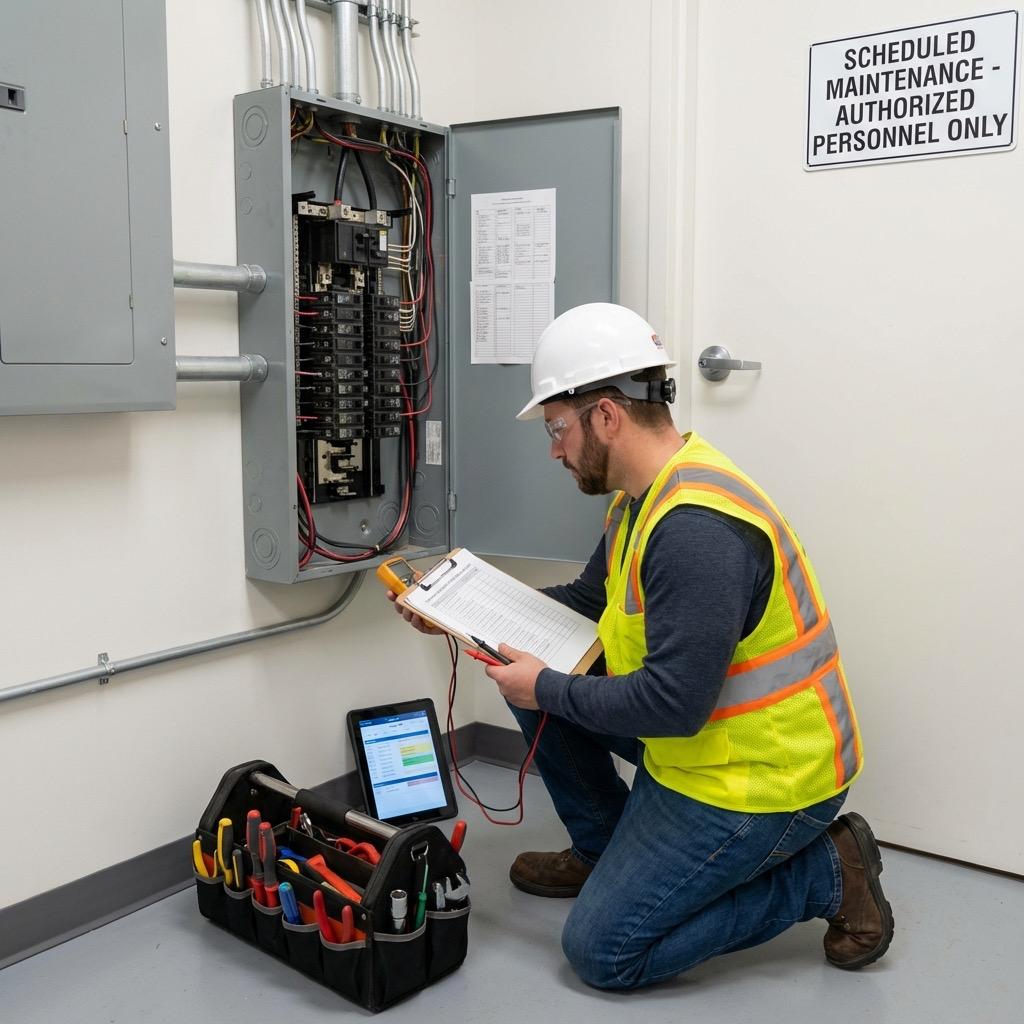
Commercial electrical systems work hard every day, often without attention until something fails. When failures occur, the results are costly: business disruption, emergency repair bills, damaged equipment, and potential safety hazards. For property managers and business owners across Northern Virginia -- from office towers in Tysons to industrial facilities along the Dulles corridor -- a proactive maintenance plan prevents these problems, extends equipment life, and ensures reliable operation year after year.
Key Takeaways
- Emergency electrical repairs cost 3-5 times more than planned preventive maintenance.
- Regular maintenance extends the service life of electrical equipment by 20-50%, maximizing your capital investment.
- A comprehensive plan covers service entrance equipment, distribution panels, motor controls, lighting, and emergency power systems.
- Infrared thermographic inspections detect loose connections and overloaded circuits before they cause failures or fires.
- Different components require different maintenance frequencies -- from monthly emergency light tests to annual comprehensive inspections and load bank testing.
The Case for Preventive Electrical Maintenance
Preventive maintenance offers compelling benefits compared to reactive, breakdown-based approaches:
Reduced Downtime
Identifying and addressing problems before failure prevents unexpected outages that disrupt operations and revenue.
Lower Total Costs
Emergency repairs cost 3-5 times more than planned maintenance. Prevented failures avoid both repair costs and associated business losses.
Extended Equipment Life
Regular maintenance extends the service life of electrical equipment by 20-50%, maximizing your capital investment.
Safety, Efficiency, and Compliance
Maintenance identifies hazards before they cause fires, shocks, or other safety incidents. Clean, well-maintained equipment operates more efficiently, reducing energy costs. Insurance requirements and some codes mandate regular electrical maintenance.
The Numbers Do Not Lie: According to the National Fire Protection Association, electrical failures are responsible for over $1.3 billion in commercial property damage annually in the United States. In Northern Virginia, where commercial property values are among the highest in the nation, the financial exposure from an electrical fire can be devastating. A maintenance plan costing a few thousand dollars a year protects assets worth millions.
Components of a Commercial Electrical Maintenance Plan
Comprehensive maintenance addresses all aspects of your electrical system:
Our licensed electricians have installed hundreds of EV chargers across Northern Virginia. We handle everything from panel evaluation to permit filing. Call (703) 997-0026 or request your free estimate online.
Service Entrance Equipment
Your main electrical service requires annual inspection:
- Visual inspection for physical damage, corrosion, or overheating signs
- Connection torque verification (loose connections cause fires)
- Infrared scanning to detect hot spots
- Grounding system testing
- Surge protection device inspection
- Utility meter and main disconnect operation
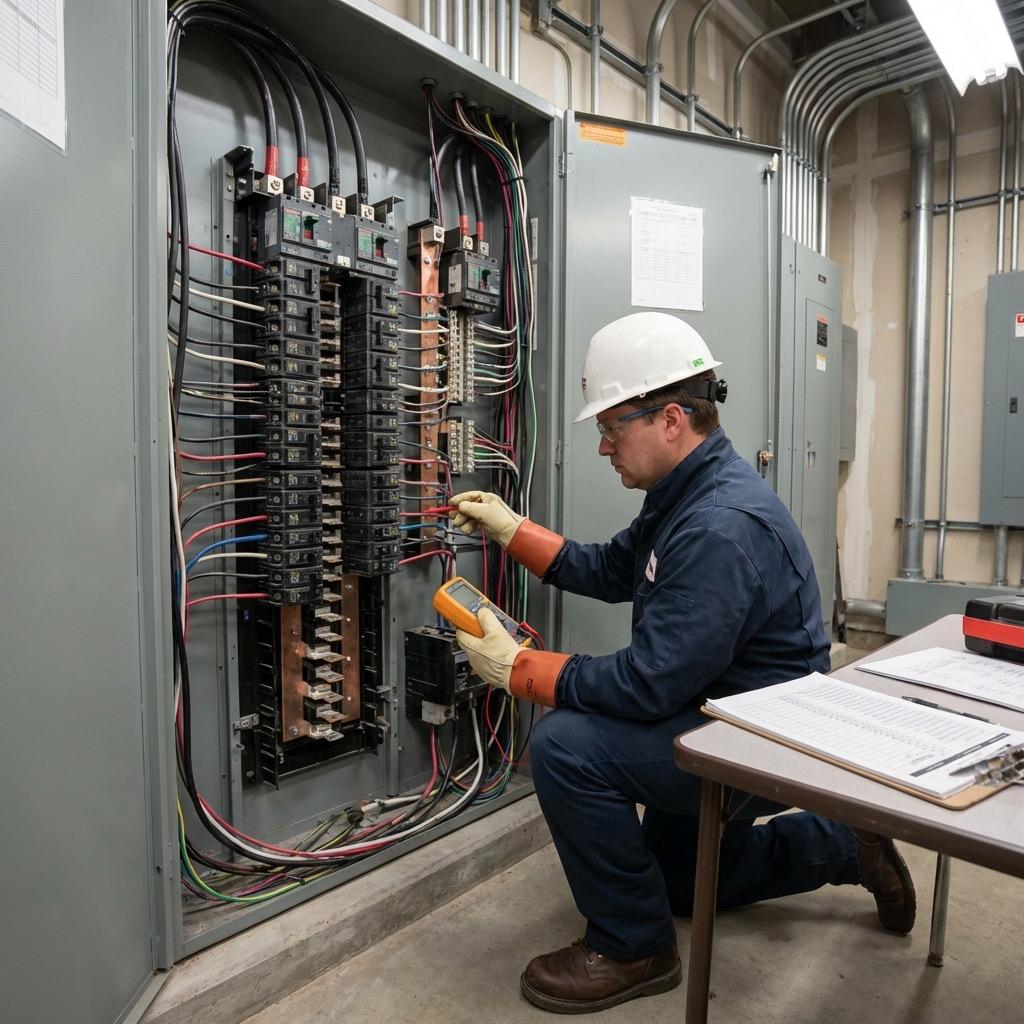
Distribution Equipment
Panelboards, switchgear, and transformers need regular attention:
- Enclosure inspection and cleaning
- Bus bar inspection and connection tightening
- Breaker operation testing
- Thermal scanning for overheating
- Transformer oil analysis (for oil-filled units)
- Labeling accuracy verification
Motor Control Centers
Motor starters and controls require periodic maintenance:
- Contactor inspection and cleaning
- Overload relay testing and calibration
- Control circuit verification
- Motor lead inspection
- Variable frequency drive maintenance
Lighting Systems
Lighting maintenance ensures proper illumination:
- Lamp replacement (group relamping for efficiency)
- Fixture cleaning
- Ballast and driver inspection
- Emergency lighting testing (monthly and annual)
- Photocell and timer adjustment
- Exterior fixture maintenance
Emergency Power Systems
Generators and UPS systems require regular testing:
- Weekly generator exercise runs
- Monthly generator inspections
- Annual load bank testing
- Fuel system maintenance
- Transfer switch testing
- UPS battery testing and replacement
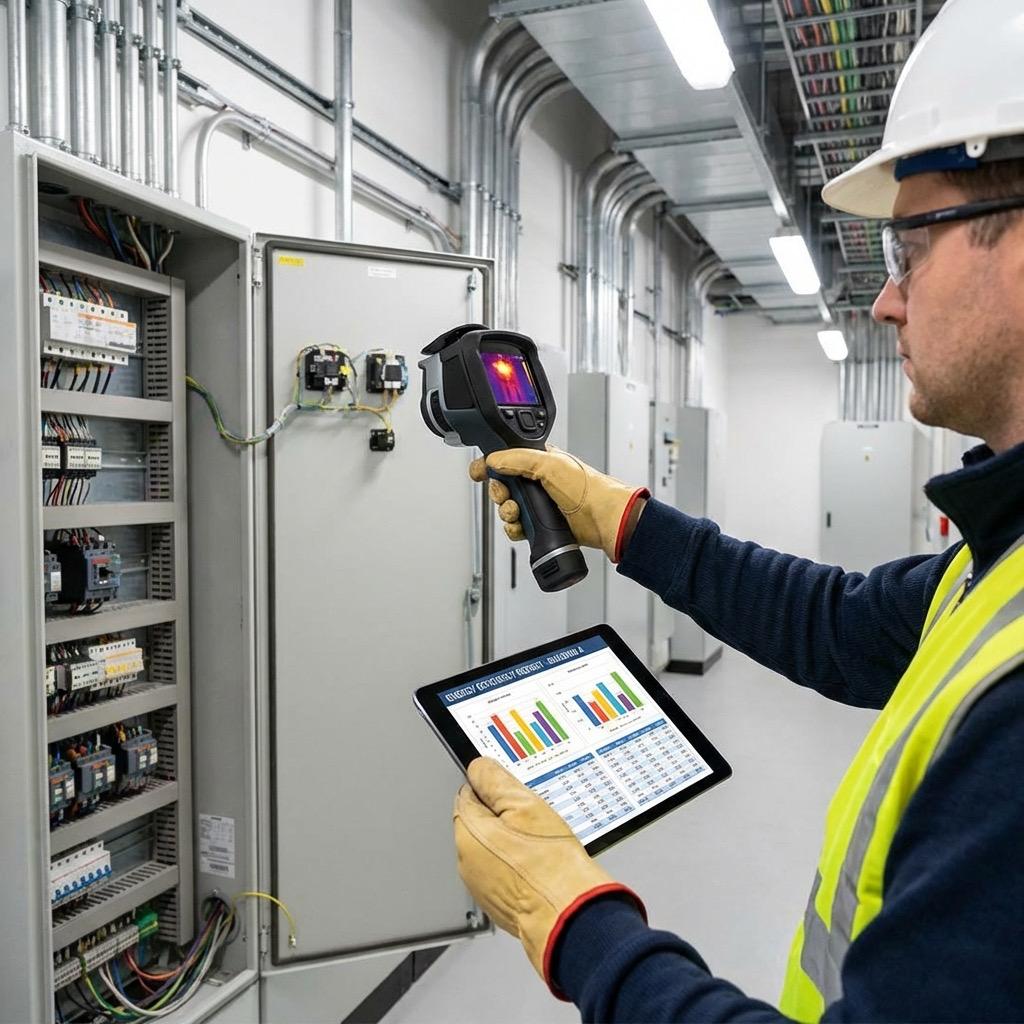
Infrared Thermographic Inspections
Thermal imaging is a powerful predictive maintenance tool that can detect problems invisible to the naked eye:
What It Detects
- Loose connections (appear as hot spots)
- Overloaded circuits
- Failing components (breakers, contactors)
- Phase imbalances
- Insulation breakdown
When to Use It
Annual infrared inspections are recommended for most commercial facilities. Critical facilities or high-risk environments may warrant quarterly scanning.
Insurance Benefits
Many insurance carriers offer premium discounts for facilities with documented thermographic inspection programs.
Pro Tip: Schedule infrared inspections during peak load periods when your building is fully operational. Hot spots from loose connections and overloaded circuits are most visible under load. An inspection performed on a quiet Sunday will miss problems that only appear during Monday's peak demand. Our technicians typically recommend mid-week, mid-afternoon scans for the most accurate results.
Maintenance Frequencies
Different components require different maintenance intervals for optimal reliability:
Monthly
- Emergency light testing (30-second test)
- Generator exercise runs
- Visual inspection of accessible equipment
Quarterly
- Panel room inspections
- Exterior lighting inspection
- UPS battery monitoring review
Semi-Annual
- Thermal imaging (critical facilities)
- Motor and drive inspection
- Control system verification
Annual
- Comprehensive system inspection
- Thermal imaging (standard facilities)
- Emergency lighting 90-minute test
- Generator load bank testing
- Connection torque verification
- Ground system testing
Creating Your Maintenance Plan
An effective maintenance plan starts with understanding your facility:
Equipment Inventory and Criticality Assessment
Document all electrical equipment including age, capacity, manufacturer, and condition. This inventory guides maintenance scheduling and replacement planning. Identify which systems are most critical to operations -- these receive priority attention and more frequent maintenance.
Historical Analysis and Scheduling
Review past failures and repairs to identify problem areas requiring additional attention. Develop a calendar of maintenance activities that minimizes business disruption while ensuring all systems receive appropriate attention.
Documentation
Maintain records of all inspections, tests, and repairs. Documentation demonstrates due diligence and tracks equipment condition over time.
Maintenance Plan Benefits by Facility Type
Different businesses benefit from maintenance in different ways:
Office Buildings
Prevents tenant complaints and lease issues, ensures code compliance, and maintains property value.
Retail Stores
Prevents lost sales during outages, maintains product displays and refrigeration, and ensures customer safety.
Restaurants
Protects food safety and inventory, maintains health code compliance, and prevents costly service interruptions.
Healthcare Facilities
Ensures life-safety system reliability, maintains regulatory compliance, and protects patient care equipment.
Manufacturing
Prevents production losses, protects process equipment, and reduces scrap from power quality issues.
AJ Long Electric Maintenance Programs
AJ Long Electric offers comprehensive commercial electrical maintenance programs tailored to your facility and budget throughout Northern Virginia. Our programs include scheduled inspections, thermal imaging, emergency response, and detailed documentation. We serve office buildings, retail centers, restaurants, medical facilities, and industrial properties across Fairfax, Loudoun, Prince William, and Arlington counties.
Contact AJ Long Electric to discuss a maintenance program designed for your commercial property and start protecting your electrical investment today.
Tags:

Written by
Matt Long
Master Electrician
Our team of licensed electricians brings over 40 years of combined experience serving Northern Virginia. We're committed to providing expert electrical solutions with a focus on safety, quality, and customer satisfaction.
Reviewed by AJ Long Electric Master Electricians · VA License #2705031092 · View Credentials