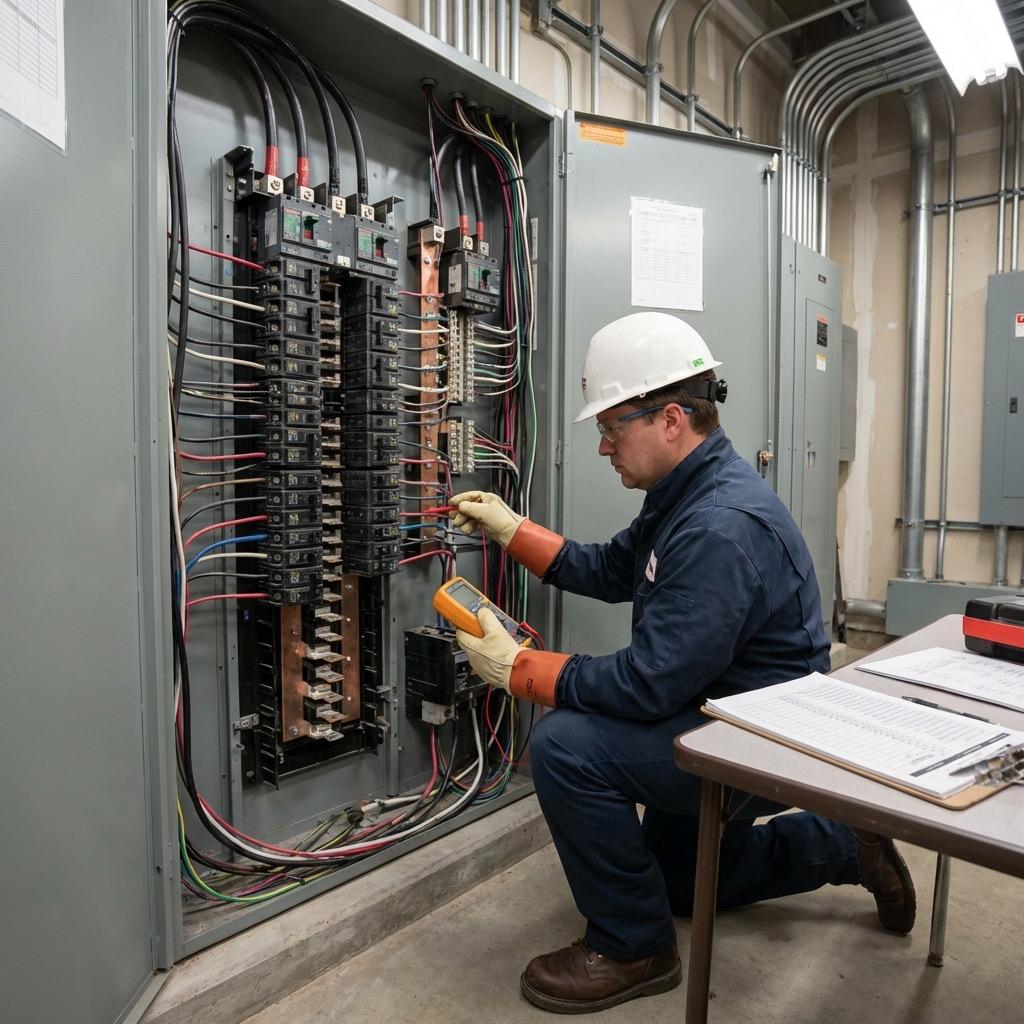
Commercial electrical inspections are essential for business safety, insurance compliance, and regulatory adherence. For property managers and business owners across Fairfax County, Loudoun County, Prince William County, and the broader Northern Virginia region, understanding what inspectors look for helps you prepare and address issues before they become costly problems. This guide explains the inspection process and helps you maximize the value of your commercial electrical inspection.
Key Takeaways
- Regular electrical inspections prevent fires, ensure code compliance, satisfy insurance requirements, and protect you from liability.
- Inspections cover service entrance equipment, distribution panels, branch circuits, wiring methods, receptacles, lighting, and special systems like generators and fire alarms.
- The most common violations include working space obstructions around panels, missing covers, overloaded circuits, improper modifications, and missing GFCI protection.
- Infrared thermographic inspections detect hot spots from loose connections and overloaded circuits before they cause failures or fires.
- Preparing by clearing panel access, testing emergency lights, and addressing known issues makes inspections more productive and less costly.
Why Commercial Electrical Inspections Matter
Regular electrical inspections serve multiple important purposes that protect your business, employees, and investment:
- Fire Prevention: Electrical issues are a leading cause of commercial fires. Inspections identify hazards before they cause fires.
- Code Compliance: Electrical codes evolve, and older installations may not meet current standards. Inspections identify compliance gaps.
- Insurance Requirements: Many commercial insurance policies require periodic electrical inspections. Non-compliance can void coverage.
- Liability Protection: Documented inspections demonstrate due diligence if electrical issues cause injury or property damage.
- Equipment Protection: Inspections can identify power quality issues that damage sensitive equipment.
- Operational Reliability: Finding and fixing problems during planned inspections prevents unexpected failures that disrupt business.
Types of Commercial Electrical Inspections
Different inspections serve different purposes, and you may encounter several types over the life of your property:
Our licensed electricians have installed hundreds of EV chargers across Northern Virginia. We handle everything from panel evaluation to permit filing. Call (703) 997-0026 or request your free estimate online.
Permit Inspections
Required after any electrical work requiring a permit. Local inspectors verify work meets code requirements before it can be energized or concealed. In Northern Virginia, Fairfax County, Loudoun County, and Prince William County each have their own inspection scheduling systems and timelines.
Insurance Inspections
Many insurance companies require inspections before issuing policies or at regular intervals. These typically focus on fire hazards and general safety.
Real Estate Transaction Inspections
When buying or selling commercial property, electrical inspections identify conditions affecting value or requiring immediate attention. This is especially important for older commercial properties along established corridors like Route 7, Route 50, and Route 28.
Preventive Maintenance Inspections
Regularly scheduled inspections by qualified electricians identify developing problems and verify system performance. Recommended annually for most commercial properties.
Infrared Thermographic Inspections
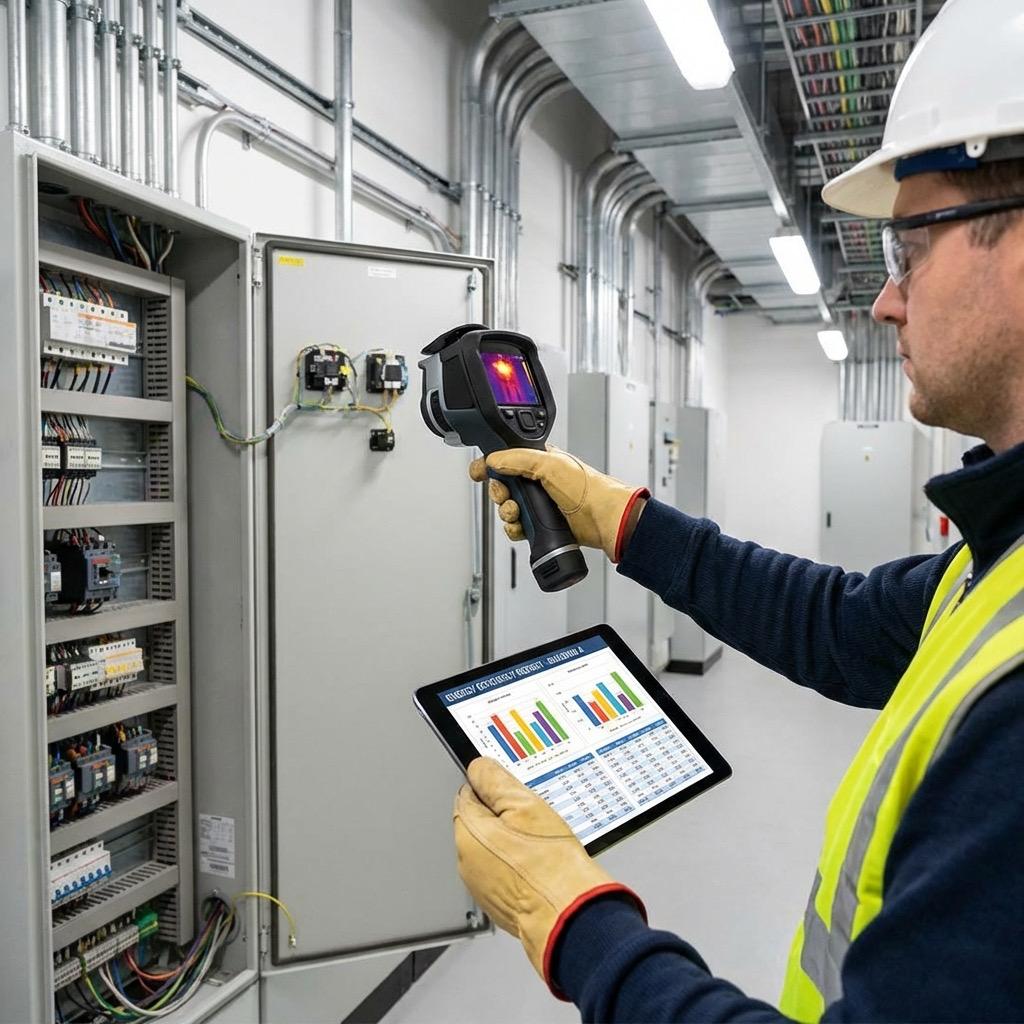
Using thermal imaging cameras, these specialized inspections detect hot spots indicating loose connections, overloaded circuits, or failing components. Often required for large commercial and industrial facilities.
Insurance Tip: Many commercial insurance carriers serving the Northern Virginia market offer premium discounts of 5-15% for properties with documented annual electrical inspections and infrared thermographic surveys. Ask your insurance agent whether your carrier offers this benefit -- the inspection often pays for itself through premium savings alone.
What Inspectors Examine
A comprehensive commercial electrical inspection covers every component of your electrical system:
Service Entrance Equipment
- Service capacity versus connected load
- Meter and main disconnect condition
- Proper grounding and bonding
- Service conductor condition
- Weatherhead and service drop/lateral condition
Distribution Equipment
- Panelboard condition and labeling
- Breaker condition and proper sizing
- Conductor terminations and condition
- Working space compliance (36" clearance minimum)
- Bus bar condition and connections
Branch Circuits, Wiring, and Devices
- Proper wire sizing for loads
- GFCI and AFCI protection where required
- Dedicated circuits for required equipment
- Extension cord and power strip usage
- Appropriate wiring methods for the environment
- Conduit condition and support
- Junction box covers and accessibility
- Receptacle physical condition, grounding, and ratings
- Weatherproof covers where required
Lighting and Special Systems
- Fixture condition and mounting
- Emergency and exit lighting function
- Ballast and driver condition
- Exterior lighting condition and controls
- Emergency power systems
- Fire alarm power
- Elevator electrical
- HVAC electrical connections
- Commercial kitchen equipment
Common Issues Found During Inspections
Based on our experience inspecting commercial properties throughout Northern Virginia, these issues appear frequently:
Working Space Violations
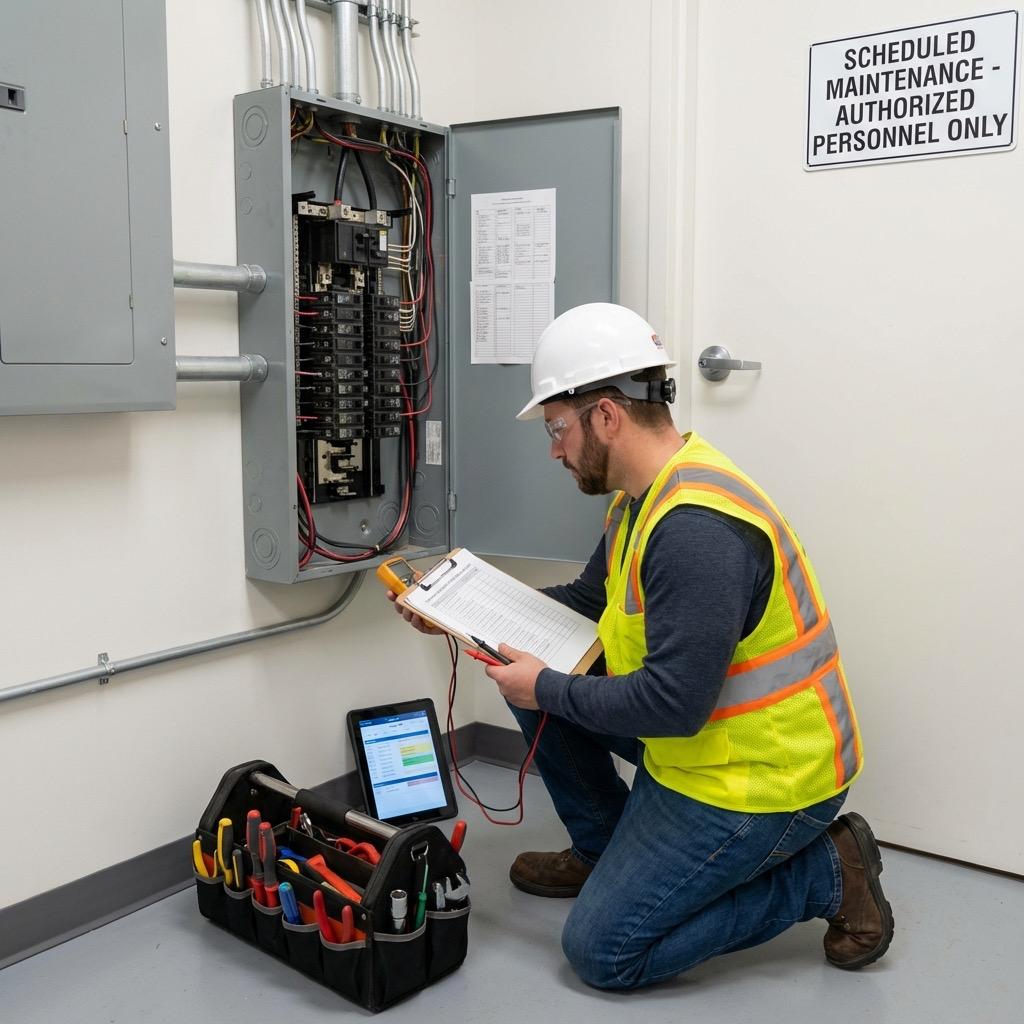
NEC Article 110.26 requires 36 inches of clear working space in front of electrical panels. Storage in electrical rooms is one of the most common violations we encounter, particularly in office buildings and retail spaces where storage space is at a premium.
Missing or Damaged Covers
Junction box covers, panel covers, and device covers protect against accidental contact with live parts. Missing covers are serious safety hazards.
Overloaded Circuits
Adding equipment over time often overloads circuits designed for original loads. This causes breaker trips, overheating, and fire risk.
Improper Modifications
Work performed without permits, by unqualified persons, or using improper methods creates ongoing hazards.
Deteriorated Components and Missing GFCI
Age, environmental conditions, and usage cause component deterioration. Corroded connections, cracked insulation, and worn contacts require attention. Older buildings often lack GFCI protection now required in kitchens, bathrooms, outdoors, and other wet locations.
Pro Tip: Two weeks before your scheduled inspection, walk through your facility with a checklist. Verify all panel doors close and latch, all junction box covers are in place, emergency lights illuminate when you press the test button, and no electrical rooms are being used for storage. Addressing these simple items before the inspector arrives saves time and reduces findings.
Preparing for and Understanding Your Inspection
Steps to Prepare
- Ensure Access: Clear access to all electrical equipment, including panels, disconnects, and junction boxes
- Maintain Working Space: Remove storage from within 36 inches of panels
- Gather Documentation: Have permits, previous inspection reports, and as-built drawings available
- Test Emergency Systems: Verify exit signs and emergency lights work before the inspector arrives
- Know Your Systems: Have someone available who knows the electrical systems and can answer questions
- Address Known Issues: Fix obvious problems before the inspection rather than having them documented
Understanding Inspection Reports
Inspection reports typically categorize findings by severity:
- Immediate Hazards: Conditions requiring immediate correction to prevent injury or fire
- Code Violations: Conditions not meeting current code requirements
- Recommendations: Suggested improvements that are not code requirements
- Maintenance Items: Normal wear requiring attention
After the Inspection
Following your inspection, address immediate hazards right away, develop a plan and timeline to correct other issues, retain inspection reports for insurance and liability documentation, schedule follow-up inspection to verify corrections, and implement ongoing maintenance to prevent future issues.
Schedule Your Commercial Electrical Inspection
AJ Long Electric provides comprehensive commercial electrical inspections throughout Northern Virginia, including Fairfax, Loudoun, Prince William, and Arlington counties. Our master electricians thoroughly evaluate your systems, provide detailed reports, and can address any issues found. We also offer infrared thermographic inspections for larger facilities.
Contact AJ Long Electric to schedule your commercial electrical inspection and protect your business from electrical hazards.
Tags:

Written by
Matt Long
Master Electrician
Our team of licensed electricians brings over 40 years of combined experience serving Northern Virginia. We're committed to providing expert electrical solutions with a focus on safety, quality, and customer satisfaction.
Reviewed by AJ Long Electric Master Electricians · VA License #2705031092 · View Credentials