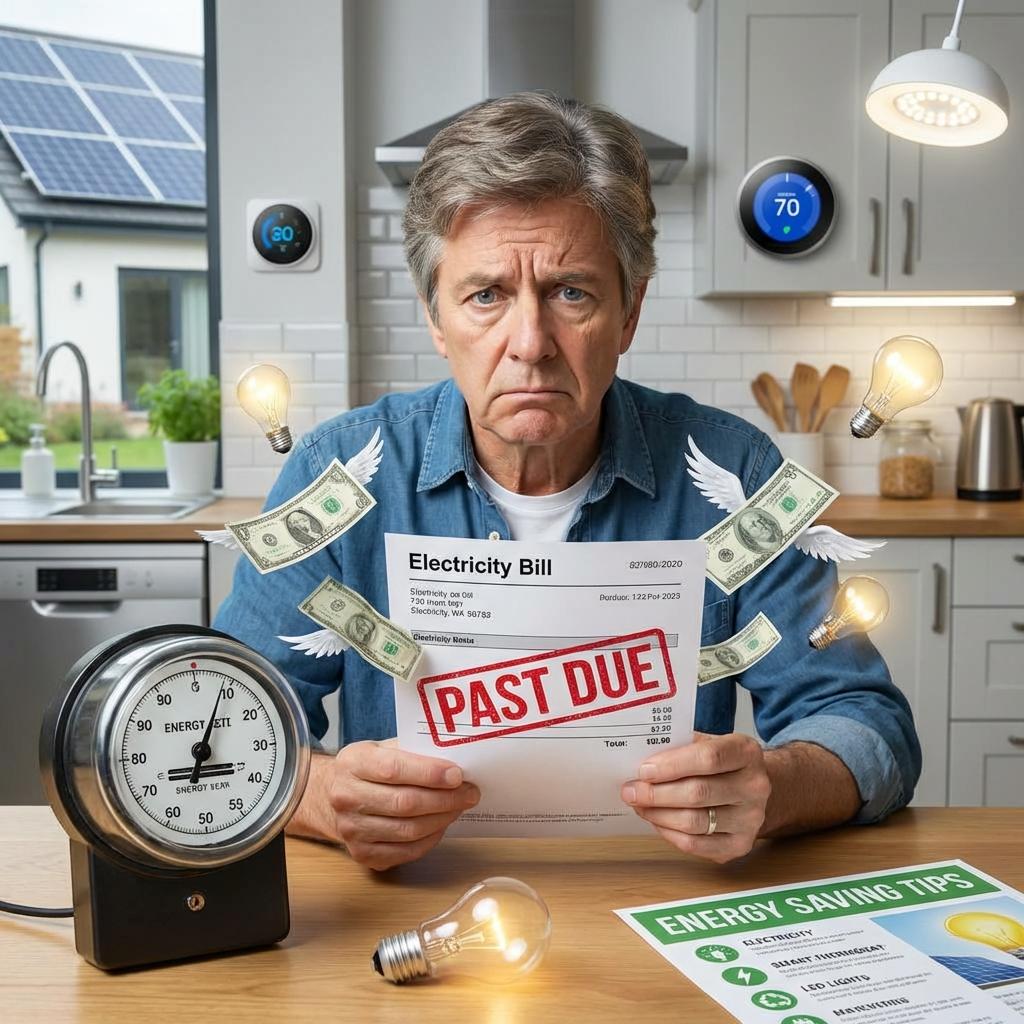
Opening your monthly electric bill to find a number significantly higher than expected is a jarring experience, and it is one that many Northern Virginia homeowners face, especially during the peak summer cooling and winter heating seasons. While rate increases from Dominion Energy are sometimes a factor, a suddenly or persistently high electric bill usually points to specific, identifiable problems within your home that can be diagnosed and corrected. From aging HVAC systems running inefficiently to phantom loads silently drawing power around the clock, the energy wasters in your home are often hiding in plain sight once you know where to look.
Key Takeaways
- HVAC systems account for roughly half of the average home's electricity consumption, making them the first place to investigate.
- Phantom loads from electronics in standby mode can add 5 to 10 percent to your electric bill.
- Old appliances, particularly refrigerators and water heaters, consume significantly more energy than modern equivalents.
- An electrician can install monitoring equipment that shows exactly where your electricity is going.
- Simple behavioral changes and targeted upgrades can reduce your bill by 10 to 30 percent.
Understanding Your Electric Bill
Before hunting for energy wasters, it helps to understand what you are actually being charged for. Your electric bill from Dominion Energy is based on kilowatt-hours consumed. One kilowatt-hour is the energy used by a 1,000-watt device running for one hour. The average Northern Virginia home consumes between 1,000 and 1,500 kilowatt-hours per month, though this varies widely based on home size, insulation quality, HVAC efficiency, and household habits.
Seasonal Patterns
Electric bills in the DMV area typically follow a predictable seasonal pattern. Summer bills peak in July and August when air conditioning runs heavily. Winter bills rise when heat pumps work hard against cold temperatures, and especially when backup electric heat strips activate during the coldest periods. Spring and fall usually bring the lowest bills. A spike that deviates significantly from your normal seasonal pattern warrants investigation.
The Biggest Energy Consumers in Your Home
HVAC Systems
Heating and cooling typically account for 40 to 50 percent of a home's total electricity consumption, making it the single largest factor in your electric bill. Several HVAC issues can cause bills to spike. Dirty air filters restrict airflow, forcing the system to run longer and harder. A failing compressor draws more current as its efficiency drops. Leaking ductwork in unconditioned attics or crawl spaces wastes 20 to 30 percent of the air the system produces. A malfunctioning thermostat can cause the system to run when it should not. And aging systems simply lose efficiency over time as components wear.
Whether it is a simple repair or a major electrical project, our licensed team is ready to help. Serving all of Northern Virginia with transparent pricing and expert workmanship. Call (703) 997-0026 today.
The simplest HVAC maintenance step is replacing your air filter regularly, ideally every one to three months depending on the filter type and household conditions. This single action can reduce HVAC energy consumption by 5 to 15 percent. Beyond that, annual professional HVAC maintenance, including refrigerant level checks, coil cleaning, and electrical connection tightening, keeps the system running at its designed efficiency.
Electric Water Heaters
If your home has an electric water heater, it is likely your second-largest electricity consumer, accounting for 15 to 25 percent of your bill. Sediment buildup at the bottom of the tank insulates the water from the heating elements, forcing them to run longer. Failing elements may heat slowly or not at all, causing the other element to work overtime. An old tank with degraded insulation loses heat to the surrounding air, requiring constant reheating. Flushing the tank annually to remove sediment and checking the anode rod every few years can maintain efficiency. If your water heater is more than 10 years old, a new high-efficiency model or a heat pump water heater can significantly reduce this portion of your bill.
Heat pump water heaters are increasingly popular in Northern Virginia homes because they use roughly 60 percent less electricity than conventional electric water heaters. They work by extracting heat from the surrounding air and transferring it to the water, similar to how a heat pump HVAC system works. While they cost more upfront, the energy savings typically pay back the investment within three to five years, and federal tax credits may further offset the cost.
Phantom Loads and Standby Power
Phantom loads, also called standby power or vampire power, are the electricity consumed by devices that are turned off but still plugged in. Televisions, cable boxes, gaming consoles, computer monitors, chargers, and smart home devices all draw power continuously to maintain settings, respond to remote controls, or stay in a low-power standby state. Individually, each phantom load is small, typically 1 to 10 watts. But multiply that by dozens of devices running 24 hours a day, 365 days a year, and phantom loads can account for 5 to 10 percent of your total electricity consumption. Using smart power strips that cut power to devices in standby can eliminate most phantom loads without any inconvenience.
Aging Appliances
Major appliances manufactured in the 1990s and earlier consume significantly more energy than their modern counterparts. A refrigerator from 2000 uses roughly twice as much electricity as a current Energy Star model. An old chest freezer in the garage can consume as much electricity as a modern full-size refrigerator. Older dishwashers use more water and more energy to heat it. When evaluating your electric bill, consider the age and efficiency rating of your major appliances. Replacing a single aging appliance with an Energy Star model can reduce your annual electricity consumption by hundreds of kilowatt-hours.
Hidden Energy Wasters
Pool and Hot Tub Equipment
If you have a pool or hot tub, the associated equipment can be a major electricity consumer. Pool pumps, especially older single-speed models, can consume as much electricity as the rest of your home combined during the swimming season. Upgrading to a variable-speed pool pump can reduce pool pump electricity consumption by 70 to 80 percent. Hot tub heaters draw substantial power, particularly in winter. Using an insulated cover and maintaining the tub at a lower temperature when not in use can significantly reduce consumption.
Electric Space Heaters
Portable electric space heaters are extremely energy-intensive, drawing 1,500 watts each. Running a single space heater for eight hours a day adds roughly 360 kilowatt-hours to your monthly consumption, which can translate to thirty to fifty dollars on your bill. If you are using space heaters to supplement inadequate heating, the underlying issue is likely poor insulation, leaking ductwork, or an undersized heating system, all of which are more cost-effective to fix than to compensate for with space heaters.
Older Lighting
If your home still has significant numbers of incandescent or halogen light bulbs, they are consuming roughly five times more electricity than equivalent LED bulbs. A home with 30 incandescent bulbs averaging 60 watts each and running for five hours a day uses about 270 kilowatt-hours per month on lighting alone. Switching to LED equivalents reduces that to roughly 54 kilowatt-hours. The LED bulbs also last 15 to 25 times longer, eliminating frequent replacement costs.
Walk through your home and count the number of devices that show a light, display a clock, or feel warm when they are supposedly off. Each one is consuming standby power. Group these devices on smart power strips that can cut power completely when the devices are not in use. This simple step can save 50 to 100 dollars per year on your electric bill.
How an Electrician Can Help
Whole-House Energy Monitoring
Modern energy monitoring systems install at your electrical panel and provide real-time data on how much electricity each circuit is consuming. These systems, such as the Sense or Emporia Vue monitors, connect to your smartphone and show you exactly which circuits and appliances are driving your bill. This data eliminates guesswork and tells you precisely where to focus your efficiency improvements. Our electricians can install these systems quickly and show you how to interpret the data.
Circuit Analysis and Load Balancing
An electrician can analyze your electrical system to identify circuits that are overloaded, inefficiently routed, or serving obsolete equipment. Redistributing loads across circuits more evenly can improve efficiency and reduce the strain on individual circuits. We can also identify and eliminate unnecessary circuits that may be powering equipment you no longer use.
Efficiency Upgrades
From LED lighting retrofits to programmable thermostat installation to whole-house surge protectors that protect appliance electronics and extend their lifespan, an electrician can implement a range of upgrades that reduce your electricity consumption and pay for themselves over time.
Taking Action
A high electric bill does not have to be a recurring frustration. By systematically identifying and addressing the energy wasters in your home, you can bring your bill down to a level that matches your home's actual needs. Start with the biggest consumers, HVAC and water heating, then work through phantom loads, aging appliances, and lighting. For professional assistance with energy monitoring installation, electrical system analysis, or efficiency upgrades, contact AJ Long Electric at (703) 997-0026. We help homeowners throughout Northern Virginia understand and reduce their energy consumption with practical, cost-effective solutions.
Tags:

Written by
AJ Long Electric Team
Licensed Electricians
Our team of licensed electricians brings over 40 years of combined experience serving Northern Virginia. We're committed to providing expert electrical solutions with a focus on safety, quality, and customer satisfaction.
Reviewed by AJ Long Electric Master Electricians · VA License #2705031092 · View Credentials