A circuit breaker that keeps tripping is not just an inconvenience; it is your electrical system's way of telling you that something is wrong. Circuit breakers are engineered safety devices designed to interrupt power flow when dangerous conditions are detected. While an occasional trip is normal and shows the breaker is doing its job, repeated tripping signals an underlying issue that needs diagnosis and repair. Ignoring a breaker that trips frequently can lead to damaged appliances, melted wiring, or even an electrical fire.
Key Takeaways
- Circuit breakers trip to protect your home from overcurrent, short circuits, and ground faults.
- Overloaded circuits are the most common reason for repeated tripping.
- Never replace a breaker with a higher-amp rating as a fix; this bypasses a critical safety mechanism.
- AFCI breakers can trip due to arc faults caused by damaged wiring hidden inside walls.
- A breaker that trips with minimal load connected may be worn out and need replacement.
How Circuit Breakers Work
To understand why your breaker keeps tripping, it helps to know how breakers function. A circuit breaker monitors the flow of electrical current through the circuit it protects. Inside the breaker, a bimetallic strip heats up as current flows through it. Under normal conditions, the strip stays cool enough to maintain contact. When current exceeds the breaker's rated capacity, the strip heats and bends, mechanically releasing a latch that snaps the breaker to the off position, cutting power to the circuit.
Thermal vs. Magnetic Trip Mechanisms
Modern breakers actually use two trip mechanisms. The thermal mechanism described above handles sustained overloads, responding over seconds or minutes as heat builds. The magnetic mechanism uses an electromagnet that responds almost instantaneously to the massive current surge of a short circuit, tripping the breaker in milliseconds. This dual protection guards against both slow overloads and sudden faults.
Common Causes of Repeated Tripping
Overloaded Circuits
This is by far the most common cause and the one most homeowners can address themselves. An overloaded circuit simply has too many devices drawing power simultaneously. A standard 15-amp circuit can safely deliver about 1,440 watts, and a 20-amp circuit about 1,920 watts. Add up the wattages of everything plugged into the circuit, and you may be surprised how quickly the total approaches the limit. Hair dryers, space heaters, toasters, and window AC units are common offenders because each draws significant power on its own.
Outdated or overloaded electrical panels are a safety risk. Our team specializes in 200-amp upgrades throughout Northern Virginia, with same-day panel assessments available. Call (703) 997-0026 to get started.
The fix is usually straightforward: redistribute your loads. Move some devices to outlets on different circuits. If your home simply does not have enough circuits to distribute the load, an electrician can add new circuits to your panel, assuming it has available breaker slots.
Short Circuits
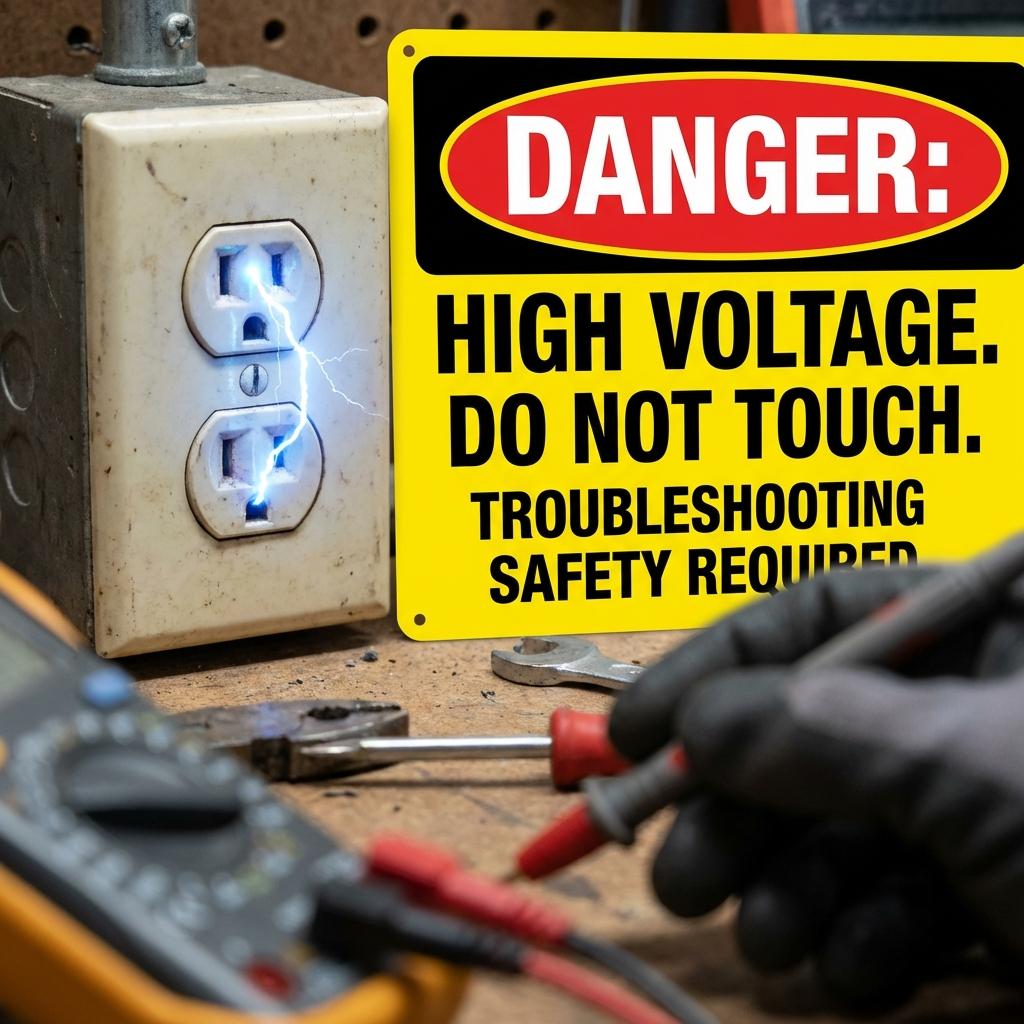
A short circuit occurs when a hot (current-carrying) wire makes direct contact with a neutral wire or another hot wire, creating a path with almost zero resistance. The resulting current surge is enormous, and the breaker's magnetic trip mechanism kicks in almost instantly. Short circuits are often caused by damaged appliance cords, faulty outlets or switches, loose wire connections inside junction boxes, or wiring damaged by rodents or nails driven through walls during home improvement projects.
Short circuits require professional diagnosis. The electrician needs to determine whether the fault is in a specific appliance, the outlet, or the building wiring itself. Unplug all devices from the affected circuit and reset the breaker. If it holds, plug devices back in one at a time to identify the faulty appliance. If the breaker trips immediately with nothing plugged in, the problem is in the building wiring.
In Northern Virginia homes built during the region's rapid expansion in the 1970s through 1990s, we frequently encounter wiring that has been compromised by decades of renovation work. Nails or screws driven into studs during remodeling projects can pierce wire insulation, creating a short circuit that may not manifest until months or years later when conditions change.
Ground Faults
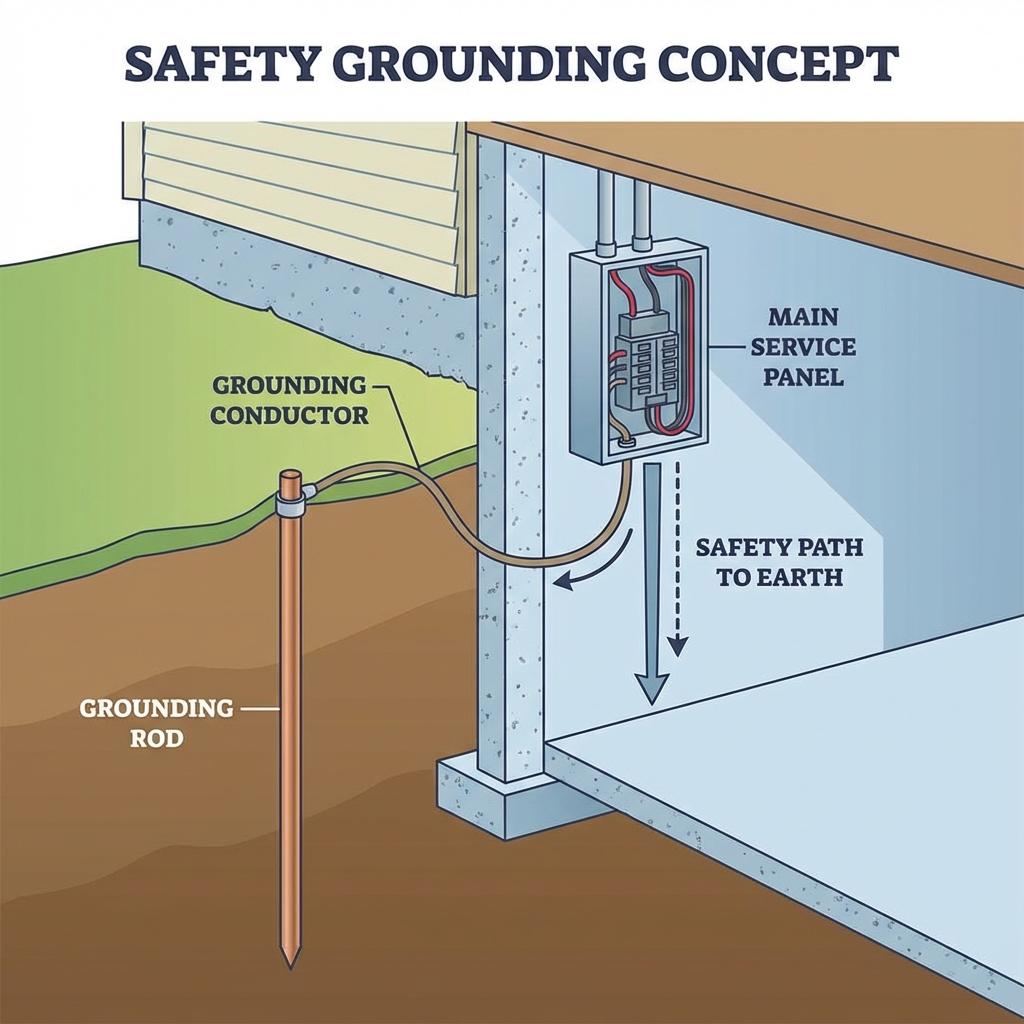
A ground fault happens when a hot wire contacts a ground wire, a metal junction box, or any other grounded surface. Like a short circuit, this creates an unintended low-resistance path that draws excessive current. Ground faults are especially common in damp environments like kitchens, bathrooms, basements, garages, and outdoor areas, which is why building codes require GFCI protection in these locations. GFCI devices detect ground faults as small as 4-6 milliamps and shut off power in about one-fortieth of a second, protecting against electrocution.
Arc Faults
Arc faults occur when damaged, deteriorated, or improperly installed wiring creates an unintended electrical arc. These arcs generate intense heat that can ignite surrounding materials. AFCI breakers, now required by code in most living spaces, detect the unique electrical signature of dangerous arcs and trip to prevent fires. If your AFCI breaker trips, it may be detecting damaged wiring behind a wall, a cord pinched by furniture, or a failing device. Do not simply replace the AFCI with a standard breaker; it is protecting you from a genuine fire risk.
Faulty or Worn-Out Breaker
Breakers are mechanical devices with a limited lifespan. After years of service and multiple trip cycles, the internal components wear out. A worn breaker may trip at current levels well below its rating, or it may fail to trip when it should, which is even more dangerous. If a breaker trips repeatedly with minimal load on the circuit, or if it feels loose when you flip it, it likely needs replacement. Breaker replacement is a straightforward job for a licensed electrician but should never be attempted by a homeowner due to the live bus bars inside the panel.
What NOT to Do When Your Breaker Trips
Never Upsize the Breaker
This is the most dangerous mistake homeowners make. If a 15-amp breaker keeps tripping, replacing it with a 20-amp breaker does not fix the problem. It simply allows more current to flow through wiring that is only rated for 15 amps. The wiring overheats, insulation melts, and a fire can start inside your walls where you cannot see it. The breaker amperage must always match the wire gauge of the circuit it protects.
Do Not Keep Resetting Without Investigating
Every time a breaker trips and you reset it without addressing the cause, you are potentially re-energizing a dangerous condition. If a breaker trips more than twice for the same apparent reason, stop resetting it and investigate or call an electrician.
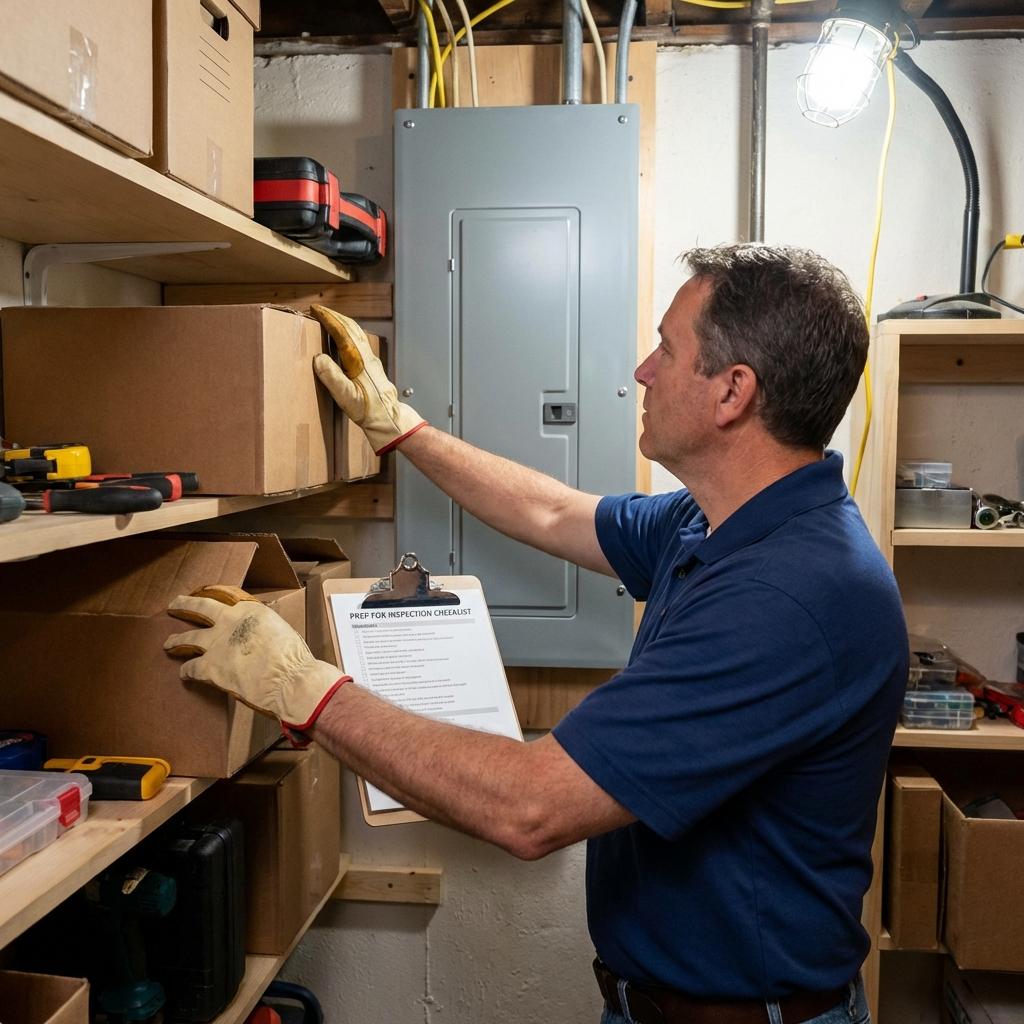
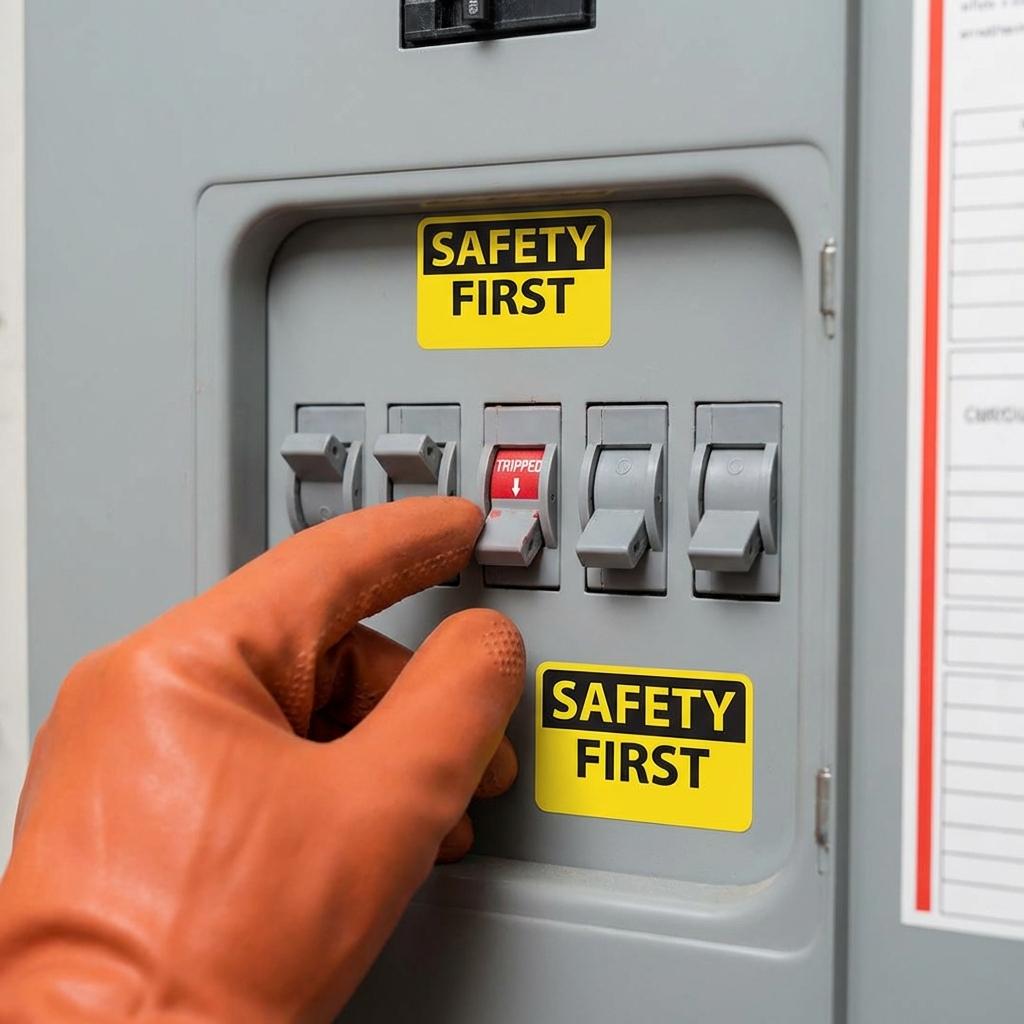
Keep a flashlight near your electrical panel so you can safely identify the tripped breaker during a power interruption. A tripped breaker sits in a middle position between on and off. To reset it, push it firmly to the full off position first, then back to on. If it immediately trips again, do not force it. Call a professional.
When to Call a Professional
Some tripping scenarios clearly warrant a professional. Call a licensed electrician if the same breaker trips repeatedly regardless of what is plugged in, if you smell burning or see scorch marks on the panel, if the breaker trips immediately upon reset with nothing connected to the circuit, if multiple breakers trip simultaneously, or if the main breaker trips. These situations indicate wiring faults, panel problems, or other conditions that require professional tools and expertise to diagnose safely.
The Diagnostic Process
An electrician will typically start by inspecting the panel for signs of overheating or damage, then use a clamp meter to measure current draw on the affected circuit under load. They may perform insulation resistance testing to check for damaged wire insulation, and they will inspect accessible junction boxes and connections along the circuit path. For intermittent faults, they may install a data-logging meter to capture the conditions at the moment of the next trip.
Preventing Future Breaker Trips
The best prevention is an electrical system that matches your home's actual demands. Many homes in the Fairfax County, Loudoun County, and Prince William County areas were built with electrical systems sized for the demands of their era. If you have added major appliances, a home office, an EV charger, or a finished basement since your home was built, your electrical system may be overdue for an upgrade. A load calculation performed by a licensed electrician will tell you exactly where you stand and what improvements would eliminate chronic tripping issues.
If your breakers trip frequently and you are tired of resetting them in the dark, contact AJ Long Electric at (703) 997-0026. We will diagnose the root cause, explain your options clearly, and implement a lasting fix. Our licensed electricians serve homeowners throughout Northern Virginia with honest, expert electrical service.
Tags:

Written by
AJ Long Electric Team
Licensed Electricians
Our team of licensed electricians brings over 40 years of combined experience serving Northern Virginia. We're committed to providing expert electrical solutions with a focus on safety, quality, and customer satisfaction.
Reviewed by AJ Long Electric Master Electricians · VA License #2705031092 · View Credentials