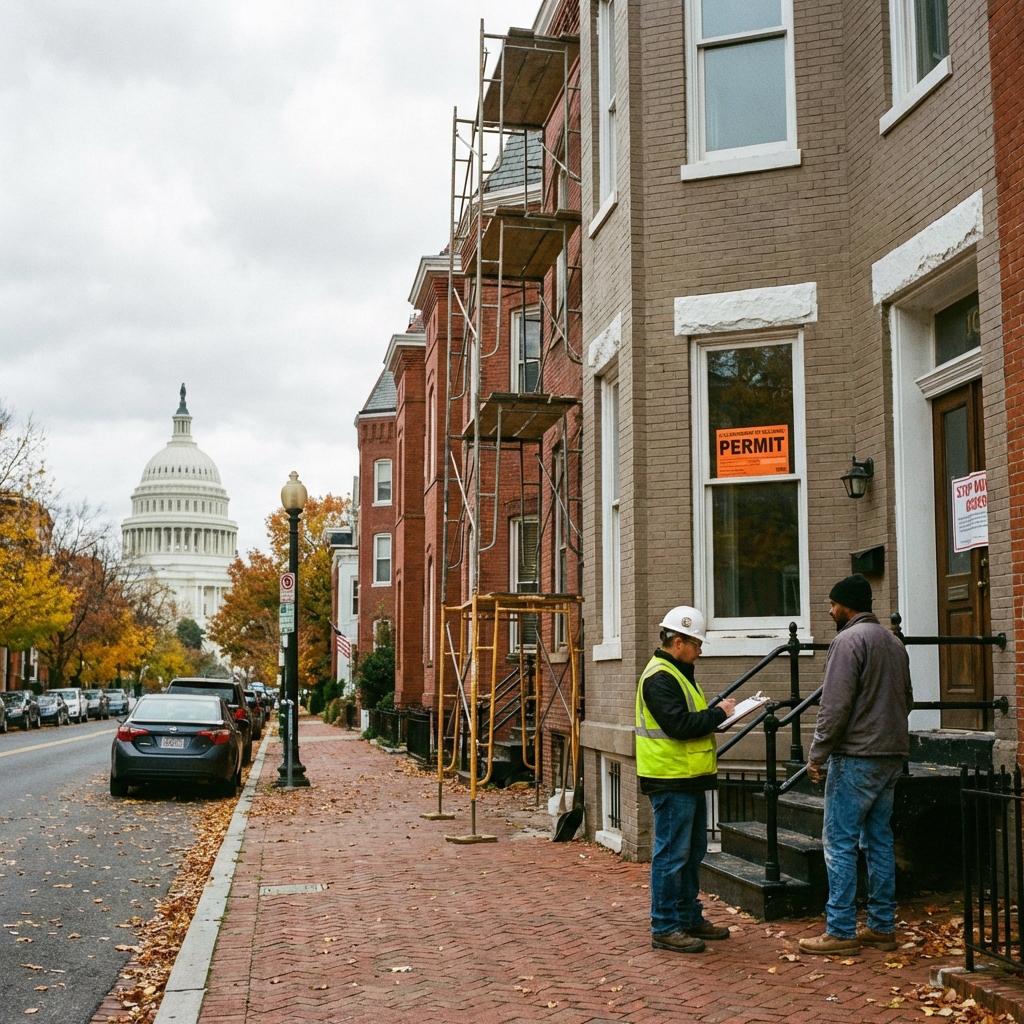
Washington, D.C. operates under its own unique set of building codes, permit requirements, and inspection processes that are entirely separate from those in neighboring Virginia and Maryland. For homeowners in the District who are planning electrical work, whether it is a panel upgrade in a Cleveland Park Colonial, an EV charger installation in a Capitol Hill rowhouse, or a complete rewire of a Dupont Circle Victorian, understanding the D.C. electrical permit process is essential for avoiding costly delays, ensuring code compliance, and protecting your investment. The District's permit process is managed by the Department of Buildings, and navigating it successfully requires familiarity with D.C.-specific requirements, the Historic Preservation Review Board process for properties in designated historic districts, and the practical realities of scheduling inspections in a busy urban jurisdiction.
Key Takeaways
- Washington, D.C. requires electrical permits for all work beyond simple fixture and device replacements, processed through the Department of Buildings.
- The District has its own electrical licensing requirements separate from Virginia and Maryland, and only D.C.-licensed electricians can pull permits for work within the District.
- Properties in D.C.'s numerous historic districts may require Historic Preservation Review Board approval for exterior electrical work before a building permit can be issued.
- D.C. adopts the National Electrical Code with District-specific amendments, and inspectors enforce these requirements rigorously.
- Unpermitted electrical work in D.C. can result in fines, required removal of completed work, complications during property sales, and potential insurance claim denials.
The D.C. Department of Buildings
The Department of Buildings, formerly part of the Department of Consumer and Regulatory Affairs, oversees all building permits and inspections within Washington, D.C. This includes electrical permits for residential and commercial work throughout the District. The department processes applications, conducts plan reviews for larger projects, and dispatches inspectors to verify that completed work meets code requirements.
Understanding the department's processes, timelines, and expectations is fundamental to planning any electrical project in D.C. The permit system has been modernized with online application capabilities, but the overall process still requires careful attention to documentation requirements, inspection scheduling, and follow-up procedures.
D.C. Electrical Licensing Requirements
Washington, D.C. maintains its own electrical licensing system that is separate from both Virginia and Maryland. An electrician licensed in Virginia or Maryland cannot legally perform permitted electrical work in D.C. without obtaining a D.C. license as well. This is a critical distinction for homeowners, because hiring an electrician who is not properly licensed in D.C. means the work cannot be legally permitted, inspected, or approved. Always verify that your electrician holds a valid D.C. electrical license before beginning any permitted work in the District.
What Electrical Work Requires a D.C. Permit
The District requires permits for virtually all electrical work that modifies the electrical system beyond simple like-for-like replacements of existing devices and fixtures.
Whether it is a simple repair or a major electrical project, our licensed team is ready to help. Serving all of Northern Virginia with transparent pricing and expert workmanship. Call (703) 997-0026 today.
Projects Requiring Permits
The following types of electrical work always require a D.C. electrical permit: new electrical service installations and upgrades, including panel replacements and service size increases; installation of new circuits for any purpose, including dedicated circuits for appliances, EV chargers, and home office equipment; whole-home and partial generator installations; hardwired EV charger installations; swimming pool, hot tub, and spa electrical connections; any electrical work associated with building additions, renovations, or basement conversions; and replacement of the main electrical panel even when the service size remains the same.
Work That Generally Does Not Require a Permit
Simple like-for-like replacements of existing devices typically do not require permits. This includes replacing a light switch with another light switch in the same location, replacing a receptacle with the same type of receptacle, swapping a light fixture for another fixture in the same location, and replacing a ceiling fan using existing wiring and support hardware. However, if any replacement involves changing wiring, adding circuits, or modifying the electrical system, a permit is required.
When in doubt about whether your D.C. electrical project requires a permit, assume that it does and confirm with your electrician or the Department of Buildings. The consequences of unpermitted work far outweigh the modest cost and effort of obtaining a permit. Permits exist to ensure safety, and the inspection process catches errors that could cause fires, shocks, or other hazards.
The D.C. Permit Application Process
The D.C. electrical permit process follows a structured sequence from application through final inspection and permit closure.
Application Submission
Your licensed D.C. electrician submits the permit application through the Department of Buildings, either online through the department's portal or in person. The application includes a description of the proposed work, the property address, the contractor's D.C. license information, and for larger projects, electrical plans or drawings. The application must be accompanied by the appropriate fee, which varies based on the scope of work.
Plan Review
Standard projects such as panel upgrades, single circuit additions, and EV charger installations typically undergo expedited review and may receive permits within a few business days. Larger projects involving significant new wiring, multiple circuits, or commercial work may require detailed plan review by the department's electrical plan reviewers. This review can take one to three weeks depending on project complexity and the department's workload. Plans must demonstrate compliance with the D.C.-adopted version of the National Electrical Code.
Inspection Scheduling
After the permitted work is complete, your electrician schedules an inspection through the Department of Buildings. D.C. inspectors are thorough and knowledgeable, verifying all aspects of the installation including proper wiring methods, correct device installation, adequate grounding and bonding, proper circuit protection including AFCI and GFCI where required, and accurate panel labeling. If deficiencies are found, corrections must be made and the work re-inspected before the permit can be closed.
Permit Closure
Once the inspector approves the completed work, the permit is closed in the department's system. A closed permit provides a permanent record that the work was performed by a licensed contractor, inspected by the District, and found to meet code requirements. This documentation is valuable during home sales, insurance claims, and any future electrical work on the property.
Historic District Considerations in D.C.
Washington, D.C. contains more than 60 designated historic districts, covering significant portions of the city's residential neighborhoods. Properties within these districts, which include Georgetown, Dupont Circle, Capitol Hill, Logan Circle, Adams Morgan, and many others, face additional review requirements when electrical work involves exterior changes.
The Historic Preservation Review Board
The HPRB reviews exterior modifications to properties within designated historic districts. While interior electrical work generally does not trigger HPRB review, any exterior changes that affect a property's historic appearance may require review and approval before a building permit can be issued. This includes installation of exterior electrical panels or meter bases, visible conduit runs on building facades, exterior lighting fixtures in some cases, generator installations visible from public ways, and EV charger installations on exterior walls facing public streets.
HPRB review adds time to the project timeline, typically two to six weeks depending on the nature of the proposed changes and the board's meeting schedule. Our approach to historic district projects emphasizes minimizing exterior changes through creative design solutions. When exterior modifications are unavoidable, we prepare documentation that demonstrates sensitivity to the property's historic character and supports the HPRB application.
Interior Electrical Work in Historic D.C. Properties
Interior electrical work in D.C.'s historic properties presents its own challenges. Many of these homes feature plaster-over-brick or plaster-over-lath wall construction that makes wire routing more difficult than in modern drywall construction. Panel space may be limited by the home's original footprint, and clearance requirements for new panels may be difficult to achieve in tight basements or utility areas. Our electricians use specialized techniques including flexible drill bits, fish tapes, and careful wall opening strategies to route new wiring through historic wall assemblies with minimal damage.
If you are purchasing a home in one of D.C.'s historic districts, include a specialized electrical inspection as part of your due diligence. Historic properties often have decades of accumulated electrical modifications, some of which may not have been permitted or may not meet current codes. A thorough evaluation by a D.C.-licensed electrician identifies safety concerns, estimates upgrade costs, and helps you negotiate the purchase with full knowledge of the property's electrical condition.
Common D.C. Electrical Projects and Permit Requirements
Different types of electrical projects in D.C. have specific permit requirements and practical considerations worth understanding before beginning work.
Panel Upgrades
Panel upgrades in D.C. require coordination with Pepco, the District's electric utility. When upgrading service size, Pepco must be notified and may need to upgrade the meter base and service connection. Pepco's timeline can vary, so early coordination is important for project planning. The D.C. inspector will verify proper panel installation, grounding, bonding, circuit protection, and labeling.
EV Charger Installations
EV charger installations in D.C. face unique challenges related to the District's urban density. Many D.C. homes rely on street parking, alley parking, or shared parking arrangements that complicate charger placement. Rowhouses with rear parking accessed from alleys may require long conduit runs from interior panels to exterior charger locations. Condo buildings require coordination with building management and may involve complex metering arrangements. Despite these challenges, D.C.'s strong support for electric vehicle adoption means the permitting process for EV chargers is well-established and generally efficient.
Generator Installations
Generator installations in D.C. require careful attention to noise ordinances, setback requirements, and, in historic districts, HPRB review. The compact lot sizes typical of D.C. residential properties make generator placement challenging, and the proximity of neighboring homes means noise considerations are paramount. Air-cooled generators in the 16 to 22 kilowatt range are most common for D.C. rowhouses and detached homes, with natural gas from Washington Gas as the typical fuel source.
Consequences of Unpermitted Work in D.C.
The consequences of performing electrical work without proper D.C. permits are significant and far-reaching. The Department of Buildings can impose fines for unpermitted work and may require that the work be exposed for inspection or even removed entirely. During home sales, buyers' inspectors and title companies often identify unpermitted work, creating delays, negotiation issues, and potential deal-breakers. Insurance companies may deny claims for damage caused by or related to unpermitted electrical work, leaving homeowners personally liable.
Trust AJ Long Electric for Your D.C. Electrical Project
AJ Long Electric holds proper D.C. electrical licensing and brings extensive experience with the District's permit process, historic preservation requirements, and the specific challenges of D.C.'s diverse housing stock. Whether your project involves a panel upgrade in a Cleveland Park Colonial, an EV charger for your Capitol Hill rowhouse, or a complete rewire of a Dupont Circle Victorian, our team navigates the D.C. permit process efficiently and delivers quality workmanship that passes inspection on the first visit. Contact AJ Long Electric today for a thorough evaluation of your D.C. property's electrical needs and expert guidance through the District's permit process.
Tags:

Written by
AJ Long Electric Team
Licensed Electricians
Our team of licensed electricians brings over 40 years of combined experience serving Northern Virginia. We're committed to providing expert electrical solutions with a focus on safety, quality, and customer satisfaction.
Reviewed by AJ Long Electric Master Electricians · VA License #2705031092 · View Credentials