Circuit breakers are the workhorses of your electrical panel, protecting your home from overloads, short circuits, and other electrical hazards. But not all breakers are the same—different types provide different protections and are required in different locations. This guide explains the various breaker types and their applications.
Key Takeaways
- Generator transfer switches connect to or replace your main panel, requiring adequate panel capacity and space.
- Automatic transfer switches (ATS) need proper panel configuration for safe utility/generator switching.
- Panel upgrades are often combined with transfer switch installation for the most cost-effective approach.
- Transfer switch sizing must match both your generator capacity and your electrical service amperage.
Standard Circuit Breakers
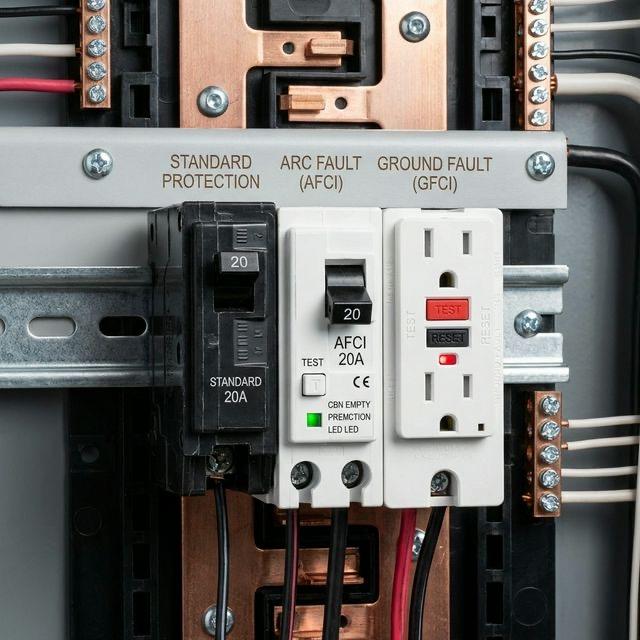
Standard breakers are the most common type and provide basic overcurrent protection.
How They Work:
- Monitor current flow through the circuit
- Trip when current exceeds the rated amperage
- Use thermal-magnetic mechanism for detection
- Thermal element responds to sustained overloads
- Magnetic element responds to short circuits
Common Ratings:
- 15 amp: Lighting and general outlets
- 20 amp: Kitchen, bathroom, and higher-load outlets
- 30 amp: Dryers, some HVAC
- 40-50 amp: Ranges, large HVAC
- 60 amp: Subpanel feeds, EV chargers
Cost:
$5-$15 each depending on brand and amperage
Combined Project: If your panel needs upgrading and you want a generator, do both at once. The electrician can configure the new panel specifically for the transfer switch, saving time and reducing total cost.
GFCI Circuit Breakers
Ground Fault Circuit Interrupters protect against electrical shock.
Outdated or overloaded electrical panels are a safety risk. Our team specializes in 200-amp upgrades throughout Northern Virginia, with same-day panel assessments available. Call (703) 997-0026 to get started.
How They Work:
- Monitor current balance between hot and neutral wires
- Detect when current is flowing through an unintended path (like a person)
- Trip within milliseconds if imbalance exceeds 4-6 milliamps
- Protect the entire circuit from the panel
Required Locations (NEC):
- Bathrooms
- Kitchens (countertop receptacles)
- Garages and accessory buildings
- Outdoors
- Basements (unfinished areas)
- Crawl spaces
- Near sinks (within 6 feet)
- Pool and spa areas
- Boathouses
GFCI Breaker vs. GFCI Outlet:
Both provide the same protection, but:
- GFCI breakers protect the entire circuit
- GFCI outlets protect from that point downstream
- Breakers are useful when outlets aren't accessible for testing
- Outlets allow for easier testing and resetting
Cost:
$25-$50 each
AFCI Circuit Breakers
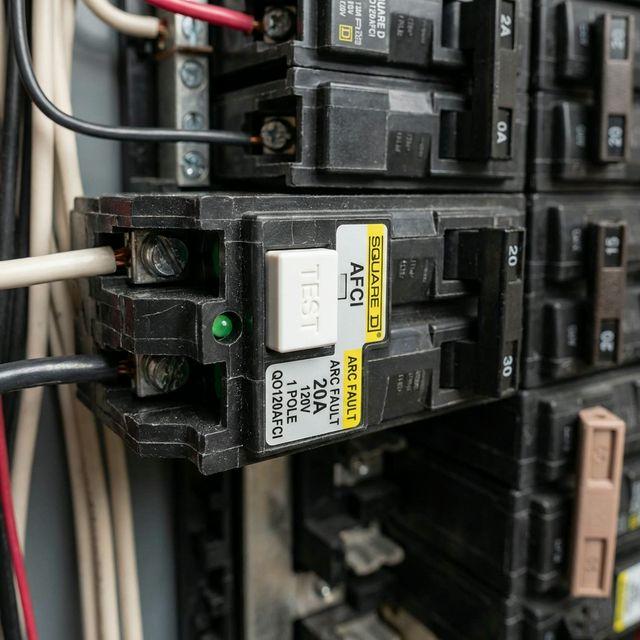
Arc Fault Circuit Interrupters protect against fires caused by arcing.
How They Work:
- Monitor electrical waveform for arc signatures
- Distinguish between normal arcs and dangerous arcs
- Trip when dangerous arc patterns are detected
- Provide protection from panel to all devices on circuit
Required Locations (NEC 2020):
- Bedrooms
- Living rooms and family rooms
- Dining rooms
- Parlors, libraries, dens
- Sunrooms
- Recreation rooms
- Closets
- Hallways
- Laundry areas
- Kitchens
Types of AFCIs:
- Branch/Feeder: Older technology, detects parallel arcs
- Combination: Current standard, detects series and parallel arcs
- Outlet AFCI: Installed at first outlet, protects downstream
Cost:
$35-$55 each
Dual-Function AFCI/GFCI Breakers
Combine both arc fault and ground fault protection in one device.
Benefits:
- Single device provides both protections
- Required where both AFCI and GFCI are needed
- Simplifies panel wiring
- Reduces troubleshooting complexity
Common Applications:
- Kitchens (where both may be required)
- Laundry areas
- Areas with both shock and fire risk
Cost:
$45-$70 each
Tandem (Twin) Breakers
Fit two circuits in one breaker space.
How They Work:
- Two independent breakers in one housing
- Each protects a separate circuit
- Use half-width or special configuration
- Allow more circuits without larger panel
Important Limitations:
- Not all panels accept tandem breakers
- Panels have limits on tandem count and positions
- Cannot be used for 240V circuits
- AFCI/GFCI tandems are limited
Cost:
$15-$30 each
Double-Pole Breakers
Connect to both bus bars for 240V circuits.
Applications:
- Electric ranges (50 amp)
- Electric dryers (30 amp)
- Central air conditioning
- Heat pumps
- Electric water heaters
- EV chargers (40-60 amp)
- Subpanel feeds
Handle-Tie Requirement:
Double-pole breakers have tied handles that turn both poles off together, ensuring both hot legs are disconnected when servicing equipment.
Cost:
$15-$40 each depending on amperage
Specialty Breakers
Surge Protection Breakers:
- Integrate whole-house surge protection
- Protect against utility surges and lightning
- Take 2 breaker spaces typically
- Cost: $100-$300
Smart Breakers:
- WiFi or Z-Wave connected
- Remote monitoring and control
- Energy usage tracking
- Integration with smart home systems
- Cost: $100-$200+ each
Shunt-Trip Breakers:
- Can be tripped remotely by external signal
- Used for emergency shutoffs
- Common with generators and fire systems
- Cost: $75-$150
Choosing the Right Breaker
Breaker selection depends on:
- Panel compatibility: Breakers must match your panel brand
- Circuit requirements: Amperage, voltage, wire size
- Code requirements: AFCI, GFCI, or both
- Location in home: Determines protection type needed
- Load characteristics: Motor loads, electronics, etc.
Troubleshooting Breaker Trips
Standard Breaker Trips:
- Reduce load on the circuit
- Check for short circuits in devices
- Inspect outlets for damage
GFCI Trips:
- Check for moisture in outlets
- Unplug devices to isolate problem
- Inspect outdoor connections
AFCI Trips:
- May indicate wiring damage
- Check for damaged cords
- Some devices cause nuisance trips
Frequent or unexplained trips warrant professional investigation. Contact AJ Long Electric at (703) 555-0123 if you're experiencing breaker problems.
Tags:

Written by
Matt Long
Master Electrician
Our team of licensed electricians brings over 40 years of combined experience serving Northern Virginia. We're committed to providing expert electrical solutions with a focus on safety, quality, and customer satisfaction.
Reviewed by AJ Long Electric Master Electricians · VA License #2705031092 · View Credentials