Arc fault circuit interrupters (AFCIs) represent one of the most significant electrical safety advances in decades. Required by the National Electrical Code in most living spaces, these specialized breakers can prevent electrical fires before they start. Understanding AFCI requirements is essential for anyone planning a panel upgrade or renovation.
Key Takeaways
- AFCI protection is now required in virtually all living areas of new construction under current NEC code.
- AFCIs detect dangerous electrical arcs that standard breakers cannot, preventing fires caused by damaged wiring.
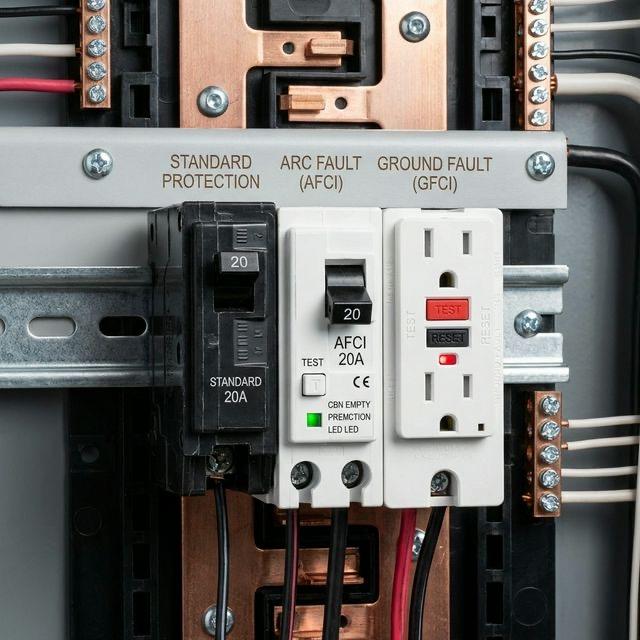
- Dual-function AFCI/GFCI breakers provide both fire and shock protection in a single device.
- Adding AFCI protection during a panel upgrade is significantly less expensive than retrofitting later.
What is an Arc Fault?
An arc fault occurs when electricity jumps across a gap in a damaged or deteriorating wire. This can happen when:
- A nail or screw pierces a wire inside a wall
- Wire insulation deteriorates from age or heat
- Furniture crushes a cord against a wall
- Connections become loose over time
- Rodents chew through wire insulation
These arcs generate intense heat—sometimes exceeding 10,000 degrees Fahrenheit—and can ignite surrounding materials. According to the Consumer Product Safety Commission, arc faults cause more than 28,000 home fires annually, resulting in hundreds of deaths and over $700 million in property damage.
Cost-Effective Timing: Adding AFCI breakers during a panel upgrade costs only the price difference between standard and AFCI breakers. Retrofitting AFCI protection into an existing panel later costs significantly more in labor.
How AFCIs Work
AFCI breakers use sophisticated electronics to monitor the electrical waveform on a circuit. They can distinguish between normal arcs (like those in a motor or light switch) and dangerous arcs (like those in damaged wiring). When a dangerous arc pattern is detected, the AFCI trips in a fraction of a second, cutting power before a fire can start.
Our licensed electricians have installed hundreds of EV chargers across Northern Virginia. We handle everything from panel evaluation to permit filing. Call (703) 997-0026 or request your free estimate online.
This protection is different from standard breakers, which only trip on overloads or short circuits, and GFCIs, which detect ground faults. AFCIs specifically target the unique electrical signature of an arc fault.
Current AFCI Requirements (2023-2025 NEC)
The National Electrical Code requires AFCI protection in the following areas of new construction and major renovations:
Required Locations:
- Bedrooms (required since 1999)
- Living rooms and family rooms
- Dining rooms
- Libraries and dens
- Sunrooms
- Recreation rooms
- Closets
- Hallways
- Laundry areas
- Kitchens (added in 2014 NEC)
Generally NOT Required:
- Bathrooms (GFCI required instead)
- Garages
- Outdoors
- Unfinished basements
Note that Virginia typically adopts the NEC with some amendments. Your local jurisdiction may have slightly different requirements, which is why working with licensed local electricians is important.
AFCI Requirements During Panel Upgrades
This is where many homeowners get surprised: when you upgrade your electrical panel, current code typically applies to the new installation. This means adding AFCI protection to circuits that didn't have it before.
What This Means for Your Project:
- Bedroom circuits will require AFCI breakers
- Living spaces will need AFCI protection
- Each AFCI breaker costs $40-60 more than a standard breaker
- A typical home might need 8-12 AFCI breakers
- Total additional cost: $300-$700 for AFCI requirements
While this adds to the cost of a panel upgrade, the safety benefits are substantial. You're essentially bringing your home's fire protection up to modern standards.
Types of AFCI Protection
There are several ways to provide AFCI protection:
AFCI Breakers
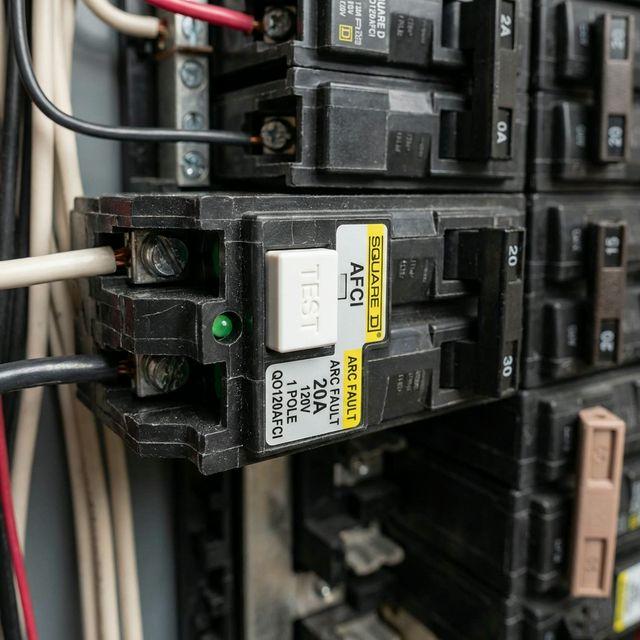
The most common solution, these breakers install in your panel like standard breakers but include AFCI technology. They protect the entire circuit from the panel to every outlet and device.
Combination AFCI Breakers
These provide both series and parallel arc detection, meeting the most recent code requirements. Most new installations use combination-type AFCIs.
Dual-Function AFCI/GFCI Breakers
These breakers provide both arc fault and ground fault protection in one device. They're useful for areas requiring both types of protection, such as kitchens.
AFCI Outlets
In some cases, AFCI protection can be provided at the first outlet in a circuit rather than at the panel. This is less common but can be useful in specific situations.
Common AFCI Concerns
Nuisance Tripping
Early AFCI technology was sometimes criticized for false trips. Modern combination AFCIs have largely solved this problem through improved detection algorithms. If you experience repeated tripping, it usually indicates an actual wiring issue that should be investigated.
Compatibility Issues
Some older devices, particularly those with motors (vacuum cleaners, treadmills) or electronic controls (LED dimmers, some appliances), could cause nuisance trips with early AFCIs. Modern devices and modern AFCIs typically work well together, but issues should be evaluated by an electrician.
Cost Concerns
Yes, AFCI breakers cost more than standard breakers. However, compared to the potential cost of an electrical fire—both in property damage and human life—the investment is modest. Many insurance companies recognize this and may offer discounts for homes with comprehensive AFCI protection.
AFCI vs. GFCI: Understanding the Difference
These two protective devices are often confused but serve different purposes:
AFCI (Arc Fault Circuit Interrupter):
- Protects against fire
- Detects dangerous arcing in wiring
- Required in living spaces
- Trips on arc fault signatures
GFCI (Ground Fault Circuit Interrupter):
- Protects against shock
- Detects current leaking to ground
- Required near water (bathrooms, kitchens, outdoors)
- Trips when current doesn't return through neutral
Both protections are important, and some circuits (like kitchens) may require both types of protection.
What to Expect with Your Panel Upgrade
When AJ Long Electric upgrades your panel, we'll:
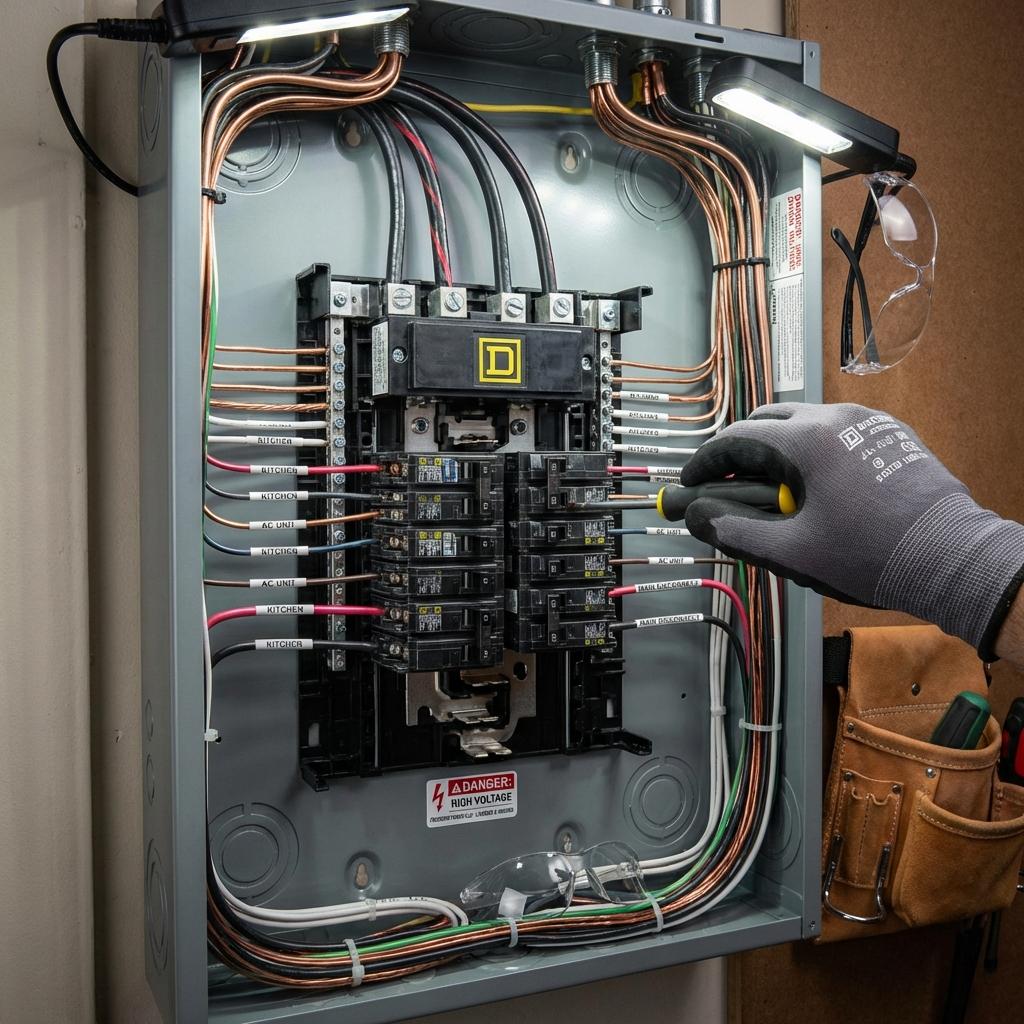
- Evaluate which circuits require AFCI protection
- Include all required AFCI breakers in your quote
- Install combination-type AFCIs meeting current code
- Test all AFCI circuits after installation
- Explain the protection you now have
We include AFCI costs in all our panel upgrade quotes, so you know the complete cost upfront with no surprises.
The Bottom Line
AFCI protection is one of the most effective fire prevention measures you can have in your home. While they add cost to panel upgrades and renovations, they provide protection that simply didn't exist a few decades ago. When upgrading your panel, embrace these requirements as an opportunity to make your home safer for your family.
Questions about AFCI requirements for your project? Contact AJ Long Electric at (703) 555-0123. We'll explain exactly what's required for your situation and provide a complete, no-surprise quote.
Tags:

Written by
Matt Long
Master Electrician
Our team of licensed electricians brings over 40 years of combined experience serving Northern Virginia. We're committed to providing expert electrical solutions with a focus on safety, quality, and customer satisfaction.
Reviewed by AJ Long Electric Master Electricians · VA License #2705031092 · View Credentials