Space heaters provide convenient supplemental heat, but they are one of the leading causes of home heating fires. According to the National Fire Protection Association, space heaters account for over 40% of home heating fires and over 80% of heating fire deaths. Understanding proper electrical requirements and safety practices is essential for anyone using portable heaters.
Key Takeaways
- Space heaters account for over 40% of home heating fires and 80% of heating fire deaths.
- Never use extension cords or power strips with space heaters -- plug directly into wall outlets only.
- Maintain at least 3 feet of clearance between heaters and anything flammable.
- Always choose heaters with tip-over switches, overheat protection, and UL or ETL certification.
- Never leave space heaters running while sleeping or when leaving the room.
Electrical Requirements for Space Heaters
Power Consumption
Most space heaters draw significant power:
- Small heaters: 750-1,000 watts
- Standard heaters: 1,500 watts (the most common)
- Large heaters: 2,000+ watts
A 1,500-watt heater on a 120-volt circuit draws 12.5 amps - most of the 15-amp circuit capacity.
Circuit Capacity
Space heaters should be the only significant load on their circuit. A 1,500-watt heater on a 15-amp circuit leaves only about 300 watts of capacity for anything else plugged in.
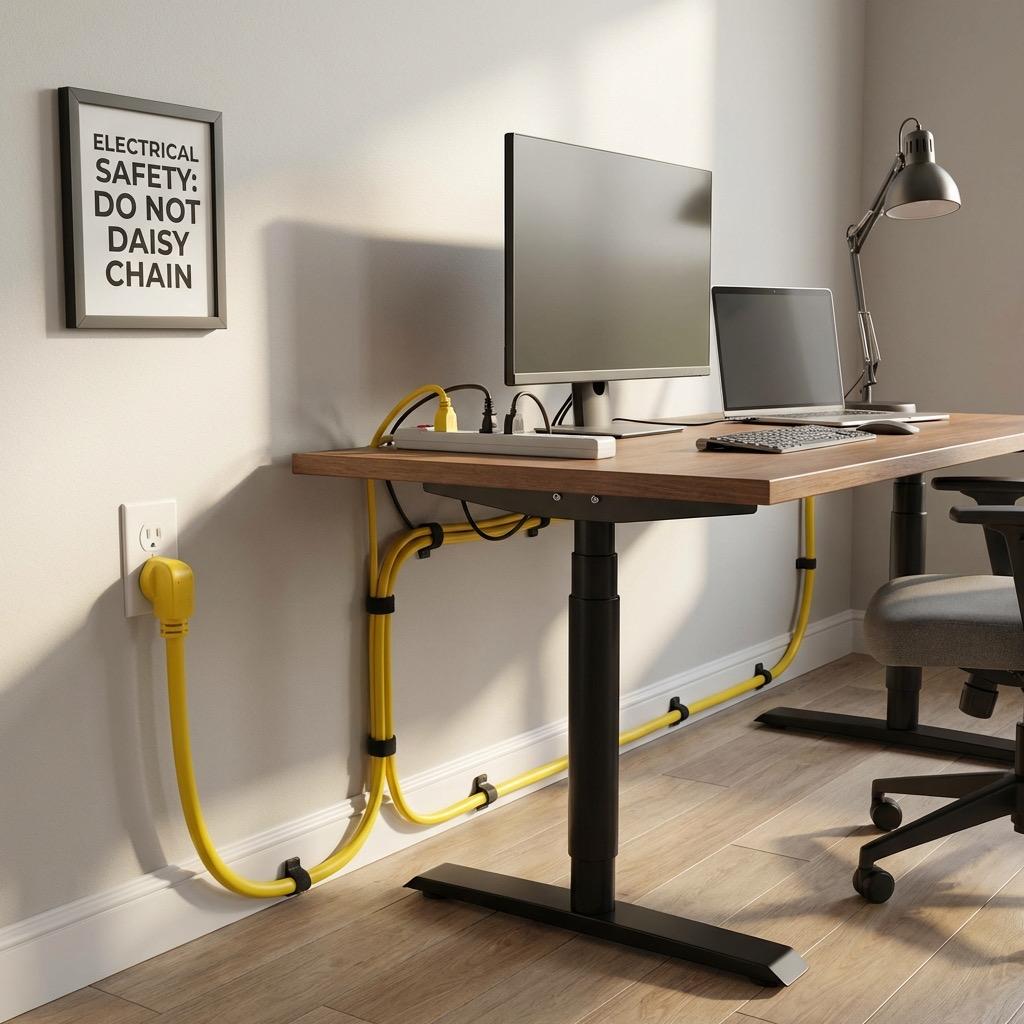
Never Use Extension Cords
Most space heater manufacturers explicitly prohibit extension cord use. The reasons are critical:
- Extension cords add resistance, generating heat
- Undersized cords can overheat and catch fire
- Connection points create additional failure points
- Even heavy-duty cords may not be rated for continuous heater loads
If your heater cannot reach an outlet, move the heater - do not use an extension cord.
Power Strip Warning
Never plug space heaters into power strips or multi-outlet adapters. These devices are not designed for the continuous high current draw that heaters require.
Critical Rule: A 1,500-watt space heater draws 12.5 amps on a 15-amp circuit, leaving only about 300 watts for everything else on that circuit. The heater should be the only significant load. If your heater cannot reach an outlet, move the heater -- never use an extension cord.
Placement and Clearance Requirements
Three-Foot Rule
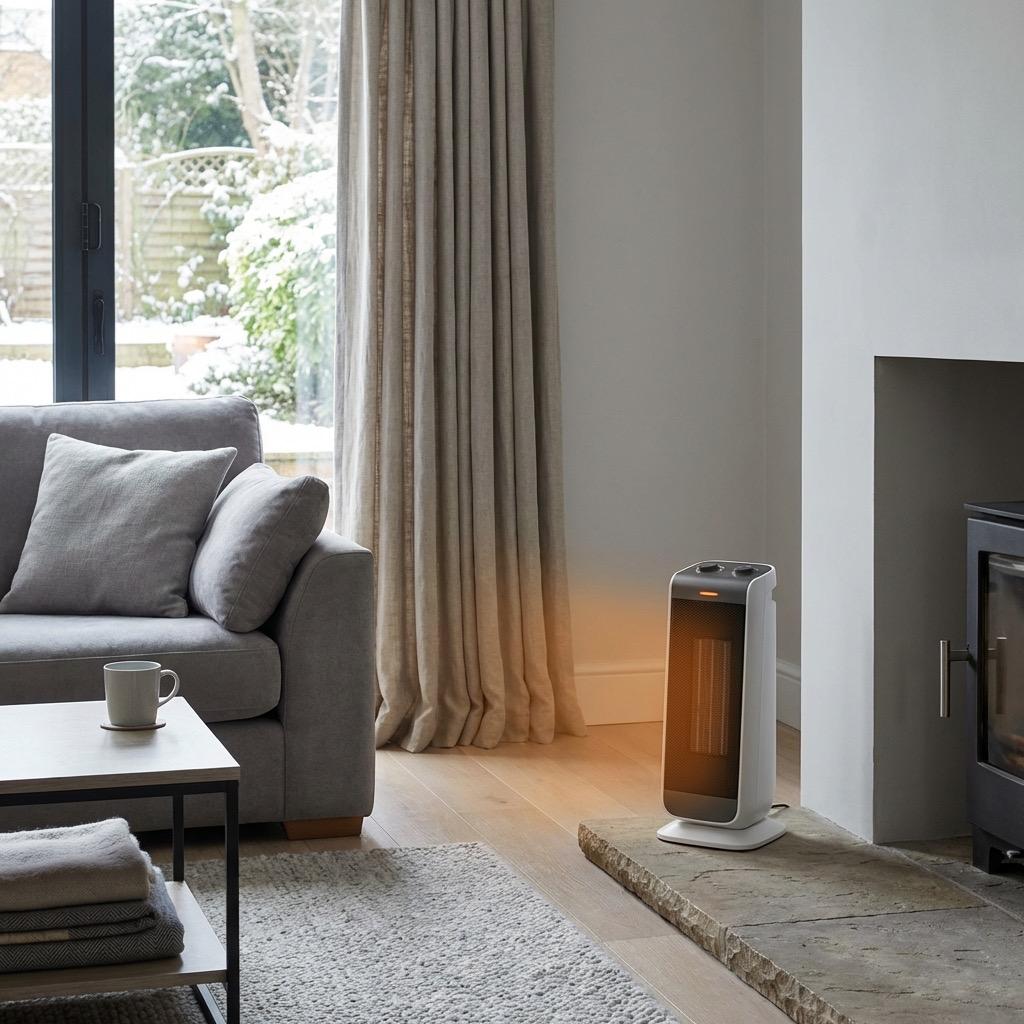
Maintain at least three feet of clearance between the heater and anything that can burn:
Our licensed electricians have installed hundreds of EV chargers across Northern Virginia. We handle everything from panel evaluation to permit filing. Call (703) 997-0026 or request your free estimate online.
- Curtains and drapes
- Furniture
- Bedding and pillows
- Clothing
- Paper and books
- Rugs and carpets
Surface Requirements
- Place heaters on flat, stable surfaces only
- Never place on furniture, tables, or counters where they could fall
- Keep away from water and damp areas
- Never use in bathrooms unless specifically rated for bathroom use
Traffic Considerations
- Place where the heater will not be knocked over
- Keep cords out of walkways
- Never run cords under rugs or carpets
Essential Safety Features
When purchasing a space heater, look for these safety features:
Tip-Over Switch
Automatically shuts off the heater if it is knocked over. This is a critical feature that should be considered mandatory.
Overheat Protection
Shuts off the heater if internal temperatures become too high. This prevents fires if airflow is blocked or the heater malfunctions.
Cool-Touch Housing
The exterior stays cool enough to touch, reducing burn risk - especially important with children or pets in the home.
Timer Function
Allows the heater to shut off automatically after a set time, preventing unattended operation.
Thermostat Control
Cycles the heater to maintain a set temperature rather than running continuously, reducing fire risk and energy consumption.
UL or ETL Listing
Always choose heaters tested and certified by recognized safety laboratories. Look for the UL or ETL marks.
Types of Space Heaters and Their Risks
Radiant Heaters
Use heated elements to radiate heat directly. The elements can get extremely hot - often red-hot. Keep extra clearance and never leave unattended.
Convection Heaters
Heat air that circulates through the room. Generally safer than radiant heaters but still require proper clearance.
Oil-Filled Radiators
Use heated oil to provide steady heat. Surface temperatures are lower, making them safer around children. However, they can still cause fires if curtains or bedding contact the surface.
Ceramic Heaters
Use ceramic elements that heat quickly but cool rapidly when turned off. Often include better safety features but still require proper use.
Operational Safety Rules
Never Leave Unattended
Turn off space heaters when leaving the room or going to sleep. Unattended heaters are responsible for most space heater fires.
Inspect Regularly
Before each heating season, check for:
- Damaged cords or plugs
- Broken or missing guards
- Blocked vents
- Strange smells when operating
Keep Children and Pets Away
Establish clear boundaries. Consider heaters with cool-touch housings for homes with young children or pets.
Never Use to Dry Clothing
Never place clothing, towels, or other items on or near space heaters to dry. This is a common cause of heater fires.
When Space Heaters Indicate Bigger Problems
Frequent space heater use may indicate underlying issues:
- Inadequate heating system: Consider HVAC inspection or upgrade
- Poor insulation: Address air leaks and insulation deficiencies
- Zoning issues: Consider mini-split systems for problem areas
Space heaters are expensive to operate and carry inherent risks. If you rely on them regularly, addressing the root cause is safer and often more economical.
Electrical Upgrades for Heater Safety
If you must use space heaters regularly, consider electrical upgrades:
- Dedicated circuits for areas where heaters are used
- Additional outlets to avoid extension cord temptation
- AFCI protection on bedroom circuits (required by code for new construction)
AJ Long Electric can help assess your heating needs and electrical system capacity. We install dedicated circuits, additional outlets, and can recommend safer heating alternatives for your home.
Better Alternative: If you rely on space heaters regularly, the underlying issue may be inadequate heating, poor insulation, or zoning problems. Addressing the root cause with HVAC improvements or mini-split systems is safer and often more economical long-term.
Contact us today to discuss your electrical and heating needs.
Tags:

Written by
AJ Long Electric Team
Licensed Electricians
Our team of licensed electricians brings over 40 years of combined experience serving Northern Virginia. We're committed to providing expert electrical solutions with a focus on safety, quality, and customer satisfaction.
Reviewed by AJ Long Electric Master Electricians · VA License #2705031092 · View Credentials