Extension cords are one of the most commonly misused electrical products in American homes. The U.S. Consumer Product Safety Commission reports that extension cords are involved in approximately 3,300 residential fires annually, resulting in about 50 deaths and 270 injuries. Most of these incidents are entirely preventable with proper cord selection and use.
Key Takeaways
- Extension cords cause approximately 3,300 residential fires annually -- most are preventable with proper use.
- Never daisy-chain cords or power strips, run cords under rugs, or use indoor cords outdoors.
- Never use extension cords with space heaters or window AC units -- plug these directly into wall outlets.
- If you rely on extension cords permanently, your home needs additional outlets installed by a licensed electrician.
Understanding Extension Cord Ratings
Not all extension cords are created equal. Choosing the right cord for your application is the first step in safe usage.
Wire Gauge (AWG)
Wire gauge determines how much current a cord can safely carry. The lower the gauge number, the thicker the wire and the more current it can handle:
- 16 AWG: Light-duty use - lamps, clocks, small electronics (up to 13 amps)
- 14 AWG: Medium-duty use - power tools, larger electronics (up to 15 amps)
- 12 AWG: Heavy-duty use - high-draw tools, workshop equipment (up to 20 amps)
- 10 AWG: Extra heavy-duty - large power tools, some appliances (up to 30 amps)
Length Matters
Longer cords have more resistance, which reduces the power available at the outlet end and generates heat. A cord that is safe for a 25-foot run may overheat at 100 feet with the same load. Always use the shortest cord that reaches your needs.
Indoor vs. Outdoor Ratings
Look for these designations on the cord jacket:
- S: Standard cord for general use
- W: Rated for outdoor use (weather-resistant jacket)
- J: Standard 300-volt insulation
- T: Vinyl thermoplastic jacket
- P: Parallel wire construction (for lighter-duty indoor cords)
- O: Oil-resistant jacket
Never use indoor cords outdoors - they are not designed for moisture and temperature extremes.
Critical Extension Cord Safety Rules
Quick Reference: Lower AWG number means thicker wire and more capacity. For most power tools, use 12 or 14 AWG. For lamps and small electronics, 16 AWG is sufficient. Always use the shortest cord that reaches.
Our licensed electricians have installed hundreds of EV chargers across Northern Virginia. We handle everything from panel evaluation to permit filing. Call (703) 997-0026 or request your free estimate online.
Never Exceed the Cord's Capacity
Check the amperage rating of your cord and ensure your devices do not exceed it. A cord running at or near capacity will generate heat. Add up the amp draw of all devices plugged into the cord - if it exceeds the cord's rating, use a heavier cord or reduce the load.
Do Not Daisy-Chain Cords or Power Strips
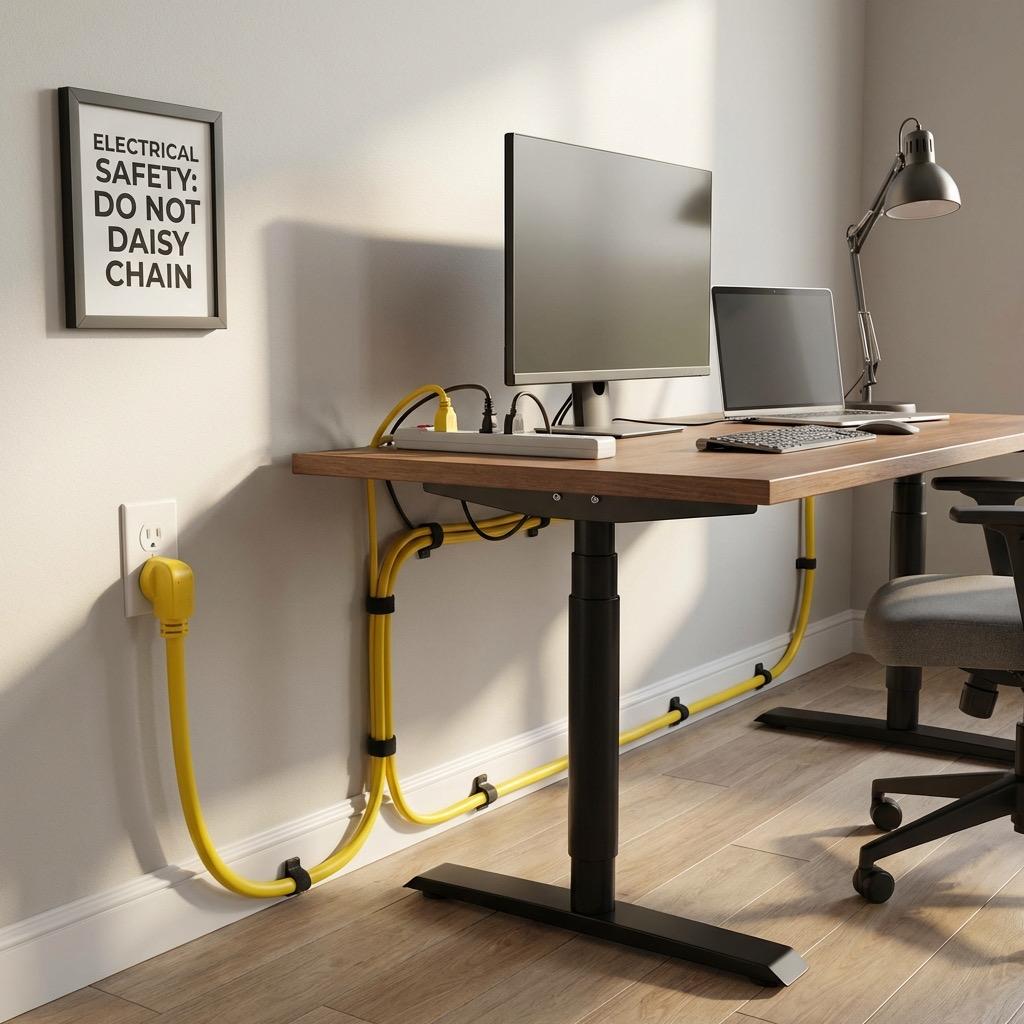
Plugging one extension cord or power strip into another is extremely dangerous. It bypasses the built-in overload protection and can easily overload the circuit or the cords themselves. If you need more reach, use a single longer cord of appropriate gauge.
Never Run Cords Under Rugs or Carpets
Covering extension cords prevents heat dissipation. A cord that would otherwise be safe can overheat when covered, potentially igniting the rug or carpet above it. This is one of the leading causes of extension cord fires.
Do Not Pinch or Crush Cords
Running cords through doorways, under furniture, or in other locations where they can be pinched damages the insulation and can create short circuits or fire hazards.
Inspect Cords Before Each Use
Check for:
- Cracked, frayed, or damaged insulation
- Exposed wires
- Damaged plugs (bent prongs, cracked housing)
- Burn marks or discoloration
- Warm spots along the cord
Damaged cords should be discarded - they cannot be safely repaired.
Extension Cords and Specific Appliances
Space Heaters
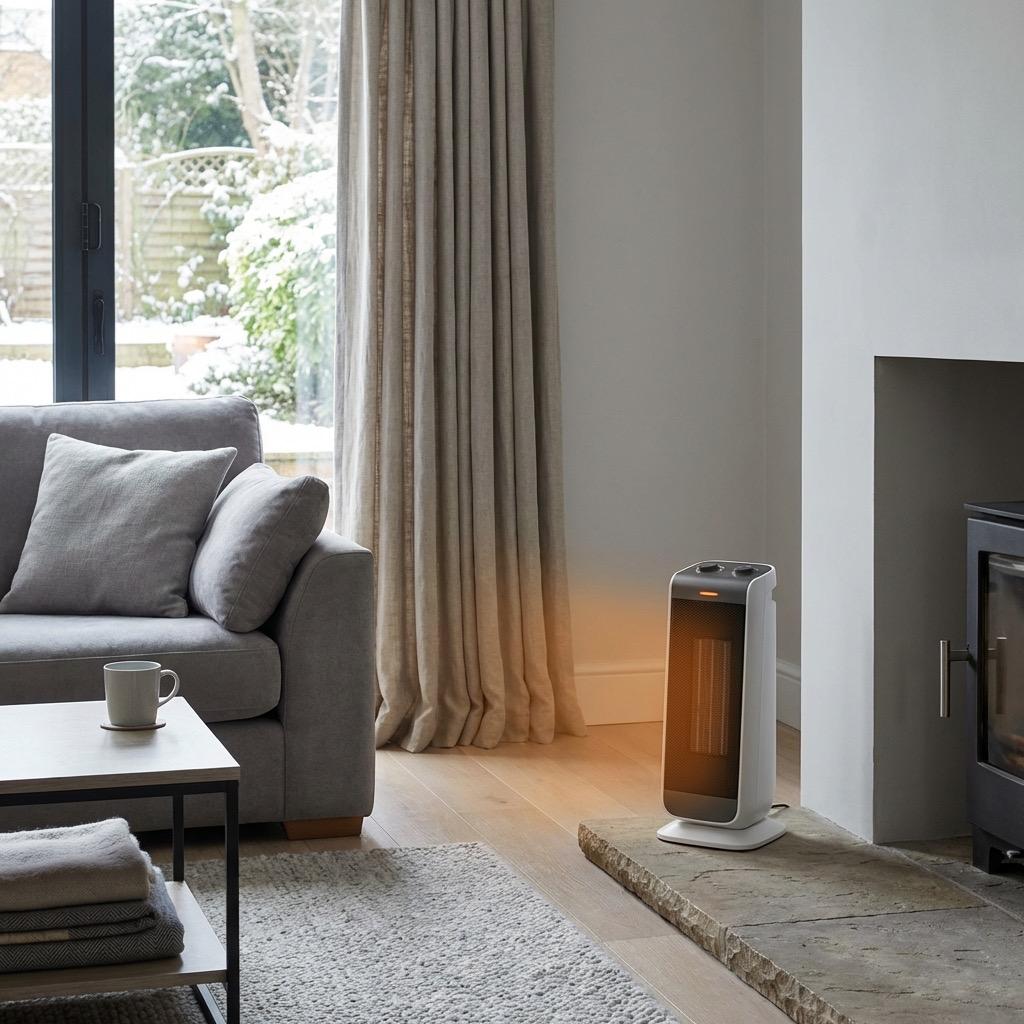
Most manufacturers explicitly prohibit using extension cords with portable heaters. Space heaters draw significant current (often 12-15 amps), which can overheat even heavy-duty extension cords. Always plug heaters directly into wall outlets.
Air Conditioners
Similar to space heaters, window AC units should be plugged directly into outlets. If you must use an extension cord temporarily, use only a heavy-gauge cord rated for the AC's amp draw and replace it with a permanent outlet as soon as possible.
Power Tools
Match the cord gauge to the tool's requirements. Most power tools specify the required extension cord gauge in their manuals. Using an undersized cord reduces power to the tool, causes overheating, and can damage the tool's motor.
When Extension Cords Indicate You Need More Outlets
Extension cords are meant for temporary use. If you find yourself relying on extension cords permanently, it is a sign your home needs additional outlets. Consider adding outlets if:
- You have extension cords permanently in place
- Multiple devices share a single outlet via power strips
- You are running cords across walkways or doorways
- You have had to buy increasingly longer cords
- Extension cords are creating tripping hazards
The Safe Solution: Install More Outlets
Adding outlets is more affordable than most homeowners expect, and it is infinitely safer than relying on extension cords. Modern electrical code requires outlets every 12 feet along walls and within 6 feet of doorways - if your older home does not meet these standards, upgrading is a worthwhile investment in safety and convenience.
AJ Long Electric can assess your outlet needs and install additional circuits and receptacles throughout your home. We will ensure your new outlets are properly grounded, include GFCI or AFCI protection where required, and meet all current electrical codes.
The Bottom Line: Adding permanent outlets is more affordable than most homeowners expect. Modern code requires outlets every 12 feet along walls -- if your older home falls short of this standard, upgrading is a worthwhile investment in both safety and convenience.
Contact us today to discuss upgrading your home's electrical system and eliminating the need for extension cords.
Tags:

Written by
AJ Long Electric Team
Licensed Electricians
Our team of licensed electricians brings over 40 years of combined experience serving Northern Virginia. We're committed to providing expert electrical solutions with a focus on safety, quality, and customer satisfaction.
Reviewed by AJ Long Electric Master Electricians · VA License #2705031092 · View Credentials