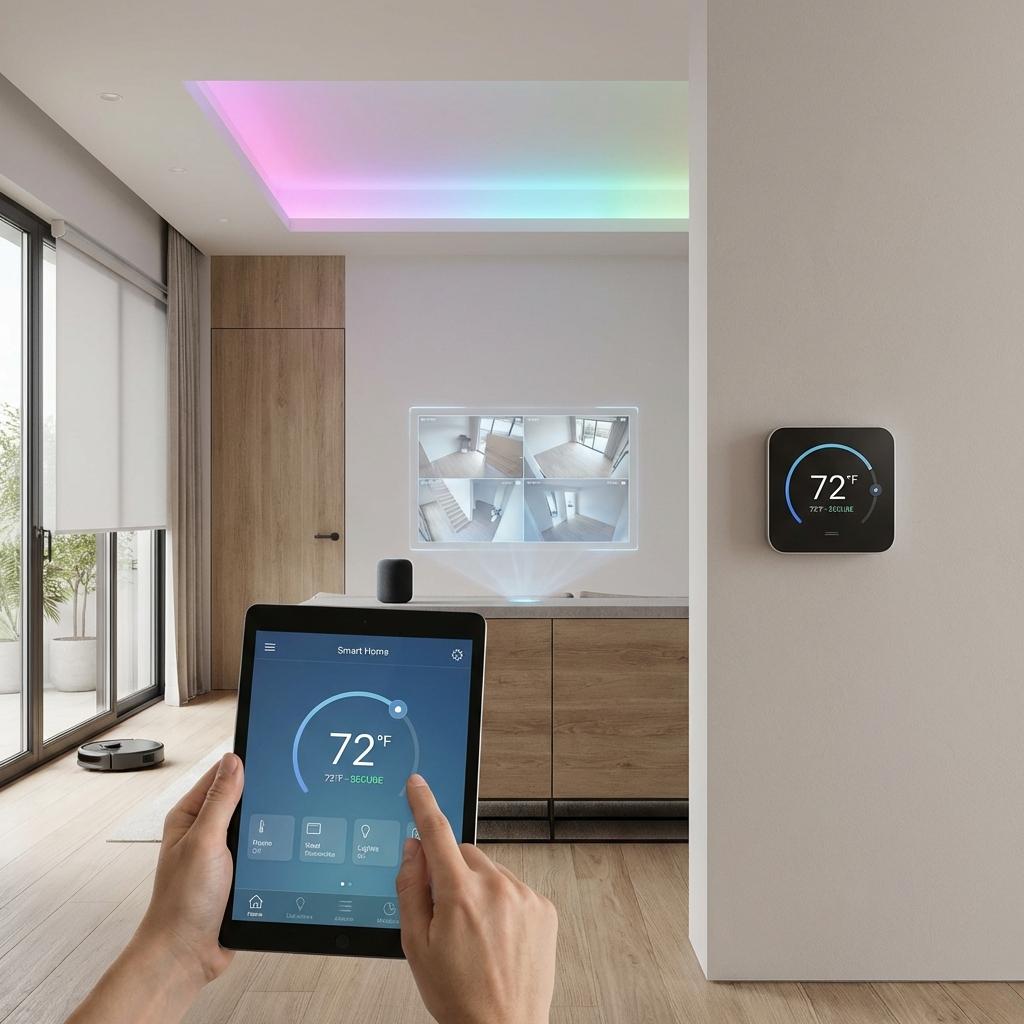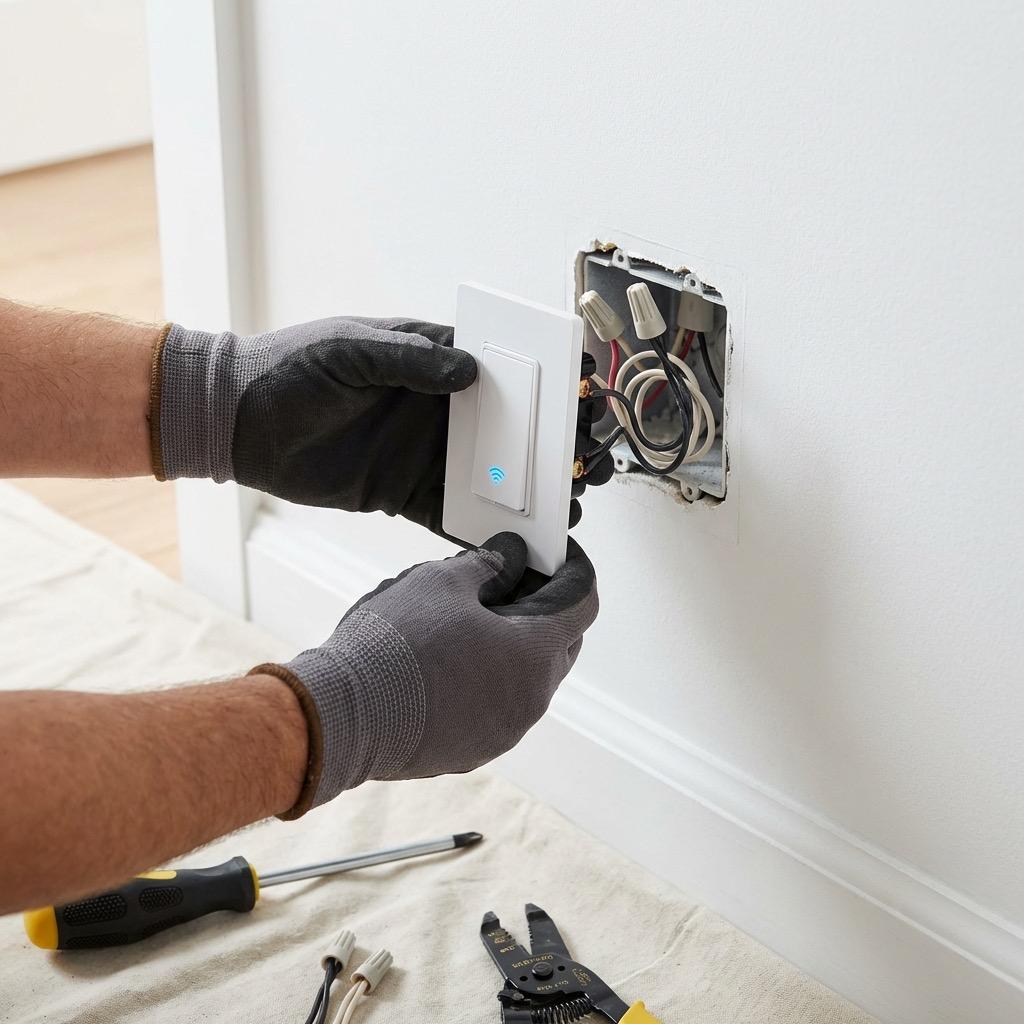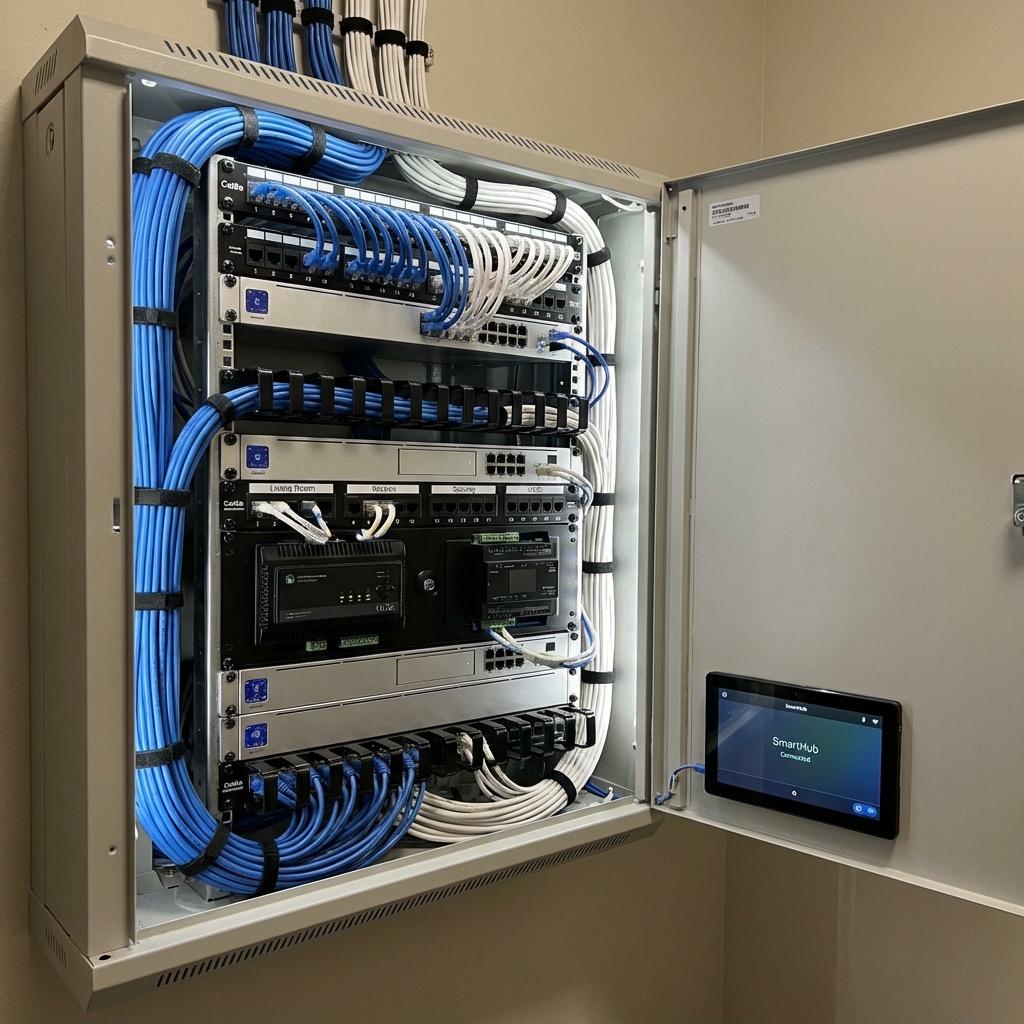
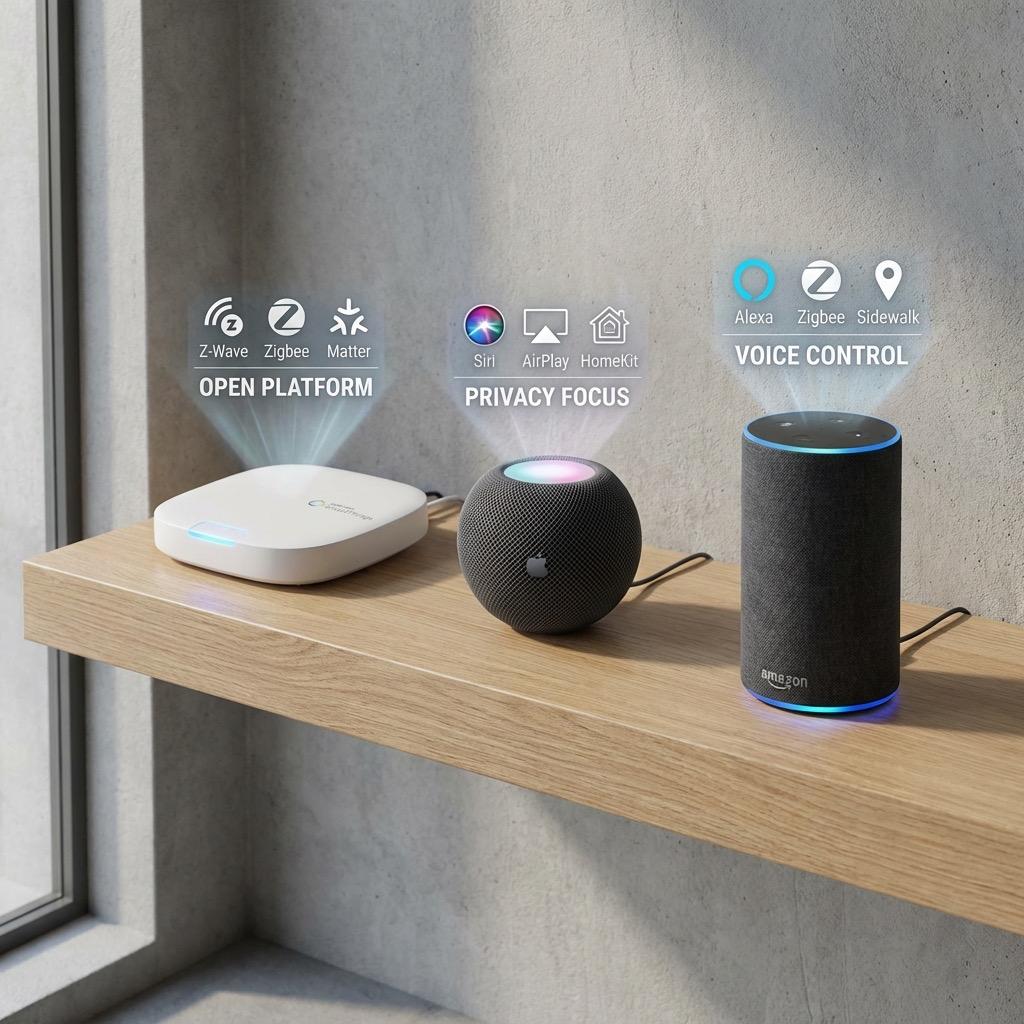
A smart home hub serves as the central brain of your connected home, unifying devices from different manufacturers into a single control point and enabling complex automations that individual devices cannot achieve on their own. Without a hub, your smart switches talk to their app, your thermostat talks to its app, and your security cameras talk to yet another app. With a hub, a single command or automation can orchestrate actions across all of these devices simultaneously. For Northern Virginia homeowners building serious smart home systems, choosing the right hub is one of the most consequential decisions in the entire process. This comparison covers the four major contenders: Samsung SmartThings, Hubitat Elevation, Home Assistant, and Apple HomeKit, evaluating each on ease of use, reliability, privacy, flexibility, and total cost.
Key Takeaways
- Samsung SmartThings offers the easiest setup and broad device compatibility, making it the best choice for smart home beginners.
- Hubitat Elevation processes everything locally without cloud dependency, providing faster response times and better privacy.
- Home Assistant is free, open-source software with the largest integration library, but requires technical skill to set up and maintain.
- Apple HomeKit provides the strongest privacy and simplest interface for Apple ecosystem users but has a more limited device selection.
- The Matter protocol is reducing the importance of hub choice by enabling cross-platform device compatibility.
Why You Need a Smart Home Hub
Many smart home devices work without a central hub, connecting directly to WiFi and controlled through their manufacturer's app. So why add another device to your network? The answer is unification and automation.
A hub brings all your devices under one roof. Instead of switching between the Lutron app, the Ecobee app, the Ring app, and the Sonos app, a hub provides a single dashboard and app. More importantly, a hub enables cross-device automations: when the Lutron motion sensor detects movement, the Ecobee thermostat adjusts, and the Sonos speaker starts playing music. Without a hub, these devices from different manufacturers cannot communicate with each other.
Protocol Translation
Smart home devices speak different wireless protocols: WiFi, Z-Wave, Zigbee, Bluetooth, Thread, and the newer Matter standard. A hub with multi-protocol support acts as a translator, allowing a Z-Wave door sensor to trigger a WiFi smart plug, or a Zigbee motion detector to control a Bluetooth smart lock. This protocol flexibility is essential for building a comprehensive smart home without being locked into a single manufacturer's ecosystem.
Samsung SmartThings
SmartThings is the most user-friendly hub for newcomers to home automation. The latest SmartThings Station and Aeotec Smart Home Hub support Z-Wave, Zigbee, Thread, and Matter, providing broad device compatibility out of the box.
Whether it is a simple repair or a major electrical project, our licensed team is ready to help. Serving all of Northern Virginia with transparent pricing and expert workmanship. Call (703) 997-0026 today.
Strengths
Setup is straightforward with a polished mobile app that guides you through device pairing and automation creation. The SmartThings ecosystem has extensive manufacturer partnerships, and the app's Routines feature makes it easy to create conditional automations without any programming knowledge. Samsung's partnership with major brands means SmartThings integration is often built into TVs, refrigerators, washers, and other Samsung appliances.
Weaknesses
SmartThings has historically been cloud-dependent, meaning automations route through Samsung's servers. If Samsung's cloud service goes down, or if your internet connection drops, automations may not execute. Samsung has been improving local processing capabilities, but full local operation is not yet available for all automations. The platform has also experienced several cloud outages over the years that left users without smart home control.
Best For: Homeowners new to smart home technology who want easy setup, broad compatibility, and a polished app experience. SmartThings is a great starting point that can grow with your needs. If you outgrow it, most Z-Wave and Zigbee devices can be migrated to another hub.
Hubitat Elevation
Hubitat is designed for users who want the automation power of SmartThings with fully local processing. Everything runs on the hub itself, with no cloud dependency for device control or automation execution.
Strengths
Local processing means Hubitat is fast. Automations execute in milliseconds rather than the seconds-long round trip through cloud servers. It also means your smart home continues working perfectly during internet outages, which is a meaningful advantage for Northern Virginia homes that rely on smart lighting and security systems. Hubitat supports Z-Wave, Zigbee, and Matter, and has a growing library of community-developed device drivers and apps.
Weaknesses
The setup experience is more technical than SmartThings. The web-based interface is functional but not as visually polished, and device pairing occasionally requires manual driver selection. The learning curve is steeper, particularly for automation rules that go beyond simple if-then triggers. However, the Hubitat community forums are active and helpful for troubleshooting.
Home Assistant
Home Assistant is the most powerful and flexible smart home platform available. It is free, open-source software that runs on a variety of hardware, from a Raspberry Pi to a dedicated mini PC. With over 2,000 integrations, it connects to virtually every smart home device and service in existence.
Strengths
The integration library is unmatched. If a device exists, Home Assistant probably supports it. Automation capabilities are essentially unlimited, supporting complex conditional logic, templating, and scripting. The dashboard is fully customizable with community-created cards and themes. Home Assistant also supports advanced features like presence detection using multiple sources, energy management dashboards, and voice assistant hosting (you can run your own voice assistant locally).
Weaknesses
Home Assistant requires genuine technical comfort. Initial setup involves installing software, configuring YAML files (though the UI-based configuration has improved significantly), and troubleshooting integration issues. Updates can occasionally break configurations, requiring manual intervention. It is not a set-it-and-forget-it platform. That said, for technically inclined homeowners, Home Assistant provides capabilities that no commercial hub can match.
Pro Tip: If you are interested in Home Assistant but worried about the technical requirements, start with the Home Assistant Green or Home Assistant Yellow hardware. These purpose-built devices simplify installation and include Z-Wave and Zigbee radios. The setup process has become significantly more accessible than it was even two years ago.
Apple HomeKit
Apple HomeKit takes a fundamentally different approach to smart home control. Rather than a dedicated hub, HomeKit uses an Apple TV, HomePod, or iPad as its home hub. The Apple Home app provides the control interface, and Siri provides voice control.
Strengths
Privacy is HomeKit's defining feature. All data is encrypted end-to-end, Apple does not collect or monetize your smart home usage data, and device communication is processed locally on your Apple TV or HomePod. For families in Northern Virginia's government, military, and intelligence communities where personal data privacy is a heightened concern, HomeKit provides unmatched assurance. The Apple Home app is clean and intuitive, and family sharing makes it easy to give household members appropriate access levels.
Weaknesses
The device ecosystem is smaller than other platforms because Apple's stringent security certification requirements limit which manufacturers participate. You need Apple devices (iPhone, Apple TV, or HomePod) to use the system, which may not suit households with mixed Apple and Android users. Automation capabilities, while solid, are not as deep or flexible as Home Assistant or even Hubitat.
The Matter Factor
Matter is the industry's attempt to create a universal smart home standard. Backed by Apple, Google, Amazon, and Samsung, Matter allows devices to work across all major platforms. A Matter-certified switch works with HomeKit, SmartThings, Google Home, and Alexa without platform-specific setup. As Matter adoption grows, the importance of hub choice diminishes for basic device control. However, advanced automation, local processing, and deep customization will continue to differentiate hubs for power users.
Our Recommendation
For most Northern Virginia homeowners, we recommend starting with SmartThings if you want an easy, polished experience with room to grow. Choose Hubitat if reliability during internet outages and fast local processing are priorities. Choose Home Assistant if you are technically inclined and want maximum flexibility. Choose HomeKit if you are an all-Apple household and privacy is paramount. And regardless of your hub choice, select devices that support Matter where possible to preserve future platform flexibility.
Building a smart home and need the electrical infrastructure to support it? AJ Long Electric installs the wiring, circuits, and network infrastructure that underpin reliable smart home systems. From dedicated circuits for equipment closets to structured wiring for sensors and controllers, our licensed electricians provide the physical foundation your smart home hub needs to perform at its best. Contact us to discuss your smart home project.
Tags:

Written by
Matt Long
Master Electrician
Our team of licensed electricians brings over 40 years of combined experience serving Northern Virginia. We're committed to providing expert electrical solutions with a focus on safety, quality, and customer satisfaction.
Reviewed by AJ Long Electric Master Electricians · VA License #2705031092 · View Credentials