Building a new home in Northern Virginia is an exciting opportunity to design your smart home infrastructure from the ground up. Whether you are working with a production builder in Brambleton, a custom builder in McLean, or renovating down to the studs in Old Town Alexandria, the construction phase is the single most cost-effective time to install the wiring, circuits, and infrastructure that will power your connected home for decades. Every cable you run while the walls are open costs a fraction of what it would cost to retrofit later, and the capabilities you plan for now determine what your home can do in the future. This guide is based on our extensive experience wiring smart homes across Fairfax, Loudoun, and Prince William Counties.
Key Takeaways
- Smart home pre-wiring during construction typically adds 5 to 10 percent to electrical costs but saves 50 to 70 percent versus retrofitting later.
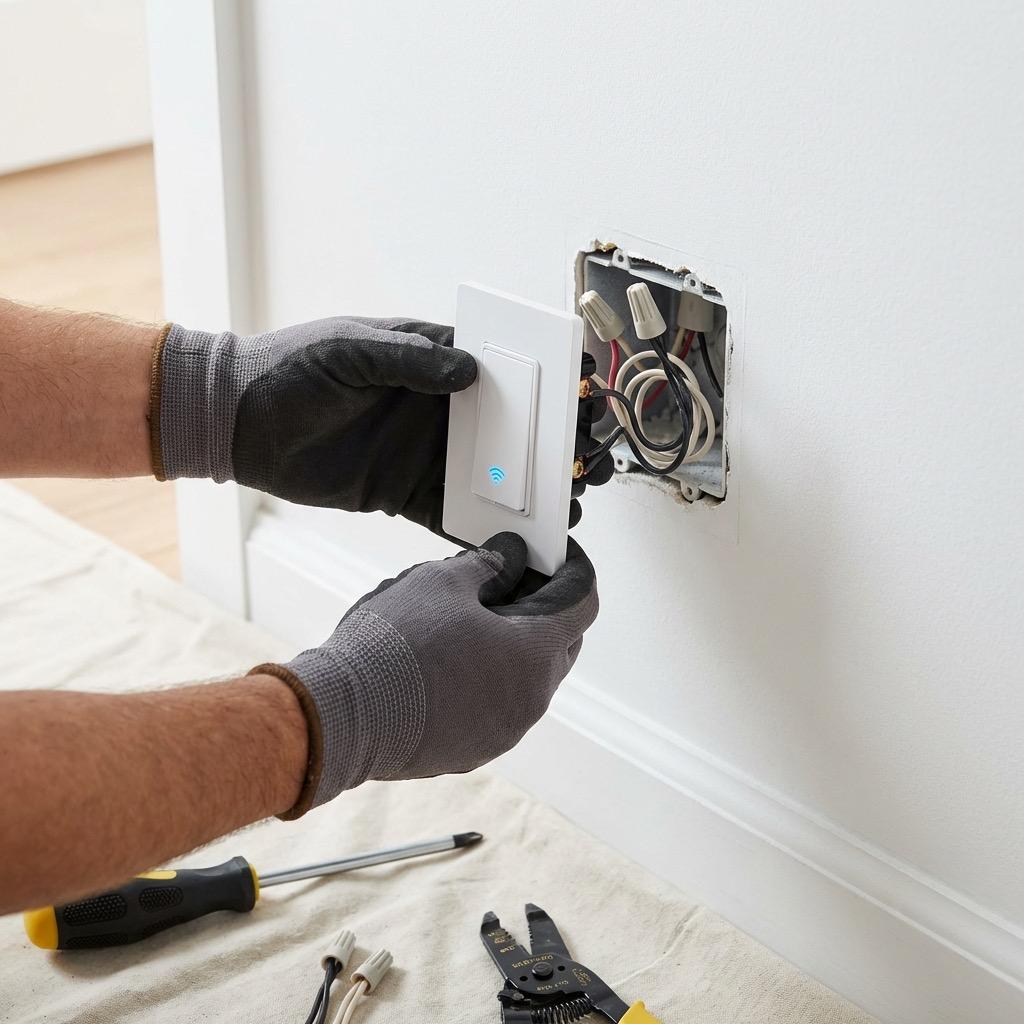
- Deep electrical boxes at switch locations are essential for accommodating smart switches, which are larger than standard switches.
- Run Cat6a ethernet to every room, exterior camera locations, and access point positions for robust network coverage.
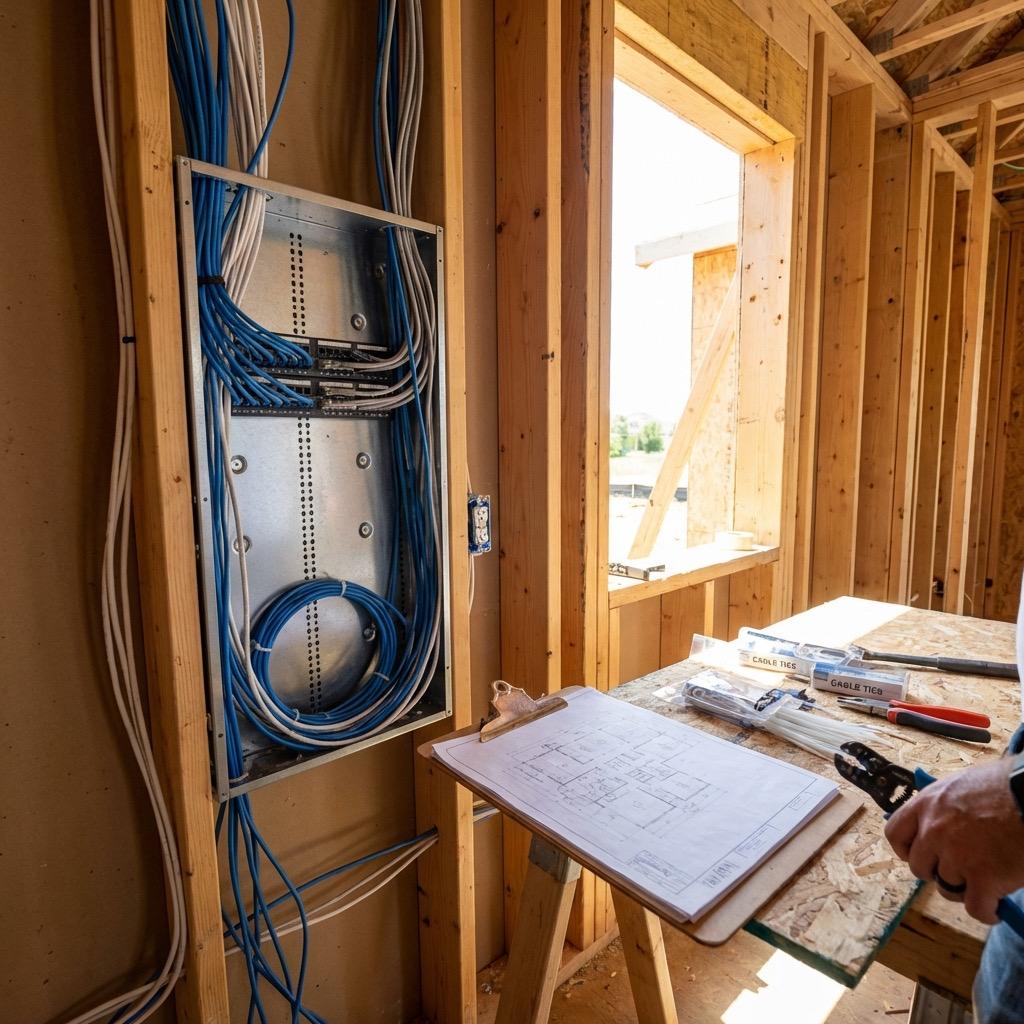
- Install conduit pathways in walls for future cable runs even if you do not plan to use them immediately.
- Coordinate early with your builder, electrician, and low-voltage contractor to avoid conflicts during rough-in.
The Cost Advantage of Pre-Wiring
The economics of smart home pre-wiring are compelling. Running a Cat6a ethernet cable from a central closet to a bedroom during construction takes an electrician about 15 minutes and costs roughly $75 to $100 including materials. Running that same cable in a finished home requires cutting drywall, fishing cable through insulated walls, patching, and repainting. The retrofit cost for a single run can easily reach $300 to $500. Multiply that across 20 or 30 cable runs throughout a house and the savings from pre-wiring are substantial.
Prioritizing Your Investment
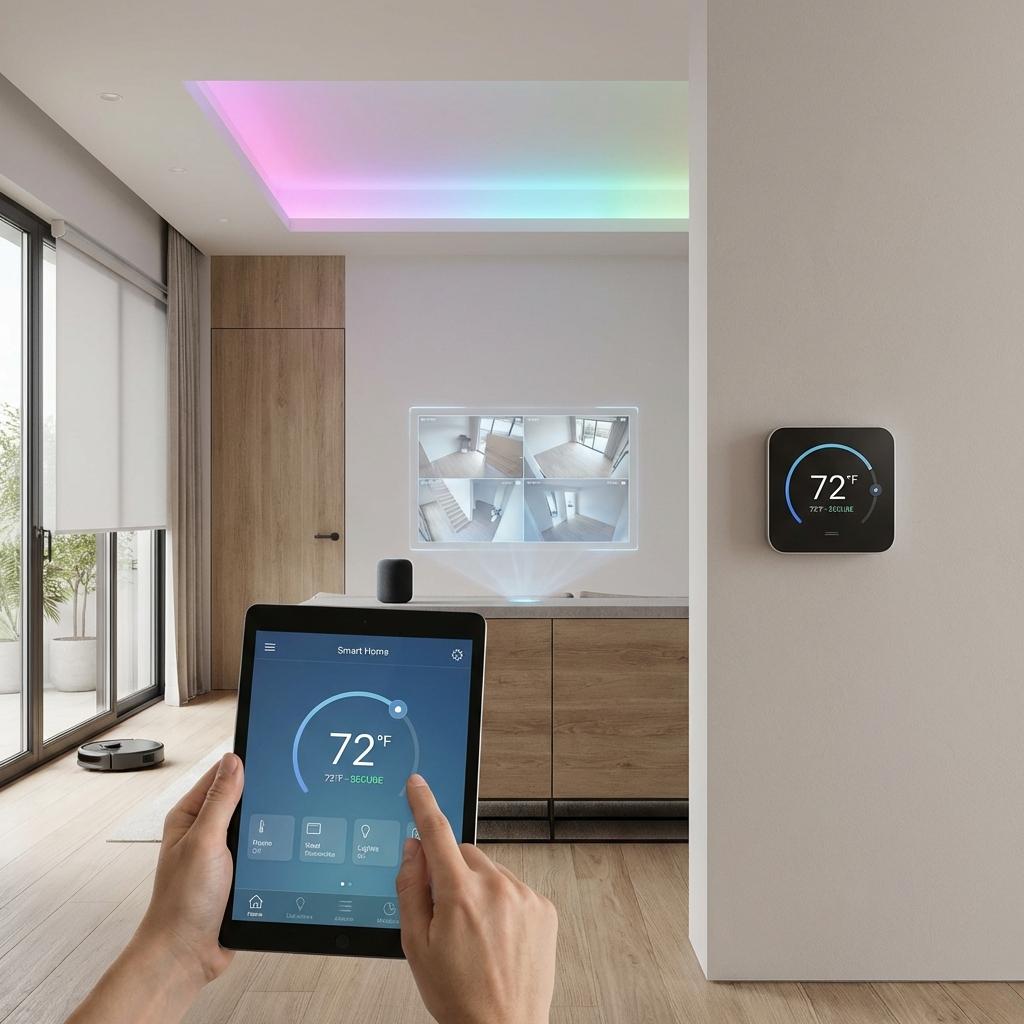
Not every smart home feature needs to be installed during construction. The key is to install the infrastructure that is difficult or impossible to add later and defer the devices and equipment that can be easily added at any time. Cables in walls, conduit pathways, deep electrical boxes, and dedicated circuits are construction-phase priorities. Smart switches, hubs, voice assistants, and automation software can be added incrementally after you move in.
Electrical Box and Circuit Planning
Standard electrical boxes are typically 14 to 18 cubic inches, which is adequate for a conventional switch but cramped for a smart switch with its bulkier body and additional wire connections. Specify deep boxes of at least 22 cubic inches at all switch locations during the rough-in phase. The marginal cost difference is negligible, but the installation ease and safety improvement are significant.
Whether it is a simple repair or a major electrical project, our licensed team is ready to help. Serving all of Northern Virginia with transparent pricing and expert workmanship. Call (703) 997-0026 today.
Dedicated Circuits to Plan
Beyond standard residential circuits, smart homes benefit from several dedicated circuits that should be planned during construction. Your network equipment closet needs a dedicated 20-amp circuit to power routers, switches, access points, and a UPS. If you plan for a home theater or media room, dedicate a circuit for audio and video equipment. Outdoor living spaces, which are increasingly popular in Northern Virginia homes, need dedicated circuits for landscape lighting controllers, outdoor audio amplifiers, and motorized shade or screen systems.
Neutral Wire Availability
Modern electrical code requires neutral wires at switch locations, so new construction homes will have them. However, confirm with your electrician that neutral wires are bundled and accessible at every switch box, not just present in the conduit or cable run. Some wiring methods can result in neutrals that are technically present but not easily accessible for smart switch connections.
Pro Tip: Ask your electrician to leave an extra six inches of wire length in each switch box. This additional slack makes it much easier to connect smart switches, which often have more terminals and wire connections than standard switches.
Network Infrastructure Planning
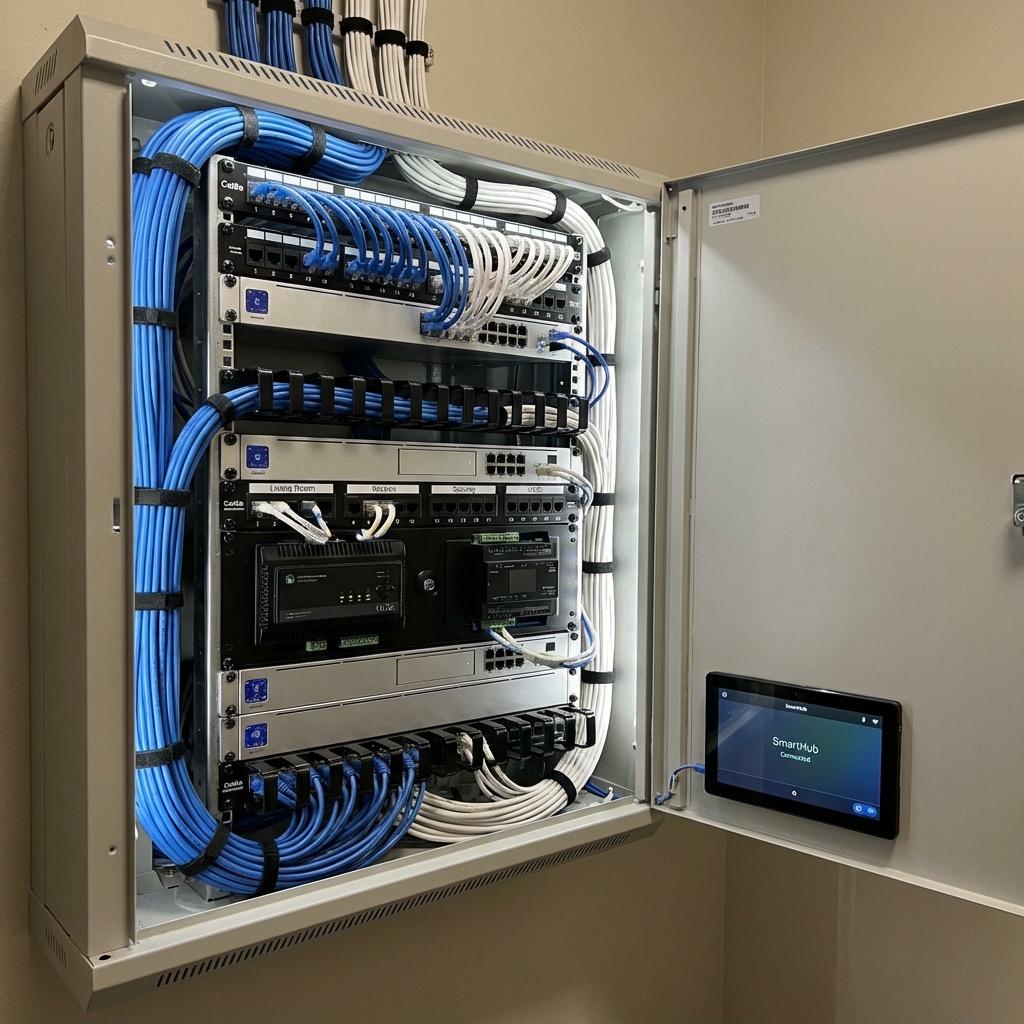
The network is the nervous system of your smart home. Every smart device needs reliable connectivity, and the best way to ensure that is through a wired backbone supplemented by strategically placed wireless access points.
Ethernet Distribution
Run Cat6a ethernet from your central network closet to every room in the house with at least two drops per room. Add dedicated drops for ceiling-mounted WiFi access points on each floor, exterior camera mounting locations on each side of the house, the garage for smart opener and EV charger connectivity, and outdoor living areas. Use a home-run topology where every cable goes directly back to the central closet rather than daisy-chaining from room to room.
WiFi Access Point Placement
Plan for hardwired WiFi access points rather than relying on a single router. For a typical two-story Northern Virginia home of 2,500 to 4,000 square feet, plan for three to four ceiling-mounted access points: one centered on each floor and one in the garage or basement if those spaces will have smart devices. Pre-wire each location with a Cat6a drop and install a low-voltage mounting bracket during rough-in.
Room-by-Room Smart Home Planning
Each room in your home has unique smart home requirements. Walking through your plans room by room with your electrician ensures nothing is missed.
Kitchen
The kitchen is often the hub of smart home interaction. Plan for under-cabinet outlets to power smart displays or tablets, outlets inside upper cabinets for smart speaker placement, a dedicated drop for a wall-mounted control panel, and smart switch locations for multiple lighting zones including task lighting, ambient lighting, and accent lighting.
Home Office
Remote work is a permanent fixture in the Northern Virginia economy. Home offices need multiple ethernet drops for wired computer connections, dedicated circuits for office equipment to avoid sharing with other rooms, smart lighting with tunable white for productive work environments, and excellent WiFi coverage for video conferencing.
Master Bedroom
Comfort and convenience drive bedroom smart home features. Plan for smart switch and dimmer locations at the entry and each side of the bed, USB outlets at nightstand locations for charging, automated shade pre-wire at each window for motorized blinds, and speaker wire for in-ceiling speakers if whole-home audio is desired.
Outdoor Living Spaces
Northern Virginia's climate supports outdoor living for much of the year. Pre-wire for landscape lighting control with a dedicated transformer location, outdoor speaker wire runs to patio and deck areas, weatherproof ethernet for security cameras and WiFi access points, and smart-controlled exterior outlets for seasonal decorations and outdoor appliances.
Virginia Building Code Note: All new construction electrical work in Fairfax County, Loudoun County, and Prince William County requires permits and inspections. Your licensed electrician handles the permitting process and schedules inspections at rough-in and final stages. Smart home low-voltage wiring typically does not require separate permits but should be coordinated with the electrical rough-in schedule.
Working With Your Builder
Communication with your builder is critical for smart home success. Most production builders in Northern Virginia offer basic smart home packages, but these are often limited to a few prewired speaker locations and a basic network panel. For a comprehensive smart home, you may need to work with an independent low-voltage contractor alongside your builder's electrician.
Key Coordination Points
Schedule a pre-construction meeting with your builder, electrician, and low-voltage contractor to walk through the smart home plan. Ensure the electrician knows to install deep boxes at switch locations, that the low-voltage contractor has access for their rough-in at the same time as the electrical rough-in, and that the builder is aware of any ceiling-mounted device locations so framing can accommodate them. Provide written specifications and a marked-up floor plan showing every cable run, device location, and dedicated circuit.
Budget Framework
For a typical new-construction home in Northern Virginia in the 3,000 to 4,000 square foot range, comprehensive smart home pre-wiring runs between $5,000 and $12,000 depending on scope. A basic package covering network drops, smart switch preparation, and a few camera locations might cost $3,000 to $5,000. A premium package adding whole-home audio pre-wire, motorized shade pre-wire, and extensive exterior camera and lighting infrastructure can reach $10,000 to $15,000. These costs cover wiring and infrastructure only. Smart devices, hubs, and programming are additional but can be phased over time.
Building a new home in Northern Virginia and want to get the smart home wiring right? AJ Long Electric works directly with homeowners, builders, and architects throughout the DMV area to design and install comprehensive smart home electrical infrastructure. From rough-in to final trim, our licensed electricians ensure your new home is wired for the connected lifestyle you envision. Contact us during the design phase to maximize your options and minimize your costs.
Tags:

Written by
Matt Long
Master Electrician
Our team of licensed electricians brings over 40 years of combined experience serving Northern Virginia. We're committed to providing expert electrical solutions with a focus on safety, quality, and customer satisfaction.
Reviewed by AJ Long Electric Master Electricians · VA License #2705031092 · View Credentials