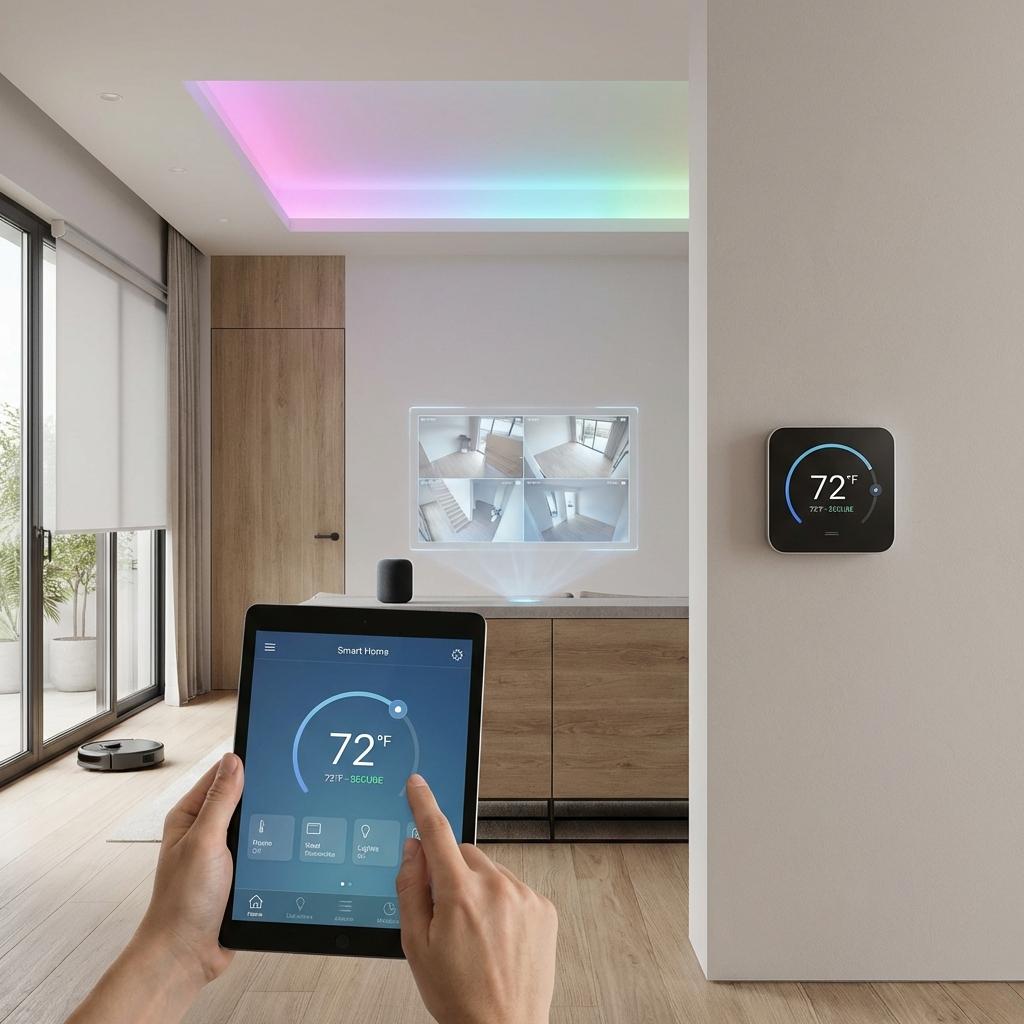
Ceiling fans are workhorses of home comfort, especially in Northern Virginia where hot, humid summers drive air conditioning costs through the roof. A ceiling fan running in conjunction with air conditioning allows you to raise your thermostat setting by 4 to 6 degrees while maintaining the same perceived comfort level, translating to meaningful savings on your Dominion Energy bill. Adding smart control to your ceiling fans elevates them from simple on-off devices to automated comfort components that adjust speed based on temperature, time of day, and occupancy. This guide covers the different ways to make your ceiling fans smart, the electrical considerations for each approach, and how to integrate fan control into your broader home automation system.
Key Takeaways
- Smart fan wall controllers like Lutron Caseta Fan Speed Control replace your existing wall switch and provide app, voice, and schedule control for existing fans.
- RF-to-WiFi bridge devices like the Bond Hub make existing remote-controlled fans smart without any rewiring.
- WiFi-enabled fans from brands like Hunter, Big Ass Fans, and Modern Forms have built-in smart capabilities.
- Fan speed control requires specific wiring considerations since fan motors behave differently than light dimmers.
- Automating ceiling fans with temperature sensors and schedules maximizes comfort while reducing energy costs.
Understanding Ceiling Fan Control Methods
There are three primary approaches to making your ceiling fans smart. Each has different installation requirements, costs, and capabilities. The right choice depends on your existing fan hardware, wiring configuration, and desired level of control.
Method 1: Smart Fan Wall Controllers
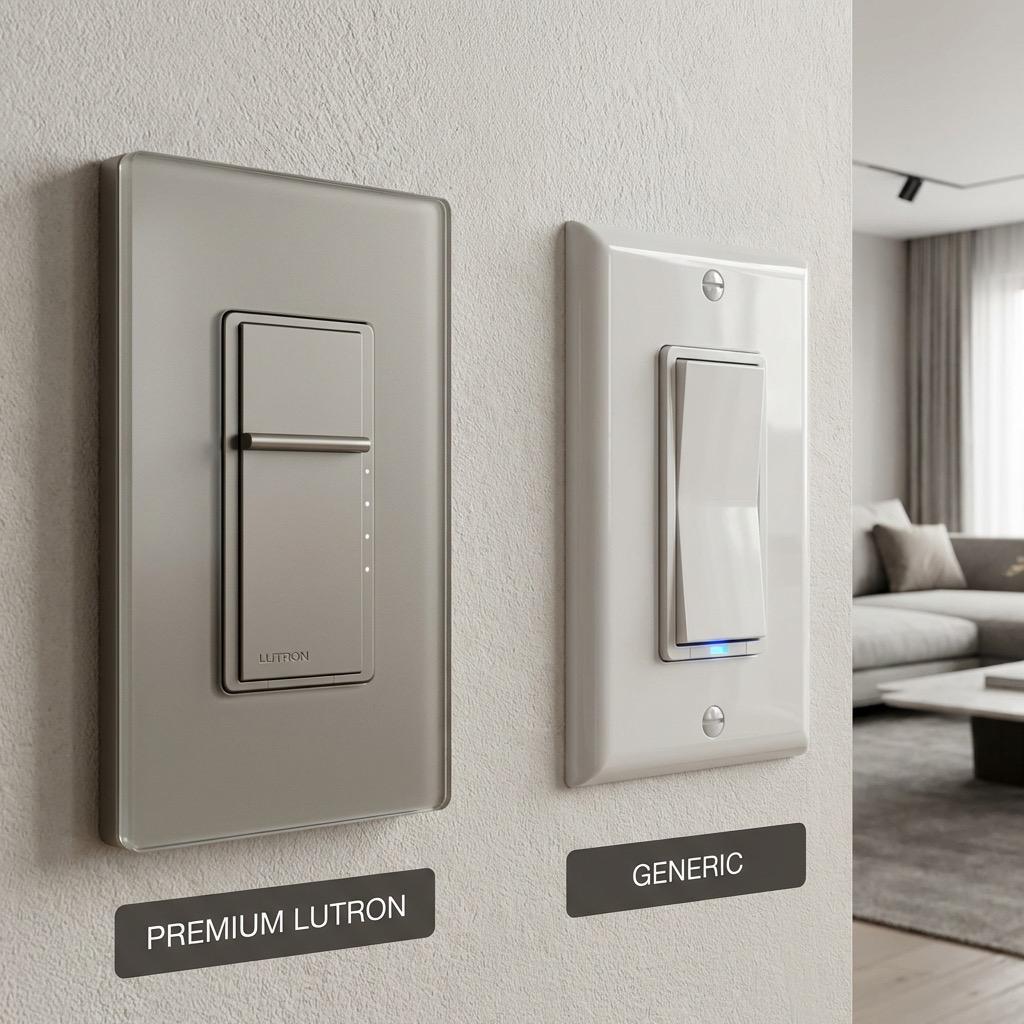
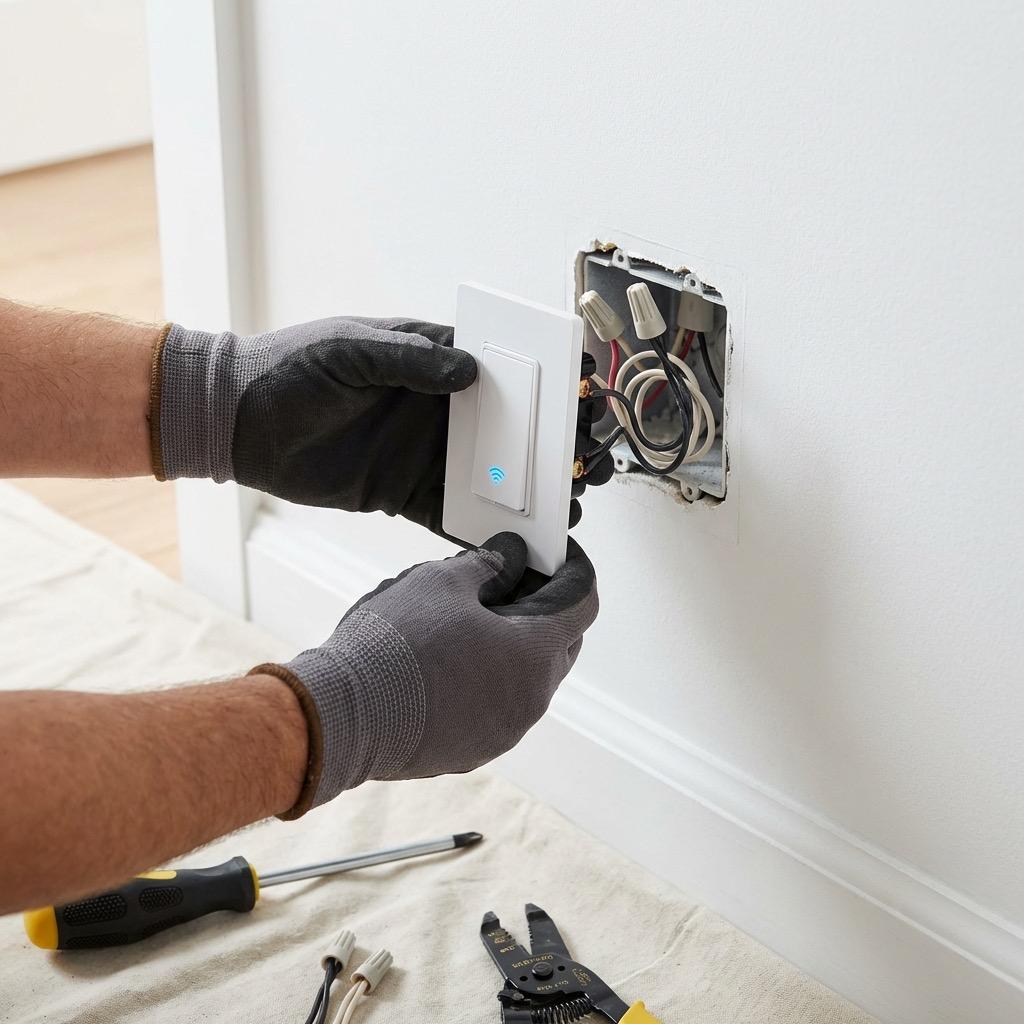
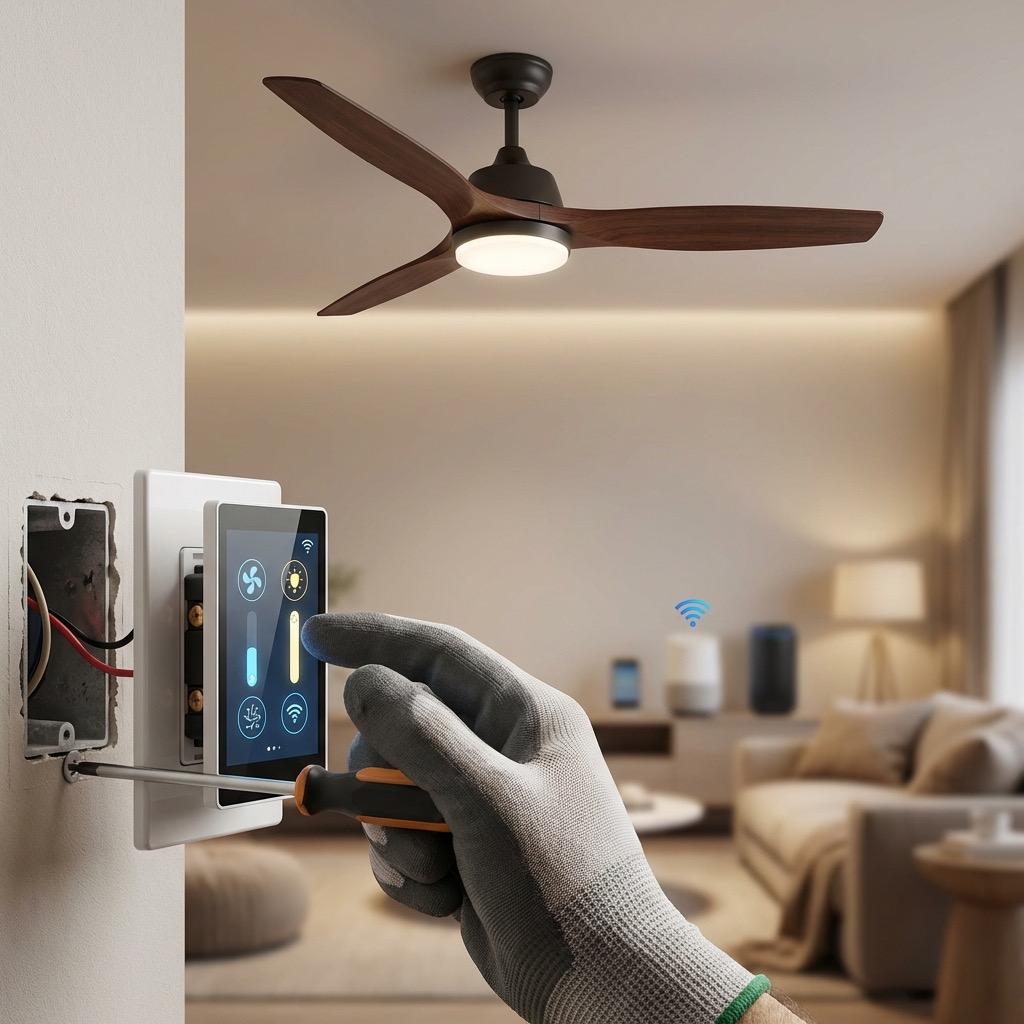
Smart fan controllers replace your existing wall switch with a smart switch designed specifically for fan motors. This is the most reliable approach because it provides a physical wall switch for manual control while adding app, voice, and automation capabilities. The Lutron Caseta Fan Speed Control is the standout product in this category. It provides four-speed control, integrates with all major voice platforms through the Caseta Smart Bridge, and does not require a neutral wire, making it compatible with virtually every home wiring configuration in Northern Virginia.
Other options include the Inovelli Fan and Light Switch (Z-Wave) which combines fan speed and light dimming in a single switch, and the GE Enbrighten Z-Wave Fan Control for SmartThings and Hubitat users. Each requires a compatible hub for smart functionality beyond basic manual control.
Method 2: RF Bridge Devices
If your ceiling fan is controlled by a handheld RF remote (the kind that comes with many fans sold at Home Depot, Lowe's, and other retailers), an RF-to-WiFi bridge can make it smart without touching any wiring. The Bond Bridge is the leading product in this category. It learns the RF signals from your existing remote and retransmits them via WiFi commands from its app. The Bond Bridge works with fans from Hampton Bay, Hunter, Harbor Breeze, and dozens of other brands.
The advantage is zero installation: plug in the bridge, teach it your remote's signals, and your fan becomes controllable via app and voice. The limitation is that the bridge can only replicate what the original remote does. If your remote has three speeds, the bridge provides three speeds. There is no additional granularity or features beyond what the original remote supported.
Method 3: WiFi-Enabled Smart Fans
If you are purchasing a new ceiling fan, many modern options include built-in WiFi and smart home integration. Hunter fans with their SIMPLEconnect technology, Big Ass Fans with their Haiku line, and Modern Forms fans all offer built-in smart capabilities. These fans connect directly to your WiFi network and their manufacturer's app, with integration available for Alexa, Google Home, and in many cases HomeKit.
The advantage is a fully integrated solution designed from the ground up for smart control. The disadvantage is that you are committed to that manufacturer's ecosystem and app, and if the company discontinues cloud support years later, you may lose smart functionality.
Electrical Wiring Considerations
Ceiling fan control wiring is more nuanced than standard lighting because fan motors have specific requirements that differ from light fixtures.
Whether it is a simple repair or a major electrical project, our licensed team is ready to help. Serving all of Northern Virginia with transparent pricing and expert workmanship. Call (703) 997-0026 today.
Single Switch vs Dual Switch Configurations
Many older ceiling fan installations in Northern Virginia use a single switch that controls both the fan and its light kit simultaneously. When the switch is on, the fan runs and the light is on. Speed and brightness are adjusted by pull chains on the fan itself. This works fine with manual control but limits smart automation because you cannot independently control the fan and light from the wall.
Homes with dual-switch configurations have separate wall switches for the fan motor and the light kit, connected by separate wires running to the fan junction box. This setup allows independent smart control of fan speed and light brightness. If you currently have a single switch and want independent control, an electrician can run an additional wire from the switch box to the fan box, or you can use a smart switch that combines both controls in a single device, like the Inovelli Fan and Light Switch.
Important: Never use a standard light dimmer to control a ceiling fan motor. Light dimmers reduce voltage in a way that can overheat fan motors, causing buzzing, poor performance, and potential fire risk. Always use a fan-rated speed controller that uses a different method to regulate motor speed safely.
Fan Motor Types and Compatibility
Ceiling fans use either AC (alternating current) or DC (direct current) motors. Most traditional fans use AC motors, and most smart fan controllers are designed for AC motors. DC motor fans are more energy efficient and quieter but often use proprietary controllers that are not compatible with third-party smart switches. If your fan has a DC motor, check compatibility carefully before purchasing a smart controller. In many cases, the Bond Bridge approach works best for DC motor fans since it replicates the original remote signals rather than directly controlling the motor.
Home Automation Integration
Smart ceiling fan control becomes most valuable when integrated into automated routines that adjust fan operation based on conditions rather than manual input.
Temperature-Based Automation
Pair your smart fan controller with a temperature sensor (many smart thermostats and smart home hubs include temperature sensing) to automatically turn on the ceiling fan when the room temperature exceeds a threshold. For example, when the living room reaches 76 degrees, the fan turns on at low speed. At 78 degrees, it increases to medium. At 80 degrees, it runs at high. When the temperature drops below 74, the fan turns off. This automated response reduces air conditioning demand without requiring you to think about the fan at all.
Schedule-Based Automation
Set bedroom ceiling fans to turn on at low speed 30 minutes before your typical bedtime and turn off an hour after your usual wake time. During summer months in Northern Virginia, this gentle air circulation improves sleep comfort significantly without running air conditioning all night.
Seasonal Direction Reversal
Ceiling fans should run counterclockwise in summer to create a cooling breeze and clockwise at low speed in winter to push warm air down from the ceiling. Smart fans and some smart controllers allow you to change direction via app or automation, making seasonal reversal a set-it-and-forget-it automated task.
Pro Tip: Include ceiling fans in your voice assistant routines. A "Movie Night" routine could dim the lights, turn off the ceiling fan to reduce background noise, and lower the blinds. A "Good Morning" routine could turn on the bedroom fan to help you wake up while gradually brightening the lights.
Installation Considerations for Northern Virginia Homes
Ceiling fan installations and upgrades in Northern Virginia homes come with common challenges that are worth addressing during any smart fan project. Many homes built in the 1980s and 1990s have ceiling fan electrical boxes that are designed for lighter fixtures and may need upgrading to fan-rated boxes that support the weight and vibration of ceiling fans. If your fan wobbles or the mounting feels loose, have the electrical box inspected before adding smart controls.
Older homes may also have electrical boxes with limited space for the wiring connections required by smart fan controllers. As with smart switches, an electrician can install a deeper box if the existing one is too shallow. Additionally, homes with nine-foot or vaulted ceilings common in many Northern Virginia developments should ensure the fan is mounted at an appropriate height for both safety and optimal airflow performance.
Want to add smart control to your ceiling fans? AJ Long Electric installs smart fan controllers, upgrades fan wiring for independent control, and integrates ceiling fan automation into whole-home smart home systems. Our licensed electricians serve homeowners throughout Northern Virginia, ensuring safe installation and optimal performance. Contact us to schedule your smart ceiling fan upgrade.
Tags:

Written by
Matt Long
Master Electrician
Our team of licensed electricians brings over 40 years of combined experience serving Northern Virginia. We're committed to providing expert electrical solutions with a focus on safety, quality, and customer satisfaction.
Reviewed by AJ Long Electric Master Electricians · VA License #2705031092 · View Credentials