Pendant lights add both illumination and style to kitchens, dining rooms, entryways, and bedrooms throughout Northern Virginia homes. These suspended fixtures create focal points, define spaces, and provide task or ambient lighting depending on their design and placement. While the visual impact is immediate, successful pendant installation requires careful planning and proper electrical work to ensure safety, code compliance, and the perfect aesthetic result. At AJ Long Electric, we have installed countless pendant lights in homes across Fairfax, Arlington, Loudoun, and Prince William counties, from single statement pieces to elaborate multi-pendant configurations over kitchen islands.
Key Takeaways
- Pendant lights must be mounted to electrical boxes rated for their weight; standard boxes support up to 50 pounds, while heavier fixtures require fan-rated or specialty boxes.
- Optimal mounting height is 30-36 inches above kitchen island surfaces, 30-34 inches above dining tables, and a minimum of 7 feet clearance in entryways.
- Multi-pendant configurations over kitchen islands should span about two-thirds of the island length and be evenly spaced.
- New wiring is required if no electrical box exists at the desired pendant location, but experienced electricians can route wiring with minimal visible modifications.
Planning Your Pendant Installation
Determining Mounting Location
Pendant location depends on the room's layout and the light's purpose. For kitchen islands, center the pendants over the island, positioned to provide even coverage across the work surface. For dining tables, center a single pendant or a group of pendants directly over the table center. For entryways and foyers, align with the front door or center of the entry space to create a welcoming focal point. In bedrooms, pendants can serve as bedside lights mounted from the ceiling, freeing up nightstand space, a growing trend in contemporary home design popular in newer Northern Virginia construction.
Height Considerations
Mounting height varies by application and significantly affects both the function and appearance of pendant lighting. Kitchen islands should have pendants positioned 30-36 inches above the counter surface. Dining tables work best with pendants 30-34 inches above the tabletop. Entryways and foyers need a minimum of 7 feet clearance from the floor to the bottom of the fixture. These measurements are starting points and should be adjusted based on ceiling height, fixture size, and personal preference. In homes with 9-foot or 10-foot ceilings common in newer Loudoun and Prince William County construction, you may want to raise the fixtures slightly to maintain proportional visual balance with the taller room.
Pro Tip: Before committing to a mounting height, temporarily hang the pendant at the intended position using a hook and cord. Live with it for a day or two to evaluate sightlines, head clearance, and light distribution. This simple test prevents the frustration of installing a fixture only to discover it blocks your view across the room or hangs too low for comfortable conversation at the kitchen island.
Electrical Requirements for Pendant Lights
Electrical Box Requirements
Pendant lights must be mounted to electrical boxes rated for their weight. Standard ceiling boxes support up to 50 pounds, which accommodates the vast majority of residential pendant fixtures. Heavier pendants, such as large glass or metal fixtures that may weigh 50-100 pounds, require fan-rated boxes or specialty boxes rated for specific weights. The electrical box must be securely mounted to structural framing, not just drywall, to safely support the fixture over time. An improperly supported pendant can pull free from the ceiling, creating both a safety hazard and costly damage.
Whether it is a simple repair or a major electrical project, our licensed team is ready to help. Serving all of Northern Virginia with transparent pricing and expert workmanship. Call (703) 997-0026 today.
Running New Wiring
If no electrical box exists at your desired pendant location, new wiring must be installed. This is common when homeowners want to add pendants over a newly installed kitchen island or reposition a dining room fixture to align with a different table placement. In finished spaces, electricians can route wiring through attics, crawl spaces, or within walls with minimal visible patching. In many Northern Virginia homes with accessible attic space, running new wiring to a pendant location can be accomplished without opening ceilings or walls, keeping the disruption to your home minimal.
Switch and Dimmer Configuration
Consider how you want to control your pendant lights. Dedicated switch locations, separate from other room lighting, give you independent control. Adding a dimmer allows you to adjust pendant brightness from full task lighting intensity to soft ambient glow. For kitchen island pendants, a separate dimmer lets you keep the pendants at a comfortable level during dinner while turning off brighter overhead recessed lights. Smart switches and dimmers add voice control and automation capabilities that many Northern Virginia homeowners find indispensable.
Types of Pendant Mounting and Styles
Cord-Hung Pendants
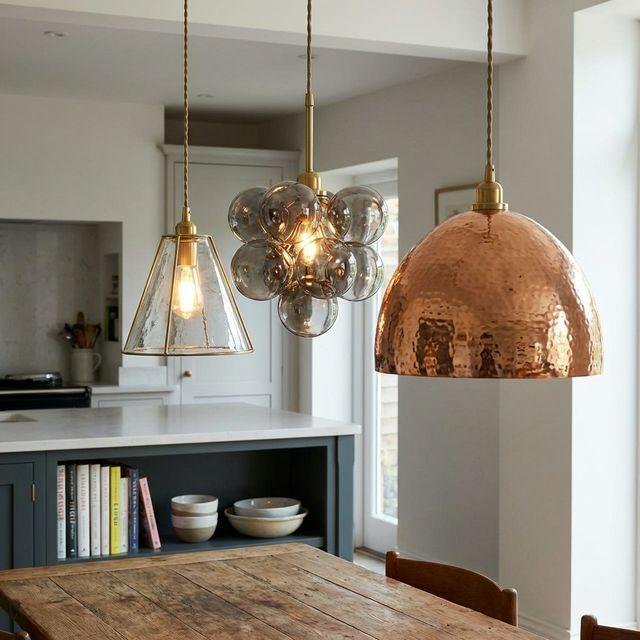
Cord-hung pendants use electrical cord covered with decorative material such as fabric, braided rope, or rubberized coatings. They are lightweight and often used for smaller fixtures. Height adjustment is simple, as excess cord is typically stored in the canopy at the ceiling. Cord-hung pendants work well in casual and contemporary settings.
Chain-Hung Pendants
Chain-hung pendants use metal chain links to suspend the fixture, with the electrical wire threaded through the chain. This traditional mounting style can support heavier fixtures and is commonly seen in chandeliers, lantern pendants, and farmhouse-style fixtures. Chain-hung pendants are popular in the traditional and transitional homes found throughout Arlington, Fairfax, and McLean.
Rod-Hung Pendants
Rod-hung pendants use rigid metal rods for a clean, contemporary look. The rods come in standard lengths and can sometimes be cut to size. Rod mounting provides a fixed, stable position that does not sway, making it ideal for modern and minimalist interiors. Multiple rod-hung pendants in a linear arrangement over a kitchen island create a sleek, architectural statement.
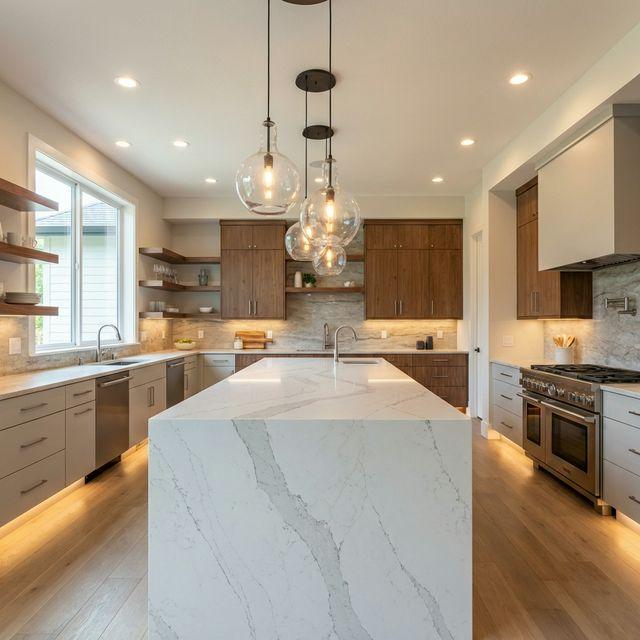
Did You Know? Multi-pendant installations over kitchen islands are one of the most requested lighting upgrades in Northern Virginia kitchen renovations. When spacing multiple pendants, distribute them evenly across two-thirds of the island length, maintaining 24-30 inches between fixture centers. Three pendants over a standard 6-8 foot island is the most common configuration and provides balanced task lighting across the entire surface.
Multi-Pendant Configurations and Wiring
Multi-pendant installations require additional planning beyond single fixture projects. Each pendant typically needs its own electrical box, though some multi-pendant canopy systems allow multiple fixtures to be wired to a single junction point. The wiring for multi-pendant setups must be properly sized to handle the combined electrical load, and all fixtures on the same circuit should be controlled by the same switch or dimmer for consistent operation.
Linear multi-pendant canopies, which mount a rectangular plate to the ceiling with multiple pendant drops, are an elegant solution that simplifies wiring while creating a cohesive visual statement. These canopies are especially popular over long rectangular kitchen islands in open-concept layouts common throughout Northern Virginia.
When to Call a Professional Electrician
Professional installation is advisable in several common scenarios: when no electrical box exists at the desired location, when the existing box is not rated for the fixture weight, when new circuits or switch locations are needed, when multi-pendant configurations require complex wiring, or when you want to add dimmer or smart switch controls. Replacing an existing fixture with a similar-weight pendant on an existing box is relatively straightforward, but any situation involving new wiring, structural box mounting, or circuit modifications should be handled by a licensed electrician to ensure safety and code compliance.
Pendant Light Installation Services in Northern Virginia
At AJ Long Electric, we handle all aspects of pendant light installation, from running new wiring through attics and walls to mounting fixtures at the perfect height and configuring dimmer or smart controls. Whether you are adding a single statement pendant in a foyer or installing a multi-fixture arrangement over your kitchen island, our electricians deliver professional results that enhance your home's beauty and functionality.
Contact AJ Long Electric for a pendant lighting consultation. We serve homeowners throughout Fairfax, Arlington, Loudoun, and Prince William counties. Our team will assess your electrical situation, discuss placement options, and provide a clear plan for bringing your pendant lighting vision to life.
Tags:

Written by
AJ Long Electric Team
Licensed Electricians
Our team of licensed electricians brings over 40 years of combined experience serving Northern Virginia. We're committed to providing expert electrical solutions with a focus on safety, quality, and customer satisfaction.
Reviewed by AJ Long Electric Master Electricians · VA License #2705031092 · View Credentials