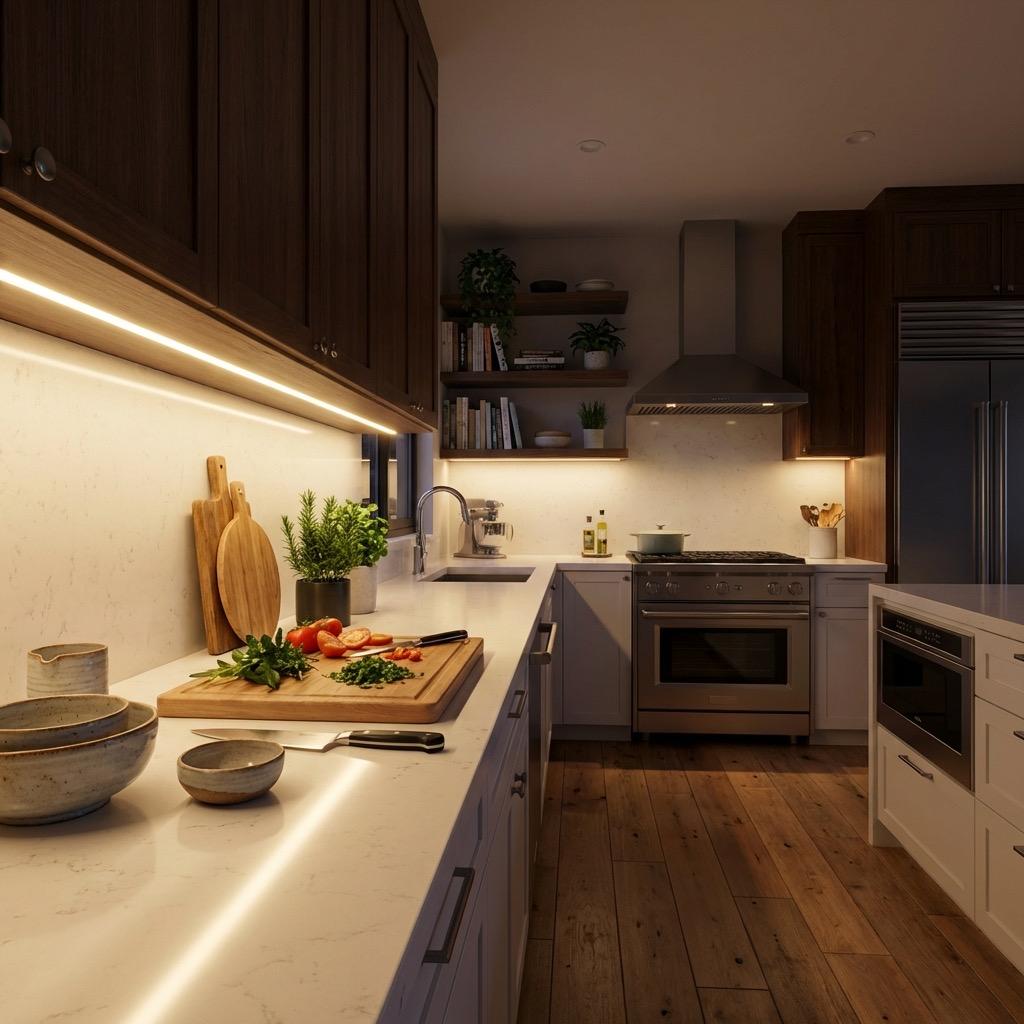
Under cabinet lighting transforms kitchens from functional spaces into showpieces while providing practical task lighting for food preparation. This often-overlooked lighting layer eliminates shadows on countertops, adds ambiance for entertaining, and can even serve as nighttime navigation lighting when dimmed. At AJ Long Electric, we have installed under cabinet lighting in kitchens throughout Arlington, Alexandria, Fairfax, Loudoun, and Prince William counties. This guide covers everything you need to know about selecting and installing the perfect under cabinet lighting for your Northern Virginia home.
Key Takeaways
- LED strip lights with aluminum diffuser channels provide the most even, professional-quality under cabinet illumination for task lighting.
- Hardwired installations offer a cleaner appearance than plug-in options and should be planned during kitchen renovations for easiest wiring access.
- Choose 2700-3000K color temperature for warm, traditional kitchens and 3500-4000K for contemporary spaces, maintaining consistency with overhead lighting.
- Position fixtures 1-2 inches from the front cabinet edge for maximum counter coverage while keeping the light source hidden from view.
- Professional installation by a licensed electrician ensures safe, code-compliant wiring and optimal light placement.
Types of Under Cabinet Lighting
LED Strip Lights
LED strip lights, also called tape lights or ribbon lights, consist of small LED chips mounted on a flexible circuit board with adhesive backing. They provide continuous, even illumination without visible light points. Modern LED strips offer high CRI ratings for accurate color rendering, which is essential when working with food. Strip lights come in various brightness levels measured in lumens per foot. For task lighting, look for strips rated at 200-300 lumens per foot. Lower output strips at 100-150 lumens per foot work well for accent lighting. Many strips offer tunable white capability, allowing adjustment between warm and cool color temperatures throughout the day.
Puck Lights
Puck lights are round, disc-shaped fixtures typically 2-3 inches in diameter. They create pools of light with defined bright spots and darker areas between fixtures. The main advantage of puck lights is simpler installation since they can be surface-mounted with minimal wiring. However, for task lighting, the uneven illumination pattern is a significant drawback. Puck lights are better suited for highlighting decorative items in glass-front cabinets than for illuminating work surfaces where you need consistent brightness across the full counter length.
Light Bars
Light bars are linear fixtures that come in standard lengths of 12, 18, 24 inches, and longer, and can often be linked together end to end. They provide more even illumination than puck lights and are easier to install than custom strip lights. Many light bars include integrated switches and can be plugged in or hardwired. Light bars are an excellent middle-ground option for retrofitting older kitchens throughout the DMV area without major electrical work.
Pro Tip: For the most professional-looking results, always install LED strips inside aluminum channels with frosted diffuser covers. The diffuser eliminates visible LED dots and creates a smooth, continuous wash of light across your countertops. This small addition makes the difference between a DIY look and a custom installation.
Power Options: Plug-In vs. Hardwired
Plug-In Installation
Plug-in under cabinet lights connect to standard outlets, making installation straightforward. The main requirement is having an accessible outlet, either on the backsplash or inside a cabinet. Many homeowners use the outlet intended for small appliances. While plug-in installation is simpler, visible cords can detract from the clean look of under cabinet lighting. Cord management becomes important since running wires through cabinet interiors or using cord covers helps maintain a tidy appearance. Plug-in systems also consume an outlet that might otherwise be used for appliances.
Whether it is a simple repair or a major electrical project, our licensed team is ready to help. Serving all of Northern Virginia with transparent pricing and expert workmanship. Call (703) 997-0026 today.
Hardwired Installation
Hardwired under cabinet lighting connects directly to your home's electrical system, controlled by a wall switch. This installation requires running new wiring, typically through the wall behind the cabinets. The result is a clean, professional appearance with no visible cords or occupied outlets. Hardwired installation is more complex and typically requires a licensed electrician. The electrician will run wiring from a switch location, through the wall, and to each fixture location. When done during a kitchen renovation, this work can be completed before drywall installation. Retrofitting existing kitchens in older Fairfax and Arlington homes requires more careful planning to minimize visible modifications.
Planning Your Under Cabinet Lighting Installation
Measuring and Layout
Start by measuring the length of each cabinet section where you want lighting. For task lighting, plan to cover the full length of upper cabinets above work areas. The lighting should be positioned toward the front of the cabinet, typically 1-2 inches from the front edge, to maximize counter illumination while minimizing visibility of the fixture itself. Consider which direction the light should face. Angled fixtures that aim light toward the backsplash can reduce glare and reflections on glossy countertops. Straight-down fixtures provide maximum counter illumination but may cause more direct glare on polished granite or quartz surfaces.
Choosing Color Temperature
Color temperature significantly impacts how your kitchen looks and feels. Warm white at 2700-3000K creates a cozy, traditional atmosphere similar to incandescent lighting and flatters warm wood tones and cream-colored cabinets. Neutral white at 3500-4000K provides a balanced, clean look that works well in contemporary kitchens popular in newer Prince William and Loudoun County construction. Cool white at 5000K and above creates a bright, energizing environment but can feel clinical in residential settings. Under cabinet lights should complement, not clash with, your overhead lighting color temperature.
Step-by-Step LED Strip Installation Process
For a professional-quality LED strip installation, follow these steps:
- Prepare the surface: Clean the underside of cabinets thoroughly with degreaser or rubbing alcohol. Any grease or residue will prevent adhesive from bonding properly.
- Plan wire routing: Determine how wiring will run between cabinet sections and to the power source. Drill small holes through cabinet sides if running wires through cabinet interiors.
- Install mounting channels: For the best appearance, use aluminum channels with diffuser covers. These spread the light evenly and protect the LED strips.
- Cut strips to length: LED strips have designated cut points, typically every 2 inches. Cut only at these marked locations to avoid damaging the circuit.
- Connect strips: Use solderless connectors to join strip sections and connect to power wires. Ensure all connections are secure and polarity is correct.
- Install the driver: The LED driver converts household voltage to the low voltage used by LED strips. Mount the driver in an accessible but hidden location.
- Connect to power: For hardwired installations, connect the driver to the electrical supply. This step requires a licensed electrician.
- Test and adjust: Power on the system and check for connection issues, flickering, or uneven lighting before finalizing.
Dimming, Controls, and Common Mistakes
Dimming and Smart Controls
Dimmable under cabinet lighting offers versatility, from bright for cooking to dimmed for ambiance during dining or as night lighting. LED strips require compatible dimmers, either wall-mounted or inline. Many LED systems use 0-10V dimming or PWM protocols rather than traditional phase-cut dimmers. Smart controls add convenience and automation. WiFi-enabled controllers allow smartphone adjustment of brightness and color temperature, and integration with smart home systems like Alexa or Google Home enables voice control and automated schedules.
Did You Know? Under cabinet lighting is one of the most cost-effective kitchen upgrades you can make. For a fraction of the cost of a full kitchen remodel, hardwired under cabinet LEDs dramatically improve both the functionality and perceived value of your kitchen. Many real estate agents in Fairfax and Arlington counties cite under cabinet lighting as a feature that helps homes sell faster.
Common Installation Mistakes to Avoid
- Insufficient brightness: Under cabinet task lighting should be bright enough to illuminate work surfaces adequately. Do not compromise on lumens for energy savings.
- Visible light sources: Position fixtures so the LED elements are not visible when standing at the counter. Use lens covers or channels with diffusers.
- Poor wire management: Visible wires ruin the clean look of under cabinet lighting. Plan wire routing carefully and use appropriate concealment methods.
- Mismatched color temperatures: Using different color temperature lights in the same kitchen creates an inconsistent appearance.
- Ignoring the cabinet bottom material: Dark cabinet bottoms may require higher brightness or reflective additions to achieve adequate counter illumination.
Professional Under Cabinet Lighting Installation
While plug-in under cabinet lights can be DIY projects, hardwired installations and complex LED strip systems benefit from professional installation. Licensed electricians ensure safe electrical connections, proper wire routing through walls and cabinets, code compliance for new circuits, and optimal placement for even illumination.
At AJ Long Electric, our kitchen lighting specialists design and install under cabinet lighting systems that enhance both function and aesthetics. We handle everything from initial planning through final testing, including any necessary electrical upgrades to support your new lighting. Homeowners across Fairfax, Arlington, Loudoun, and Prince William counties trust our team for under cabinet lighting projects that deliver beautiful, lasting results. Contact us to schedule a consultation and discover how under cabinet lighting can transform your kitchen experience.
Tags:

Written by
AJ Long Electric Team
Licensed Electricians
Our team of licensed electricians brings over 40 years of combined experience serving Northern Virginia. We're committed to providing expert electrical solutions with a focus on safety, quality, and customer satisfaction.
Reviewed by AJ Long Electric Master Electricians · VA License #2705031092 · View Credentials