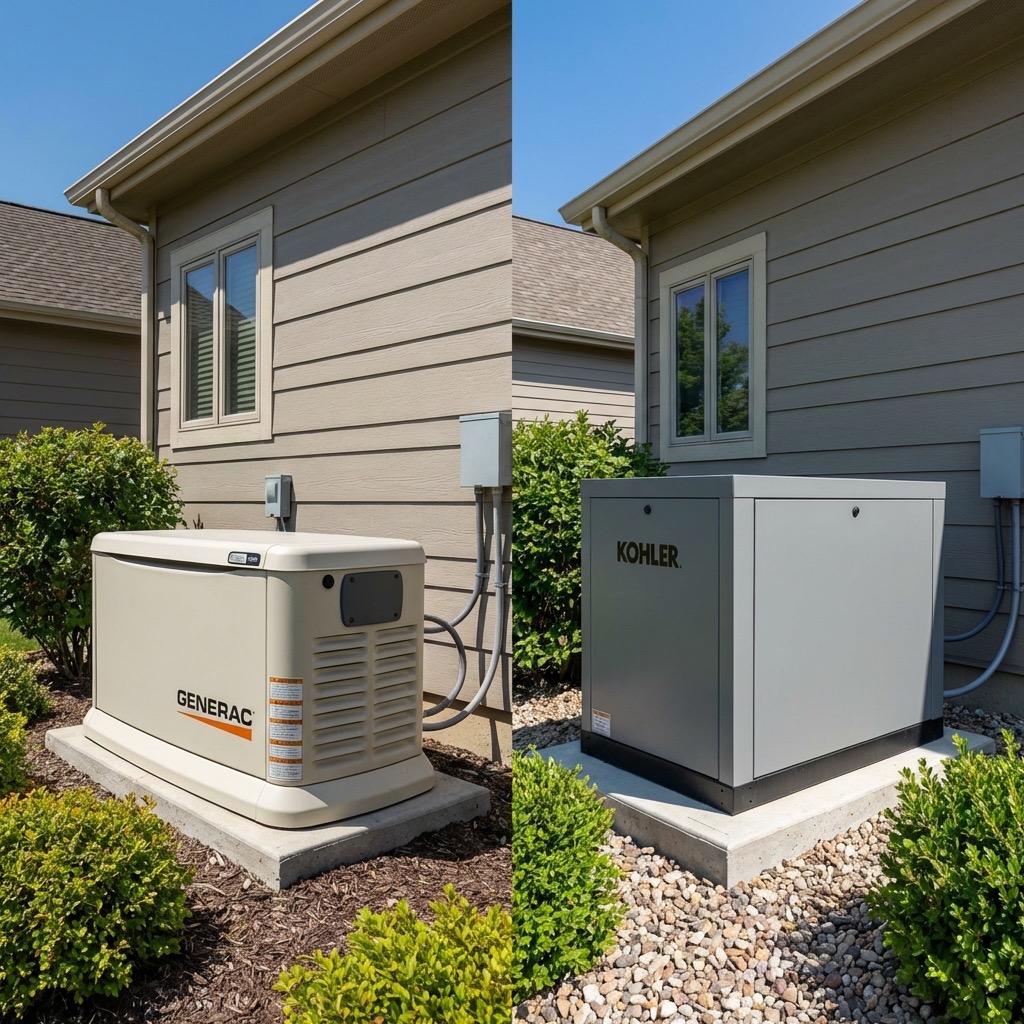
When investing in a whole-home standby generator, fuel choice is just as important as brand selection. Natural gas and propane are the two primary options, and each has distinct advantages depending on your location, usage expectations, and infrastructure. Here is everything you need to know to make the right choice for your Northern Virginia home.
Key Takeaways
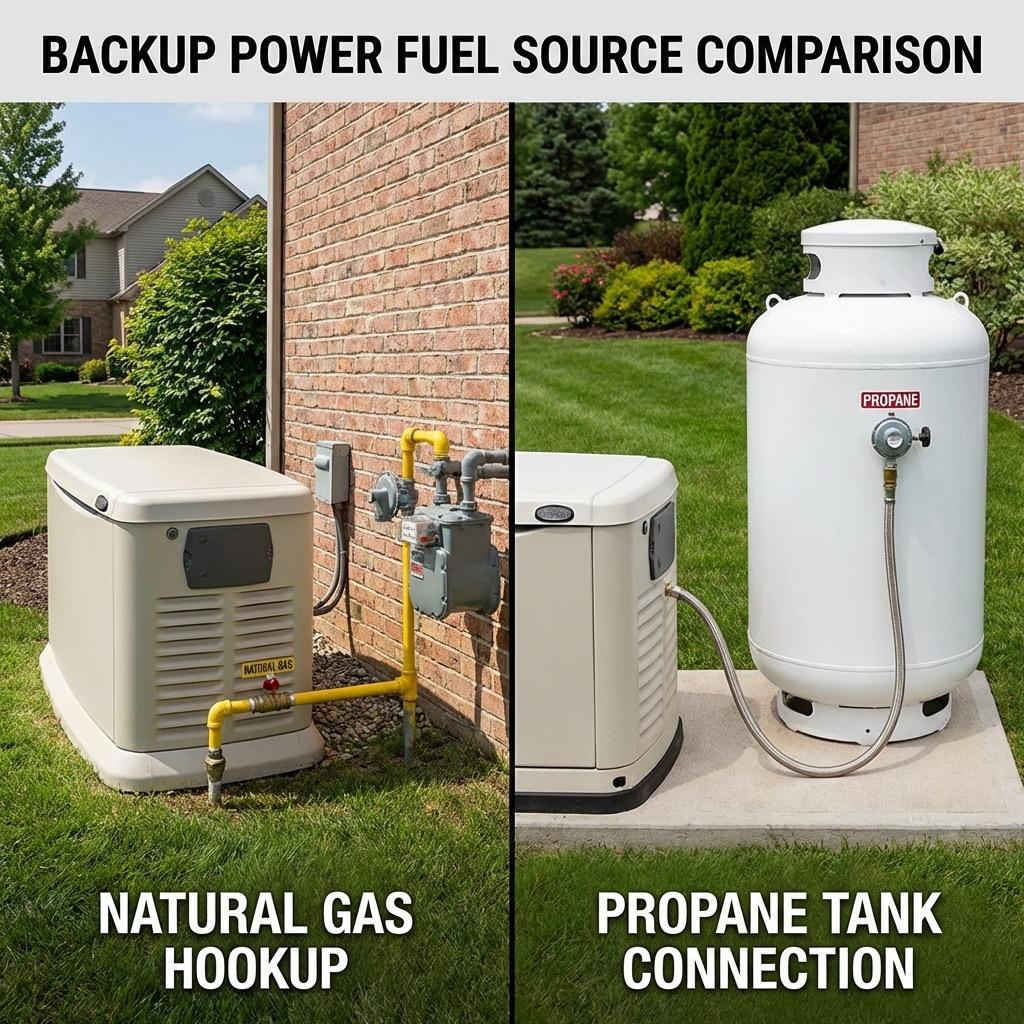
- Natural gas generators connect to your existing gas line for unlimited runtime with no tank to manage. Propane generators use an on-site storage tank for complete independence from utility infrastructure.
- Natural gas is 60-70% less expensive to operate per hour, but propane is available anywhere, including rural areas without gas mains.
- In the Northern Virginia suburbs (Fairfax, Arlington, Alexandria), most homes have natural gas, making it the practical default. In rural Loudoun, Prince William, or Fauquier counties, propane is often the better or only option.
- A 500-gallon propane tank provides roughly 4-5 days of runtime for a 20kW generator at 50% load.
- Most standby generators can be configured for either fuel during installation; some offer dual-fuel capability.
Understanding Your Options
Natural Gas Generators
Natural gas generators connect to your home's existing natural gas line, drawing fuel directly from the utility supply. There is no tank to fill. As long as the gas mains are working, your generator has fuel.
Propane (LP) Generators
Propane generators use a storage tank on your property, typically 250-1000 gallons for residential use. A propane supplier delivers fuel to refill the tank as needed.
Dual-Fuel Generators
Many standby generators can be configured for either fuel type during installation. Some can even switch between fuels, though this is more common in portable units.
Natural Gas vs Propane: Full Comparison
| Factor | Natural Gas | Propane (LP) |
|---|---|---|
| Runtime | Unlimited (utility supply) | Limited by tank size |
| Fuel cost (20kW, 8 hrs at 50%) | ~$12 | ~$40 |
| Storage tank required | No | Yes (250-1000 gal) |
| Tank cost (installed) | N/A | $1,500-$5,000 |
| Gas line extension cost | $500-$10,000+ | N/A |
| Energy density (BTU) | 1,000 BTU/cu ft | 91,500 BTU/gal |
| Generator output | Slightly lower | 10-15% higher (same model) |
| Fuel shelf life | N/A (piped) | Indefinite |
| Disaster independence | Vulnerable to main damage | Fully independent on-site |
| Cold weather performance | Good | Excellent (vaporizes at -44F) |
| Delivery logistics | None (always on) | Must schedule refills |
| Emissions | Cleaner burning | Slightly higher |
Natural Gas: Advantages and Disadvantages
Advantages
Unlimited Runtime: As long as natural gas service continues, your generator runs indefinitely. You never need to schedule fuel deliveries, monitor tank levels, or worry about running out during an extended outage. This is the single biggest advantage for Northern Virginia homeowners with existing gas service.
Never lose power again. We are authorized Generac installers serving all of Northern Virginia. From sizing to installation to maintenance, we handle every step. Call (703) 997-0026 for a free in-home assessment.
No Storage Tank: Without a propane tank, you save on equipment cost, installation, and yard space. Tanks require setback distances from structures and property lines, which can be challenging on the smaller lots common in Fairfax and Arlington counties.
Lower Fuel Cost: Natural gas typically costs 60-70% less per unit of energy than propane. Over years of testing cycles and outage operation, this difference adds up meaningfully.
Disadvantages
Vulnerable to Gas Main Disruption: In a major disaster, natural gas lines can be damaged or shut off for safety. When the gas stops, your generator stops. Lower Energy Density: Natural gas units often produce slightly less power than equivalent propane models. Requires Existing Gas Service: Installing new gas service can cost $3,000-$10,000+.
Northern Virginia Infrastructure: Natural gas is widely available in developed suburbs throughout Fairfax, Arlington, and Alexandria. Most homes in these areas already have gas service. In more rural areas of western Loudoun, southern Prince William, or Fauquier County, natural gas may not be available, making propane the practical default. Check with Washington Gas or your local utility to confirm availability at your address.
Propane: Advantages and Disadvantages
Advantages
Self-Contained Fuel Supply: Your propane tank is entirely on your property, independent of any utility. Whatever is in your tank is available to you regardless of infrastructure damage. Works Anywhere: Propane generators can be installed at any location. If a truck can deliver propane, you can have backup power. Higher Energy Density: Propane generators often produce 10-15% more power than natural gas equivalents from the same engine.
Disadvantages
Finite Fuel Supply: A 500-gallon tank running a 20kW generator at 50% load provides roughly 4-5 days of runtime. Extended outages require refueling planning. Tank Cost and Space: A 500-gallon underground tank installed costs $3,000-$5,000. Above-ground tanks are less expensive but require significant yard space. Higher Fuel Cost: Propane costs 20-40% more per BTU than natural gas.
Pro Tip: Ice storms are the most common cause of extended power outages in Northern Virginia. Since ice storms do not typically damage underground gas lines, natural gas maintains a reliability advantage for our region. However, if you are in a rural area or want complete utility independence, a properly sized propane tank (we recommend 500 gallons minimum) provides excellent peace of mind.
Fuel Cost Comparison
For a 20kW generator running 8 hours at 50% load:
- Natural gas: ~125 cubic feet/hour x 8 hours x $1.20/therm = approximately $12
- Propane: ~2 gallons/hour x 8 hours x $2.50/gallon = approximately $40
Natural gas is typically 60-70% less expensive to operate, though actual costs vary by supplier and season. Both fuel types require similar maintenance schedules. Propane's cleaner burning may slightly reduce maintenance frequency, but the difference is marginal.
Making Your Decision
Choose Natural Gas If:
- You already have natural gas service to your home
- You want unlimited runtime without monitoring fuel levels
- Your area has reliable natural gas infrastructure
- You prefer lower ongoing fuel costs
- Your property lacks space for a propane tank
Choose Propane If:
- Natural gas is not available at your property
- You want fuel supply independence from utilities
- You live in a rural area with reliable propane delivery
- You already have propane infrastructure for heating or cooking
- You prefer a self-contained on-property solution
Our Recommendation for Northern Virginia
For homeowners with existing natural gas service, we generally recommend natural gas generators. The combination of unlimited runtime, lower operating costs, and no tank to maintain makes it the practical choice. For homes without gas service, propane provides reliable backup power with complete independence from utility infrastructure. The key is sizing your tank appropriately; we recommend 500 gallons minimum for whole-home backup.
Not sure which fuel type is right for your situation? AJ Long Electric provides free generator consultations throughout Northern Virginia. We assess your existing infrastructure, calculate your runtime needs, and recommend the best fuel solution for your home. Contact us to schedule your consultation.
Tags:

Written by
Matt Long
Master Electrician
Our team of licensed electricians brings over 40 years of combined experience serving Northern Virginia. We're committed to providing expert electrical solutions with a focus on safety, quality, and customer satisfaction.
Reviewed by AJ Long Electric Master Electricians · VA License #2705031092 · View Credentials