Most homeowners have no idea where their electricity actually goes. You see the Dominion Energy bill arrive each month, note the total, and hope it does not climb too much. But what if you could see exactly which appliances, systems, and circuits are consuming power in real time? Home energy monitoring systems make this possible, revealing hidden energy waste, identifying failing equipment before it breaks, and providing the data you need to make meaningful efficiency improvements. For Northern Virginia homeowners facing summer electric bills that can easily exceed $300 or more for larger homes, energy monitoring pays for itself by identifying savings opportunities you would never find otherwise.
Key Takeaways
- Whole-home energy monitors install inside your electrical panel using CT clamps and typically require professional installation by a licensed electrician.
- The Sense monitor uses machine learning to identify individual appliance signatures, while the Emporia Vue provides circuit-level monitoring with expansion modules.
- Energy monitoring helps identify vampire loads, failing appliances, and opportunities for efficiency upgrades that can reduce your monthly bill by 10 to 20 percent.
- Solar panel owners benefit from production-versus-consumption monitoring to optimize their energy usage around solar generation.
- Integration with smart home systems enables automated responses to energy data, such as adjusting thermostat setpoints during peak rate periods.
How Home Energy Monitors Work
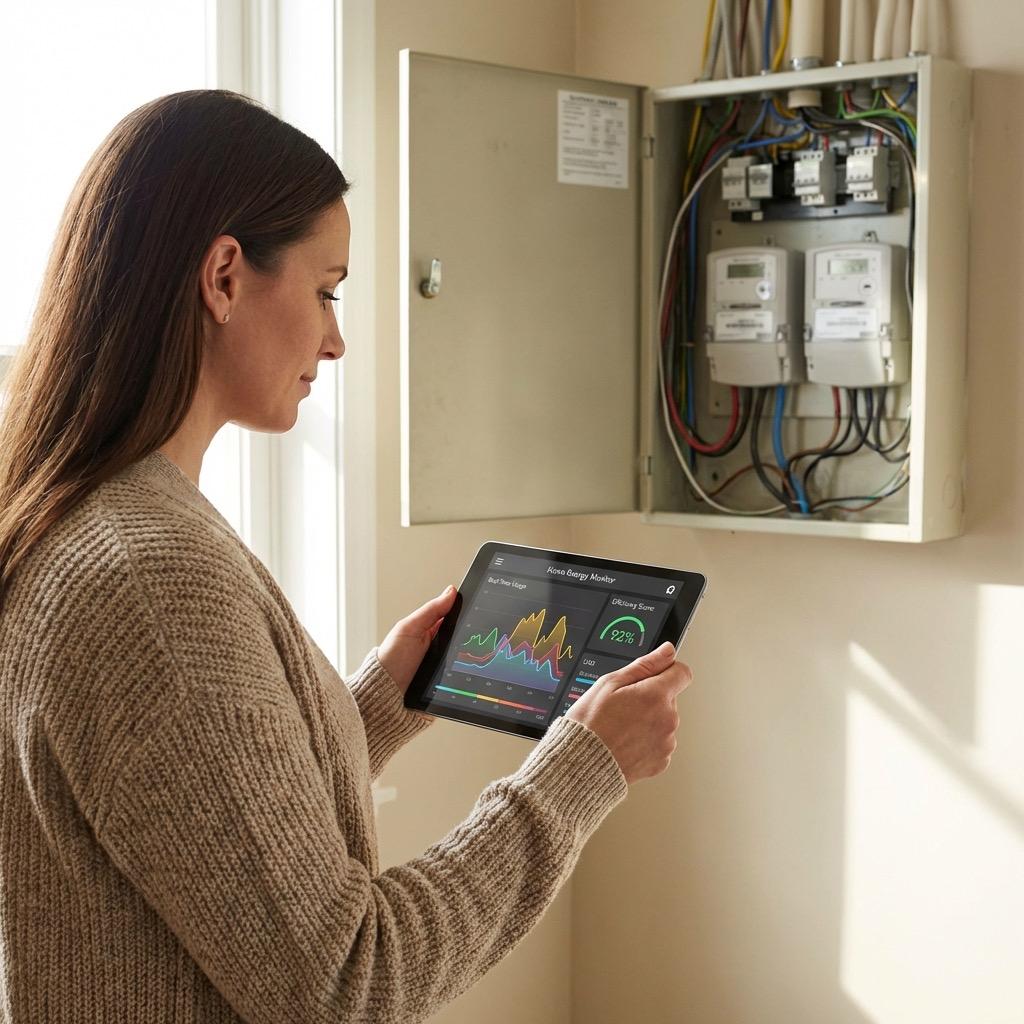
Home energy monitors measure the electrical current flowing through your home's main feed wires or individual circuit breakers. They use current transformers, commonly called CT clamps, which are donut-shaped sensors that clip around a wire without making direct electrical contact. The CT clamp measures the magnetic field generated by current flow and converts it to a data signal that the monitor processes and sends to your phone or web dashboard.
Installation Inside the Electrical Panel
Most energy monitors install inside your main electrical panel, where CT clamps attach around the main service entrance wires. This provides whole-home energy measurement. More advanced setups add smaller CT clamps to individual circuit breakers, allowing you to see how much power each circuit consumes. Because this work involves opening your electrical panel and working near live conductors, professional installation by a licensed electrician is strongly recommended. In fact, many manufacturers require professional installation to maintain their warranty.
Comparing Popular Energy Monitors
The energy monitoring market has matured significantly, and several products stand out for Northern Virginia homeowners.
Whether it is a simple repair or a major electrical project, our licensed team is ready to help. Serving all of Northern Virginia with transparent pricing and expert workmanship. Call (703) 997-0026 today.
Sense Energy Monitor
The Sense monitor is the most sophisticated consumer energy monitor available. It installs two CT clamps on your main service feeds and uses machine learning algorithms to identify individual device signatures over time. Sense can recognize your refrigerator, HVAC system, dryer, dishwasher, and many other appliances by their unique electrical patterns. The app displays real-time consumption and breaks it down by identified device.
The learning process takes time. Sense typically identifies major appliances within the first few weeks but can take several months to recognize more subtle devices. The always-on detection feature identifies vampire loads from devices that draw power even when supposedly off, which is particularly revealing for most homeowners.
Emporia Vue Energy Monitor
The Emporia Vue takes a different approach by offering circuit-level monitoring. The base unit monitors your main feeds like Sense, but expansion modules add CT clamps to individual circuit breakers. The Emporia Vue 2 supports up to 16 circuit monitors in addition to the main feeds, giving you precise data about specific circuits like your HVAC, water heater, dryer, kitchen, and EV charger.
The advantage of circuit-level monitoring is immediate, accurate data without a learning period. You know exactly how much power the kitchen circuit uses because you are measuring it directly. The trade-off is that circuits serving multiple outlets or lights show combined usage without individual device breakdowns.
Smart Electrical Panels
The newest development in energy monitoring is the smart electrical panel. Products like the Span panel and Leviton Smart Load Center replace your traditional breaker panel with one that has built-in monitoring, individual circuit control, and integration with solar and battery storage systems. These are premium products that make the most sense during a panel upgrade or new construction.
Dominion Energy Compatibility: Both Sense and Emporia work with Dominion Energy's standard residential service, which is the most common configuration in Northern Virginia. If you are on Dominion's time-of-use rate plan, energy monitors can help you shift consumption to off-peak hours when electricity is cheaper, typically overnight and on weekends.
What Energy Monitoring Reveals
The data from an energy monitor is often surprising. Here are common discoveries that Northern Virginia homeowners make after installing monitoring systems.
HVAC Dominance
In most Northern Virginia homes, heating and cooling account for 40 to 60 percent of total electricity consumption. Energy monitoring lets you see exactly how often your system cycles, how much power each cycle draws, and whether your consumption aligns with expected performance. A system that runs constantly without reaching the set temperature may indicate failing equipment, duct leaks, or inadequate insulation.
Vampire Loads
Always-on devices like cable boxes, gaming consoles, smart home hubs, and chargers collectively draw significant power. Sense's always-on detection frequently reveals $10 to $30 per month in vampire loads. Smart plugs paired with energy monitoring can automatically cut power to these devices when not in use.
Failing Appliance Detection
An aging refrigerator or freezer that runs longer and harder than normal can be identified through energy monitoring before it fails completely. If your refrigerator suddenly starts consuming 50 percent more power than its historical average, the compressor may be struggling and replacement should be planned before food spoilage occurs.
Pro Tip: After installing an energy monitor, resist the urge to make changes for the first two weeks. Let the system establish baseline data for your normal consumption patterns. Then make one change at a time and observe the impact. This methodical approach helps you understand exactly which modifications produce real savings.
Solar Energy Monitoring
For Northern Virginia homeowners with solar panels, energy monitoring provides critical insight into the relationship between solar production and household consumption. You can see when your panels are producing more than you are consuming (sending excess to the grid) and when household demand exceeds solar output (drawing from the grid).
Optimizing Solar Usage
Energy monitoring data helps you shift consumption to peak solar production hours. Running the dishwasher, laundry, and EV charger during midday when solar production is highest maximizes self-consumption and reduces grid dependence. Smart home integration can automate this scheduling based on real-time solar production data.
EV Charging Monitoring
Electric vehicle charging is a significant new electrical load for many Northern Virginia households. A Level 2 home charger draws 7 to 10 kilowatts, comparable to running a large central air conditioner. Energy monitoring lets you track charging costs separately from the rest of your consumption, verify that your charger is operating efficiently, and schedule charging for off-peak hours if you are on a time-of-use rate.
Integration With Smart Home Systems
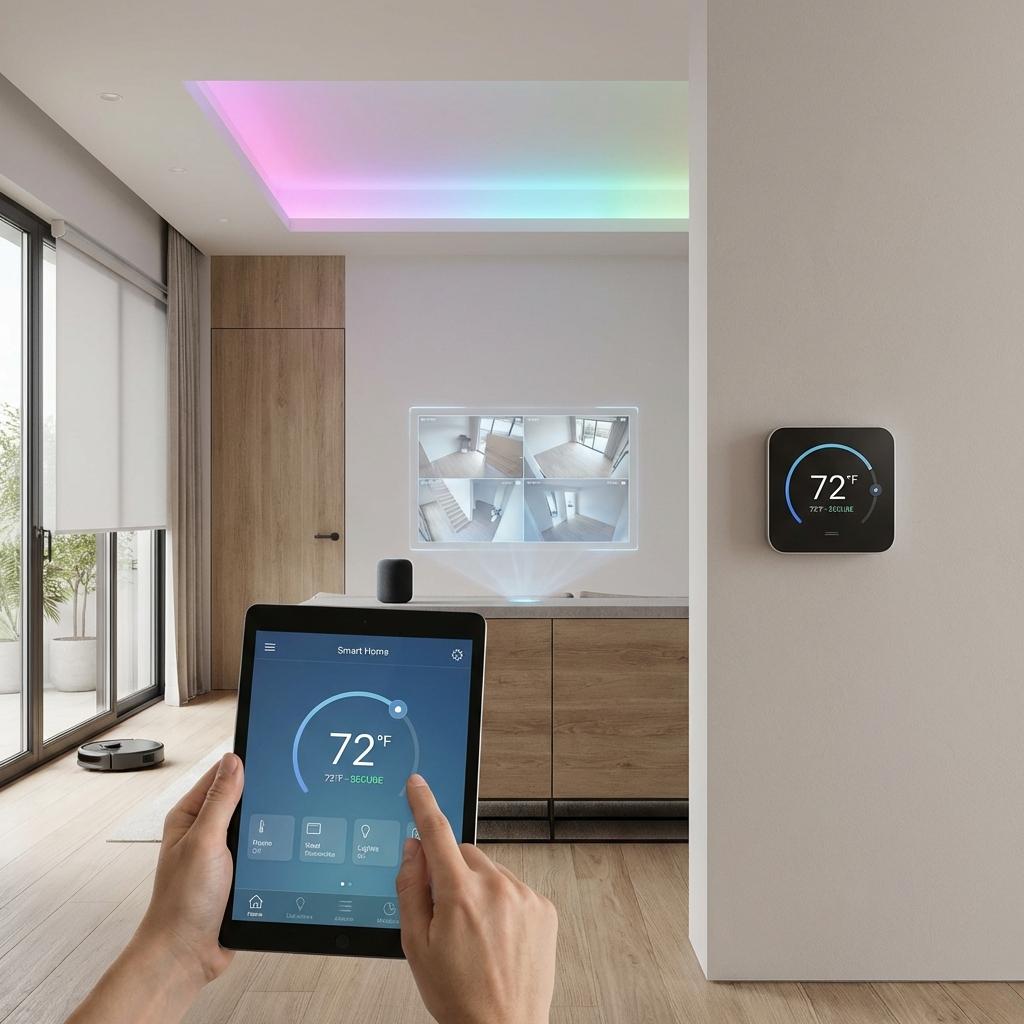
Energy monitors that integrate with smart home platforms enable automated responses to energy data. If the monitor detects consumption exceeding a threshold, the smart thermostat can adjust by a degree or two. If solar production peaks, smart plugs can activate high-consumption appliances. If the energy monitor detects an unusual pattern suggesting a forgotten appliance, you receive a phone notification to investigate.
Want to know exactly where your electricity goes? AJ Long Electric installs energy monitoring systems in homes throughout Northern Virginia, from basic whole-home monitors to comprehensive circuit-level solutions. Our licensed electricians ensure safe installation inside your electrical panel and help you understand the data to make informed decisions about energy efficiency improvements. Call us today to schedule your energy monitor installation.
Tags:

Written by
Matt Long
Master Electrician
Our team of licensed electricians brings over 40 years of combined experience serving Northern Virginia. We're committed to providing expert electrical solutions with a focus on safety, quality, and customer satisfaction.
Reviewed by AJ Long Electric Master Electricians · VA License #2705031092 · View Credentials