When installing a Level 2 EV charger at home, one of the first decisions you will face is whether to hardwire it directly to your electrical panel or use a plug-in installation with a NEMA outlet. Both methods are safe and code-compliant, but they offer different advantages that can significantly impact your experience as a Northern Virginia EV owner.
Key Takeaways
- Hardwired chargers connect permanently to your electrical system with no plug; plug-in chargers use a NEMA 14-50 or 6-50 outlet and can be unplugged and moved.
- Hardwired installation delivers a cleaner look and more secure connection; plug-in offers portability and easy charger replacement.
- Total installation costs are usually within $50-$100 of each other; the real difference is in long-term flexibility versus permanence.
- For homeowners planning to stay long-term, hardwired is the professional recommendation. For renters or those who may move, plug-in is the smarter choice.
Understanding the Basics
Hardwired Installation
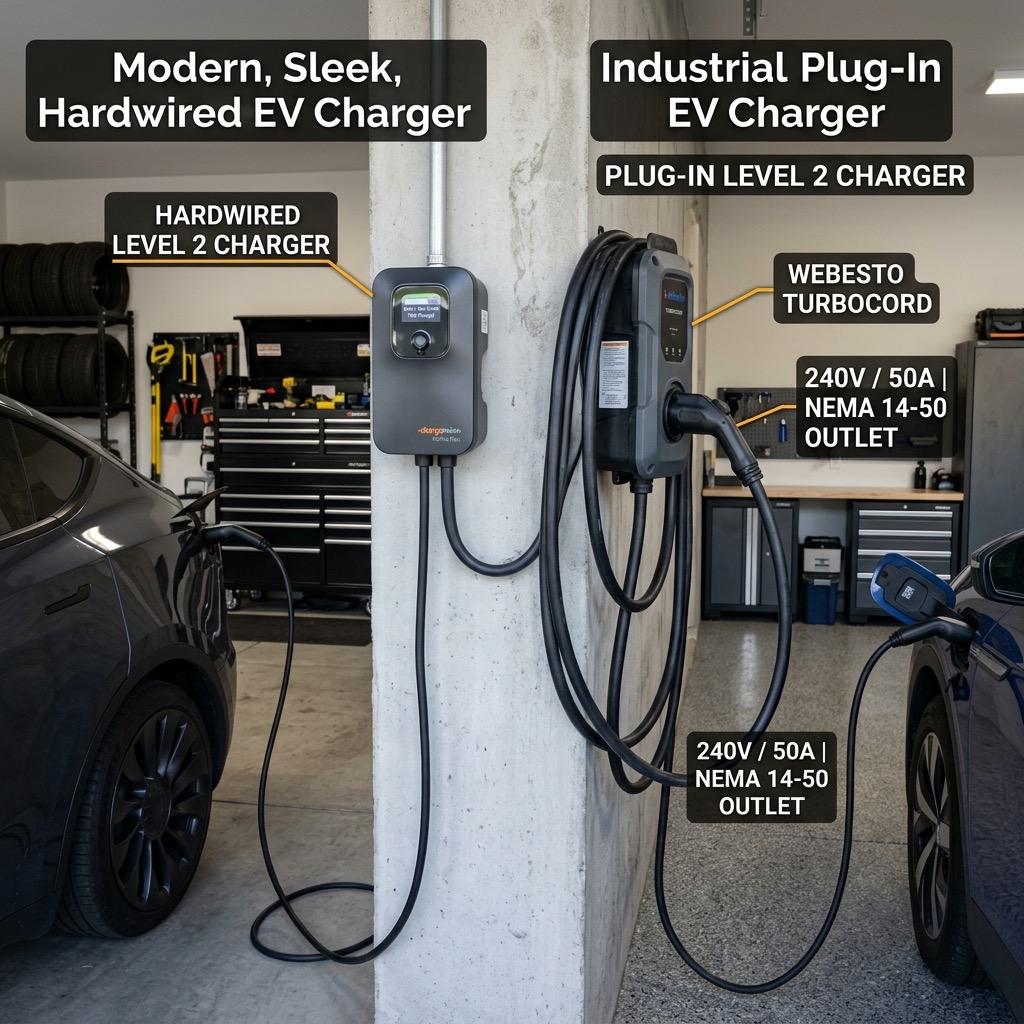
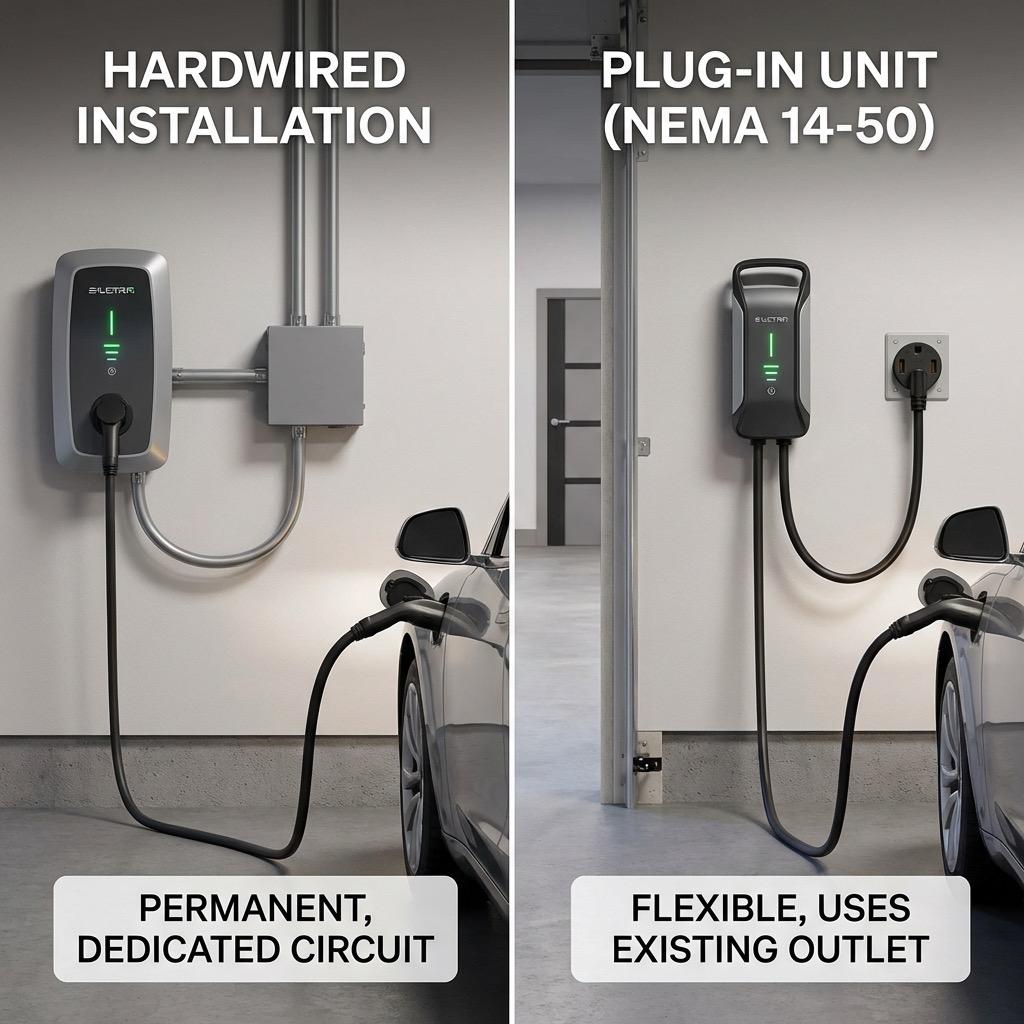
A hardwired EV charger connects directly to your home's electrical system through a dedicated circuit breaker. The wiring runs from the panel to a junction box behind the charger with no plug involved. The charger becomes a permanent fixture, like a built-in appliance.
Plug-In Installation
A plug-in EV charger uses a high-capacity outlet, typically a NEMA 14-50 (the same as used for electric ranges) or NEMA 6-50. The charger has a corresponding plug that simply connects to the outlet. You can unplug and move the charger when needed.
Hardwired vs Plug-In: Full Comparison
| Factor | Hardwired | Plug-In (NEMA 14-50/6-50) |
|---|---|---|
| Max amperage (60A circuit) | 60A (full capacity) | 48A (80% derating for continuous load) |
| Portability | Stays with the house | Take it when you move |
| Charger replacement | $150-$250 (electrician required) | $0 (DIY plug swap) |
| Appearance | Clean, flush mount | Visible outlet and plug |
| Outlet cost | $0 | $50-$100 |
| Additional labor | +$100-$150 | Standard |
| Connection security | Permanent, no loosening | May loosen over years |
| Outlet versatility | Charger only | Can power other 240V devices |
| Ideal for renters | No | Yes |
Hardwired EV Chargers: Pros and Cons
Advantages
Maximum Power Delivery: The National Electrical Code requires circuits with outlets to be derated to 80% capacity for continuous loads. A hardwired connection can use the full circuit capacity. On a 60-amp circuit, hardwired delivers 60 amps (14.4 kW) versus 48 amps (11.5 kW) for plug-in. For most home chargers limited to 48 amps anyway, this difference is academic, but for future-proofing, hardwiring provides more headroom.
Our licensed electricians have installed hundreds of EV chargers across Northern Virginia. We handle everything from panel evaluation to permit filing. Call (703) 997-0026 or request your free estimate online.
Cleaner Installation: Without a visible outlet and plug, hardwired installations look more streamlined. The charger mounts flush against the wall. Many homeowners in Northern Virginia prefer this aesthetic, especially in finished garages.
More Secure Connection: A hardwired connection eliminates the outlet as a potential failure point. Over years of use, plug connections can loosen, potentially causing heat buildup. Hardwired connections are permanently secured.
Disadvantages
The charger is not portable. If you move, it stays with the house unless you pay an electrician to remove and reinstall it. Replacement or upgrades also require a service call. Hardwired installation typically takes 30-60 minutes longer, adding $75-$150 to labor costs.
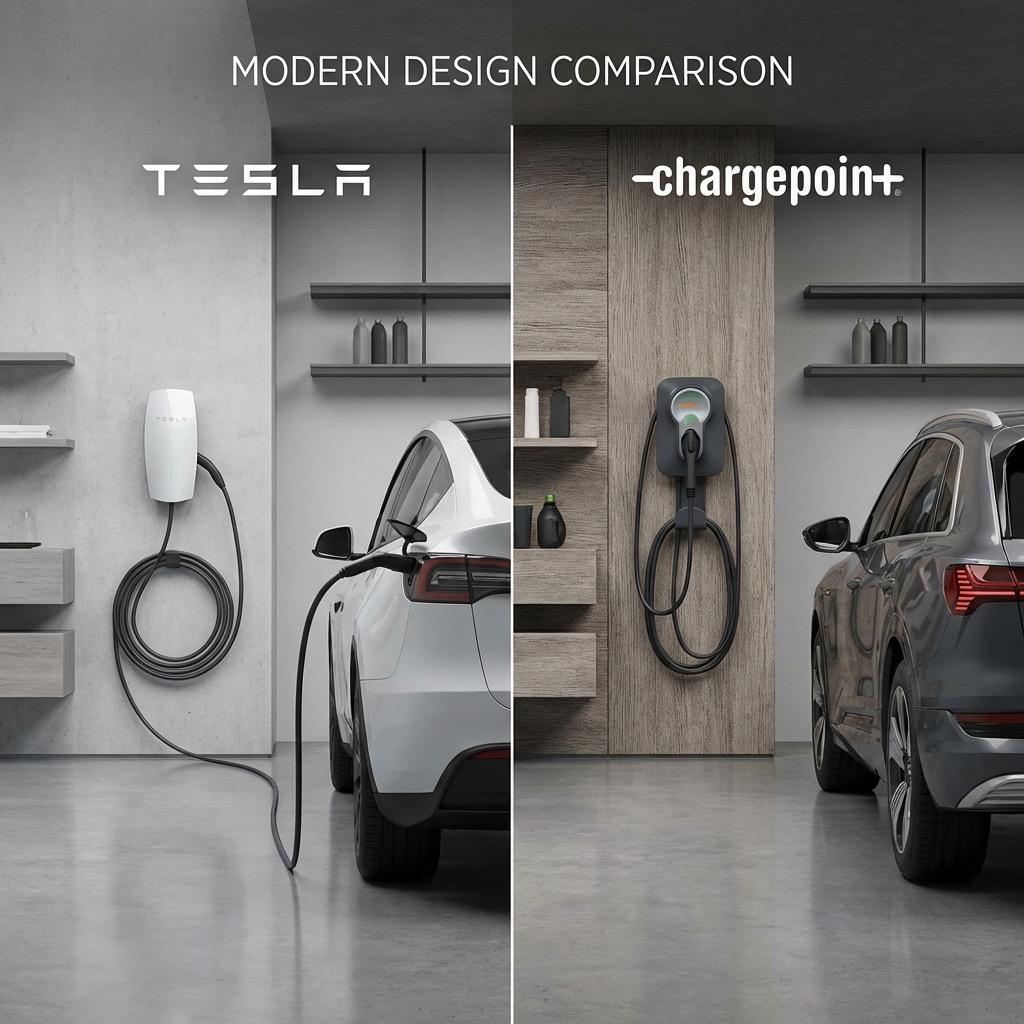
Charger Compatibility Note: Not all chargers support both methods. The Tesla Wall Connector and Grizzl-E are hardwired only. The ChargePoint Home Flex, JuiceBox, and Emporia support both plug-in and hardwired. Most portable/travel chargers are plug-in only. Check your chosen charger's options before scheduling installation.
Plug-In EV Chargers: Pros and Cons
Advantages
Portability: Take your charger when you move. Simply unplug it and you have a complete charging solution for your new home. You will still need a suitable outlet at the new location, but the charger investment travels with you.
Easy Replacement: When charger technology improves or if your unit fails, replacement is as simple as unplugging the old charger and plugging in the new one. No electrician needed for the swap.
Installation Flexibility: An outlet is a versatile investment. If your charging needs change or you need the outlet for other 240V devices temporarily, such as welders, air compressors, or power tools, you have options. This is especially popular in Northern Virginia homes where the garage doubles as a workshop.
Disadvantages
The 80% derating requirement means a 50-amp outlet on a 50-amp breaker delivers only 40 amps continuously. The outlet and plug represent an additional component that can potentially fail or degrade. The visible plug is slightly bulkier in appearance.
Pro Tip: If you choose plug-in installation, invest in a commercial-grade NEMA 14-50 outlet from Hubbell or Leviton ($50-$100). The cheaper residential outlets are not built for the continuous high-current draw of EV charging and may degrade faster. AJ Long Electric always installs commercial-grade receptacles for EV applications across our Northern Virginia service area.
Making Your Decision
Choose Hardwired If:
- You own your home and plan to stay long-term
- You want the cleanest possible installation
- You are installing a Tesla Wall Connector or other hardwired-only unit
- You want maximum possible amperage for future-proofing
- Your garage is prone to dust or moisture that could affect outlet contacts
Choose Plug-In If:
- You rent or may move in the next few years
- You want flexibility to relocate or replace the charger easily
- You may need the outlet for other 240V uses occasionally
- You want to purchase and install the charger yourself after outlet installation
- You value the ability to upgrade chargers as technology improves
Our Professional Recommendation
For most homeowners planning to stay in their current home for 5+ years, we recommend hardwired installation. The cleaner appearance, more secure connection, and simplified setup outweigh the flexibility of plug-in for permanent installations. However, if there is any chance you will move, rent, or want to upgrade your charger in the next few years, plug-in makes more sense. The good news: both options are safe, code-compliant, and will serve you well.
AJ Long Electric installs all types of EV chargers throughout Northern Virginia, both hardwired and plug-in. We help you determine the best installation method for your needs, handle permits, and ensure a safe, code-compliant installation. Contact us for your free EV charger installation quote.
Tags:

Written by
Matt Long
Master Electrician
Our team of licensed electricians brings over 40 years of combined experience serving Northern Virginia. We're committed to providing expert electrical solutions with a focus on safety, quality, and customer satisfaction.
Reviewed by AJ Long Electric Master Electricians · VA License #2705031092 · View Credentials