What if you could power your entire home with a smaller, less expensive generator? Load management systems make this possible by intelligently managing how your generator distributes power. Here's how this technology works and whether it's right for you.
Key Takeaways
- A typical standby generator installation takes 1-2 days for the actual installation work after site preparation.
- The full process from consultation to operational takes 2-6 weeks including permits, utility coordination, and scheduling.
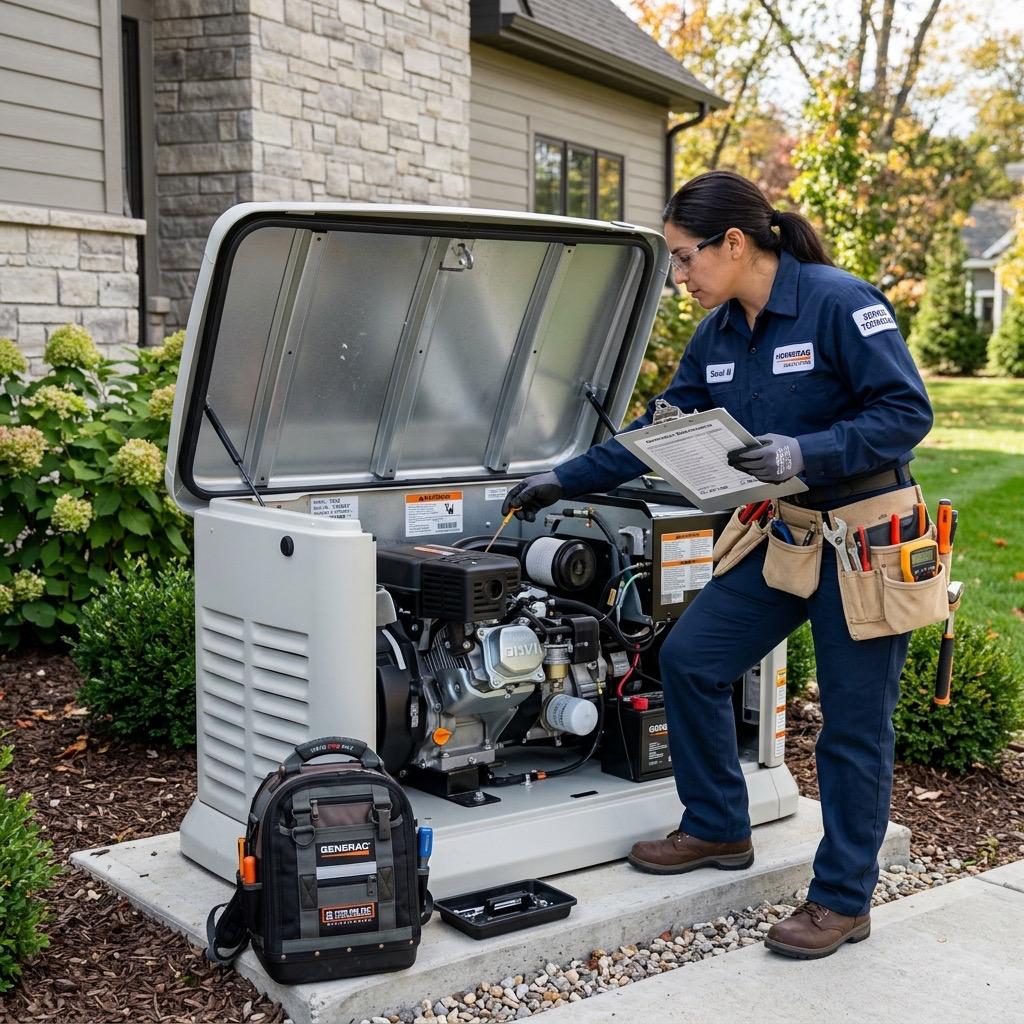
- Installation day includes concrete pad work, generator placement, electrical connection, gas line connection, and testing.
- Final inspection by the local building department is required before the system can be put into service.
What Is Generator Load Management?
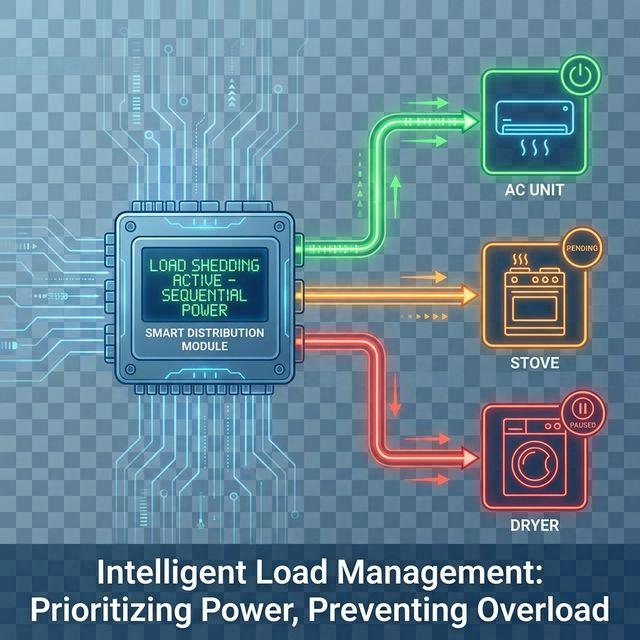
Load management (also called load shedding or power management) is a smart system that monitors your generator's output and automatically cycles non-critical loads on and off to prevent overload. This allows a smaller generator to effectively serve a home that would otherwise require a larger unit.
How It Works
- The system monitors total generator load in real-time
- When load approaches generator capacity, it temporarily shuts off designated "sheddable" loads
- After load decreases or higher-priority needs are met, shed loads are restored
- The process is automatic and usually unnoticeable
Timeline Tip: Start the process at least 4-6 weeks before storm season. Permitting, utility coordination, and scheduling all take time. Rush installations during active storm season often face delays and premium pricing.
Types of Load Management
Priority-Based Load Shedding
Circuits are assigned priority levels:
Never lose power again. We are authorized Generac installers serving all of Northern Virginia. From sizing to installation to maintenance, we handle every step. Call (703) 997-0026 for a free in-home assessment.
- Priority 1: Never shed (refrigerator, sump pump, security)
- Priority 2: Shed only if necessary (some HVAC, lighting)
- Priority 3: First to shed (EV charger, pool pump, dryer)
Smart Load Centers
Advanced panels like Generac's PWRview or the Smart Management Modules can:
- Monitor individual circuit loads
- Make intelligent shedding decisions
- Learn your usage patterns
- Provide app-based visibility and control
Simple Load Controllers
Basic systems control specific high-draw circuits:
- Air conditioner delay timers
- Water heater load controllers
- Pool pump schedulers
Common Applications
Air Conditioning Management
Central AC is typically the largest load. Load management can:
- Delay AC start during high-demand periods
- Alternate between multiple AC zones
- Shed AC temporarily when other large loads start
- Limit runtime during peak demand
Electric Water Heater Control
Water heaters can wait—they maintain temperature for hours:
- Shed during AC operation
- Heat water during low-demand periods
- Coordinate with other high-draw appliances
EV Charger Management
EV charging is ideal for load management:
- Reduce charging rate during peak loads
- Pause charging when other loads need power
- Resume when generator capacity is available
- Still provide meaningful charge during extended outages
Pool and Spa Equipment
- Lowest priority—can wait hours or days
- Run during periods of low demand
- Schedule for overnight hours
The Financial Benefit
Generator Size Savings
A home that calculates to 24kW might run effectively on 16-18kW with load management:
- 24kW generator installed: $15,000-$20,000
- 18kW generator + load management: $12,000-$16,000
- Potential savings: $3,000-$5,000
Fuel Savings
Smaller generators consume less fuel:
- Lower hourly consumption
- More efficient operation at higher load percentage
- Reduced fuel costs during extended outages
Limitations to Consider
Not Instantaneous
Load shedding takes a moment to respond. Very rapid load increases may still trip the generator before shedding occurs.
Comfort Trade-offs
You may experience:
- Brief periods without AC during load spikes
- Delayed hot water after heavy use
- Slower EV charging rates
System Complexity
- More components mean more potential failure points
- Programming and configuration required
- May need adjustment as household needs change
Who Benefits Most?
Good Candidates
- Homes with loads that naturally cycle (AC, water heater)
- Budget-conscious homeowners
- Homes with EV charging
- Properties with multiple sheddable loads
- Those willing to accept minor convenience trade-offs
Not Ideal For
- Homes with medical equipment requiring constant power
- Those who want completely seamless backup power
- Simple installations where loads can't be easily prioritized
- Homes with few sheddable loads
Load Management Products
Generac Smart Management Modules (SMM)
- Manages up to 8 individual loads
- Integrates with Generac generators
- App-based monitoring and control
Kohler Load Control Module
- Prioritizes up to 4 loads
- Simple setup for common applications
- Works with Kohler OnCue monitoring
Third-Party Solutions
- Span Smart Panel
- Schneider Square D Energy Center
- Various individual load controllers
Professional Assessment
At AJ Long Electric, we analyze your specific situation to determine if load management makes sense:
- Identify sheddable vs. critical loads
- Calculate potential generator downsizing
- Compare costs of larger generator vs. smaller + load management
- Design appropriate prioritization
Contact us for a free consultation. We'll help you find the most cost-effective backup power solution for your home.
Tags:

Written by
Matt Long
Master Electrician
Our team of licensed electricians brings over 40 years of combined experience serving Northern Virginia. We're committed to providing expert electrical solutions with a focus on safety, quality, and customer satisfaction.
Reviewed by AJ Long Electric Master Electricians · VA License #2705031092 · View Credentials