
Major electrical upgrades like panel replacements, rewiring, or generator installation can often be financed through various options, making necessary safety improvements accessible regardless of your current cash position. Northern Virginia homeowners face some of the highest costs of living in the country, and finding the right way to fund essential electrical work is just as important as choosing the right electrician. This guide walks through every financing option available to help you make the best financial decision for your situation.
Key Takeaways
- Home equity loans and HELOCs offer the lowest interest rates for large electrical projects ($10,000+)
- Personal loans work well for medium-sized projects with fixed rates and no collateral required
- 0% APR credit card offers can finance smaller projects interest-free if paid off during the promotional period
- Some electrical contractors offer in-house financing or partner with lending companies
- Delaying necessary electrical upgrades often costs more in the long run through emergency repairs and safety risks
Understanding Your Financing Options
Electrical upgrades range from a few hundred dollars for simple repairs to $30,000 or more for whole-house rewiring. The right financing approach depends on the project size, your available equity, credit score, and how quickly you need the work completed. Here is a detailed look at each option available to Northern Virginia homeowners.
Home Equity Loans and HELOCs
For large projects costing $10,000 or more, home equity loans and home equity lines of credit (HELOCs) offer the most favorable terms. These products use your home as collateral, which allows lenders to offer significantly lower interest rates than unsecured options.
A home equity loan provides a lump sum at a fixed interest rate with fixed monthly payments over a set term (typically 5-15 years). This option works well when you know the exact project cost upfront, such as a quoted whole-house rewire or generator installation. Current rates for well-qualified borrowers in Virginia typically range from 6-9%, though this varies with market conditions.
A HELOC functions like a credit card secured by your home equity. You draw funds as needed and only pay interest on the amount used. This flexibility is ideal when you are planning multiple electrical projects over time or when the final scope is uncertain. HELOCs typically have variable rates starting 1-2% lower than fixed home equity loans but carry the risk of rate increases over time.
Northern Virginia homeowners generally have substantial home equity due to the region's strong real estate market. Homes in Fairfax, Arlington, Loudoun, and Prince William counties have appreciated significantly, making equity-based financing accessible to most homeowners with established mortgages.
Personal Loans
Personal loans are well-suited for medium-sized electrical projects in the $2,000-$15,000 range. These unsecured loans do not require your home as collateral, which means faster approval and no risk to your property if financial difficulties arise. The trade-off is higher interest rates, typically 7-15% for borrowers with good credit.
Personal loans offer several advantages for electrical project financing. They have fixed rates and fixed monthly payments, providing predictable budgeting. Funding is often available within 1-3 business days after approval, which is ideal when you need work completed promptly. Loan terms of 3-5 years keep monthly payments manageable while avoiding decades of interest payments.
Many national and local banks serve the Northern Virginia market with competitive personal loan products. Credit unions, which are often overlooked, frequently offer the best rates. Northern Virginia residents have access to several strong credit unions including Apple Federal, Navy Federal, and Pentagon Federal that offer competitive personal loan products.
Credit Cards
Credit cards are best suited for smaller electrical projects under $3,000. The key strategy is to use a card with a 0% APR introductory period (typically 12-18 months) and pay off the balance before the promotional rate expires. This approach effectively provides interest-free financing for your electrical work.
However, credit card financing requires discipline. If you do not pay off the balance before the promotional period ends, the standard interest rate (typically 18-25%) will apply to the remaining balance, making this the most expensive financing option. Only use credit card financing if you are confident in your ability to pay off the balance within the promotional period.
Contractor Financing
Some electrical contractors offer payment plans directly or partner with third-party lenders to provide financing to their customers. This option is convenient because the financing is arranged at the time of the quote, eliminating the need to apply separately with a bank. Companies like GreenSky and Synchrony Financial are common lending partners for home service contractors.
Contractor financing rates vary widely. Some promotional offers include 0% financing for 12-18 months on qualifying projects, making them competitive with credit card promotions. Standard rates for contractor financing typically range from 8-15%. Always compare the contractor's financing terms with bank and credit union alternatives before accepting.
Government and Utility Programs
Several government and utility programs can help offset the cost of specific electrical upgrades. These include:
- Federal tax credits: The Alternative Fuel Vehicle Refueling Property Credit covers up to 30% of EV charger installation costs. Energy-efficient home improvement credits may apply to certain electrical upgrades.
- Dominion Energy rebates: Dominion periodically offers rebates for energy-efficient equipment and electrical upgrades. Check their website for current programs.
- Virginia energy programs: The state occasionally offers incentives for energy efficiency improvements and renewable energy installations that include electrical components.
Factors to Consider When Choosing Financing
Selecting the right financing option requires evaluating several factors beyond just the interest rate. Consider these elements when making your decision.
Whether it is a simple repair or a major electrical project, our licensed team is ready to help. Serving all of Northern Virginia with transparent pricing and expert workmanship. Call (703) 997-0026 today.
Total Project Cost
The project size naturally steers your financing choice. A $500 outlet repair does not warrant a home equity application, while a $20,000 rewiring project deserves the lower rates that equity-based financing provides. Match the financing complexity to the project size.
Interest Rates and Total Interest Paid
A lower interest rate does not always mean less total interest paid. A 7% rate on a 15-year home equity loan can result in more total interest than an 11% rate on a 3-year personal loan. Calculate the total interest cost over the full repayment period, not just the monthly payment.
Monthly Payment Affordability
The monthly payment must fit comfortably within your budget. Stretching payments over a longer term reduces the monthly amount but increases total interest. Find the balance that keeps payments manageable without unnecessarily extending the repayment period.
Impact on Credit Score
Applying for credit triggers a hard inquiry on your credit report, which can temporarily reduce your score by a few points. Multiple applications in a short period can have a larger impact. If you are planning other major purchases (like a home or car), time your electrical financing application carefully.
Speed of Funding
If your electrical need is urgent, such as a failed panel that leaves you without power, or a safety hazard that needs immediate correction, the speed of funding matters. Personal loans and credit cards provide the fastest access to funds, while home equity products may take 2-4 weeks to process.
The Cost of Delaying Electrical Upgrades
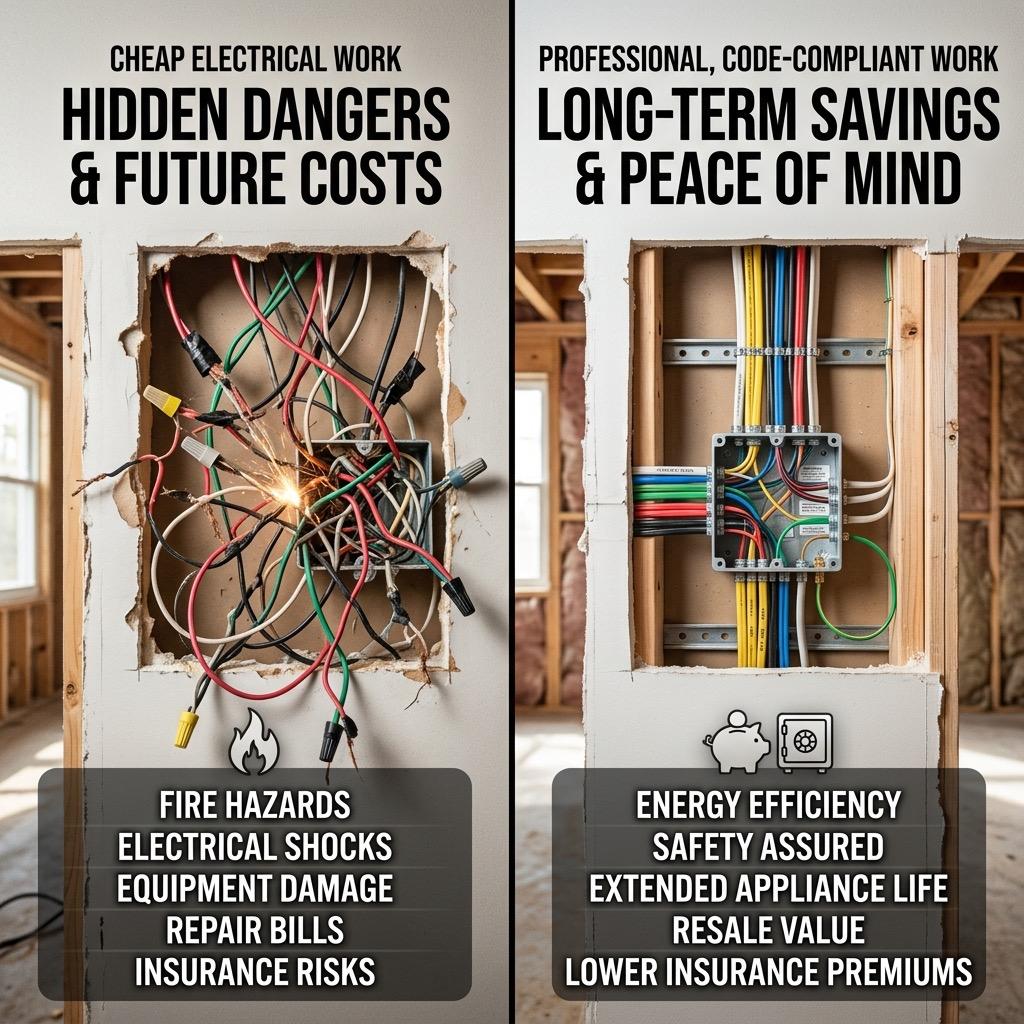
Some homeowners postpone necessary electrical work because of cost concerns, but delaying can be more expensive in the long run. An outdated electrical panel that fails during a summer heat wave creates an emergency situation with premium pricing. Deferred maintenance allows small problems to become large ones. Homes with outdated electrical systems pay higher insurance premiums every month the upgrade is delayed. And the risk of electrical fires increases with every year that aging wiring remains in service.
From a pure financial perspective, financing a planned upgrade at favorable terms is nearly always less expensive than paying emergency rates for the same work under crisis conditions.
Talk to AJ Long Electric About Your Project
At AJ Long Electric, we understand that electrical upgrades are significant investments. We provide detailed, transparent quotes so you know exactly what your project will cost, allowing you to make informed financing decisions. We are happy to discuss project phasing if budget constraints require spreading work over time, and we can advise on which upgrades provide the greatest safety impact for your investment. Contact us at (703) 997-0026 to discuss your electrical needs and get a detailed quote. We serve homeowners throughout Fairfax, Arlington, Loudoun, and Prince William counties with the professional, fairly priced electrical services your home deserves.
Tags:

Written by
Matt Long
Master Electrician
Our team of licensed electricians brings over 40 years of combined experience serving Northern Virginia. We're committed to providing expert electrical solutions with a focus on safety, quality, and customer satisfaction.
Reviewed by AJ Long Electric Master Electricians · VA License #2705031092 · View Credentials