A single power surge can destroy your EV charger's electronics and potentially damage your vehicle's onboard charging system, turning a quick electrical event into a repair bill of hundreds or even thousands of dollars. Northern Virginia is particularly susceptible to power surges from summer thunderstorms, utility grid switching events, and the momentary power fluctuations that accompany the region's frequent construction activity. Investing in proper surge protection during your EV charger installation is one of the smartest and most cost-effective steps you can take to protect your charging equipment and your vehicle.
Key Takeaways
- Power surges can originate from lightning, utility grid events, large appliance cycling, and power restoration after outages.
- Whole-house surge protection installed at your main panel protects all electronics including your EV charger for $200-$400.
- Point-of-use surge protection at the charger provides an additional layer of defense for about $50-$150.
- A layered approach combining whole-house and point-of-use protection offers the most comprehensive coverage.
- Some EV chargers include built-in surge protection, but external protection is still recommended.
Understanding Power Surges
A power surge is a brief spike in voltage that exceeds the normal 240 volts delivered to your home. Surges can last microseconds to milliseconds, but in that brief window, the elevated voltage can overwhelm and destroy sensitive electronic components. Modern EV chargers contain microprocessors, communication modules, and power management circuits that are vulnerable to surge damage.
How Surges Damage Equipment
When a voltage spike reaches your EV charger, the excess energy overwhelms the charger's internal components. Circuit boards can burn out, communication modules can fail, and power management circuits can be permanently damaged. In severe cases, the surge can travel through the charger into your vehicle's onboard charging system, damaging the vehicle's AC-to-DC converter. Vehicle onboard charger repairs typically cost $1,500-$3,000, making prevention far more economical than repair.
Common Surge Sources in Northern Virginia
Understanding where surges come from helps you appreciate the importance of protection in the NoVA area.
Our licensed electricians have installed hundreds of EV chargers across Northern Virginia. We handle everything from panel evaluation to permit filing. Call (703) 997-0026 or request your free estimate online.
Lightning
Northern Virginia averages 30-40 thunderstorm days per year, concentrated in the summer months of June through August. A direct lightning strike to your home or a nearby utility line delivers massive voltage spikes that can destroy any unprotected electronics. Even lightning striking within a mile of your home can induce surges through the power lines. During an active thunderstorm season, the cumulative risk over years of EV ownership is significant.
Utility Grid Switching
Dominion Energy and other utilities routinely switch loads between transmission lines, substations, and transformers as part of normal grid management. Each switching event can create brief voltage spikes that ripple through the distribution system. These events are invisible to homeowners but occur frequently, creating low-level surges that accumulate stress on electronic components over time.
Large Appliance Cycling
Inside your own home, large motor-driven appliances generate surges when they cycle on and off. Central air conditioning compressors, well pumps, sump pumps, and even refrigerator compressors create momentary voltage spikes on your home's wiring. These internal surges are smaller than external events but occur many times daily, creating chronic stress on sensitive electronics throughout your home.
Power Restoration After Outages
When power returns after an outage, the initial voltage is often unstable, with surges and fluctuations as the grid stabilizes. Northern Virginia experiences occasional outages from summer storms, winter ice events, and the rare derecho. Each power restoration event is a potential surge opportunity. If your EV charger is connected and waiting when power returns, it receives whatever voltage the grid delivers in those first unstable moments.
Surge Protection Options
Effective surge protection uses a layered approach, with protection at multiple points between the utility service and your EV charger.
Whole-House Surge Protection (Type 1 or Type 2 SPD)
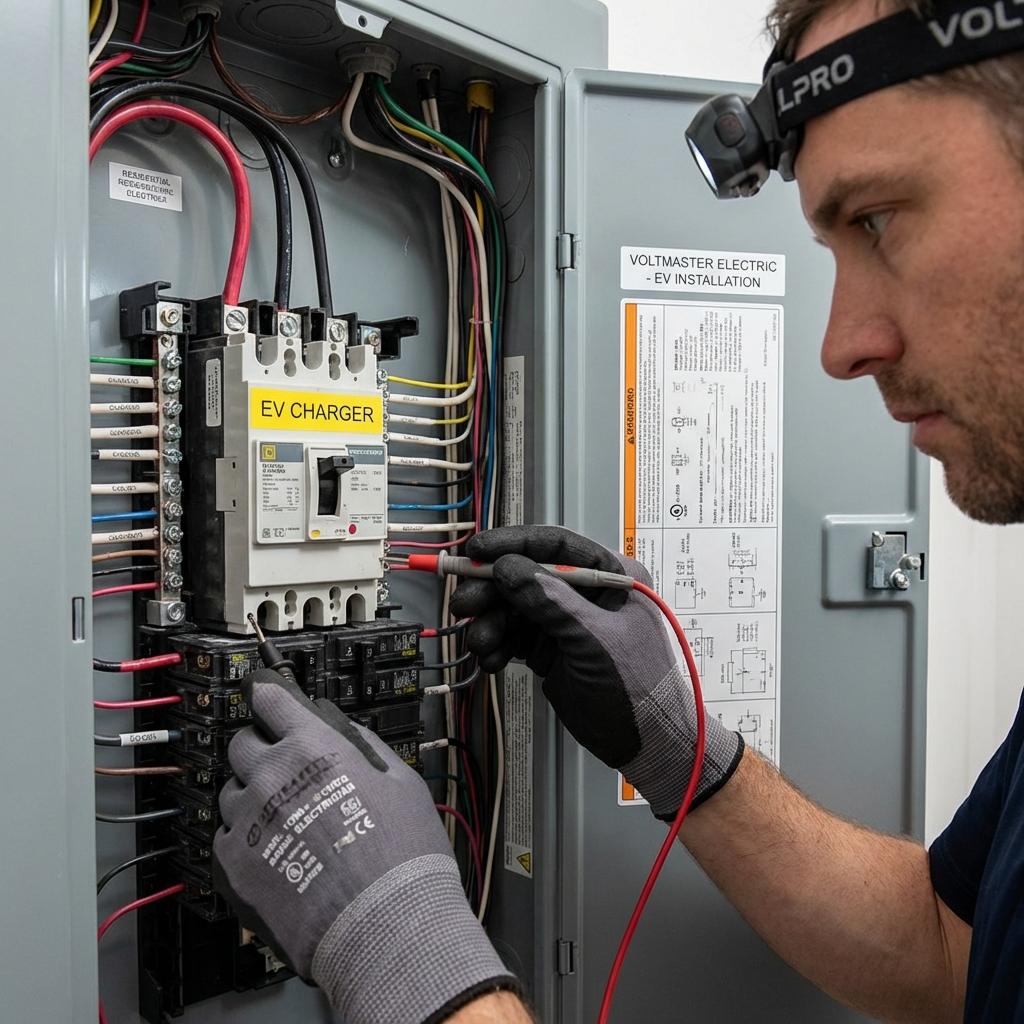
A whole-house surge protective device (SPD) installs at your main electrical panel, between the utility service and all of your home's circuits. It monitors the incoming voltage and diverts excess energy to ground when a surge is detected. This protects every circuit in your home, including your EV charger, computers, smart home devices, and appliances.
Whole-house SPDs are classified as Type 1 (installed before the main breaker, on the utility side) or Type 2 (installed after the main breaker, on the load side). Type 2 devices are the most common for residential installations and provide excellent protection against both external and internal surges.
Cost for a quality whole-house SPD, including professional installation, is typically $200-$400. Products from Eaton, Siemens, Leviton, and Square D are among the most respected in the industry. This single investment protects your entire home's electronics, making it one of the best values in electrical protection.
Point-of-Use Surge Protection
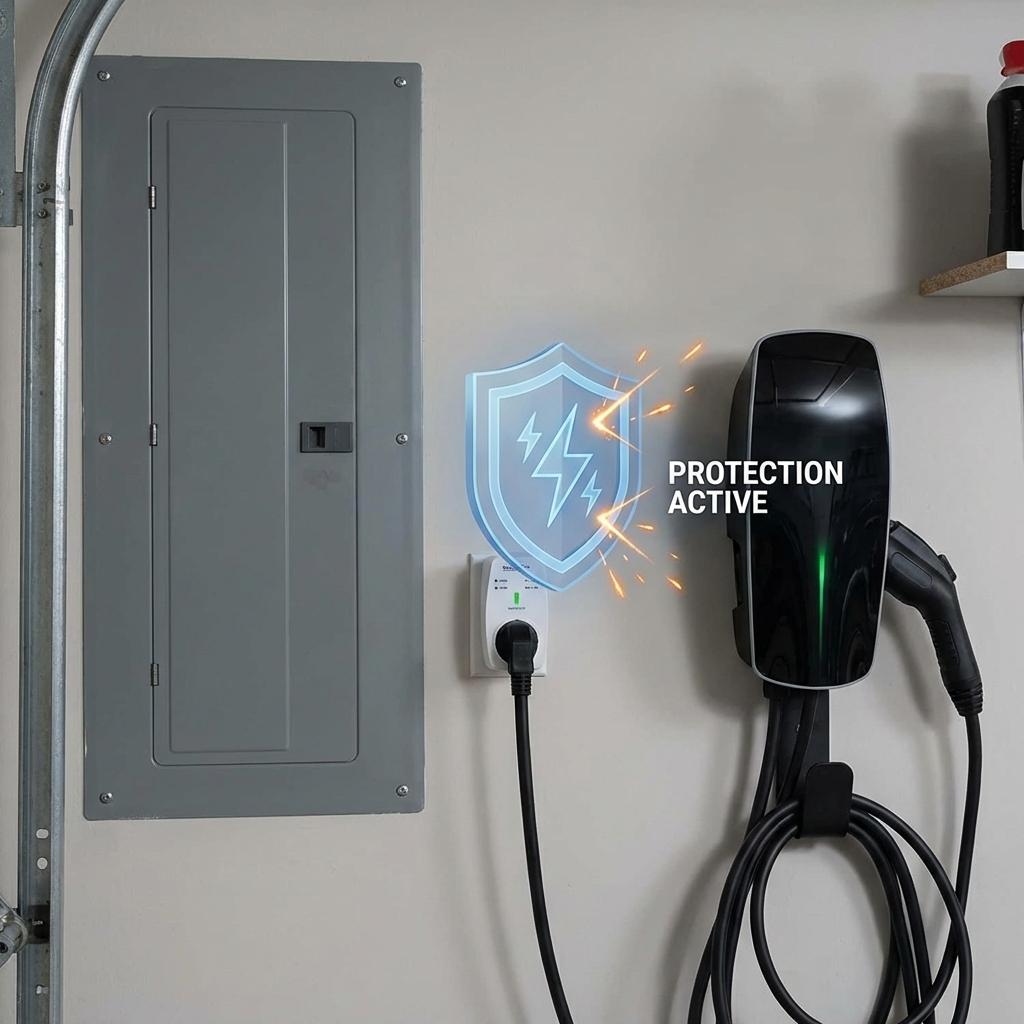
A dedicated surge protector installed at the EV charger's circuit provides an additional layer of protection specifically for your charging equipment. Point-of-use devices can be installed as a dedicated surge protection receptacle (for plug-in chargers) or as an inline SPD at the charger's junction box (for hardwired chargers). These devices cost $50-$150 and provide targeted protection that catches any residual surge energy that makes it past the whole-house SPD.
Built-In Charger Protection
Some EV chargers include built-in surge protection components. The ChargePoint Home Flex, for example, includes basic surge protection in its internal circuitry. However, built-in protection is typically rated for smaller surge events and may not withstand large surges from lightning or major grid events. We recommend external surge protection even for chargers with built-in features.
The Layered Protection Approach
The most effective strategy combines multiple layers of protection.
Layer 1: Whole-House SPD at the Main Panel
This catches the majority of surge energy before it reaches any circuit in your home. It is your primary defense against lightning, utility grid events, and power restoration surges.
Layer 2: Point-of-Use SPD at the EV Charger
This catches any residual surge energy that makes it past the whole-house SPD, as well as internally generated surges from appliances on adjacent circuits. It provides targeted protection for your most valuable charging investment.
Layer 3: Built-In Charger Protection
If your charger includes built-in surge protection, it serves as the final layer of defense, handling the smallest residual surge events.
Together, these three layers provide comprehensive protection that reduces the surge energy reaching your charger's sensitive electronics to negligible levels.
Surge Protection and Insurance
Most homeowners insurance policies cover surge damage to electronics, but claims come with deductibles, potential rate increases, and the hassle of documenting damage and waiting for reimbursement. Preventing the damage in the first place with a $200-$400 surge protector is far simpler and more cost-effective than filing a claim for a $2,000+ charger and vehicle repair.
Installation During EV Charger Setup
The most efficient time to install surge protection is during your EV charger installation. Your electrician is already working in your panel and can add a whole-house SPD in 30-45 minutes. Adding it as part of the EV charger project saves the cost of a separate service call and ensures protection is in place from the first day you plug in your vehicle.
Protect Your EV Charging Investment
AJ Long Electric recommends and installs whole-house surge protection as part of every EV charger installation across Northern Virginia. Our electricians install quality SPDs from trusted manufacturers and ensure proper grounding, which is essential for effective surge protection. Protect your EV charger, your vehicle, and all the electronics in your Fairfax, Arlington, Loudoun, or Prince William County home. Contact AJ Long Electric at (703) 481-3732 to add surge protection to your EV charger installation.
Tags:

Written by
Matt Long
Master Electrician
Our team of licensed electricians brings over 40 years of combined experience serving Northern Virginia. We're committed to providing expert electrical solutions with a focus on safety, quality, and customer satisfaction.
Reviewed by AJ Long Electric Master Electricians · VA License #2705031092 · View Credentials