Your electrical panel is the gateway to every circuit in your home, and adding an EV charger represents one of the largest single loads most residential panels will ever support. For homeowners in Northern Virginia, where housing stock ranges from 1950s colonials in Arlington with original 100-amp panels to brand-new construction in Loudoun County with 200-amp service, understanding your panel's capacity is the essential first step before any EV charger installation. This guide explains load calculations, panel upgrade options, and smart alternatives that can help you charge your EV safely and efficiently.
Key Takeaways
- A typical Level 2 EV charger requires a 40-60 amp dedicated circuit, representing 20-30% of a 200-amp panel's total capacity.
- Homes with 200-amp service can usually support an EV charger without upgrades; 100-amp panels often need attention.
- A professional load calculation is the only reliable way to determine if your panel can handle the additional load.
- Load management devices and smart chargers offer alternatives to full panel upgrades when capacity is tight.
- Panel upgrades in Northern Virginia typically cost $2,000-$4,500 and require permits from your local jurisdiction.
Understanding Your Electrical Panel
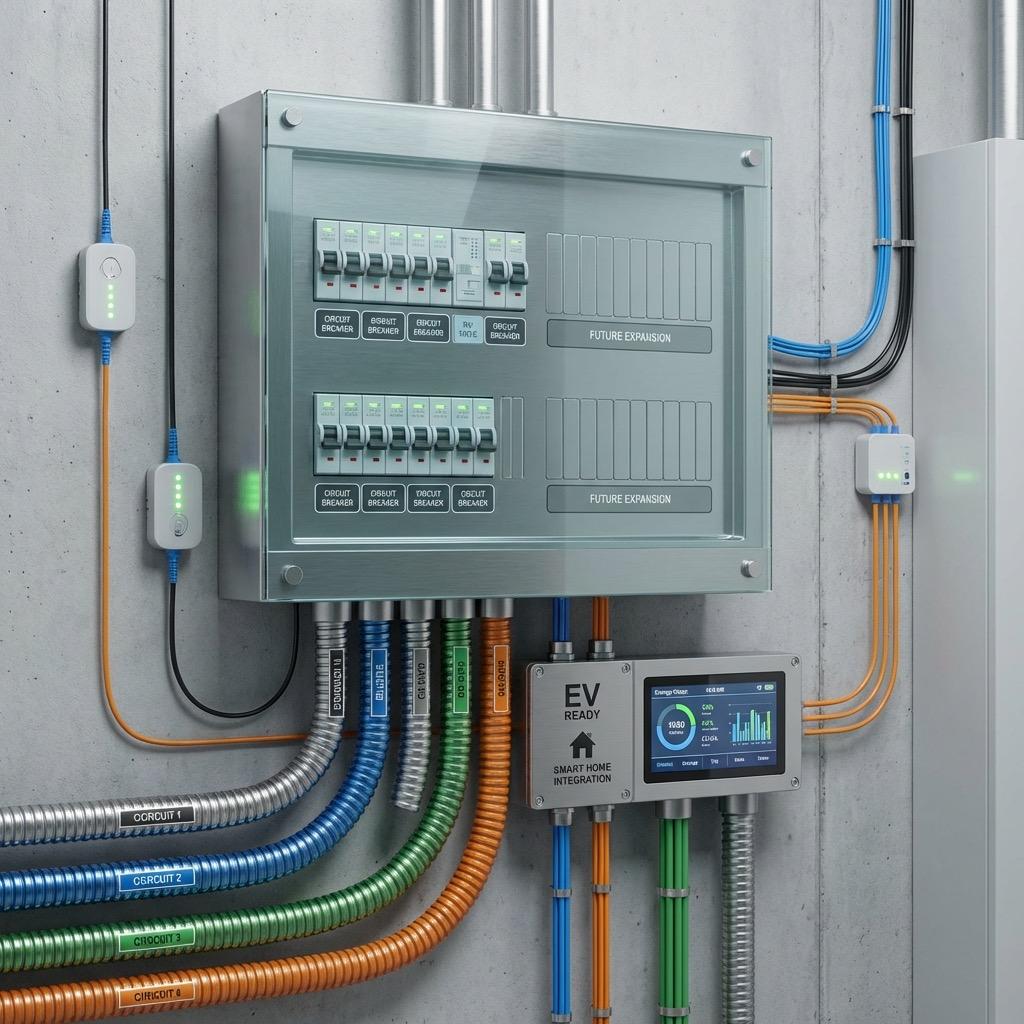
Your electrical panel, sometimes called a breaker box or load center, distributes electricity from the utility service to individual circuits throughout your home. Every panel has a maximum amperage rating, typically 100, 150, or 200 amps for residential homes. This rating represents the total electrical capacity available for all circuits combined.
Common Panel Sizes in Northern Virginia
The age and style of your home strongly correlates with your panel size. Here is what we typically find across Northern Virginia neighborhoods.
- 100-amp panels: Common in homes built before 1970, found frequently in older sections of Arlington, Falls Church, and Fairfax City. These panels were designed for an era before central AC, multiple computers, and EV chargers.
- 150-amp panels: Found in many homes built between 1970 and 1995, common in established neighborhoods in Burke, Springfield, and Centreville. These panels offer moderate capacity but may be near their limits with modern loads.
- 200-amp panels: Standard in homes built after 1995-2000, the norm in newer communities throughout Loudoun County, South Riding, Brambleton, and newer Fairfax County developments. These panels typically have ample capacity for EV charging.
How to Check Your Panel Rating
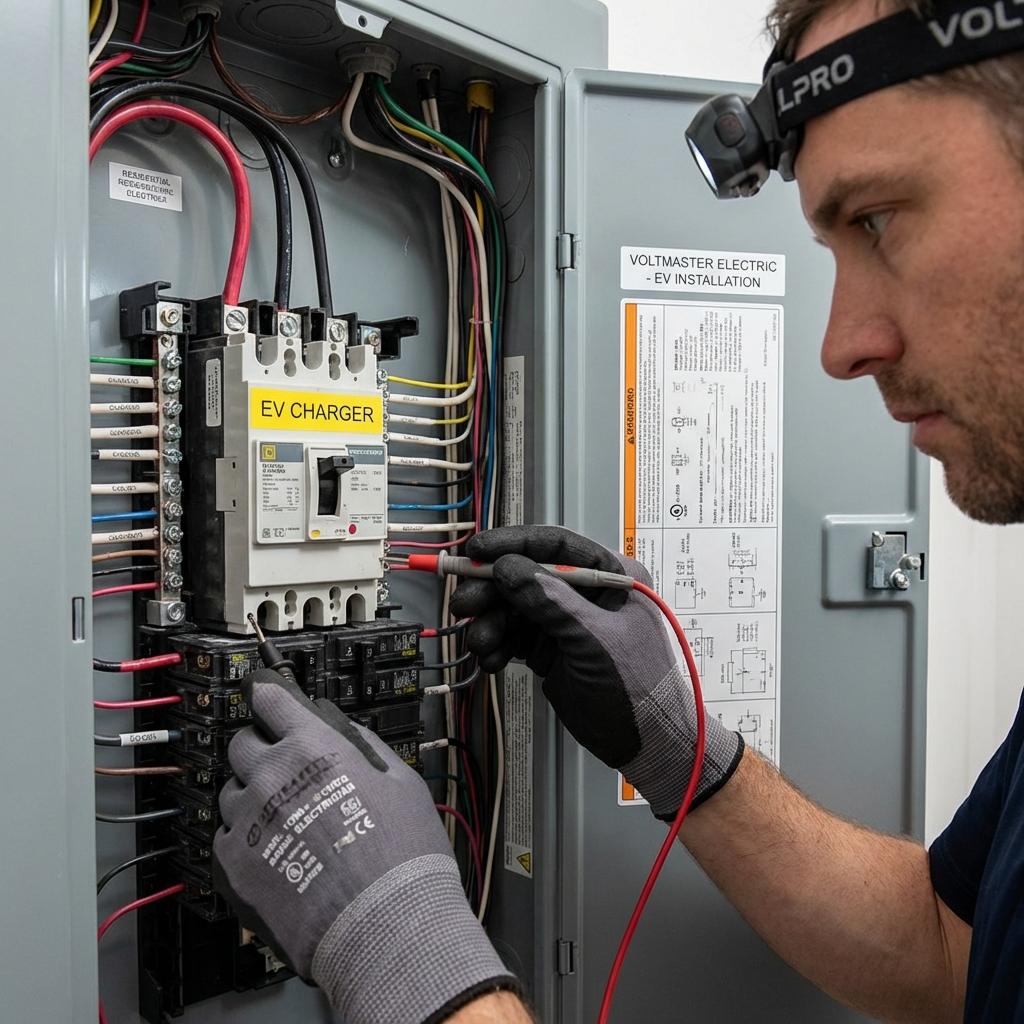
Your panel's amperage rating is printed on the main breaker at the top of your panel. Open the panel door (not the cover) and look for a number like 100, 150, or 200 on the large breaker that controls power to the entire panel. This number is your service entrance capacity. If you are unsure or your labeling is unclear, our electricians can identify your panel capacity during a quick site assessment.
Load Calculations: The Science Behind Panel Capacity
Knowing your panel's rating is only part of the equation. A 200-amp panel does not have 200 amps of unused capacity. It has 200 amps total, minus everything already connected to it. A load calculation determines how much of your panel's capacity is currently in use and how much remains available for new circuits like an EV charger.
Our licensed electricians have installed hundreds of EV chargers across Northern Virginia. We handle everything from panel evaluation to permit filing. Call (703) 997-0026 or request your free estimate online.
What a Load Calculation Includes
A professional load calculation follows NEC Article 220, accounting for general lighting and receptacle loads based on square footage, fixed appliance loads including your electric range, dryer, water heater, and dishwasher, heating and air conditioning loads using the larger of the two since they rarely run simultaneously, and any other dedicated circuits like hot tubs, pool pumps, or workshop equipment. The calculation applies demand factors that account for the statistical reality that not all circuits run at full load simultaneously.
Typical Load Calculation Results
In our experience across hundreds of Northern Virginia homes, a typical 2,500 square foot home with gas heating, central AC, electric range, and electric dryer has a calculated load of approximately 110-140 amps. On a 200-amp panel, this leaves 60-90 amps of available capacity, more than enough for a 50-amp EV charger circuit. On a 150-amp panel, the margin is tighter, and on a 100-amp panel, there is often no room for a high-amperage EV circuit without modifications.
When Panel Upgrades Are Needed
If your load calculation shows insufficient capacity for your desired EV charger circuit, a panel upgrade is the most straightforward solution. Here are the scenarios that most commonly require upgrades.
100-Amp Panels
A 100-amp panel almost always requires an upgrade for Level 2 EV charging at 40-50 amps. After accounting for existing loads, there is typically not enough remaining capacity for a high-amperage charger circuit. Upgrading to 200-amp service is the standard recommendation, as it provides ample room for current and future needs.
Full Breaker Panels
Even if your panel has adequate amperage, it needs physical space for a new breaker. If every slot is occupied, options include installing tandem breakers to free up slots, adding a sub-panel to create additional circuit capacity, or upgrading to a larger panel with more slots. Sub-panels are a cost-effective solution when your service entrance has capacity but your main panel lacks physical space.
Heavy Existing Loads
All-electric homes with electric heating, electric water heater, electric range, and electric dryer place the heaviest demands on electrical panels. If your load calculation shows insufficient remaining capacity, you may need a panel upgrade even with a 200-amp service. This situation is relatively uncommon but does occur in some Northern Virginia homes.
What a Panel Upgrade Involves
A residential panel upgrade in Northern Virginia typically involves replacing the main breaker panel with a new, higher-capacity unit, upgrading the service entrance cables from the meter to the panel, possibly upgrading the meter base and utility connections, transferring all existing circuits to the new panel, and adding the new EV charger circuit. The process takes a full day, requires a permit from your local jurisdiction, and involves coordination with Dominion Energy for the meter reconnection. Total cost typically ranges from $2,000 to $4,500 depending on the scope of work.
Alternatives to Full Panel Upgrades
If a panel upgrade is not in your budget or timeline, several alternatives can make EV charging possible with your existing infrastructure.
Smart Load Management
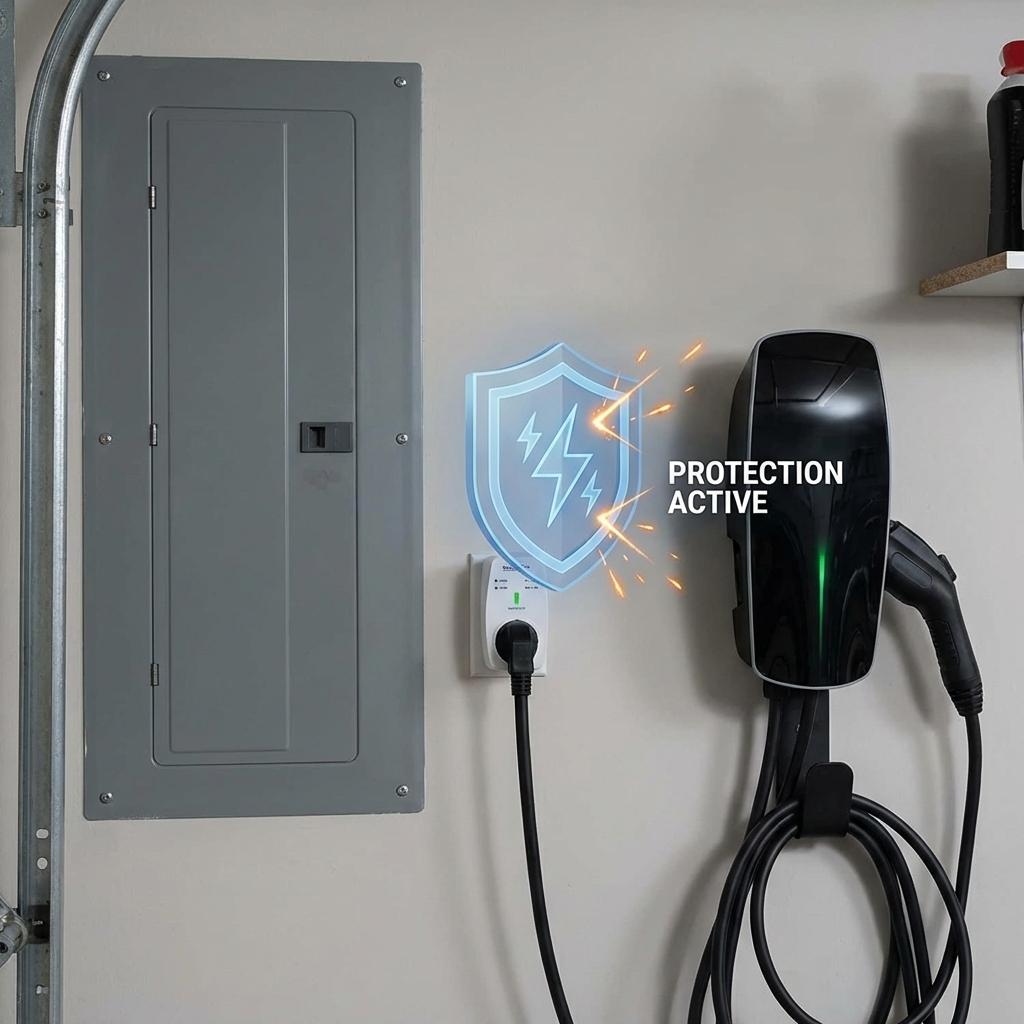
Devices like the DCC-9 or Span smart panel can monitor your home's real-time electrical consumption and dynamically adjust EV charging to stay within your panel's capacity. When your AC compressor kicks on, the load manager reduces charging speed. When the AC cycles off, charging ramps back up. This approach can eliminate the need for a panel upgrade in many cases.
Lower Amperage Charging
Chargers like the ChargePoint Home Flex allow you to set a lower amperage that fits within your available capacity. Even at 24 amps (30-amp circuit), you add approximately 18 miles of range per hour, more than enough for most daily commutes. This approach requires a much smaller circuit that fits within tighter panel budgets.
Time-of-Use Scheduling
While not a substitute for proper circuit sizing, scheduling your EV to charge at night when other loads are off reduces the likelihood of concurrent high-demand situations. Combined with load management, this strategy can work within panel limitations that would otherwise require an upgrade.
Preparing Your Panel for the Future
EV adoption is accelerating, and many Northern Virginia households will eventually own two or more electric vehicles. If you are upgrading your panel now, think ahead. Install a 200-amp or even 320-amp panel to accommodate future EV chargers, heat pump systems, or other electrification upgrades. The incremental cost of a larger panel during the upgrade process is minimal compared to doing a second upgrade later.
Get Your Panel Assessed for EV Charging
AJ Long Electric provides comprehensive electrical panel assessments for EV charger installation across Fairfax, Arlington, Loudoun, and Prince William counties. Our master electricians perform professional load calculations, evaluate your panel's condition and capacity, and provide honest recommendations on whether you need an upgrade or can proceed with your existing infrastructure. With decades of experience in Northern Virginia homes of every era and style, we deliver solutions that are safe, code-compliant, and cost-effective. Contact AJ Long Electric at (703) 481-3732 to schedule your panel assessment.
Tags:

Written by
Matt Long
Master Electrician
Our team of licensed electricians brings over 40 years of combined experience serving Northern Virginia. We're committed to providing expert electrical solutions with a focus on safety, quality, and customer satisfaction.
Reviewed by AJ Long Electric Master Electricians · VA License #2705031092 · View Credentials