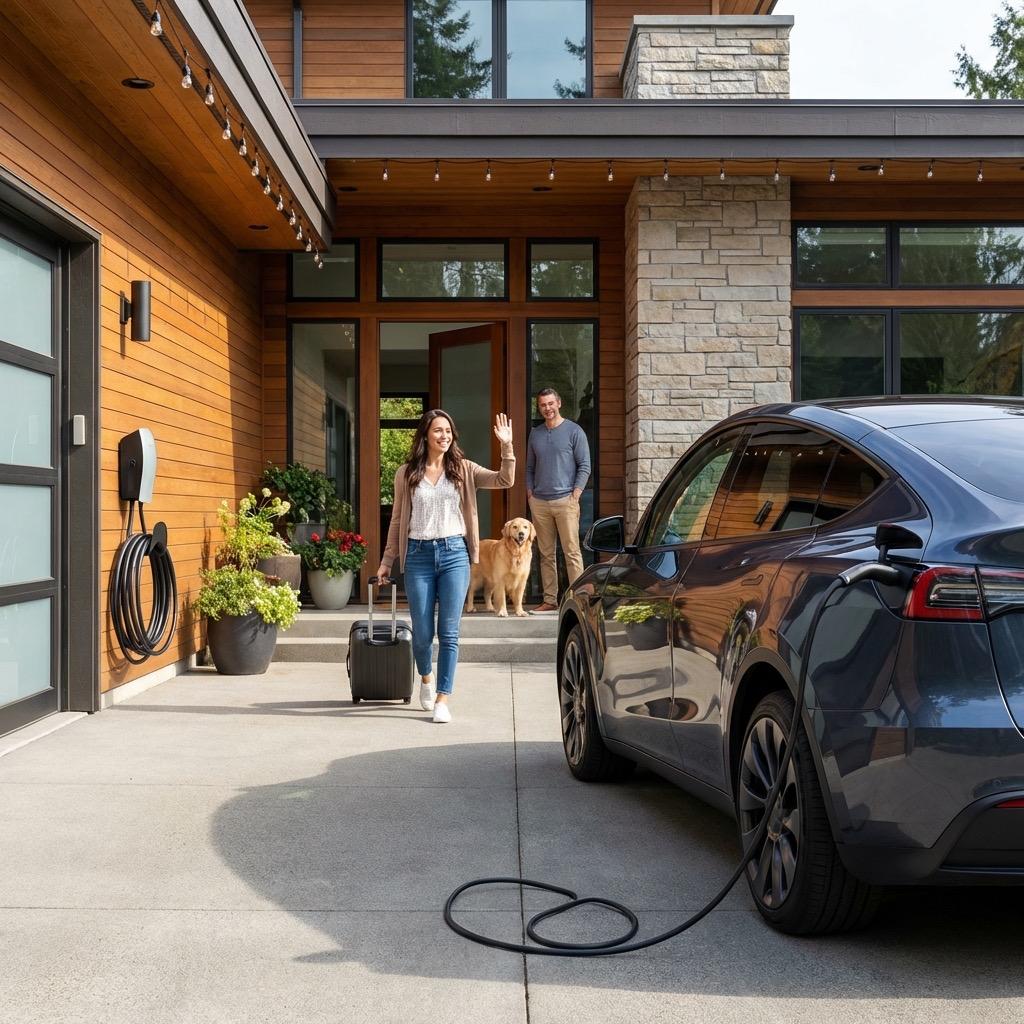
EV technology is evolving rapidly, and the charger you install today should serve you not just for your current vehicle but for the next one, and possibly the one after that. Future-proofing your EV charger installation means making thoughtful infrastructure decisions now that prevent costly rewiring, re-trenching, or panel upgrades later. For Northern Virginia homeowners making long-term investments in their Fairfax, Arlington, Loudoun, or Prince William County homes, a little extra planning during the initial installation delivers significant savings and convenience for years to come. This guide covers the specific infrastructure decisions that ensure your home is ready for whatever the EV future brings.
Key Takeaways
- Install a 60-amp circuit even if your current charger needs only 40 amps, allowing faster charger upgrades without rewiring.
- Use oversized conduit (1-inch minimum) to allow pulling larger wire in the future without replacing the conduit run.
- If a second EV is possible within 3-5 years, run conduit and wire for a second charger during the initial installation.
- Choose smart chargers with WiFi and over-the-air updates that gain features over time without hardware replacement.
- If your panel is near capacity, upgrade to 200 amps or higher now rather than facing a second upgrade later.
Why Future-Proofing Matters
The EV market is in a period of rapid advancement. Vehicles are gaining larger batteries, faster onboard chargers, and new features like vehicle-to-home (V2H) capability. The average Northern Virginia household keeps a vehicle for 6-8 years, and many keep their homes much longer. An EV charger installation built for today's specifications may become a limitation for tomorrow's vehicle.
The Cost of Retrofitting
Upgrading electrical infrastructure after the initial installation is significantly more expensive than doing it right the first time. Running a second conduit path costs roughly $200-$400 during initial installation but $800-$2,000 as a separate project. Upsizing a circuit from 40 to 60 amps later requires pulling new wire through existing conduit (if it fits) or running a completely new conduit. Panel upgrades after the initial installation mean a second permit, a second inspection, and a second service call. By investing an additional 10-20% during the initial installation, you can avoid 50-100% cost increases for future upgrades.
Circuit Sizing: Build for Tomorrow's Charger
The most impactful future-proofing decision is circuit sizing. Installing a larger circuit than you currently need costs very little more during initial installation but provides flexibility for years to come.
Our licensed electricians have installed hundreds of EV chargers across Northern Virginia. We handle everything from panel evaluation to permit filing. Call (703) 997-0026 or request your free estimate online.
Install a 60-Amp Circuit Regardless of Current Charger
Even if your current charger only draws 32 or 40 amps, install the wiring and breaker for a 60-amp circuit. The cost difference between 6-gauge wire (suitable for 50-60 amps) and 8-gauge wire (suitable for 40 amps) is roughly $0.50-$1.00 per foot. For a typical 30-foot run, this adds only $15-$30 to your material cost. The 60-amp breaker itself costs a few dollars more than a 40 or 50-amp breaker. For this minimal additional investment, you can upgrade to a 48-amp charger anytime in the future without any electrical changes.
Consider 4-Gauge Wire for Maximum Flexibility
For the ultimate in future-proofing, install 4-gauge copper wire instead of 6-gauge. While 6-gauge supports 60 amps for runs under 50 feet, 4-gauge supports 60 amps for runs up to 75 feet or more, and also supports 70-amp circuits if future EV chargers ever exceed 48 amps. The additional wire cost is approximately $1-$2 per foot, adding $30-$60 to a typical installation. This small investment removes wire gauge as a limitation for decades to come.
Conduit Sizing: Think Bigger Now
Conduit is the protective tube that houses your electrical wire. Oversizing conduit during initial installation provides the ability to pull larger or additional wire in the future without the labor-intensive process of replacing the conduit itself.
Use 1-Inch Conduit Minimum
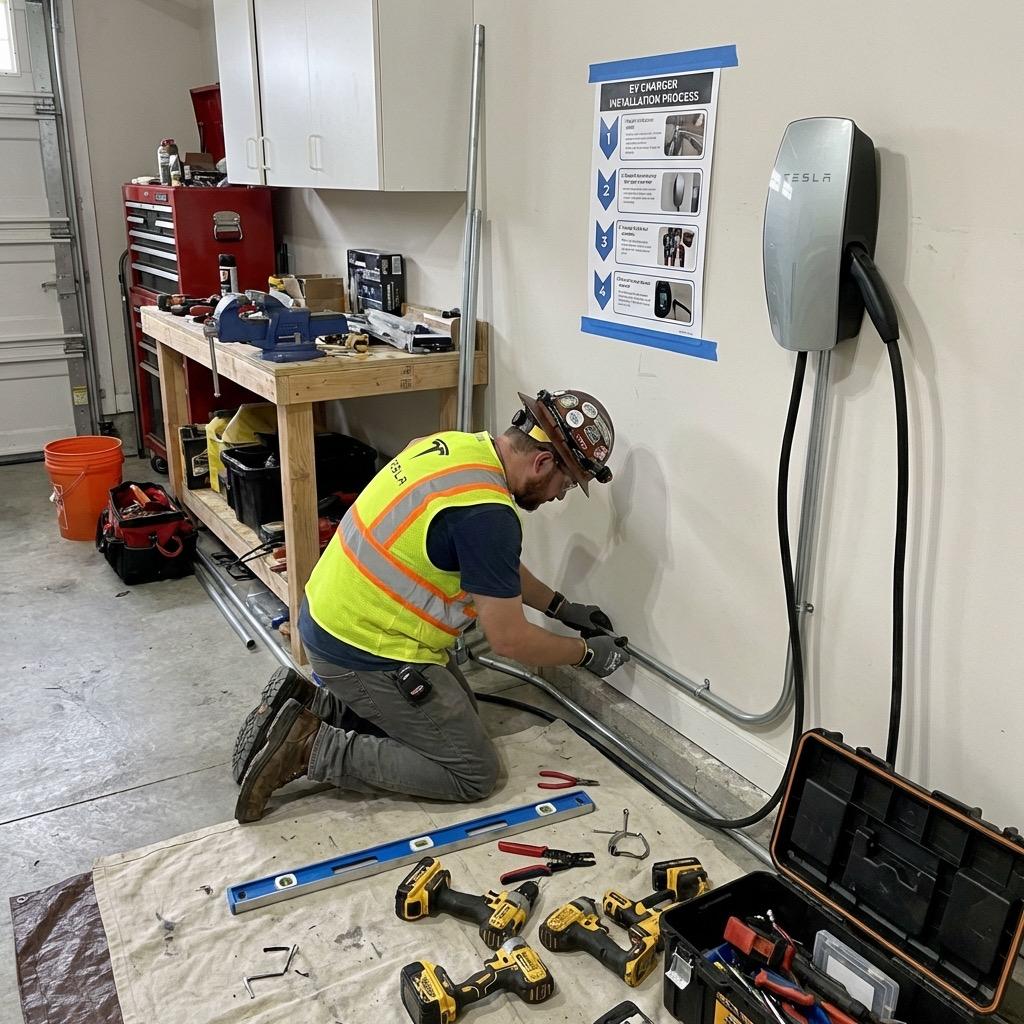
Standard EV charger installations often use 3/4-inch conduit, which accommodates 6-gauge wire but leaves little room for larger wire. Installing 1-inch conduit instead costs approximately $0.25-$0.50 more per foot and allows you to pull 4-gauge or even 2-gauge wire in the future, or to add a second set of wires for a second charger in some configurations. For underground runs, where replacing conduit means re-trenching your yard or driveway, the oversizing decision is particularly important.
Spare Conduit for Future Circuits
If a second EV is possible within the next 5-10 years, consider running a spare empty conduit alongside the first during initial installation. The incremental cost of the second conduit run is fraction of what it would cost to trench and run conduit as a separate future project. Pull string (a thin rope left inside the empty conduit) makes future wire pulling easy when the time comes.
Panel Capacity: Invest in Headroom
Your electrical panel is the hub of your home's electrical system, and its capacity determines what you can power now and in the future.
Assess Future Electrical Needs
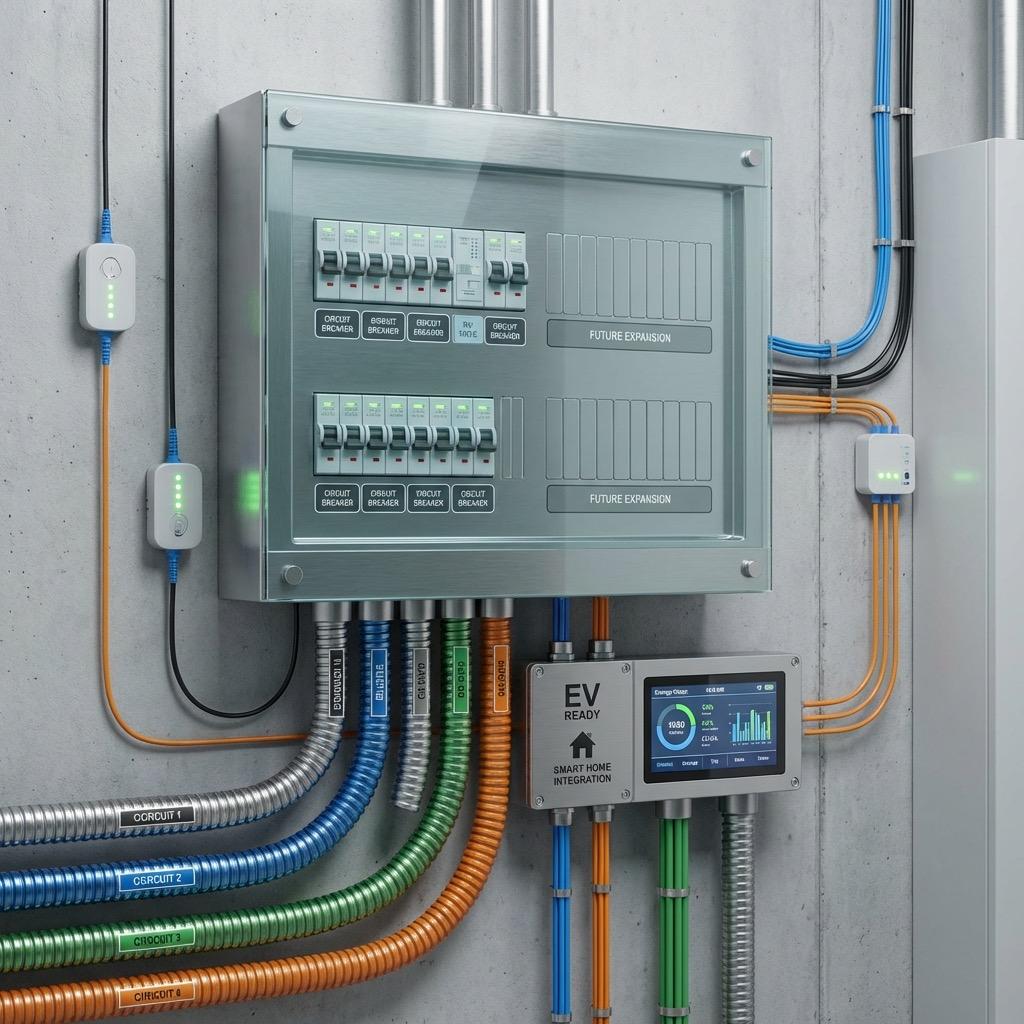
When evaluating panel capacity for your EV charger installation, think beyond just the charger. Consider potential future needs including a second EV charger for a second vehicle, a heat pump system if you electrify your heating, an electric water heater replacing a gas unit, a home battery system for solar or backup power, electric cooking equipment replacing a gas range, and a hot tub, pool heater, or workshop equipment. Each of these represents a significant electrical load. If your panel is at or near capacity after adding the EV charger, you may face an upgrade sooner than expected.
When to Upgrade Now
If your panel is at 80% or more of its rated capacity after adding the EV charger, and you anticipate adding any of the loads listed above within the next 5-10 years, upgrading now is the smarter financial decision. The incremental cost of upgrading during the EV charger installation (when your electrician is already working on the panel) is less than a standalone upgrade later. Upgrading from 100 or 150 amps to 200 amps during EV charger installation typically adds $1,500-$3,000 to the project, compared to $2,000-$4,500 as a standalone project.
Consider 320-Amp Service
For homes planning significant electrification, including multiple EVs, heat pump HVAC, and a home battery, 200-amp service may eventually be insufficient. Some homeowners, particularly in newer Loudoun County and Fairfax County homes, are proactively installing 320-amp or 400-amp panels. While this is currently uncommon, it eliminates panel capacity as a future constraint entirely.
Smart Infrastructure: Software That Grows With You
Choosing a smart charger with WiFi and over-the-air software updates ensures your charger improves over time without hardware replacement.
Software Updates Add Features
Smart chargers from companies like ChargePoint, JuiceBox (Enel X), and Tesla receive periodic software updates that can add new scheduling options and time-of-use optimizations, improve charging algorithms for better efficiency, enable participation in future utility demand response programs, add compatibility with new vehicle communication protocols, and enhance app functionality and user interface improvements. A charger purchased in 2024 can gain features in 2026 or 2028 that did not exist when you bought it.
Integration with Emerging Technologies
Smart chargers are better positioned to integrate with emerging home energy technologies. Vehicle-to-home (V2H) systems that use your EV battery to power your home during outages will require smart communication between the charger and the vehicle. Home energy management systems that coordinate solar panels, home batteries, and EV charging require smart charger connectivity. Utility grid services that compensate you for allowing charging adjustments during peak demand require charger communication with utility systems. By choosing a smart charger now, you position your home to participate in these emerging technologies as they become available.
Connector Standards: Preparing for the Transition
The EV industry is transitioning from the J1772 connector to the Tesla-originated NACS connector as the North American standard. Most major manufacturers have announced NACS adoption for future vehicles.
What This Means for Your Installation
The electrical infrastructure (circuit, wiring, panel capacity) is connector-agnostic. Regardless of whether your charger has a J1772 or NACS connector, the circuit behind it is the same. If you install a J1772 charger now and later need NACS, you simply swap the charger unit while keeping the existing circuit. If you install a Tesla Wall Connector now, future non-Tesla NACS vehicles will connect directly. Adapters are available for cross-compatibility in the interim.
The key takeaway: your electrical infrastructure investment (circuit, wire, conduit, panel capacity) is permanent regardless of connector changes. The charger unit itself can be swapped relatively easily and inexpensively.
Second Vehicle Preparation
Multi-EV households are the fastest-growing segment of EV adoption. If there is any possibility your household will add a second EV within the next 5 years, preparing during your first installation saves substantial money.
Run Conduit Now
Running a second conduit from your panel area to a second charger location during the first installation adds $200-$600 to the project. Doing it as a separate project later costs $800-$2,500 or more, particularly if underground trenching is involved.
Reserve Panel Space
Ensure your panel has at least two additional breaker slots available beyond what the first charger needs. If your panel is full, adding a sub-panel during the first installation is more cost-effective than doing it separately later.
Plan Charger Placement for Two Vehicles
Position the first charger considering where a second charger might eventually go. In a two-car garage, mounting the first charger on the wall between the two parking positions can allow a single charger to reach both vehicles as an interim solution before the second charger is installed.
Build Your Future-Proof EV Charging Infrastructure
AJ Long Electric helps Northern Virginia homeowners build EV charging infrastructure that serves them for decades. During every installation, we discuss future-proofing options and recommend the right level of investment for your plans and budget. From oversized conduit and circuits to panel capacity planning and second-vehicle preparation, our team ensures your installation is ready for whatever comes next. Contact AJ Long Electric at (703) 481-3732 to discuss a future-proof EV charger installation for your Fairfax, Arlington, Loudoun, or Prince William County home.
Tags:

Written by
Matt Long
Master Electrician
Our team of licensed electricians brings over 40 years of combined experience serving Northern Virginia. We're committed to providing expert electrical solutions with a focus on safety, quality, and customer satisfaction.
Reviewed by AJ Long Electric Master Electricians · VA License #2705031092 · View Credentials