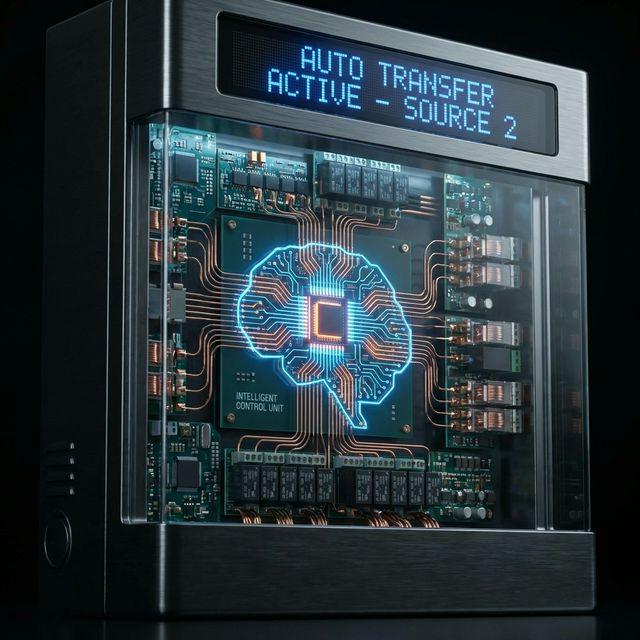
An automatic transfer switch (ATS) is arguably the most critical component of your standby generator system. It's the "brain" that monitors utility power, starts your generator when needed, and safely switches your home to backup power—all automatically, even when you're not home. Here's everything you need to know.
Key Takeaways
- Automatic transfer switches (ATS) detect power loss and start your generator within seconds without manual intervention.
- The ATS isolates your home from utility lines, preventing dangerous backfeed to power company workers.
- Whole-home ATS units power everything; load-shedding ATS units intelligently manage which circuits receive power.
- Manual transfer switches cost less but require you to be home to start the generator and switch over.
What Is an Automatic Transfer Switch?
An ATS is an electrical device that automatically transfers your home's power source from the utility to your generator when the utility fails, and back again when utility power is restored. It prevents dangerous backfeed that could harm utility workers and damage your equipment.
Key Functions
- Utility monitoring: Continuously checks for proper voltage and frequency
- Generator start signal: Automatically starts the generator when utility fails
- Transfer switching: Safely disconnects utility and connects generator
- Retransfer: Switches back to utility when stable power returns
- Generator shutdown: Signals generator to cool down and stop
Critical Safety Function: The transfer switch is not optional -- it is the device that prevents backfeed to utility lines, which can electrocute workers repairing downed power lines. Never bypass or skip the transfer switch.
How the Transfer Process Works
Outage Detection (0-3 seconds)
The ATS constantly monitors utility power. When it detects a loss or significant deviation from normal voltage/frequency, it waits a brief programmed delay (typically 2-5 seconds) to confirm the outage isn't just a momentary fluctuation.
Never lose power again. We are authorized Generac installers serving all of Northern Virginia. From sizing to installation to maintenance, we handle every step. Call (703) 997-0026 for a free in-home assessment.
Generator Start (3-8 seconds)
Once outage is confirmed, the ATS sends a start signal to the generator. The generator cranks and starts, reaching stable operating speed within seconds.
Transfer (8-15 seconds)
After the generator is running and producing proper voltage, the ATS opens the utility connection and closes the generator connection. This "break before make" design ensures the two sources are never connected simultaneously.
Operation
Your home now runs on generator power. The ATS continues monitoring both the generator output and utility lines.
Utility Restoration
When utility power returns, the ATS waits a programmed delay (typically 5-10 minutes) to ensure stability before transferring back. It then reconnects utility, signals the generator to cool down, and shuts it off.
Types of Transfer Switches
Service Entrance Rated ATS
The most common type for whole-house generators. It's installed between the utility meter and main panel, transferring all circuits to generator power. Benefits:
- Simplest installation
- All circuits available on generator
- No circuit prioritization needed
- Best value for whole-house coverage
Load Center ATS (Critical Loads Panel)
For smaller generators that can't power everything. A subpanel is installed with selected critical circuits that transfer to generator power:
- Lower cost option
- Works with smaller generators
- Requires deciding which circuits to include
- May require re-running wires to the critical loads panel
Smart Load Management ATS
Advanced systems that actively manage generator load by cycling certain circuits:
- Allows smaller generators to effectively power more
- Prioritizes essential loads automatically
- Sheds loads to prevent generator overload
- Higher equipment cost, but may allow smaller generator
ATS Features to Consider
Amperage Rating
Your ATS must be rated for at least your home's electrical service:
- 100-amp service: Common in older homes
- 200-amp service: Standard in modern homes
- 400-amp service: Large homes, may need special ATS
Open vs Closed Transition
- Open transition: Brief power interruption during transfer (standard)
- Closed transition: No interruption—momentarily parallels sources (premium feature)
Most residential applications use open transition. The 100-200 millisecond interruption is imperceptible for most loads.
Voltage Sensing
Look for adjustable voltage sensing that initiates transfer:
- Undervoltage threshold (typically 80-85% of nominal)
- Overvoltage protection
- Single-phase and three-phase monitoring
Exercise Schedule Programming
Many ATS units can schedule automatic generator exercise cycles (weekly tests) to ensure the generator stays ready.
Installation Requirements
Location
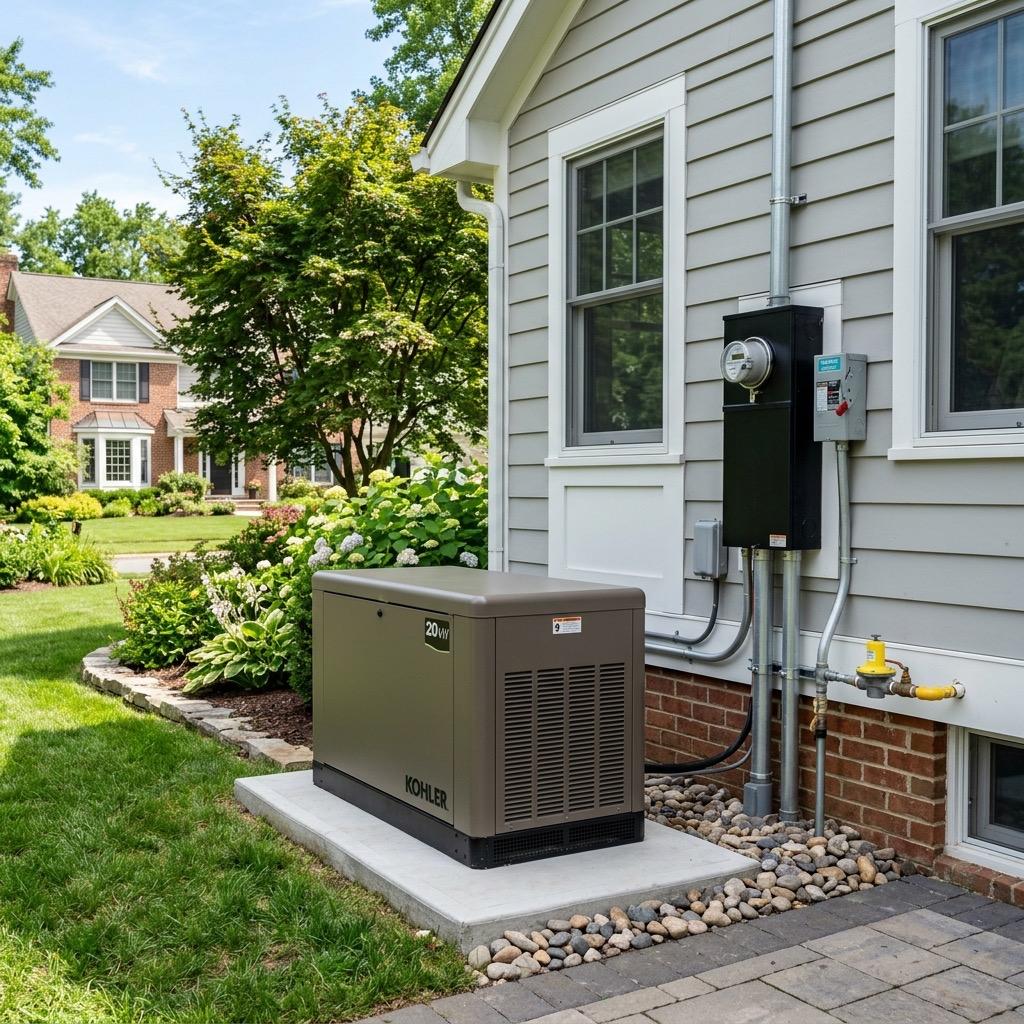
The ATS is typically installed:
- Adjacent to or integrated with main electrical panel
- Outdoors in weatherproof enclosure (for outdoor generators)
- Indoors in utility room or garage
Code Requirements
National Electrical Code (NEC) and Virginia codes require:
- Listed and approved transfer equipment
- Proper neutral-ground bonding
- Utility notification in some jurisdictions
- Permit and inspection
Common ATS Problems and Solutions
ATS Won't Transfer
- Check control power/battery backup
- Verify generator is starting and producing power
- Check voltage sensing adjustment
- Inspect transfer mechanism for obstructions
ATS Transfers Unnecessarily
- Voltage sensing may be set too sensitive
- Utility power quality issues (sags, brownouts)
- Adjust delay timers if nuisance transfers are common
Generator Starts But ATS Doesn't Transfer
- Generator output voltage may be out of spec
- ATS waiting for generator warm-up period
- Transfer mechanism may need service
Leading ATS Manufacturers
- Generac: Integrated with their generators, excellent app connectivity
- Kohler: Heavy-duty construction, matched with Kohler generators
- Eaton: Wide range of commercial and residential options
- ASCO: Industry leader in commercial transfer switches
- Briggs & Stratton: Good value residential options
Professional Installation Is Essential
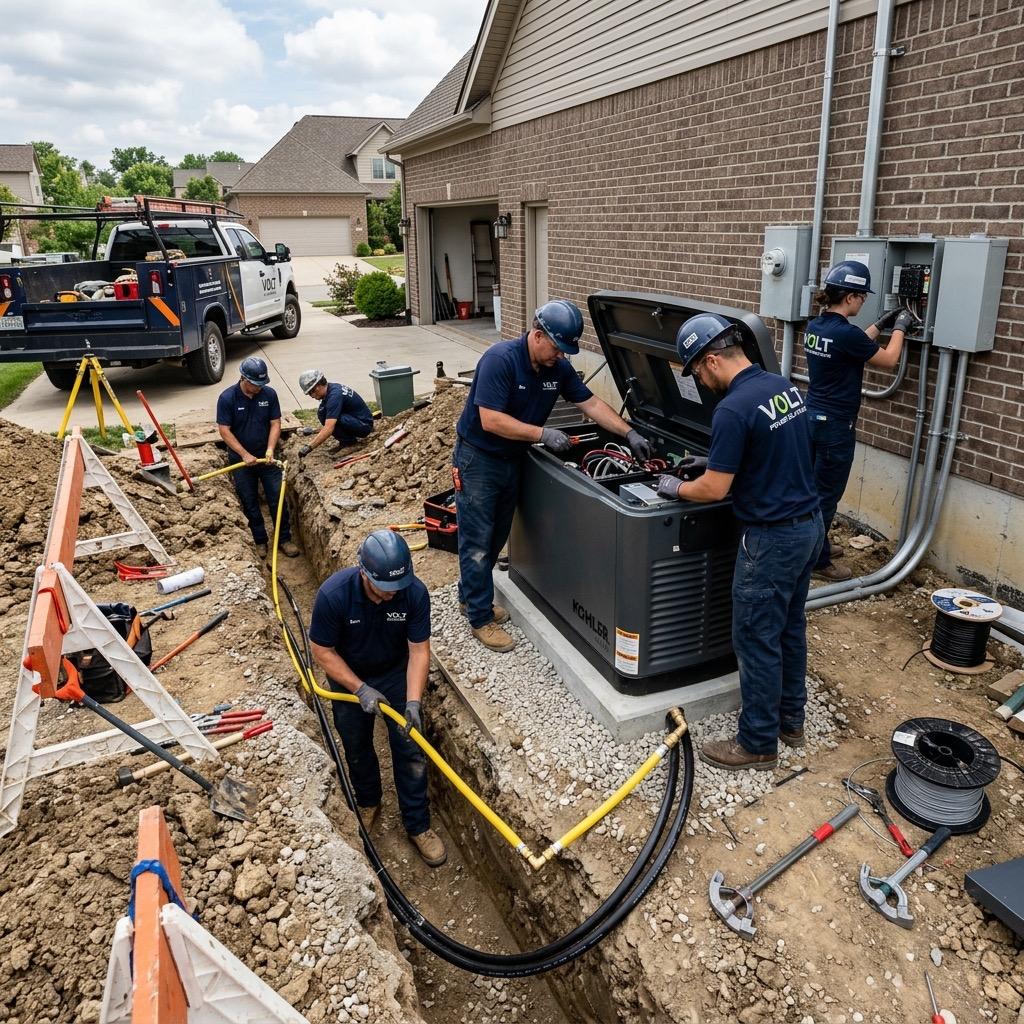
ATS installation involves working with your main electrical service—this is not a DIY project. Improper installation can result in:
- Dangerous backfeed to utility lines
- Damage to generator or home electrical system
- Code violations and permit issues
- Voided warranties
- Insurance problems
At AJ Long Electric, we're factory-trained on Generac, Kohler, and other major brands. We properly size, install, and program your ATS for reliable, code-compliant operation. Contact us to discuss your generator and transfer switch needs.
Tags:

Written by
Matt Long
Master Electrician
Our team of licensed electricians brings over 40 years of combined experience serving Northern Virginia. We're committed to providing expert electrical solutions with a focus on safety, quality, and customer satisfaction.
Reviewed by AJ Long Electric Master Electricians · VA License #2705031092 · View Credentials