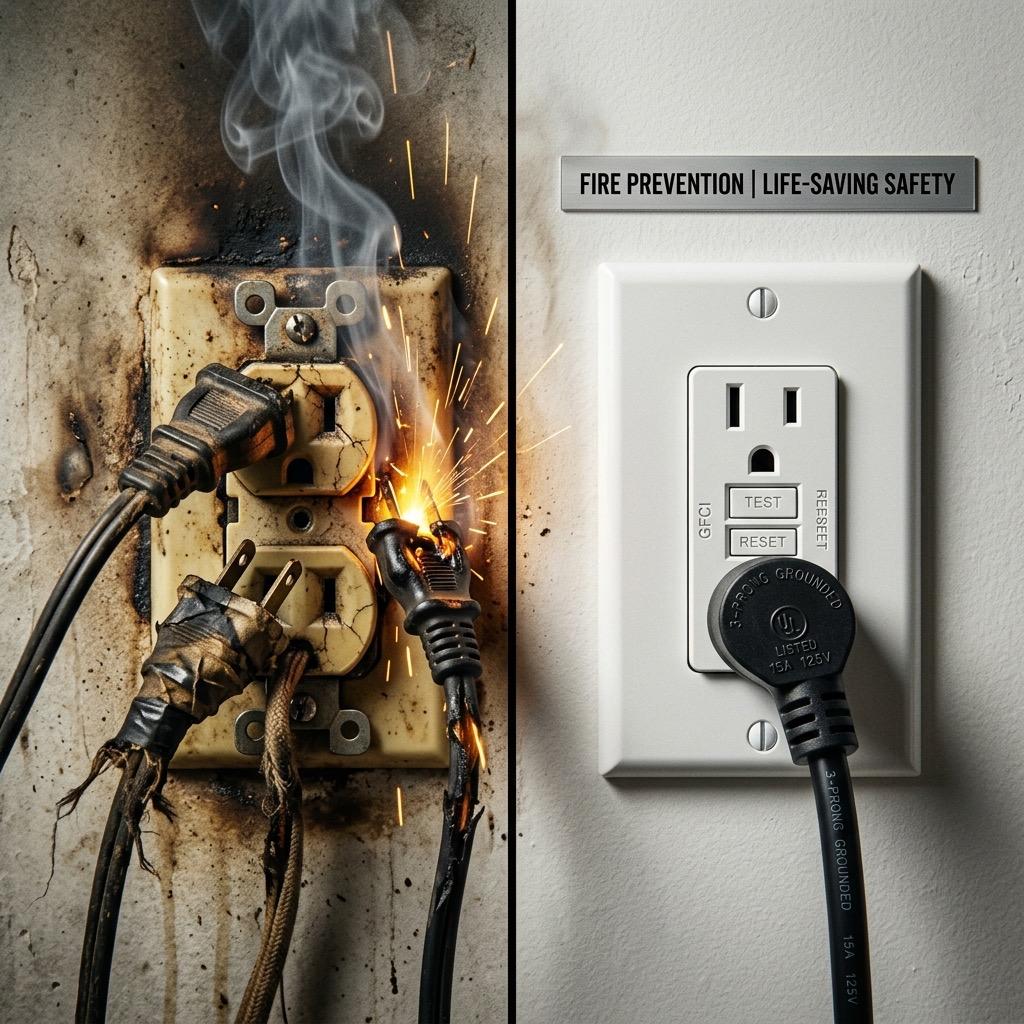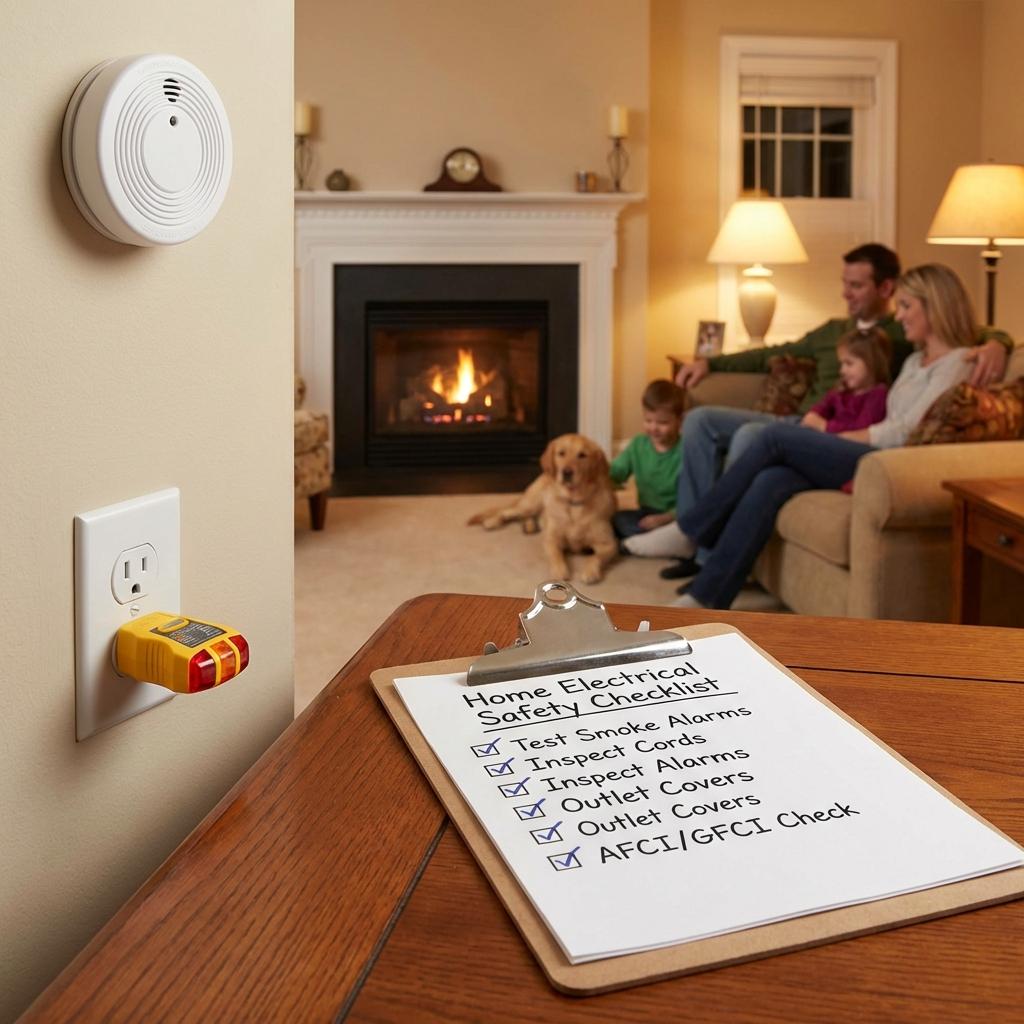
Arc faults are one of the leading causes of electrical fires in homes. Unlike short circuits or overloads that trip standard breakers, arc faults can occur at current levels too low to trip conventional protection -- yet hot enough to ignite surrounding materials. Arc-Fault Circuit Interrupters (AFCIs) are specifically designed to detect and stop these dangerous conditions.
Key Takeaways
- Electrical arcs can reach 10,000+ degrees Fahrenheit -- far exceeding what is needed to ignite wood and insulation.
- Standard breakers cannot detect arc faults because they occur at normal current levels.
- Current NEC code requires AFCI protection in virtually all living areas of new homes.
- AFCIs and GFCIs protect against different hazards -- AFCIs prevent fires while GFCIs prevent shock.
- Dual-function AFCI/GFCI breakers are available for areas requiring both types of protection.
Understanding Arc Faults
An arc fault occurs when electricity jumps across a gap in a circuit, creating an arc of superheated plasma. This arc can reach temperatures of 10,000 degrees Fahrenheit or higher - far exceeding what is needed to ignite wood, insulation, and other building materials.
Causes of Arc Faults
- Damaged wire insulation: Age, rodent damage, or physical abuse can expose conductors
- Loose connections: Wires that are not securely fastened can arc at connection points
- Overdriven staples: Installation damage from staples penetrating wire insulation
- Pinched or crushed wires: Furniture against cords, wires in door jambs
- Worn appliance cords: Frayed cords from age and use
- Improper repairs: DIY wiring mistakes
Series vs. Parallel Arcs
AFCIs must detect two types of arcs:
- Series arcs: Occur within a single conductor, such as a broken wire. Current levels may be normal, so standard breakers cannot detect them.
- Parallel arcs: Occur between two conductors or between a conductor and ground. These may draw more current but can still be below trip thresholds.
How AFCIs Work
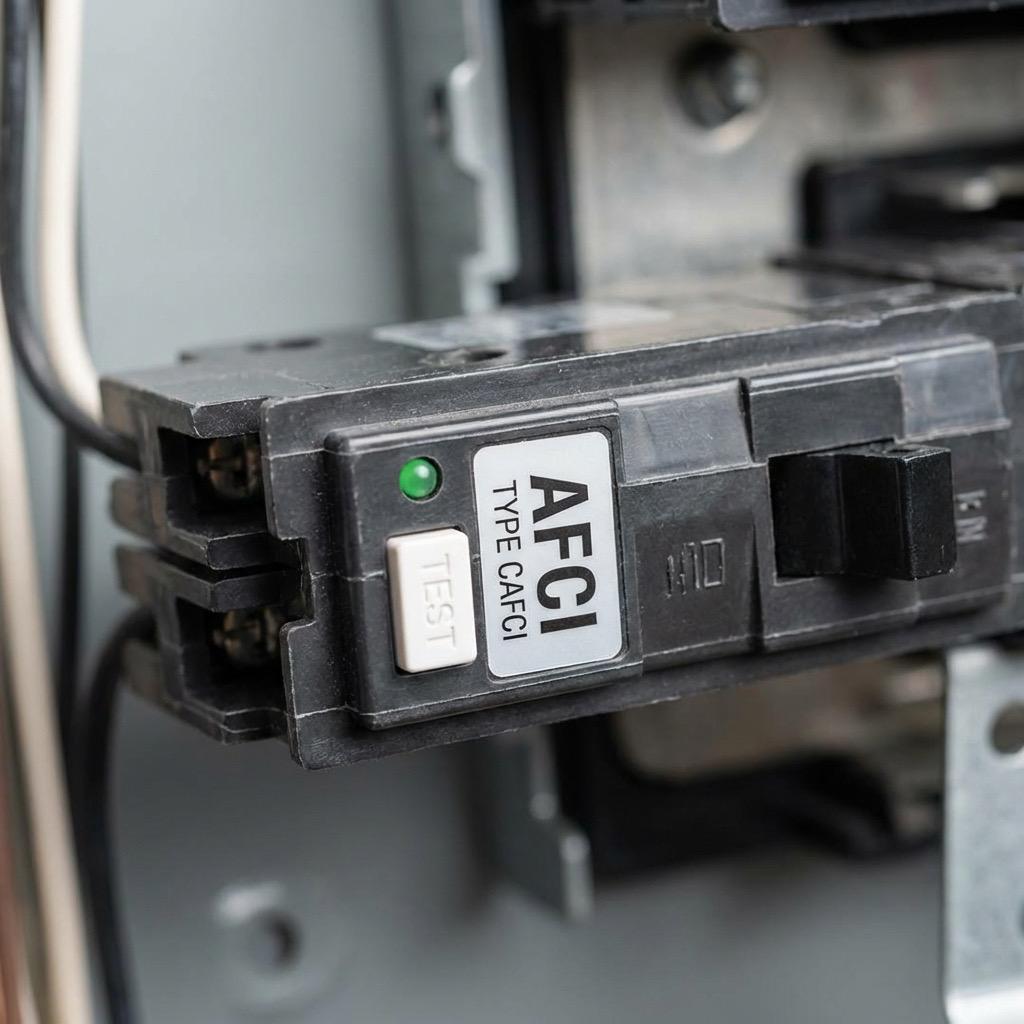
AFCI breakers contain sophisticated electronics that analyze the electrical waveform on the circuit. Normal loads produce predictable electrical signatures. Arc faults create distinctive, irregular patterns that the AFCI recognizes.
Our licensed electricians have installed hundreds of EV chargers across Northern Virginia. We handle everything from panel evaluation to permit filing. Call (703) 997-0026 or request your free estimate online.
When an arc fault is detected, the AFCI trips the circuit in a fraction of a second - before the arc can cause a fire. This protection is completely different from overcurrent protection and is why AFCIs are required in addition to standard breakers.
Current AFCI Requirements
The National Electrical Code has progressively expanded AFCI requirements over the years:
NEC 2023 Requirements
AFCI protection is required for all 120-volt, 15- and 20-amp branch circuits supplying outlets or devices in:
- Kitchens
- Family rooms
- Dining rooms
- Living rooms
- Parlors
- Libraries
- Dens
- Bedrooms
- Sunrooms
- Recreation rooms
- Closets
- Hallways
- Laundry areas
Essentially, AFCI protection is now required throughout the living areas of a home in new construction.
AFCI vs. GFCI: GFCIs protect people from electrical shock by detecting current leaks. AFCIs protect property from electrical fires by detecting dangerous arcing. Both are important, and modern codes require both in many areas of the home.
AFCI Types and Options
Combination AFCI Breakers
The most common type, these install in your electrical panel and protect the entire circuit. They detect both series and parallel arcs and are the type required by current code.
AFCI Outlets
AFCI receptacles can provide protection downstream from the outlet. They are useful for retrofitting older homes where panel replacement is not practical, but they do not protect the wiring between the panel and the first outlet.
Dual-Function AFCI/GFCI
These breakers provide both arc-fault and ground-fault protection in a single device. They are useful in areas requiring both types of protection, such as kitchens and laundry rooms.
AFCI vs. GFCI: Understanding the Difference
These two safety devices protect against different hazards:
GFCIs (Ground Fault Circuit Interrupters)
- Protect against electrical shock
- Detect current imbalance between hot and neutral
- Trip when current flows through an unintended path (like a person)
- Required near water sources
AFCIs (Arc Fault Circuit Interrupters)
- Protect against electrical fires
- Detect dangerous arcing conditions
- Trip when arc signatures are detected
- Required throughout living spaces
Both types of protection are important and serve different purposes. Modern codes require both in many areas of the home.
Common AFCI Issues and Solutions
Nuisance Tripping
Early AFCI breakers were prone to false trips from certain appliances. Modern AFCIs are much more sophisticated, but some devices may still cause issues:
- Older vacuum cleaners with worn motors
- Some power tools with brushed motors
- Treadmills and exercise equipment
- Older fluorescent lighting ballasts
If an AFCI trips repeatedly, do not simply replace it with a standard breaker. Have an electrician investigate - the AFCI may be detecting a real problem.
Legitimate Trips
When an AFCI trips, it may have detected a genuine hazard:
- Check for damaged cords on the circuit
- Look for loose outlet connections
- Consider hidden wiring damage (rodents, nail penetration)
- Have an electrician investigate if tripping persists
Upgrading to AFCI Protection
Even if your home was built before AFCI requirements, adding this protection is a worthwhile safety upgrade. Options include:
AFCI Breaker Replacement
If your panel accepts AFCI breakers, replacing standard breakers with AFCIs is straightforward. Not all panels are compatible, especially older models.
AFCI Outlet Installation
For panels that cannot accept AFCI breakers, AFCI outlets at the first outlet on each circuit provide protection for downstream wiring.
Panel Upgrade
If your panel is outdated, a full panel upgrade allows installation of AFCI and other modern safety devices throughout your home.
Professional Installation
AFCI installation requires working in the electrical panel - a task that should only be performed by licensed electricians. Professional installation ensures:
- Correct breaker selection for your panel
- Proper wiring of the neutral pigtail
- Verification that protection is working correctly
- Compliance with local electrical codes
AJ Long Electric installs AFCI protection for homeowners throughout Northern Virginia. We can assess your current panel, recommend the best upgrade approach, and install AFCI breakers to protect your home from arc-fault fires.
Pro Tip: If an AFCI trips repeatedly, do not replace it with a standard breaker. The AFCI may be detecting a real hazard like damaged wiring behind walls. Have an electrician investigate the cause before overriding the protection.
Contact us today to discuss adding AFCI protection to your home.
Tags:

Written by
AJ Long Electric Team
Licensed Electricians
Our team of licensed electricians brings over 40 years of combined experience serving Northern Virginia. We're committed to providing expert electrical solutions with a focus on safety, quality, and customer satisfaction.
Reviewed by AJ Long Electric Master Electricians · VA License #2705031092 · View Credentials