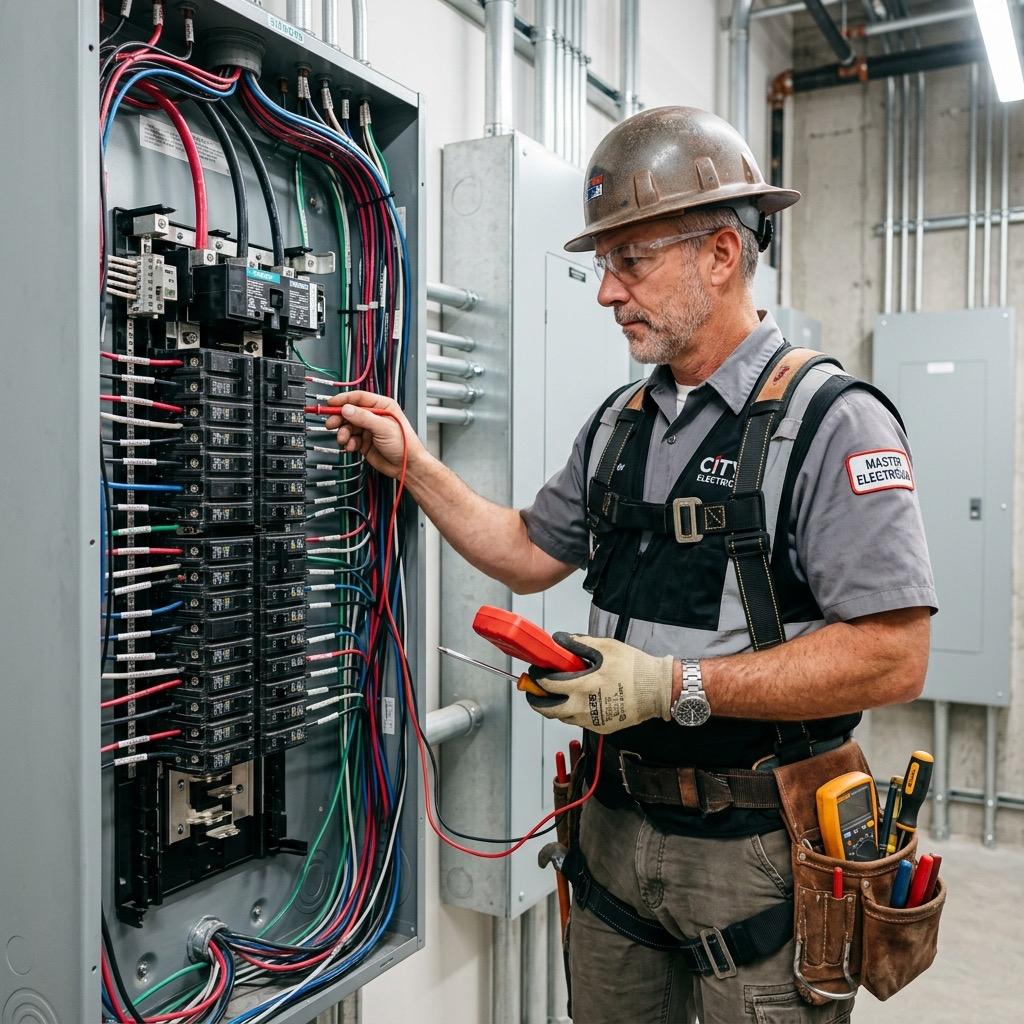
After more than two decades working in the electrical trade -- first as an apprentice, then as a journeyman, and for the past 12 years as a licensed Master Electrician in Virginia -- I've seen what separates contractors who do adequate work from those who do exceptional work. The difference isn't just technical skill. It's a combination of craftsmanship, communication, professionalism, and a genuine commitment to safety that shows up on every single job, no matter how small.
Key Takeaways
- Technical mastery is the foundation -- a great electrician understands not just what the code requires, but why, and can explain it clearly to homeowners.
- Continuous education matters because the National Electrical Code is updated every three years, and great electricians stay ahead of these changes rather than working from memory of older requirements.
- Communication is a professional skill -- the ability to explain complex electrical issues in plain language, provide accurate timelines, and proactively flag unexpected findings separates top contractors from average ones.
- Attention to detail in residential work -- clean wire runs, labeled circuits, properly torqued connections -- prevents failures that may not show up for years.
- The best electricians in Northern Virginia understand local code amendments, inspection culture, and neighborhood-specific challenges that only come from years of hands-on regional experience.
I've also been called in to fix the work of contractors who fell short of these standards. A loose neutral connection that caused flickering lights and a $4,000 appliance replacement. An oversized breaker that allowed a circuit to run dangerously hot for years without tripping. A panel upgrade that failed inspection three times because the contractor didn't understand Fairfax County's specific requirements. These failures are preventable -- and they almost always trace back to a deficit in one of the qualities I'll describe here.
Technical Mastery: Understanding the Code and the Principles Behind It
A great electrician knows the National Electrical Code (NEC) -- not just as a rulebook to follow, but as a framework of principles rooted in physics, materials science, and decades of failure analysis. When I understand why a code requirement exists, I can apply it correctly in unusual situations that the code doesn't explicitly address, and I can explain it to homeowners in a way that builds genuine understanding rather than blind compliance.
The NEC is updated every three years (the 2023 edition is the current cycle), and states and localities adopt amendments on their own schedules. Virginia has its own building code amendments to the NEC, and individual jurisdictions like Fairfax County, Arlington County, and the City of Alexandria have their own interpretations and inspection practices layered on top of that. A Master Electrician in Northern Virginia needs to hold all of this in their head simultaneously and apply the right standard to every job.
According to the National Fire Protection Association, poor workmanship and code violations are responsible for approximately 13% of residential electrical fires annually -- not faulty appliances, not aging systems, but contractor error. The technical gap between adequate and exceptional work is real, and it has real consequences.
Virginia Licensing Levels: Virginia DPOR issues three tiers of electrical licenses. Apprentices work under direct supervision. Journeymen can perform work independently but cannot pull permits. Master Electricians can pull permits, design systems, and supervise all work. Only a Master Electrician can legally act as the responsible party on a permitted electrical project in Virginia.
Continuous Education and Code Compliance
The best electricians in Northern Virginia don't coast on what they learned during their apprenticeship. The electrical trade evolves constantly -- new technologies like EV chargers, battery storage systems, and whole-home surge protection have introduced requirements that didn't exist a decade ago. Solar interconnection, smart panel technology, and energy management systems require knowledge that goes beyond traditional residential wiring.
A professional electrical inspection identifies hidden hazards before they become emergencies. Our licensed electricians provide thorough safety inspections throughout Northern Virginia. Call (703) 997-0026 to schedule yours.
Virginia DPOR requires licensed Master Electricians to complete continuing education hours for license renewal. The best in the trade exceed this minimum significantly, participating in manufacturer training programs, code update seminars, and hands-on workshops with new technology. When a homeowner asks me about integrating a Tesla Powerwall with their existing service panel, or about the latest Fairfax County requirements for EV charger installation, I need current knowledge -- not outdated assumptions.
According to a 2024 survey by Electrical Contractor Magazine, Master Electricians who completed more than the required minimum of continuing education hours were rated significantly higher by clients on measures of technical accuracy, first-inspection pass rates, and problem-solving effectiveness.
Communication and Professionalism
Technical skill is necessary but not sufficient. A great electrician communicates clearly, sets realistic expectations, and handles problems with transparency and accountability. In my experience, most homeowner complaints about electrical contractors trace back to communication failures -- not technical failures.
Great communication in this trade means explaining the problem in plain language without condescension, providing a realistic timeline and honoring it, calling before arriving, leaving the workspace cleaner than you found it, and proactively flagging any unexpected findings before proceeding with additional work that would increase the cost. It means answering calls and returning messages promptly, because homeowners dealing with electrical issues are often stressed and need reassurance.
When I encounter an unexpected condition -- say, aluminum wiring in an older McLean home that complicates a panel upgrade -- a great electrician stops, explains the situation clearly, outlines the options with honest cost estimates for each, and lets the homeowner make an informed decision. An average electrician either ignores the complication (creating a liability) or proceeds without informing the homeowner (destroying trust).
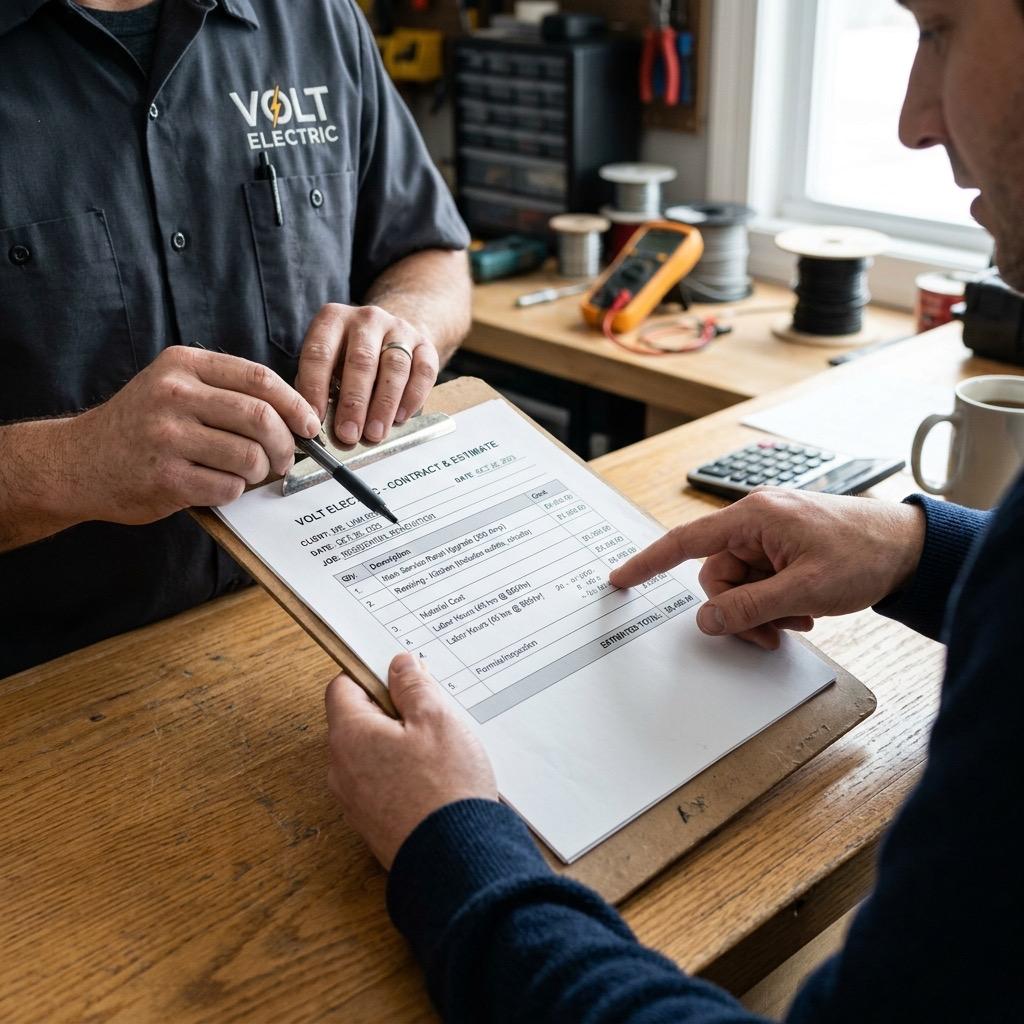
What to Listen For: In your first interaction with an electrician, pay attention to how they communicate. Do they explain their diagnosis clearly? Do they answer your questions directly? Do they ask good questions about your home and your goals? The way a contractor communicates in the estimate phase is a reliable preview of how they'll communicate throughout the project.
Attention to Detail in Workmanship
Electrical work done well looks different from electrical work done adequately. In a panel, great workmanship means wire runs that are organized, labeled, and properly torqued at every termination point. It means breakers installed level, knockouts properly filled, and the panel interior left clean and accessible. It means every wire is identified, every circuit is labeled, and the as-built condition is documented.
In the field, great workmanship means holes drilled cleanly and centered in studs, conduit runs that follow the geometry of the structure, device boxes set flush and level, and wire protection installed wherever code requires it. It means connections made correctly the first time -- properly stripped, correctly torqued, and inspected before being concealed.
Why does this matter beyond aesthetics? Because electrical failures often occur at connections and terminations. A connection torqued to 10% below specification can loosen over years of thermal cycling, eventually creating an arc fault. A wire run that cuts corners on protection is a future code violation waiting to be discovered. An unlabeled panel is a safety hazard for every future electrician, emergency responder, or homeowner who works on the system.
The NFPA estimates that 30% of all residential electrical fires involve loose connections or improper terminations. Attention to detail at the termination point is not perfectionism -- it's fundamental safety.
Local Knowledge and Regional Experience
Great electricians in Northern Virginia know this region deeply. They understand that Fairfax County inspectors have specific interpretations of certain code sections that differ from Arlington County or Loudoun County. They know which neighborhoods have overhead versus underground service, which areas are served by Dominion Energy versus NOVEC, and what the typical service size is in homes from different construction eras.
They know that a 1965 home in Vienna likely has a 100-amp service with aluminum branch circuit wiring. A 1985 home in Burke probably has a 150-amp panel that was undersized for today's loads. A new home in Ashburn may need additional circuits for EV charging and battery storage that weren't anticipated in the original design. This regional context shapes every job estimate and every job plan.
Local knowledge also means relationships -- with inspectors, with suppliers, with other trades. When a Fairfax County inspection is scheduled, an experienced local contractor knows the process, communicates with the inspector professionally, and resolves any deficiency notes efficiently. This matters to homeowners because inspection delays cost time and money.
Safety Culture as a Core Value
The best electricians I know share one non-negotiable: safety is never traded for speed or cost. Every decision on every job is evaluated through a safety lens first. Will this wire routing create a future access problem? Is this panel location compliant with clearance requirements? Is this outdoor fixture rated for wet locations?
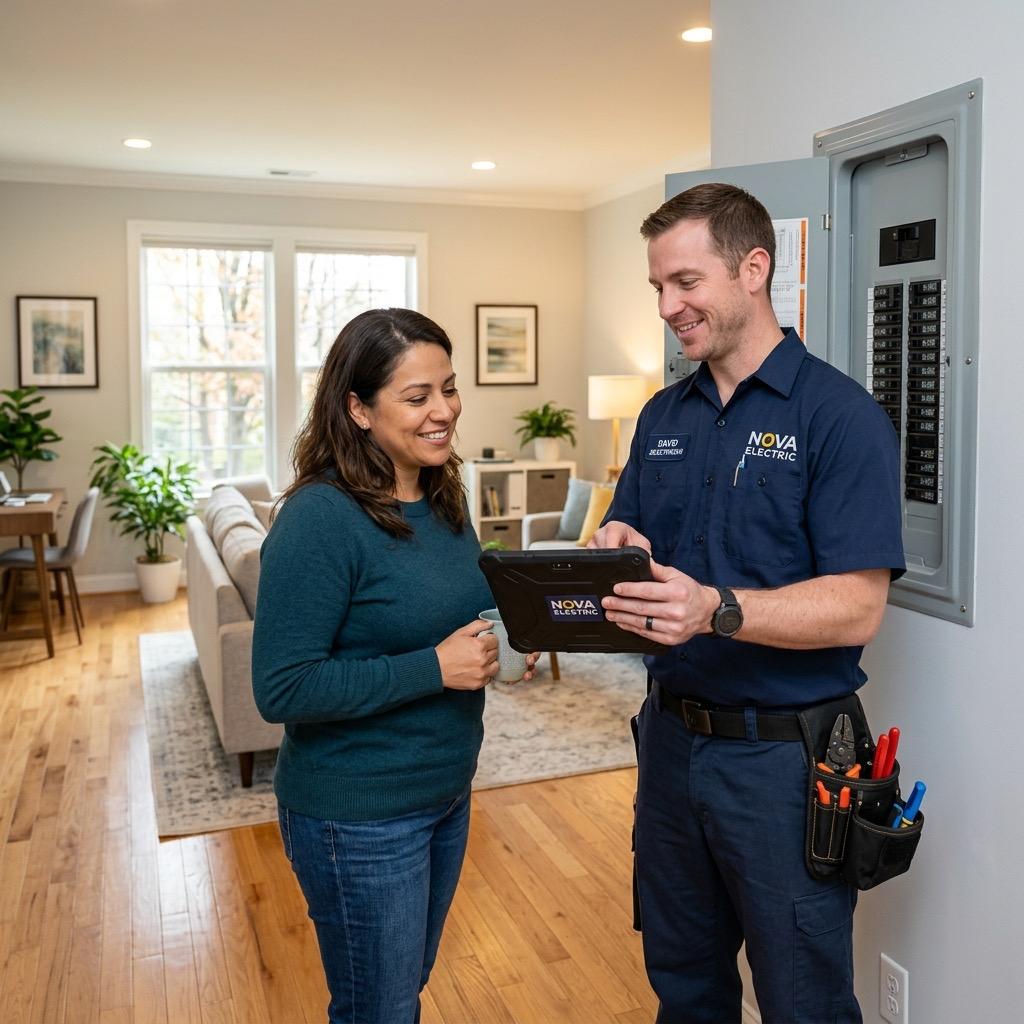
Safety culture also extends to the homeowner. Great electricians take a moment to explain the work they've done, point out the location of the main shutoff, show the homeowner how to test their GFCI outlets, and flag any issues they noticed that fall outside the scope of the current project. This is the difference between a transaction and a relationship.
At AJ Long Electric, these are the standards we hold ourselves to on every job in Northern Virginia. If you want to experience the difference that craftsmanship and professionalism make, call us at (703) 997-0026 or schedule online. We serve homeowners and businesses throughout Fairfax County, Arlington, Alexandria, Loudoun County, and Prince William County.
Tags:

Written by
Matt Long
Master Electrician
Our team of licensed electricians brings over 40 years of combined experience serving Northern Virginia. We're committed to providing expert electrical solutions with a focus on safety, quality, and customer satisfaction.
Reviewed by AJ Long Electric Master Electricians · VA License #2705031092 · View Credentials