Recessed lighting, also known as can lights or pot lights, has become one of the most popular lighting choices for modern homes across Fairfax, Arlington, Loudoun, and Prince William counties. When properly planned and installed, recessed lighting provides clean, unobtrusive illumination that enhances any space. However, poor layout planning can result in dark spots, harsh shadows, or an overly bright room that feels uncomfortable. This comprehensive guide from AJ Long Electric shares our professional insights on creating the perfect recessed lighting layout for your Northern Virginia home.
Key Takeaways
- Use the ceiling-height-divided-by-two formula as a starting point for fixture spacing, then adjust based on beam angle, lumen output, and room function.
- Position the first row of recessed lights at half the fixture spacing distance from walls to achieve an even wall wash effect.
- Always use IC-rated housings where insulation is present and ensure all installations meet Virginia electrical permit requirements.
- LED recessed fixtures offer tunable white technology and greater energy efficiency, but require LED-compatible dimmers for smooth operation.
- Professional installation by a licensed electrician is essential for safety, code compliance, and optimal fixture placement.
Understanding Recessed Lighting Basics
Before diving into layout planning, it is essential to understand the components of recessed lighting. Each fixture consists of three main parts: the housing (the can that goes into the ceiling), the trim (the visible part that sits flush with the ceiling), and the bulb or LED module. Housing types vary based on ceiling construction. IC-rated housings are required when insulation will contact the fixture, while non-IC housings need clearance from insulation. In many Northern Virginia homes built between the 1960s and 1990s, attic insulation levels have been upgraded over time, making IC-rated housings the safer and more code-compliant choice.
Fixture Sizes and Applications
Recessed lights come in various sizes, with 4-inch, 5-inch, and 6-inch being the most common for residential applications. Smaller 3-inch fixtures work well for accent lighting, while larger 6-inch fixtures provide more general illumination. The size you choose affects both the light output and the spacing requirements. In homes throughout Arlington and Fairfax County, we frequently recommend 4-inch fixtures for hallways and accent applications and 6-inch fixtures for kitchens, living rooms, and basements where broader coverage is needed.
The Spacing Formula and How to Apply It
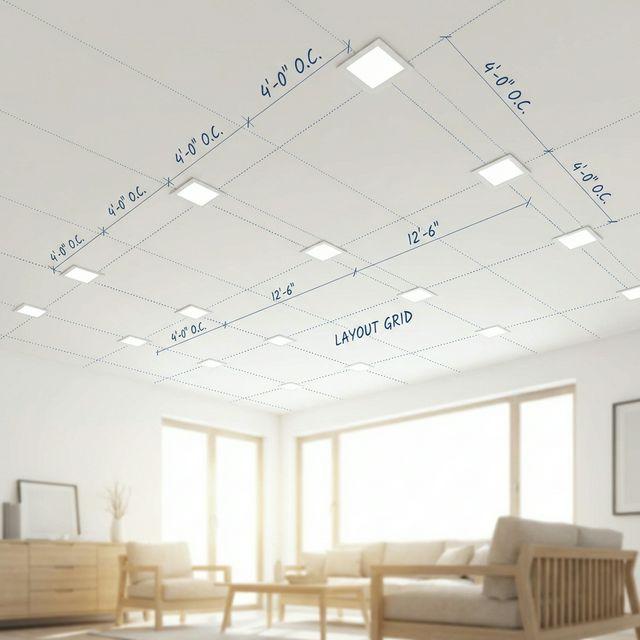
The most important rule for recessed lighting layout is the spacing formula. For general ambient lighting, the standard rule is to divide your ceiling height by two to determine the maximum distance between fixtures. For example, with an 8-foot ceiling, fixtures should be no more than 4 feet apart. With the 9-foot ceilings common in newer Loudoun County and Prince William County construction, the maximum spacing extends to 4.5 feet. This formula ensures even light distribution without dark spots between fixtures.
Whether it is a simple repair or a major electrical project, our licensed team is ready to help. Serving all of Northern Virginia with transparent pricing and expert workmanship. Call (703) 997-0026 today.
However, this formula is just a starting point. Several factors can affect optimal spacing:
- Beam angle: Narrow beam angles (25-30 degrees) require closer spacing, while wide beam angles (60+ degrees) allow greater distance between fixtures.
- Light output: Higher lumen fixtures can be spaced farther apart while still providing adequate illumination.
- Room function: Task areas like kitchen counters may need tighter spacing for more intense light, while living rooms can use wider spacing for a more relaxed ambiance.
- Ceiling color: White ceilings reflect more light, potentially allowing slightly wider spacing.
Pro Tip: When in doubt, err on the side of more fixtures at lower brightness rather than fewer fixtures at higher brightness. More fixtures with dimmer capability give you far greater flexibility and eliminate the harsh hot spots that come from too few bright lights.
Wall Placement Guidelines
The distance from walls is equally important as the spacing between fixtures. Placing recessed lights too close to walls creates harsh shadows and uneven lighting, while placing them too far away leaves walls looking dark and cave-like. The general rule is to position the first row of fixtures at a distance equal to half the fixture spacing from the wall.
Wall Wash and Accent Positioning
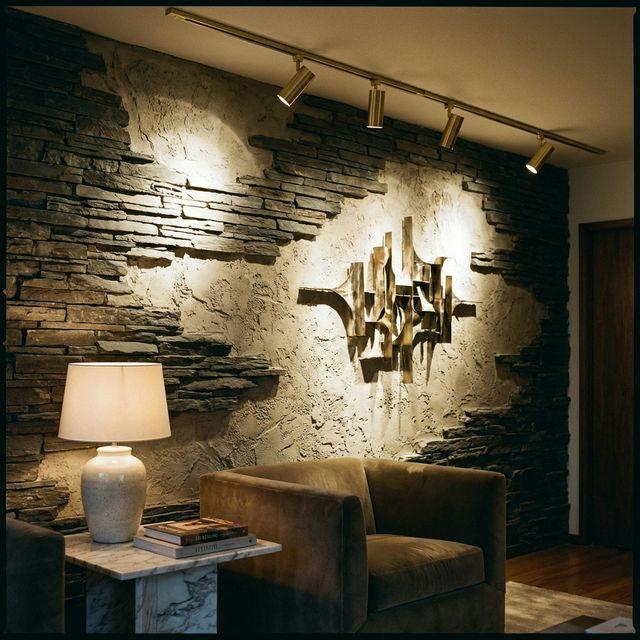
For an 8-foot ceiling with 4-foot fixture spacing, the first row should be approximately 2 feet from the wall. This creates a pleasant wall wash effect that makes rooms feel larger and more inviting. If you plan to highlight artwork or architectural features, you may want fixtures closer to the wall, typically 12-18 inches, angled to create dramatic accent lighting. Many homeowners in the DMV area have invested in artwork and built-in cabinetry that deserves to be showcased with properly positioned recessed lighting.
Room-by-Room Layout Strategies
Living Rooms
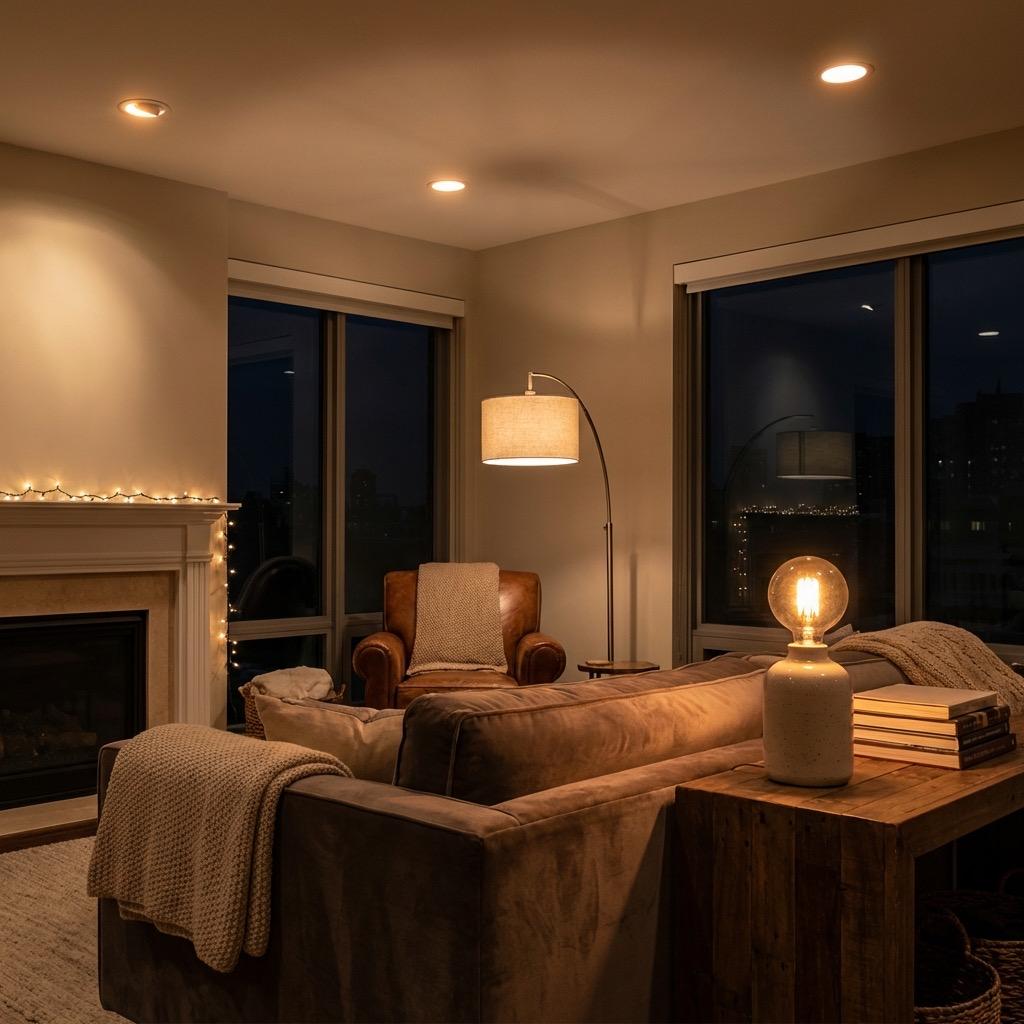
Living rooms benefit from a layered lighting approach. A grid pattern of recessed lights provides ambient illumination, typically with 5-6 fixtures for an average-sized room. Consider placing fixtures to highlight seating areas and artwork. Using dimmable recessed lights allows you to adjust the mood for different activities, from bright for reading to dimmed for movie watching. In the open-concept floor plans common in Northern Virginia homes, recessed lighting helps define different zones within one large space.
Kitchens
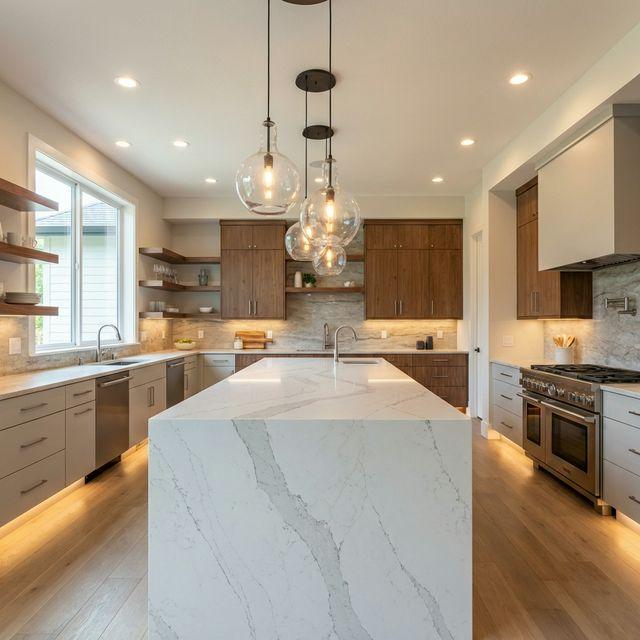
Kitchens require careful planning because they combine multiple functions. Position recessed lights over work areas like countertops, the sink, and the stove. A row of lights approximately 24 inches from the wall illuminates counter surfaces without casting shadows. Center fixtures over islands or peninsulas, and consider separate switching for different zones to control light levels based on activity. Many of the kitchen renovations we perform in Fairfax and Arlington involve converting older single-fixture kitchens to multi-zone recessed layouts.
Bathrooms
Bathroom recessed lighting should complement vanity lighting rather than replace it. Place fixtures in the shower area using wet-rated fixtures, over the tub, and in the general space. Avoid placing a single recessed light directly over the vanity mirror, as this creates unflattering shadows on the face. Vanity sconces or light bars handle face illumination much more effectively.
Hallways and Entryways
Long hallways need recessed lights spaced evenly to create uniform illumination. For standard 8-foot ceilings, place fixtures every 4-6 feet along the center of the hallway. Avoid the common mistake of placing just one fixture in the middle, which creates dark ends. Entryways and foyers benefit from slightly tighter spacing to create a bright, welcoming first impression.
Creating Your Layout Plan
Start by measuring your room and creating a scale drawing. Mark permanent fixtures like ceiling fans, HVAC vents, and structural elements that cannot be moved. Identify task areas that need focused lighting and areas where you want accent lighting. Then apply the spacing formula while working around obstacles.
Consider the location of furniture and how the room will be used. In living rooms, you might center fixtures over a seating area rather than centering them in the room. In bedrooms, avoid placing fixtures directly over the bed where they will shine in your eyes. Take note of any joists or structural members in the ceiling that could interfere with fixture placement, especially in older homes throughout the DMV area where framing may not align with a perfect grid.
Did You Know? Virginia building code requires electrical permits for new recessed lighting installations. Inspections verify that all fixtures are properly rated, wiring meets code, and the installation is safe. AJ Long Electric handles the permitting process as part of every recessed lighting project in Fairfax, Arlington, Loudoun, and Prince William counties.
Common Layout Mistakes to Avoid
- Too few fixtures: Trying to save money by using fewer fixtures often results in inadequate lighting. It is better to use more lower-wattage fixtures for even coverage.
- Ignoring architectural features: Recessed lights should work with your room's architecture, not against it. Consider how light interacts with coffered ceilings, beams, or vaulted spaces.
- Uniform grid in every room: While grids work well for general illumination, some rooms benefit from asymmetrical placement that responds to the room's layout and function.
- Forgetting about switches: Plan your switch locations and consider which fixtures should be on separate circuits for zoned control.
- Ignoring existing wiring paths: In retrofits, working with existing wiring routes rather than against them can significantly reduce installation time and cost.
Professional Installation and LED Considerations
While planning a layout is something homeowners can do, installation should always be performed by a licensed electrician. Recessed lighting installation involves working with electrical wiring, cutting ceiling holes precisely, and ensuring proper housing selection for your ceiling type. Improper installation can create fire hazards, especially when IC-rated housings are not used where required.
Modern LED Recessed Fixtures
Modern LED recessed lights have changed some traditional layout thinking. LEDs produce more lumens per watt than incandescent bulbs, meaning fewer fixtures may be needed for the same illumination. However, LED fixtures often have specific beam angles that affect coverage patterns. When planning with LEDs, consider the manufacturer's spacing recommendations based on the specific fixture's output and beam characteristics.
Many LED recessed fixtures also offer tunable white technology, allowing you to adjust color temperature from warm 2700K to cool 5000K. This adds flexibility but requires planning for appropriate controls during the layout phase. LED-compatible dimmers are a must, as standard incandescent dimmers can cause flickering, buzzing, or limited dimming range with LED fixtures.
Get Expert Recessed Lighting Design for Your Home
A well-designed recessed lighting layout transforms how you experience your home. Whether you are renovating a single room or planning lighting for new construction, the investment in proper planning pays dividends in comfort and functionality for years to come. Homeowners throughout Fairfax, Arlington, Loudoun, and Prince William counties trust AJ Long Electric for recessed lighting projects that deliver outstanding results.
Contact AJ Long Electric for a professional lighting consultation. Our experienced electricians will evaluate your space, recommend optimal fixture placement, and provide a complete installation that meets all Northern Virginia building codes. We handle everything from initial design through permitting and final inspection, ensuring the perfect balance of light for every room in your home.
Tags:

Written by
AJ Long Electric Team
Licensed Electricians
Our team of licensed electricians brings over 40 years of combined experience serving Northern Virginia. We're committed to providing expert electrical solutions with a focus on safety, quality, and customer satisfaction.
Reviewed by AJ Long Electric Master Electricians · VA License #2705031092 · View Credentials