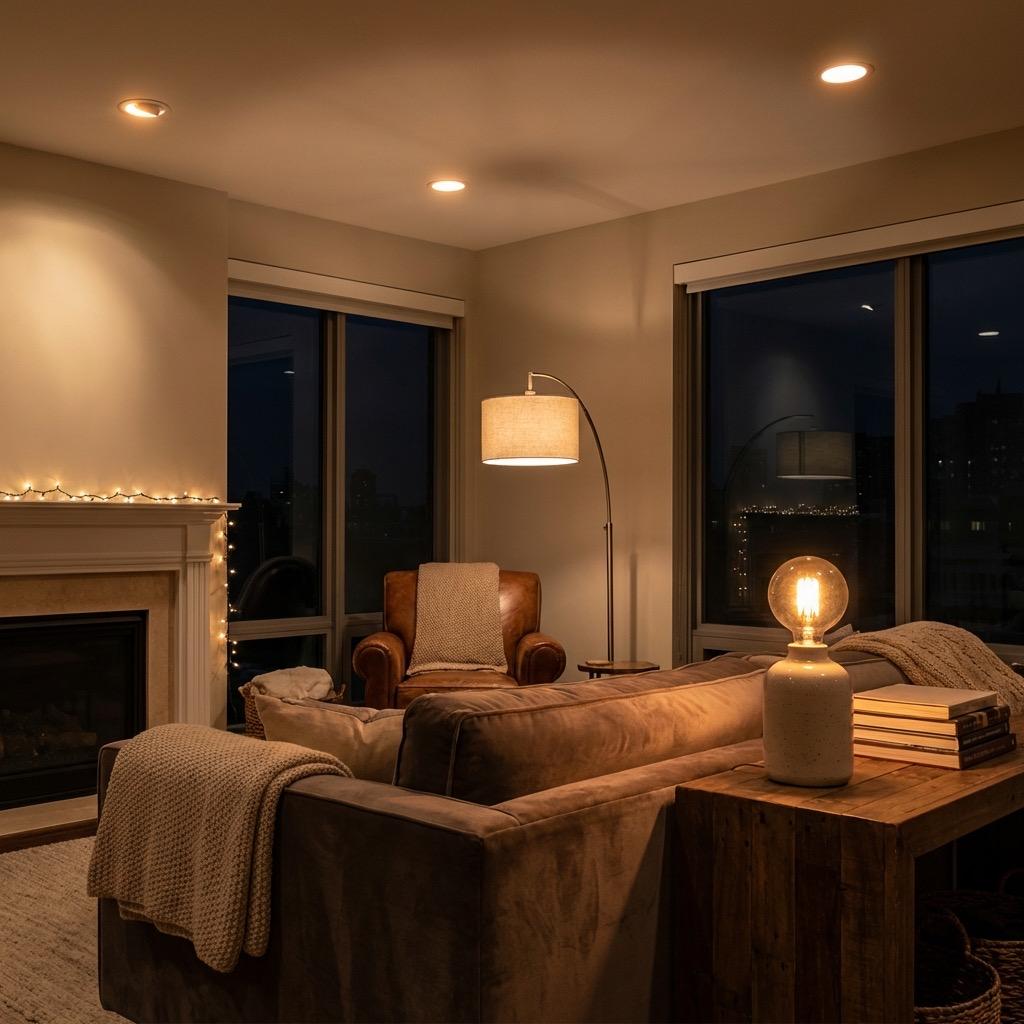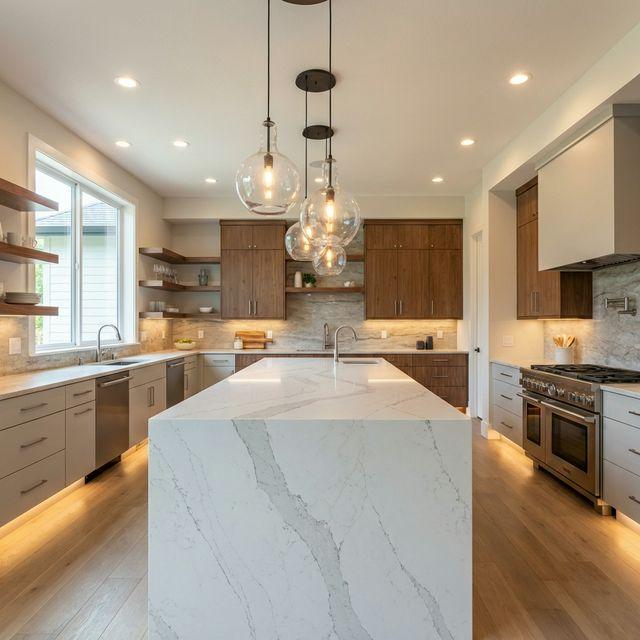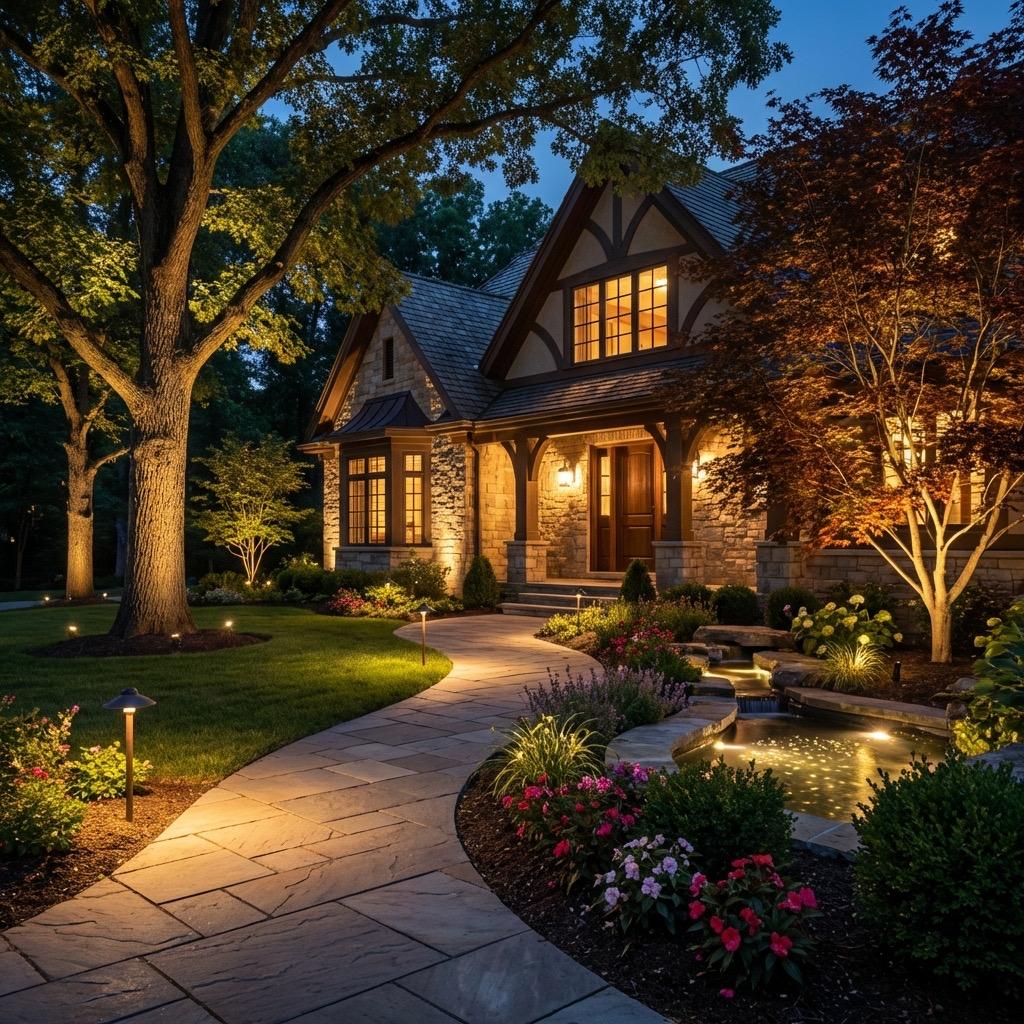
While ambient lighting keeps rooms functional and task lighting enables activities, accent lighting creates the visual interest and drama that transform a house into a home with character. Accent lighting draws the eye to architectural features, highlights artwork, emphasizes textures, and adds depth to spaces that might otherwise feel flat and one-dimensional. At AJ Long Electric, we help homeowners across Fairfax, Arlington, Loudoun, and Prince William counties discover the transformative power of accent lighting. This guide explores the techniques, applications, and best practices for adding this essential lighting layer to your Northern Virginia home.
Key Takeaways
- Effective accent lighting is three to five times brighter than the ambient lighting in the same space, creating the contrast that makes highlighted elements stand out.
- Key techniques include wall washing, wall grazing, uplighting, backlighting, and spotlighting, each creating distinct visual effects.
- Artwork requires dedicated lighting with CRI of 95 or higher for accurate color rendering; use UV-filtered LED sources to protect valuable pieces.
- The best accent lighting is invisible, meaning you see the effect rather than the fixture itself.
- Restraint is essential: when everything is highlighted, nothing stands out. Choose a few focal points and let shadows do their work.
The Purpose and Principles of Accent Lighting
Accent lighting serves several distinct purposes in interior design. It creates focal points that draw attention to the most important features in a room. It adds visual hierarchy by making some elements more prominent than others. It provides depth and dimension by introducing layers of light and shadow. And it sets mood by adding warmth, drama, or sophistication to a space.
The Brightness Ratio
Effective accent lighting depends on contrast. The general rule is that accent lighting should be three to five times brighter than the ambient lighting in the same space. This contrast is what makes accented elements visually "pop." If your ambient lighting provides 200 lux at the wall, your accent lighting should deliver 600-1000 lux on the highlighted feature. Without sufficient contrast, accent lighting blends into the ambient layer and loses its impact. With too much contrast, it creates harsh spots that feel uncomfortable rather than dramatic.
Pro Tip: Always evaluate accent lighting at night with all layers of lighting active. During the day, natural light washes out accent effects, making it difficult to judge whether your accent lighting has the right intensity and placement. The true impact of accent lighting reveals itself after dark when it can create the contrast and drama that define a space's character.
Accent Lighting Techniques
Wall Washing
Wall washing bathes a wall surface in even, uniform illumination. It makes walls appear brighter and more expansive, which can make rooms feel larger. Wall washing works well for textured walls, accent-colored walls, and walls with displayed artwork or photography. Position fixtures 2-3 feet from the wall, aimed at approximately 30-degree angles for even coverage. In many Northern Virginia homes with feature walls in living rooms and dining rooms, wall washing transforms a painted accent wall into a glowing focal point that anchors the room's design.
Whether it is a simple repair or a major electrical project, our licensed team is ready to help. Serving all of Northern Virginia with transparent pricing and expert workmanship. Call (703) 997-0026 today.
Wall Grazing
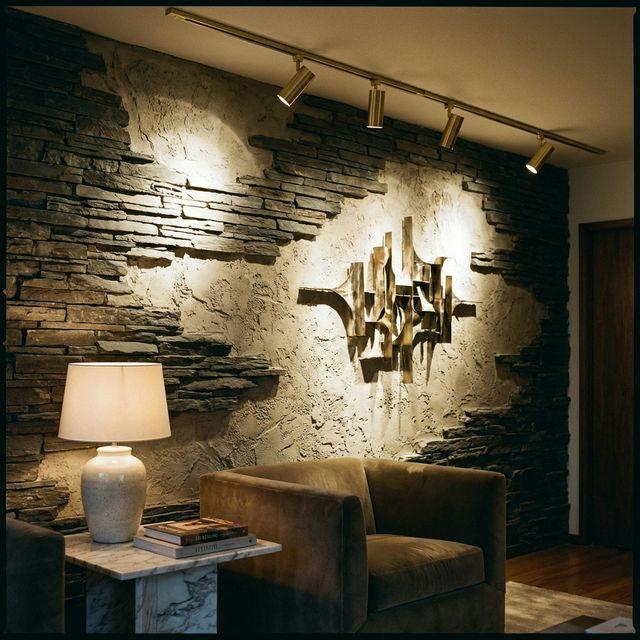
Wall grazing places fixtures very close to the wall, typically 6-12 inches away, casting light nearly parallel to the surface. This shallow angle emphasizes texture dramatically because every bump, crevice, and joint casts a shadow. Wall grazing is spectacular on stone facades, exposed brick, textured plaster, and board-and-batten walls. The technique is popular in Northern Virginia homes with stone fireplace surrounds and rustic feature walls, where it reveals the natural beauty and depth of the material in a way that no other lighting technique can match.
Uplighting
Uplighting positions fixtures at floor level, casting light upward onto walls, architectural features, or plants. It creates dramatic effects by reversing the natural downward direction of daylight. Uplights placed behind large indoor plants cast fascinating shadow patterns on walls and ceilings. Floor-level uplights aimed at columns, archways, or tall windows add visual height and grandeur to a space. Small uplights tucked into corners can add a warm glow that softens the transition between wall and floor.
Backlighting
Backlighting positions the light source behind an object, creating silhouettes or glowing effects depending on the material's translucency. It works beautifully for onyx countertops and panels, frosted glass shelving, floating headboards, and bathroom vanities. Backlighting adds perceived depth to a space by creating a luminous layer behind the primary surface. In master bathrooms throughout Fairfax and Loudoun counties, backlit mirrors and floating vanities have become popular design elements that create a spa-like atmosphere.
Spotlighting
Spotlighting uses focused, directional fixtures to illuminate a specific object or area. Adjustable recessed fixtures, track lights, and dedicated picture lights are all forms of spotlighting. This technique is essential for artwork, sculpture, and display collections. The key to effective spotlighting is precise aiming: the light should fall on the subject without spilling onto surrounding surfaces, creating a natural visual frame that draws the eye.
Did You Know? When lighting valuable artwork, always use LED sources with UV filtering. Traditional halogen and incandescent art lights emit ultraviolet radiation that fades pigments and damages canvases over time. Modern LED art lights with CRI of 95 or higher provide museum-quality color rendering without the UV damage, preserving your art collection while displaying it beautifully.
Applications for Accent Lighting in Your Home
Artwork and Photography
Art deserves dedicated lighting with high-CRI sources for accurate color rendering. Picture lights mounted above frames provide classic, focused illumination. Adjustable recessed fixtures aimed at artwork offer a cleaner ceiling line. Track lighting provides flexibility to adjust as your collection changes. For proper art lighting, the light should illuminate the artwork evenly from top to bottom without casting a hot spot at the top and leaving the bottom in shadow. Aim fixtures at a 30-degree angle from the ceiling for optimal coverage.
Architectural Features
Fireplaces, coffered ceilings, archways, columns, niches, and built-in cabinetry all become focal points with proper accent lighting. A fireplace surround illuminated with grazing light from above reveals the texture and craftsmanship of stone or tile. Cove lighting in coffered ceilings creates depth and highlights the architectural geometry. Recessed lights in niches and alcoves create intimate display spaces. Many homes in Arlington and McLean feature architectural details that deserve to be celebrated with thoughtful accent lighting.
Bookshelves and Display Cases
Bookshelves and display cases transform with in-cabinet lighting. LED strip lights mounted inside shelves, either at the top of each shelf or along the front edge, illuminate displayed objects while creating a warm glow visible from across the room. Glass-front cabinets with internal lighting showcase china, collectibles, and decorative objects beautifully. Battery-powered LED puck lights offer a simple solution for shelves without wiring, though hardwired solutions provide more reliable, maintenance-free results.
Indoor Plants and Greenery
Indoor plants come alive with uplighting through foliage. A small uplight placed at the base of a large potted plant or tree creates shadows on the wall and ceiling that add organic, natural patterns to the room. The effect is particularly striking with plants that have interesting leaf shapes or branching structures. Fiddle leaf figs, palm trees, and large ferns are especially effective subjects for accent uplighting.
Common Accent Lighting Mistakes
- Too bright: Accent lights that are too intense create uncomfortable glare rather than appealing drama. Always use dimmers to fine-tune intensity.
- Accenting everything: When everything in a room is highlighted, nothing stands out. Select two to three focal points per room and let the rest recede.
- Wrong color temperature: Accent lighting should harmonize with the overall space. Using cool white accent lights in a warm-toned room creates a jarring contrast.
- Visible fixtures: The best accent lighting is invisible. You should see the illuminated effect, not the fixture itself. Use miniature fixtures, concealed mounting, and careful aiming.
- Forgetting dimmers: Accent lighting without dimming capability offers no flexibility. What looks dramatic at night may be invisible during the day or overwhelming at close range.
Professional Accent Lighting Design in Northern Virginia
At AJ Long Electric, we help homeowners add accent lighting that elevates their interiors from ordinary to extraordinary. From artwork spotlighting to architectural feature lighting, from cove installations to backlit design elements, we design and install accent lighting that creates the visual impact you envision. Our electricians work with homeowners and interior designers throughout Fairfax, Arlington, Loudoun, and Prince William counties to deliver accent lighting installations that showcase your home's best features.
Contact AJ Long Electric to discuss accent lighting for your home. We will evaluate your space, identify the focal points that deserve highlighting, and design a lighting scheme that brings depth, drama, and character to every room.
Tags:

Written by
AJ Long Electric Team
Licensed Electricians
Our team of licensed electricians brings over 40 years of combined experience serving Northern Virginia. We're committed to providing expert electrical solutions with a focus on safety, quality, and customer satisfaction.
Reviewed by AJ Long Electric Master Electricians · VA License #2705031092 · View Credentials