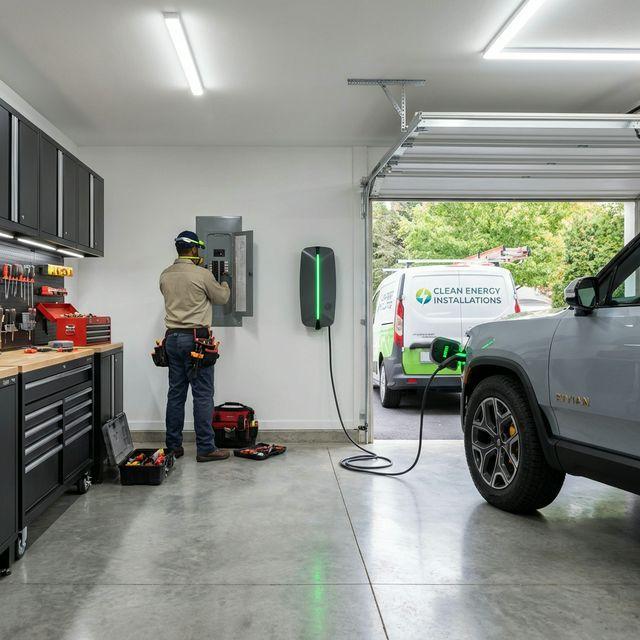
Electric vehicle adoption in Northern Virginia is accelerating rapidly. As more homeowners purchase EVs, the question of home charging infrastructure becomes critical. One of the most common concerns we hear is whether installing an EV charger will require a panel upgrade. Here's everything you need to know.
Key Takeaways
- Proper grounding provides a safe path for fault current, preventing electrical shock and fire.
- The grounding system connects your panel to earth ground rods, water pipes, and building steel.
- Bonding connects all metal components to the grounding system, preventing dangerous voltage differences.
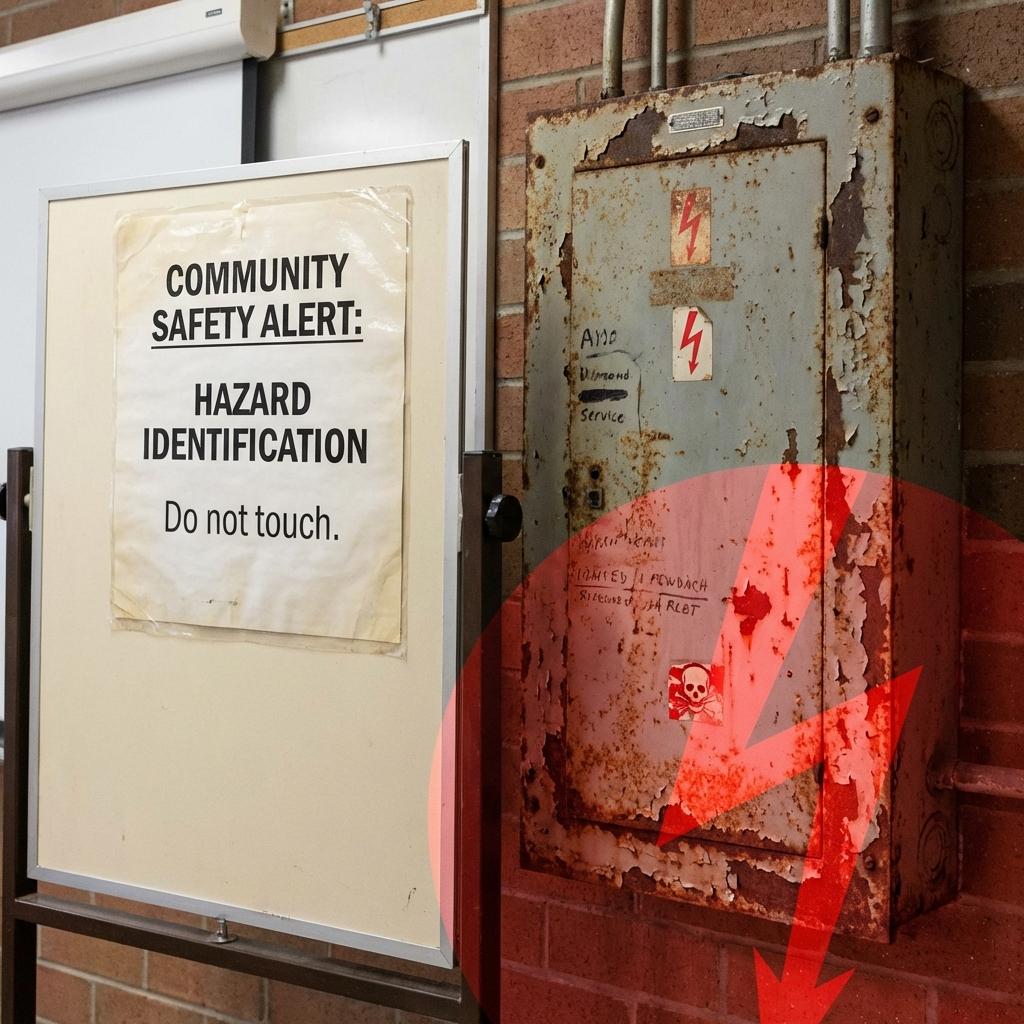
- Improper grounding is a common code violation in older homes that creates serious safety hazards.
EV Charger Power Requirements
First, let's understand what power EV chargers actually need:
Level 1 Charging (Standard Outlet)
- Uses existing 120V, 15-20 amp outlet
- Provides 3-5 miles of range per hour
- No electrical work needed
- Best for plug-in hybrids or minimal daily driving
Level 2 Charging (Dedicated Circuit)
- Requires 240V circuit
- Common options: 30, 40, 50, or 60 amp circuits
- Provides 15-40 miles of range per hour
- Most popular choice for home charging
- What most EV owners want and need
Common Level 2 Charger Specifications:
| Charger Type | Circuit Required | Range per Hour |
|---|---|---|
| Tesla Wall Connector | 60 amp (for full speed) | 30-44 miles |
| ChargePoint Home Flex | 50 amp | Up to 37 miles |
| Grizzl-E | 40 amp | Up to 30 miles |
| Clipper Creek HCS-40 | 40 amp | 25 miles |
Why Grounding Matters: Without proper grounding, a fault in an appliance can energize its metal housing at full line voltage. The grounding system ensures fault current flows safely to earth, tripping the breaker before anyone can be shocked.
When Panel Upgrade is Required
You Have 100 Amp Service
If your home has 100 amp service (common in homes built before 1990), adding a 50-60 amp EV circuit often requires a service upgrade. Here's why:
Our licensed electricians have installed hundreds of EV chargers across Northern Virginia. We handle everything from panel evaluation to permit filing. Call (703) 997-0026 or request your free estimate online.
- 100 amps provides about 24,000 watts of capacity
- Central air conditioning uses 3,000-5,000 watts
- Electric range uses 8,000-12,000 watts
- Electric dryer uses 4,000-5,000 watts
- General loads use 3,000-5,000 watts
- A 60 amp EV charger adds 14,400 watts
The math simply doesn't work—you'd exceed your capacity if multiple high-draw devices ran simultaneously.
Your Panel is Full
Even with a 200 amp panel, you might have no available spaces for an EV circuit. If every slot is occupied, you'll need either a panel upgrade or a subpanel.
You're Adding Multiple Chargers
Households with two EVs may need 80-120 amps of capacity for charging, which even some 200 amp panels can't accommodate.
When Panel Upgrade is NOT Required
You Have 200 Amp Service with Available Capacity
If your 200 amp panel has space and you're not already near capacity, adding an EV circuit is straightforward. This is the case for many newer homes.
You Choose a Smaller Charger
A 30 amp charger uses significantly less power than a 60 amp charger. While charging is slower, it might work within your existing capacity.
You Implement Load Management
Smart load management devices can allow EV charging on panels that couldn't otherwise support it (more on this below).
Load Management Solutions
Technology offers alternatives to full panel upgrades:
Smart Load Management
Devices like the DCC-10 or EV-Ready load management systems monitor your home's power usage and adjust EV charging accordingly. When your dryer runs, charging pauses; when it stops, charging resumes.
- Cost: $200-$500 plus installation
- Pros: Avoids panel upgrade cost
- Cons: Charging may pause during high-demand times
Scheduled Charging
Most EVs and smart chargers allow scheduled charging during off-peak hours (overnight), when other household loads are minimal. This doesn't increase capacity but maximizes available power.
Reduced Amperage
Many EV chargers are adjustable. Installing a charger at 32 amps instead of 48 amps requires less capacity while still providing overnight charging capability.
Cost Comparison
Here's how the options compare:
Option 1: EV Charger Only (No Upgrade)
- Charger installation: $500-$1,000
- Total: $500-$1,000
- Requirement: Adequate existing capacity
Option 2: EV Charger with Load Management
- Charger installation: $500-$1,000
- Load management device: $300-$600
- Total: $800-$1,600
- Benefit: Works with limited capacity
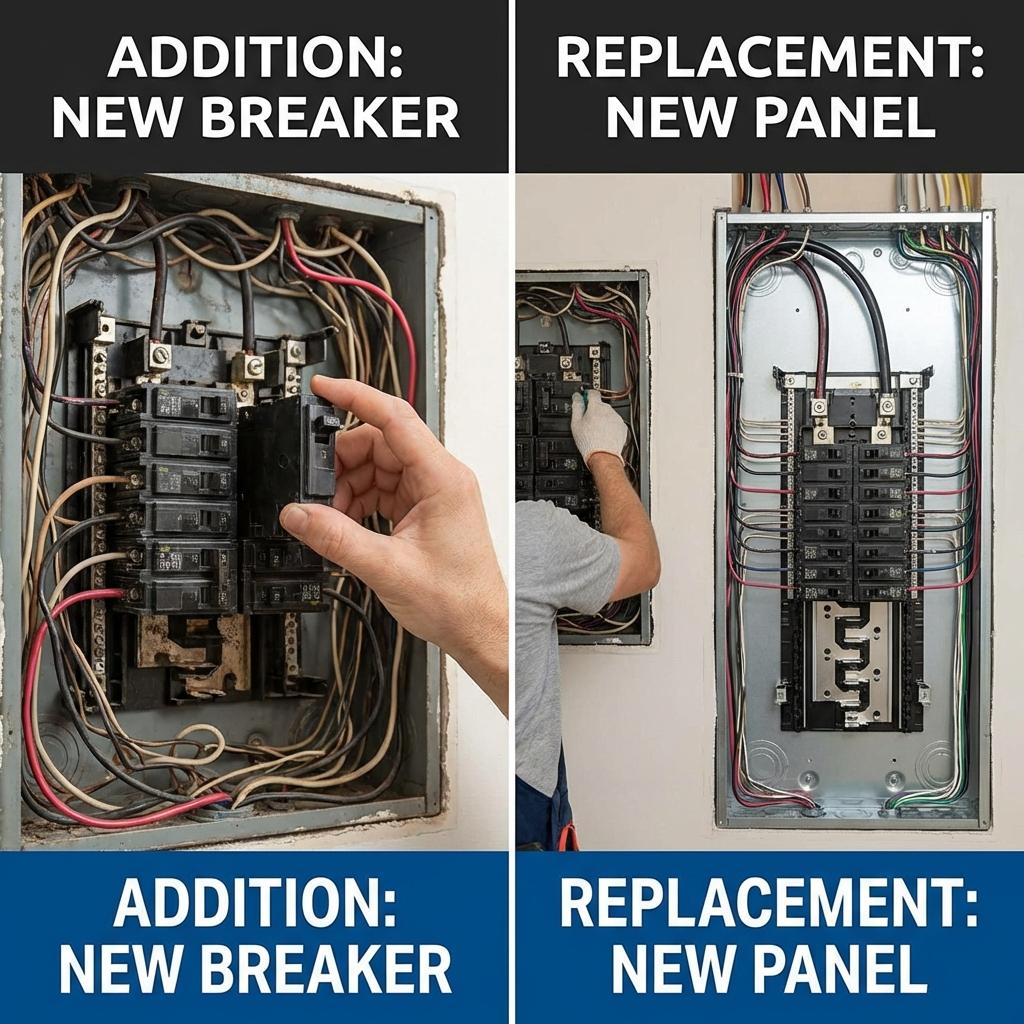
Option 3: Panel Upgrade + EV Charger
- Panel upgrade (100 to 200 amp): $2,500-$4,500
- EV circuit (included or additional): $200-$500
- Total: $2,700-$5,000
- Benefit: Full capacity for EV + future needs
Utility Incentives and Programs
Dominion Energy offers programs that can help offset costs:
- EV charging rebates for Level 2 installations
- Time-of-use rates for off-peak charging savings
- Smart charger programs with additional incentives
Check current programs as incentives change periodically.
Federal Tax Credits
The federal tax credit for EV charging equipment (Section 30C) provides:
- 30% credit on equipment and installation costs
- Maximum credit of $1,000 for residential installations
- Applies to charger cost and installation labor
- Panel upgrade costs may also qualify if required for installation
Consult a tax professional for specific guidance on your situation.
Planning for the Future
When making decisions about EV charging, think ahead:
- Will you add a second EV?
- Might you upgrade to a longer-range vehicle needing faster charging?
- Are other electrical additions planned (hot tub, addition, etc.)?
- Is your panel already aging or problematic?
If panel upgrade is eventually needed anyway, doing it with your EV installation saves money on labor and permits.
Get a Professional Assessment
At AJ Long Electric, we specialize in EV charger installations throughout Northern Virginia. Our process:
- Evaluate your current panel and capacity
- Perform a load calculation
- Discuss your charging needs and future plans
- Present all options with transparent pricing
- Handle permits, installation, and inspection
Contact us at (703) 555-0123 for a free EV charger installation assessment. We'll help you determine the best path to home charging for your situation and budget.
Tags:

Written by
Matt Long
Master Electrician
Our team of licensed electricians brings over 40 years of combined experience serving Northern Virginia. We're committed to providing expert electrical solutions with a focus on safety, quality, and customer satisfaction.
Reviewed by AJ Long Electric Master Electricians · VA License #2705031092 · View Credentials