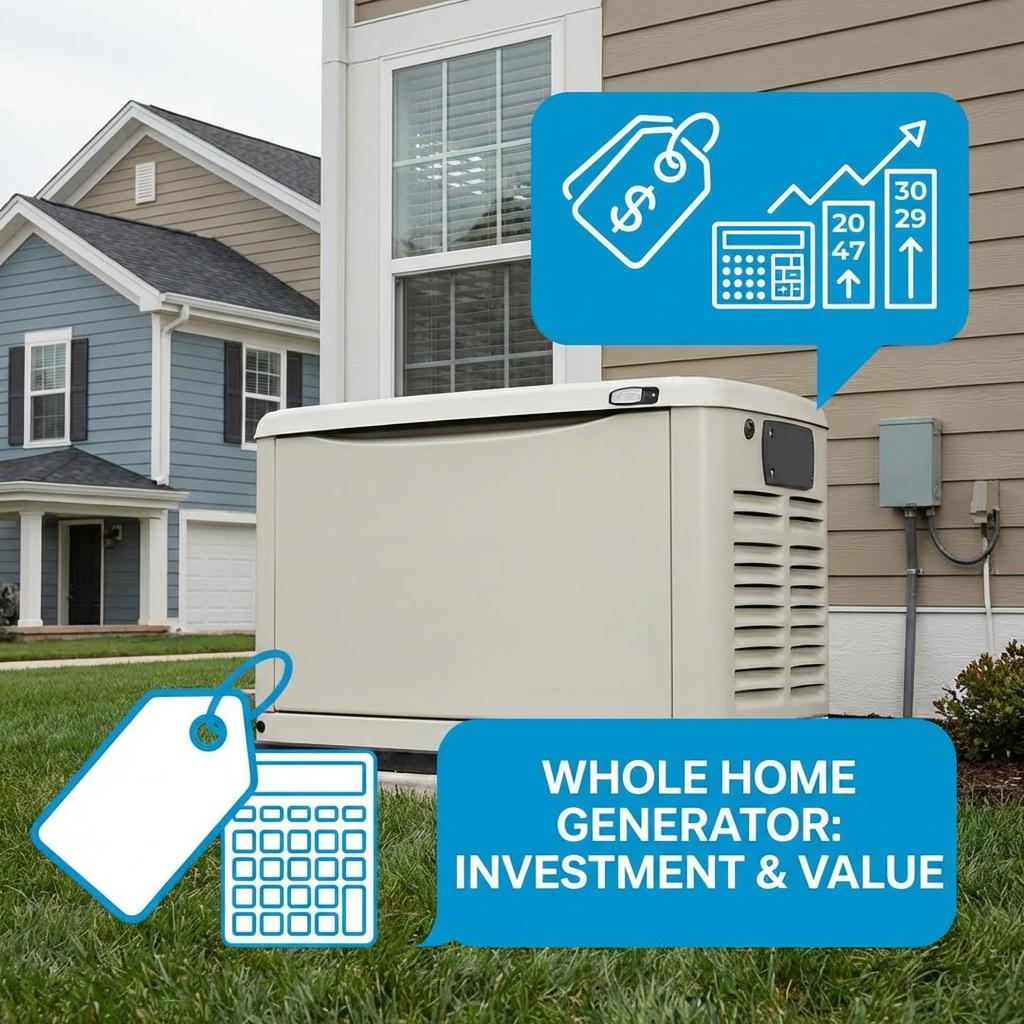
Whole-home standby generators in Virginia cost between $8,000 and $20,000 fully installed. This investment provides automatic backup power during outages, protecting your home, family, and valuable equipment. Northern Virginia residents know all too well the impact of severe storms, ice events, and summer thunderstorms that can knock out power for hours or even days. This comprehensive guide breaks down every cost factor involved in a generators">standby generator installation across the DMV area.
Key Takeaways
- Whole-home standby generators cost $8,000-$20,000 fully installed in Northern Virginia depending on size and fuel type
- A 16-20kW generator handles most homes in the region and costs $9,000-$14,000 installed
- Installation requires electrical permits, gas permits, and coordination between your electrician and gas utility
- Natural gas generators have lower fuel costs than propane but require a gas line connection
- Automatic transfer switches engage the generator within seconds of a power loss, requiring no homeowner intervention
Generator Size and Pricing
Choosing the right generator size is the most important decision in the process. An undersized unit will not power your essential systems, while an oversized unit wastes money on capacity you do not need. Your electrician will perform a load calculation to determine the correct size based on what you want to power during an outage.
- 10-14kW (Essential Circuits): $6,000-$9,000 -- Powers lights, refrigerator, sump pump, a few outlets, and one HVAC zone. Suitable for smaller homes or budget-conscious homeowners.
- 16-20kW (Most Homes): $9,000-$14,000 -- Powers most or all circuits including HVAC, kitchen appliances, and general outlets. This is the most popular size for 2,000-3,500 square foot homes common throughout Fairfax and Loudoun counties.
- 22-26kW (Large Homes): $13,000-$18,000 -- Powers the entire home including large central AC systems, multiple HVAC zones, electric ranges, and high-demand appliances. Common for larger homes in Great Falls, McLean, and Ashburn.
- 30kW+ (Whole Home + Shop): $18,000-$25,000 -- Powers everything including workshops, pool equipment, and detached structures. Typically liquid-cooled units with commercial-grade reliability.
Installation Cost Breakdown
Generator Unit ($4,000-$12,000)
Generac and Kohler are the two leading residential standby generator brands, and both are well-represented by dealers and service technicians in Northern Virginia. Generac Guardian series units offer excellent value in the 16-22kW range, while Kohler generators are known for their quieter operation and robust build quality. Air-cooled models (typically under 26kW) cost less than liquid-cooled units. Air-cooled generators are also simpler to maintain, making them the preferred choice for most residential installations.
Never lose power again. We are authorized Generac installers serving all of Northern Virginia. From sizing to installation to maintenance, we handle every step. Call (703) 997-0026 for a free in-home assessment.
Automatic Transfer Switch ($500-$2,000)
The automatic transfer switch (ATS) is the brain of the system. It monitors utility power continuously and automatically starts the generator within 10-30 seconds of detecting an outage. Load-shedding transfer switches allow smaller generators to power essential circuits by intelligently cycling less critical loads. Whole-home transfer switches cost more but provide seamless power to every circuit in the house. For most Northern Virginia installations, a 200-amp whole-home transfer switch is the standard recommendation.
Concrete Pad ($400-$800)
A level concrete pad is required for proper installation and warranty compliance. The pad must be sized to the specific generator model and positioned according to manufacturer clearance requirements. Most jurisdictions in Northern Virginia require the generator to be placed at least 5 feet from windows, doors, and soffit vents, and at least 18 inches from the home's exterior wall. Your electrician will identify the optimal location during the site assessment.
Gas Line ($500-$2,000)
Running a dedicated gas line from the meter to the generator location involves trenching, piping, and connection work. The distance from the gas meter to the generator pad is the primary cost driver. A 20-foot run is straightforward and affordable, while a 75-foot run around the perimeter of the house requires significantly more material and labor. Homes in areas without natural gas service (common in rural parts of Loudoun and western Prince William counties) will use propane, which requires a storage tank installation adding $1,500-$3,000 to the project.
Electrical Installation ($1,000-$2,500)
The electrical component includes installing the automatic transfer switch at your main panel, running control and power wiring between the transfer switch and generator, and integrating the system with your existing electrical infrastructure. If your electrical panel needs upgrading to accommodate the transfer switch, that cost is additional. The electrician also installs a battery charger circuit to keep the generator's starting battery maintained and wires any remote monitoring equipment.
Permits ($200-$500)
Generator installations require both electrical and gas permits in all Northern Virginia jurisdictions. Fairfax County, Arlington County, Loudoun County, and Prince William County each have their own permit requirements and fee structures. Electrical permits cover the transfer switch and generator wiring. Gas permits cover the fuel line installation. Both permits trigger inspections that verify code compliance and safe installation.
Natural Gas vs. Propane: Cost Comparison
Natural Gas Generators
Most homes in the established neighborhoods of Fairfax, Arlington, Falls Church, and Vienna have natural gas service, making natural gas the obvious fuel choice. Operating costs are lower since natural gas is typically less expensive per BTU than propane, and there is no tank to maintain or refill. The main limitation is that natural gas generators produce slightly less power per unit of fuel compared to propane.
Propane Generators
Homes in rural areas, newer developments in western Loudoun County, or properties without natural gas service use propane. Propane generators produce slightly more power per unit of fuel and have a longer shelf life (propane does not degrade like gasoline). However, you must maintain an adequate propane supply, which means monitoring tank levels and scheduling deliveries. A 500-gallon propane tank is standard for whole-home generators and provides approximately 7-10 days of moderate use during an outage.
The Installation Process
Site Assessment
The process begins with a thorough evaluation of your home's electrical system, gas service, and available installation locations. The electrician performs a load calculation to size the generator correctly and identifies the optimal pad location considering clearance requirements, noise considerations, and aesthetics.
Permitting and Scheduling
After you approve the proposal, your contractor pulls the necessary permits and orders the equipment. Generator lead times vary from 1-6 weeks depending on the model and current demand. Installation is typically scheduled once the unit arrives and permits are in hand.
Installation Day
A typical installation takes 1-2 days. Day one involves pouring the concrete pad, running the gas line, and positioning the generator. Day two covers the electrical work including transfer switch installation, wiring, and system testing. The electrician performs a complete test cycle including simulating a power outage to verify automatic startup and transfer.
Inspection and Commissioning
After installation, both electrical and gas inspections must pass. Once approved, your electrician will walk you through the system operation, maintenance schedule, and how to check the generator's status. Most modern Generac and Kohler units include WiFi monitoring that sends alerts to your phone.
Ongoing Maintenance Costs
Budget $200-$400 annually for generator maintenance. This includes oil and filter changes, spark plug replacement, battery testing, and a comprehensive operational check. Most manufacturers recommend professional service every 6-12 months. AJ Long Electric offers maintenance contracts that include annual service visits and priority response during storm events.
Get Your Generator Installation Quote
Power outages in Northern Virginia are not a matter of if but when. Whether you want to protect your family's comfort, prevent basement flooding from sump pump failure, or keep your home office running during storms, a standby generator is a sound investment. Contact AJ Long Electric at (703) 997-0026 for a free on-site assessment and detailed installation quote. We serve homeowners throughout Fairfax, Arlington, Loudoun, and Prince William counties with professional generator installations backed by our workmanship warranty.
Tags:

Written by
Matt Long
Master Electrician
Our team of licensed electricians brings over 40 years of combined experience serving Northern Virginia. We're committed to providing expert electrical solutions with a focus on safety, quality, and customer satisfaction.
Reviewed by AJ Long Electric Master Electricians · VA License #2705031092 · View Credentials