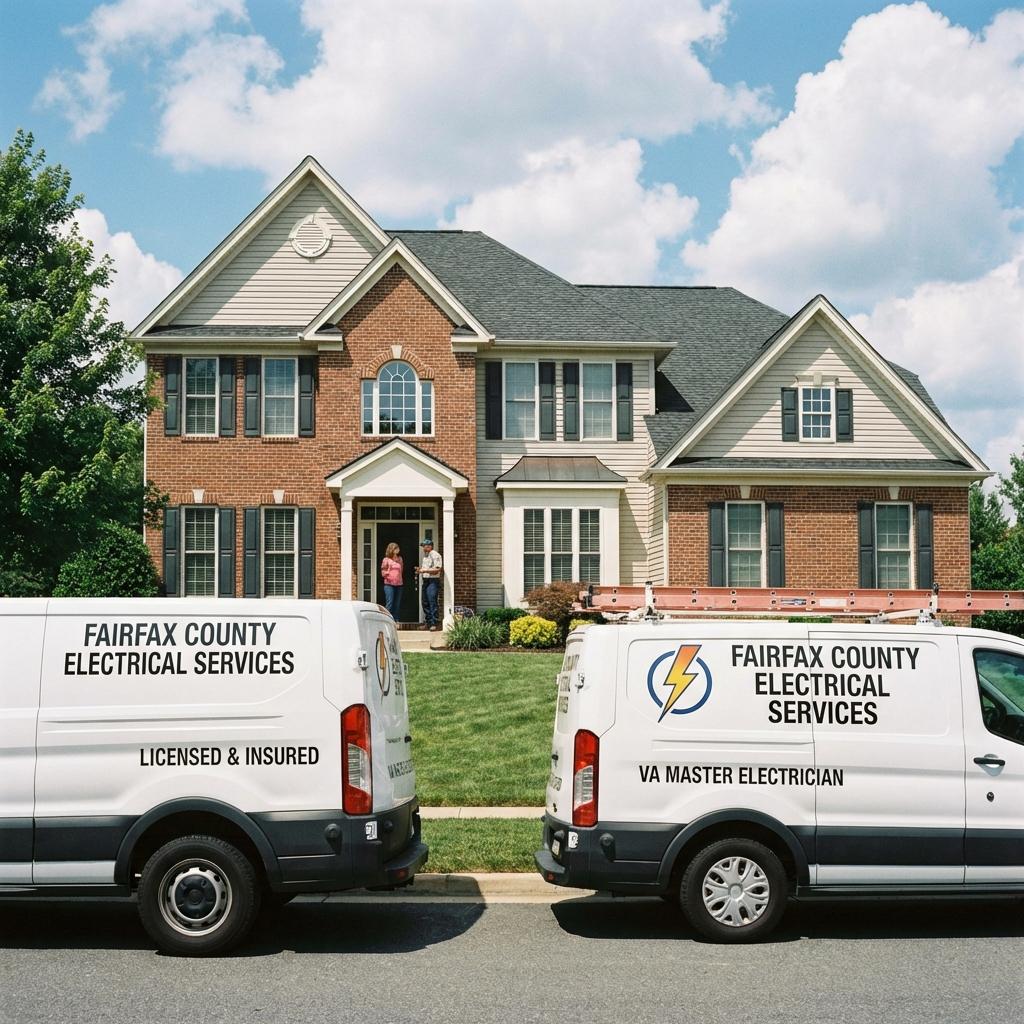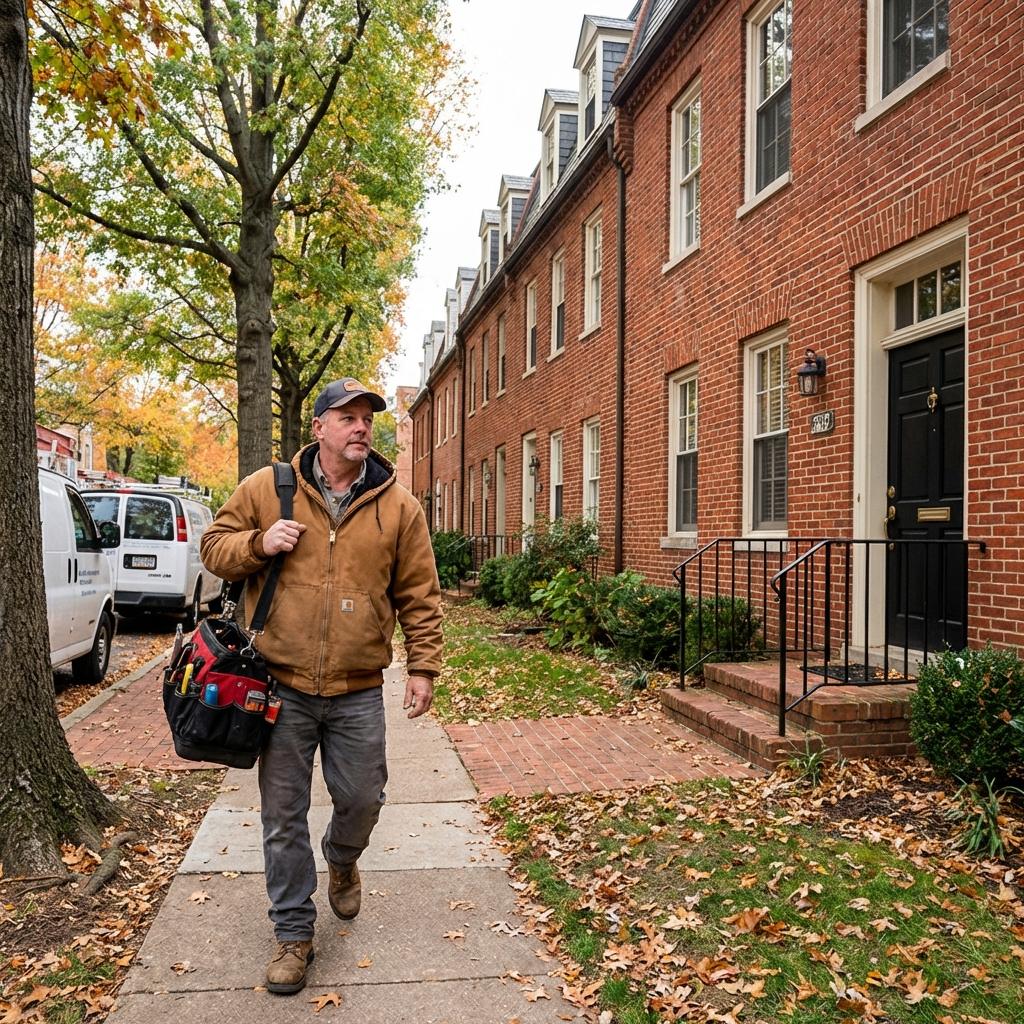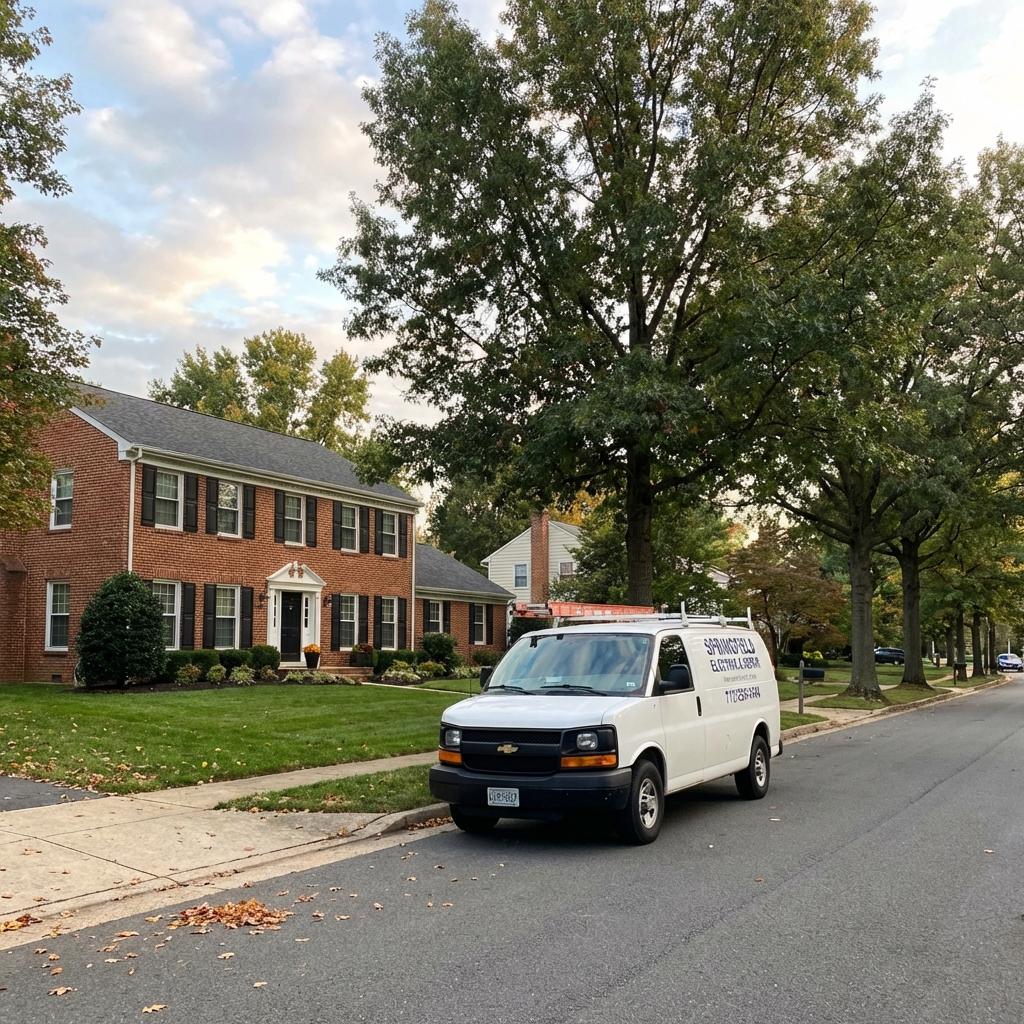
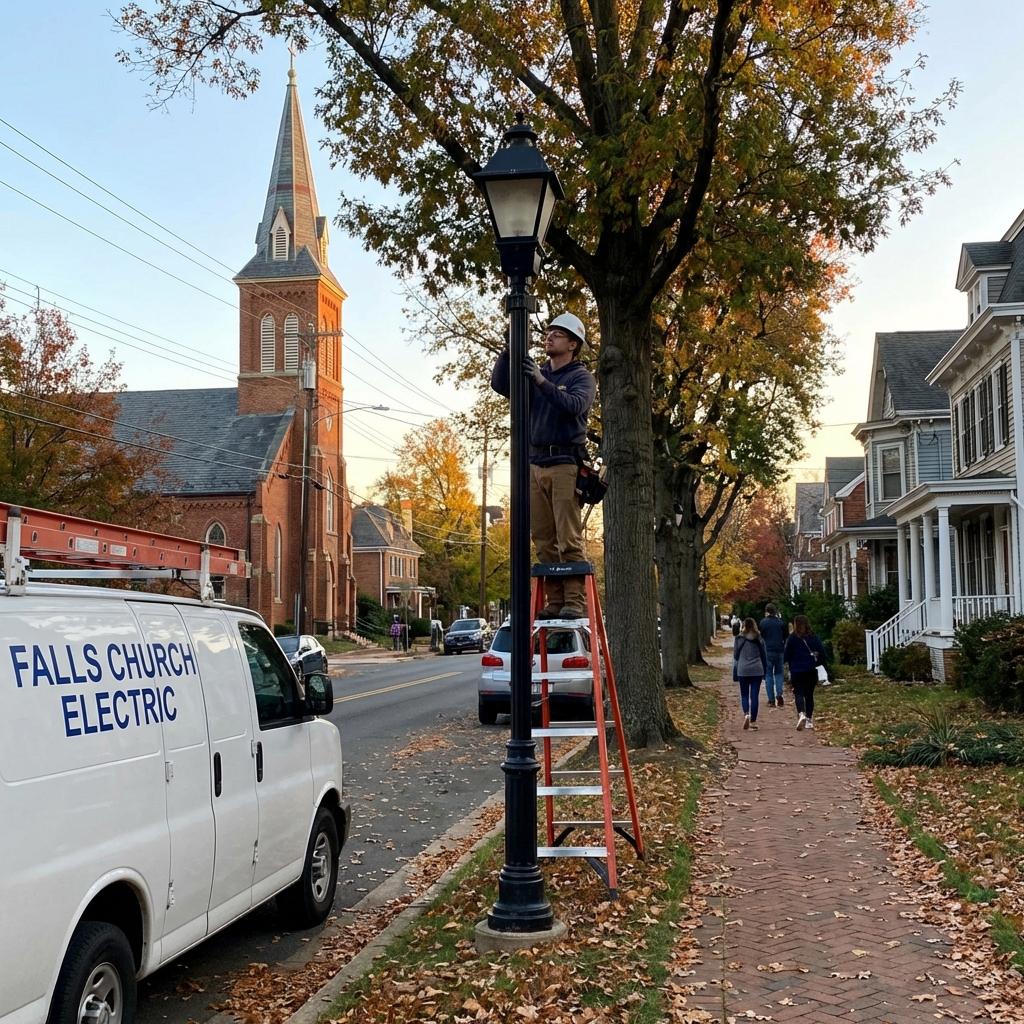
Falls Church, Virginia is a small but fiercely independent community with a rich history and a housing stock that tells the story of more than a century of residential development. The City of Falls Church, often called "The Little City," covers just over two square miles and is entirely surrounded by Fairfax County, creating a unique jurisdictional situation that directly affects how electrical work is permitted and inspected. From the post-war Cape Cods and Colonials that line the streets near the State Theater and the farmers market to the modern townhome developments along Broad Street and the W&OD Trail, Falls Church homeowners face electrical challenges that range from complete rewiring of aging systems to integrating cutting-edge smart home technology into newer construction.
Key Takeaways
- The City of Falls Church has its own building department and permit process, separate from Fairfax County, even though the city is entirely surrounded by the county.
- Many Falls Church homes built in the 1940s through 1970s have 100-amp or smaller panels and aging wiring that cannot support modern electrical demands.
- Townhome communities throughout Falls Church have shared walls and sometimes shared electrical infrastructure, requiring specialized knowledge for upgrades.
- Storm-related power outages are a significant concern in Falls Church, driving strong demand for whole-home generators and battery backup systems.
- EV charger installation is increasingly popular in Falls Church as homeowners embrace electric vehicles and the city supports sustainability initiatives.
Understanding Falls Church's Jurisdictional Landscape
One of the most important things to understand about electrical work in the Falls Church area is the jurisdictional distinction between the City of Falls Church and the surrounding areas that have Falls Church mailing addresses but are actually in Fairfax County. The City of Falls Church is an independent city with its own government, school system, and building department. Properties within the city limits have Falls Church City addresses and their electrical permits are processed through the city's own code enforcement office.
However, many neighborhoods that use Falls Church as their mailing address, including areas along Leesburg Pike, Arlington Boulevard, and the Seven Corners area, are actually located in Fairfax County. These properties follow Fairfax County's permit process, which has different procedures, fees, and inspection schedules. Before beginning any electrical project, confirming which jurisdiction your property falls under is an essential first step. Your property tax records will clearly indicate whether you are in the City of Falls Church or Fairfax County.
City of Falls Church Permits
The City of Falls Church requires permits for all electrical work beyond simple fixture and device replacements. The city's building department is small but responsive, and permits for standard projects like panel upgrades and EV charger installations are typically processed quickly. The city employs its own electrical inspectors who are familiar with the local housing stock and enforce code requirements consistently.
Electrical Challenges in Falls Church's Older Homes
The heart of Falls Church's residential neighborhoods contains homes primarily built during the 1940s through 1970s. These post-war Cape Cods, ramblers, split-levels, and Colonials were built during an era when electrical demands were far more modest than today. A typical 1950s Falls Church home might have been built with a 60-amp fuse box, six to eight circuits, and no grounding conductors in the branch circuit wiring.
Whether it is a simple repair or a major electrical project, our licensed team is ready to help. Serving all of Northern Virginia with transparent pricing and expert workmanship. Call (703) 997-0026 today.
Panel Upgrades: The Most Common Need
Upgrading from an original 60 or 100 amp panel to a modern 200-amp breaker panel is the single most requested electrical service in Falls Church. This upgrade provides the capacity foundation for all other electrical improvements, from EV chargers and heat pumps to kitchen renovations and home additions. The process involves coordinating with Dominion Energy for a service upgrade, installing a new meter base and panel, and replacing the service entrance cable. A permit from either the City of Falls Church or Fairfax County is required, depending on your property's jurisdiction.
Rewiring Considerations
Some older Falls Church homes still contain original cloth-insulated wiring or even remnants of knob-and-tube installation. While rewiring an entire home is a significant investment, it provides decades of reliable, safe electrical service and eliminates the risks associated with deteriorating insulation, overloaded circuits, and lack of grounding. A whole-home rewire in a typical Falls Church Cape Cod or Colonial involves running new Romex cables from the panel to every outlet, switch, and fixture, installing grounding throughout, and bringing the entire system up to current code standards.
If you are purchasing an older Falls Church home, request a detailed electrical inspection from a licensed electrician in addition to your standard home inspection. A specialized electrical evaluation will identify issues like aluminum wiring, insufficient grounding, overloaded panels, and deteriorating insulation that a general home inspector might miss.
Townhome Electrical Considerations
Falls Church and the surrounding area contain numerous townhome communities built from the 1970s through the present day. Developments like Falls Church Crossing, Byron Village, and others along Broad Street and Leesburg Pike present unique electrical challenges that differ significantly from single-family home work.
Shared Walls and Infrastructure
Townhomes share walls with neighboring units, and in some cases share electrical infrastructure such as meter banks and main service connections. Performing electrical work in a townhome requires awareness of shared systems and careful attention to avoid affecting neighboring units. In some communities, the meter bank is located on common property, requiring HOA coordination for any work affecting the service entrance.
HOA Requirements
Many Falls Church townhome communities have HOA rules governing exterior modifications, noise during work hours, contractor parking, and sometimes the types of equipment that can be installed on exterior walls. EV charger installations, generator placements, and exterior electrical panel relocations may all require HOA approval before work begins. We work with townhome HOAs throughout Falls Church to ensure all community requirements are met.
EV Charger Installation in Falls Church
Falls Church has been at the forefront of sustainability efforts among Northern Virginia communities, and electric vehicle adoption among Falls Church residents reflects that commitment. Home EV charging is the most convenient and cost-effective way to keep an electric vehicle powered, and Level 2 charger installations are one of our fastest-growing services in the Falls Church area.
Installation Options and Considerations
A Level 2 EV charger requires a dedicated 240-volt circuit, typically 50 amps for a 40-amp charger or 60 amps for a 48-amp charger. The charger can be hardwired directly or connected via a NEMA 14-50 receptacle. For single-family homes with attached garages, the installation is usually straightforward, with a circuit run from the panel to the charger location. For townhomes or homes with detached garages, the installation may require longer conduit runs and creative routing to reach the charging location.
Panel capacity must be assessed before installation. If your Falls Church home has a 100-amp or smaller panel, a panel upgrade will likely be needed before an EV charger can be added. For homes with 200-amp panels that are already near capacity, load management solutions or smart chargers that limit charging current during peak demand periods can sometimes allow installation without a panel upgrade.
Storm Preparedness and Backup Power
Falls Church's tree-lined streets are among its most beautiful features, but mature trees and overhead power lines are a recipe for storm-related outages. The summer derecho events and winter ice storms that periodically hit the D.C. metro area have left Falls Church residents without power for days at a time, driving strong demand for backup power solutions.
Whole-Home Standby Generators
A whole-home standby generator provides automatic backup power within seconds of an outage. These units are permanently installed on a concrete pad adjacent to the home and connected to the electrical system through an automatic transfer switch. When power is lost, the generator starts automatically and transfers the home's electrical load without any homeowner intervention.
For typical Falls Church homes ranging from 1,500 to 3,000 square feet, generators in the 16 to 24 kilowatt range provide adequate whole-home coverage. Natural gas from Washington Gas is the most common fuel source, providing unlimited fuel supply without on-site storage tanks. Generator placement must comply with setback requirements from property lines, windows, and HVAC equipment, which can be challenging on Falls Church's smaller urban lots.
Battery backup systems like the Tesla Powerwall and Enphase IQ are increasingly popular alternatives to generators in Falls Church, particularly for homeowners who prefer silent operation and want to pair backup power with solar panels. While battery systems cannot match generators for extended outage duration, they provide hours of backup for essential loads and charge automatically from the grid or solar.
Smart Home Integration
Falls Church homeowners are embracing smart home technology for convenience, energy efficiency, and security. Smart thermostats, lighting control, automated door locks, and video doorbells are among the most popular installations. More comprehensive systems integrate lighting, climate, security, and entertainment into unified platforms controlled through smartphones or voice assistants.
For older Falls Church homes, smart switch installations may require adding neutral wires to switch boxes, as many homes built before the 1980s do not have neutral conductors at switch locations. This is a straightforward modification for a licensed electrician but is not a DIY project. Smart devices that require neutral wires will not function properly or safely without them.
Why Falls Church Homeowners Choose AJ Long Electric
AJ Long Electric has served Falls Church homeowners across the city and surrounding Fairfax County neighborhoods for years, developing deep familiarity with the area's housing stock, jurisdictional requirements, and neighborhood-specific electrical challenges. Whether you need a panel upgrade in a 1950s Cape Cod near the farmers market, an EV charger in a Broad Street townhome, or a generator installation in a Colonial near Cherry Hill Park, our team delivers quality workmanship, transparent pricing, and professional service. Contact AJ Long Electric today to discuss your Falls Church electrical project.
Tags:

Written by
AJ Long Electric Team
Licensed Electricians
Our team of licensed electricians brings over 40 years of combined experience serving Northern Virginia. We're committed to providing expert electrical solutions with a focus on safety, quality, and customer satisfaction.
Reviewed by AJ Long Electric Master Electricians · VA License #2705031092 · View Credentials