If you've had a home inspection, you may have encountered the term "double-tapped breaker." This common finding is more than just a technicality—it's a genuine safety hazard that should be addressed. Let's explore what double-tapping is, why it's problematic, and how to fix it.
Key Takeaways
- Outdoor panels must be rated NEMA 3R or higher for weather resistance.
- Maintain 3 feet of clear space in front of the panel and adequate overhead clearance per code.
- Outdoor panels require proper drainage to prevent water accumulation inside the enclosure.
- UV exposure and temperature extremes accelerate wear on outdoor panel components -- inspect annually.
What is a Double-Tapped Breaker?
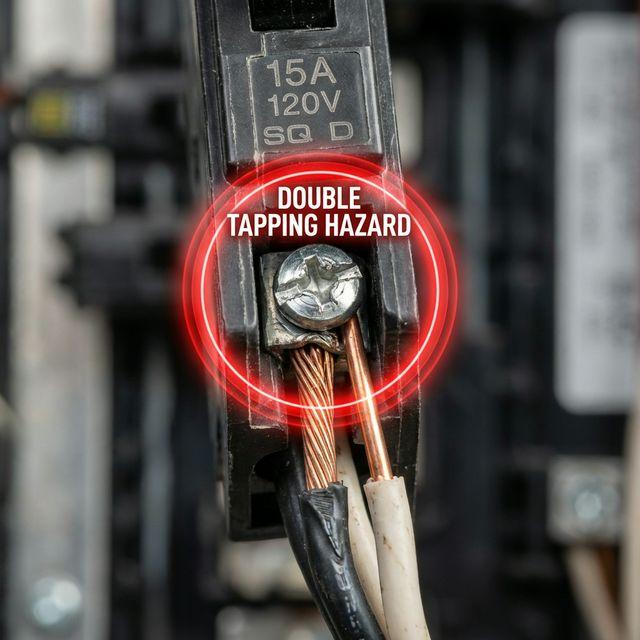
A double-tapped breaker occurs when two wires are connected to a single breaker terminal that's designed for only one wire. Each circuit breaker has a terminal (lug) where the hot wire connects. When two wires are squeezed under one terminal, it's called double-tapping.
How to Identify Double-Tapping:
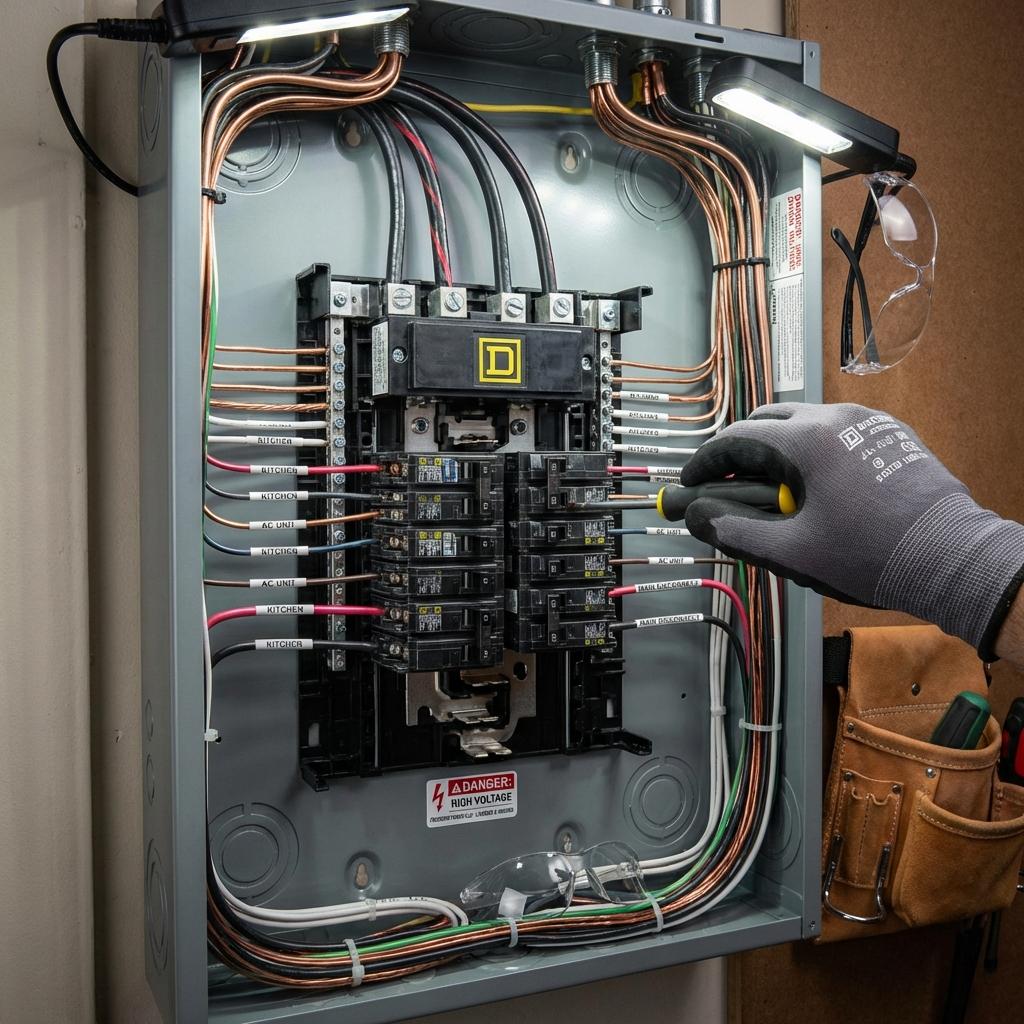
- Open your electrical panel (with caution)
- Look at where wires connect to breakers
- Each terminal should have only one wire
- If you see two wires under one screw, it's double-tapped
Note: Some breakers are specifically designed for two wires and have separate termination points. These are not double-tapped—they're designed for this purpose.
Maintenance Reminder: Outdoor panels face harsher conditions than indoor units. Inspect annually for rust, corrosion, insect nests, and damaged gaskets. Clean debris from around the panel and verify the enclosure seals properly.
Why Double-Tapping is Dangerous
1. Loose Connections
Breaker terminals are designed to clamp one wire securely. When two wires are forced in:
Outdated or overloaded electrical panels are a safety risk. Our team specializes in 200-amp upgrades throughout Northern Virginia, with same-day panel assessments available. Call (703) 997-0026 to get started.
- Neither wire is held as tightly as it should be
- Wires can work loose over time from vibration and thermal cycling
- Loose connections create resistance and heat
- Heat can melt insulation and start fires
2. Arcing
When connections are loose, electricity can arc across gaps:
- Arcing generates extreme heat (10,000°F+)
- Arc energy can ignite surrounding materials
- Arcing damage accumulates over time
- The connection deteriorates with each arc event
3. Improper Overcurrent Protection
Each circuit should have its own appropriately sized breaker:
- Two circuits on one breaker may overload the breaker
- A fault on one circuit may not trip the breaker fast enough
- Wire sizing may not match the shared breaker rating
4. Code Violation
Double-tapping violates the National Electrical Code (NEC 110.14), which can lead to:
- Failed home inspections
- Insurance issues
- Problems selling your home
- Liability if a fire occurs
Why Does Double-Tapping Happen?
Double-tapping usually occurs because:
Panel is Full
When all breaker spaces are used and someone needs to add a circuit, they may improperly add a wire to an existing breaker instead of upgrading the panel.
Cost Cutting
Adding a proper circuit or upgrading a panel costs money. Double-tapping is a shortcut that appears to "work" but creates hidden danger.
DIY Mistakes
Homeowners unfamiliar with electrical code may not know that double-tapping is prohibited.
Unprofessional Work
Unfortunately, some contractors take shortcuts that create safety hazards.
How to Fix Double-Tapped Breakers
There are several proper solutions depending on your situation:
Option 1: Install Tandem Breakers
If your panel allows tandem (split) breakers:
- Replace the double-tapped breaker with a tandem
- Each circuit gets its own overcurrent protection
- Uses the same physical space
- Cost: $50-$150
Note: Not all panels accept tandems, and there are limits on how many tandems can be installed.
Option 2: Install Additional Breakers
If your panel has empty spaces:
- Move one wire to a new breaker in an empty space
- Most straightforward solution when space is available
- Cost: $100-$200
Option 3: Add a Subpanel
If your panel is full:
- Install a subpanel with additional spaces
- Move some circuits to the subpanel
- Provides room for current and future circuits
- Cost: $800-$1,500
Option 4: Panel Upgrade
If multiple issues exist:
- Replace the entire panel with a larger one
- Addresses double-tapping and capacity issues
- Brings entire system up to code
- Cost: $2,500-$4,500
Special Cases: Dual-Rated Breakers
Some breakers are specifically designed for two wires. These have:
- Separate termination points for each wire
- UL listing for two conductors
- Clear labeling indicating dual-wire rating
If your breaker is dual-rated and properly terminated, it's not a violation. However, this is uncommon in residential panels.
Related Issues to Check
If you find double-tapping, also look for:
Double-Tapped Neutrals
Multiple neutral wires under one terminal on the neutral bar. Modern code requires each neutral to have its own terminal. This is even more common than double-tapped breakers.
Improper Wire Sizes
Double-tapped circuits may also have wire sizing issues—for example, a 14-gauge wire on a 20-amp breaker.
Missing AFCIs
Circuits that were added via double-tapping probably don't have the AFCI protection that would be required if added properly.
What Happens During Home Sales?
Double-tapped breakers frequently appear on home inspection reports:
- Buyers may request repair before closing
- Sellers may need to provide credits or repairs
- Insurance companies may require correction
- FHA/VA loans often require correction for approval
If you're selling a home with double-tapped breakers, proactively fixing them simplifies the sale process.
Professional Repair
At AJ Long Electric, we regularly correct double-tapped breakers and other panel issues. Our approach:
- Evaluate your panel for all issues (not just the obvious ones)
- Recommend the most appropriate solution for your situation
- Complete repairs to code with proper permits
- Provide documentation for your records
If you have double-tapped breakers or suspect other panel issues, contact us at (703) 555-0123 for an evaluation. We'll identify all concerns and provide options for bringing your electrical system up to safe, code-compliant standards.
Tags:

Written by
Matt Long
Master Electrician
Our team of licensed electricians brings over 40 years of combined experience serving Northern Virginia. We're committed to providing expert electrical solutions with a focus on safety, quality, and customer satisfaction.
Reviewed by AJ Long Electric Master Electricians · VA License #2705031092 · View Credentials