Electric vehicle adoption is accelerating rapidly across the DMV region, and businesses that provide charging infrastructure gain competitive advantages. Whether you want to attract customers to your retail location in Tysons, provide employee benefits at your Reston office park, or prepare your multi-family property in Arlington for the electric future, commercial EV charging installation is a smart investment. This guide covers everything business owners in Northern Virginia need to know about adding EV charging to their properties.
Key Takeaways
- Level 2 chargers (240V) are the most common commercial choice, adding 20-60 miles of range per hour at $2,000-$8,000 per unit plus installation.
- DC fast chargers provide 100-200+ miles in 20-30 minutes but cost $30,000-$150,000+ per unit with significant infrastructure requirements.
- The federal Alternative Fuel Vehicle Refueling Property Credit provides up to 30% of installation costs, capped at $100,000 per commercial location.
- Dominion Energy offers rebates and special rate programs for commercial EV charging in Virginia.
- Smart load management systems allow more chargers to share limited electrical capacity, reducing infrastructure costs.
Why Install Commercial EV Charging?
Businesses install EV charging for multiple compelling reasons that directly impact revenue and property value:
Customer Attraction and Retention
EV drivers actively seek businesses with charging. Apps like PlugShare and ChargePoint direct thousands of potential customers to charging locations. Studies show EV drivers spend more time and money at businesses while their vehicles charge. In the affluent Northern Virginia market, where EV adoption rates exceed national averages, this represents a significant customer base.
Employee Benefits
Workplace charging is a valued employee benefit that helps recruit and retain talent. It is particularly attractive to employees who cannot charge at home, such as apartment dwellers -- a large demographic in the dense NoVA corridor.
Tenant Amenity
For property owners and managers, EV charging is an increasingly expected amenity that justifies premium rents and attracts quality tenants.
Sustainability Goals
EV charging supports corporate sustainability initiatives and demonstrates environmental commitment to customers and stakeholders.
Future Readiness
With major automakers committing to electric futures and Virginia actively supporting EV infrastructure growth, charging will become essential infrastructure for any competitive commercial property.
DMV Market Insight: Northern Virginia has one of the highest EV adoption rates on the East Coast. Fairfax County alone has seen EV registrations increase by over 40% year-over-year. Businesses that install charging now position themselves ahead of competitors who will eventually be forced to add it.
Understanding Commercial Charger Types
Commercial EV chargers fall into three categories, each suited to different business applications:
Our licensed electricians have installed hundreds of EV chargers across Northern Virginia. We handle everything from panel evaluation to permit filing. Call (703) 997-0026 or request your free estimate online.
Level 2 Chargers (240V AC)
The most common choice for commercial installations, Level 2 chargers provide 7-19 kW of power, adding 20-60 miles of range per hour. They are ideal for:
- Workplace charging where vehicles park for several hours
- Hotels and resorts with overnight guests
- Retail locations with 1-4 hour typical visits
- Multi-family residential properties
Level 2 chargers cost $2,000-8,000 per unit plus installation. Installation typically adds $1,500-6,000 per charger depending on electrical infrastructure requirements.
DC Fast Chargers (480V DC)
DC fast chargers provide 50-350 kW, adding 100-200+ miles of range in 20-30 minutes. They are appropriate for:
- Highway corridor locations along I-66, I-95, or Route 28
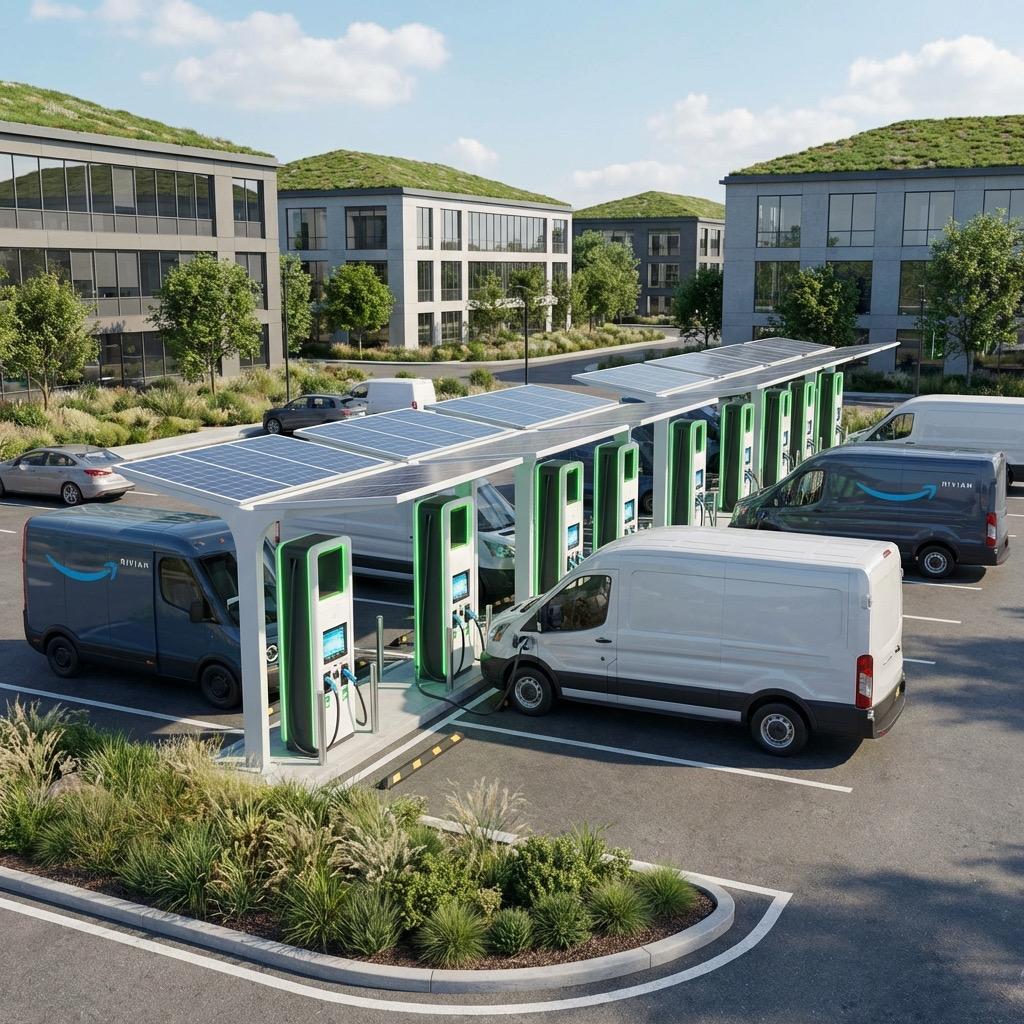
- Fleet depots requiring rapid turnaround
- High-traffic retail with short customer visits
- Public charging networks
DC fast chargers cost $30,000-150,000+ per unit, and installation often requires electrical service upgrades costing $50,000-200,000+.
Level 1 Chargers (120V AC)
Level 1 charging uses standard 120V outlets, providing only 3-5 miles of range per hour. While installation cost is minimal, this charging speed is generally too slow for most commercial applications.
Electrical Infrastructure Requirements
Adding EV charging often requires electrical upgrades that should be assessed early in your planning process:
Service Capacity Assessment
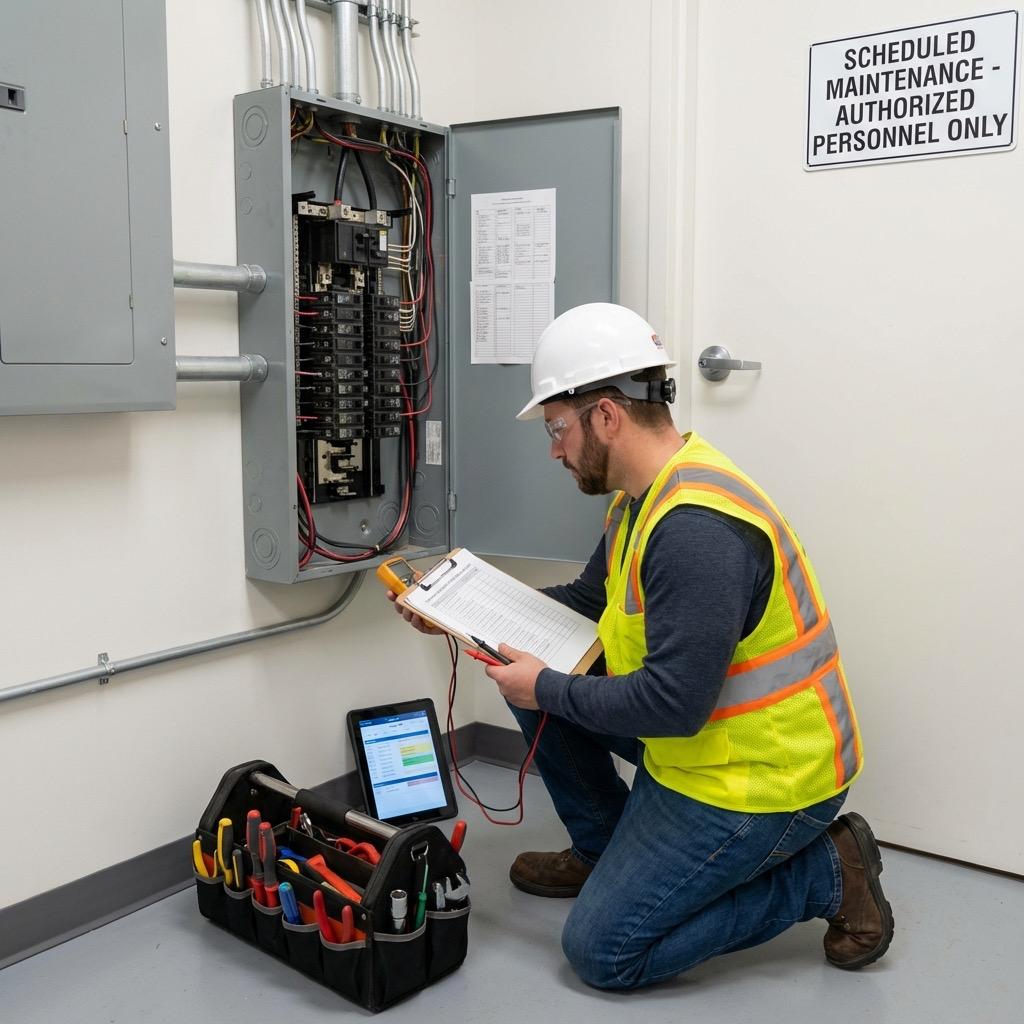
Each Level 2 charger requires 30-80 amps of capacity. Before installation, we assess your existing electrical service to determine if capacity is available or if upgrades are needed.
Panel Upgrades
Many commercial buildings need panel upgrades or subpanels to accommodate EV charging circuits. This is especially true for older buildings in established NoVA business parks that were not designed for modern electrical loads.
Load Management
Smart load management systems allow more chargers to share limited electrical capacity. These systems dynamically allocate power based on demand, vehicle needs, and time of day.
Conduit and Wiring
Running conduit and wire from the electrical panel to parking areas is often the largest installation cost. Distances, existing infrastructure, and site conditions significantly impact costs.
Pro Tip: Even if you are only installing 2-4 chargers today, run conduit for your full planned buildout now. The civil work (trenching, boring, concrete repair) accounts for 40-60% of installation cost. Doing it once is far cheaper than trenching again in two years. Many NoVA businesses that started with 4 chargers wish they had planned conduit for 12.
Site Planning and Charger Configuration
Successful EV charging installations require careful site planning:
- Location: Choose visible, convenient spots near building entrances. Accessibility requirements apply to some chargers.
- Quantity: Start with enough chargers to meet current demand plus growth. Plan conduit for future expansion.
- Signage: Clear signage directs EV drivers to chargers and reserves spaces for charging vehicles.
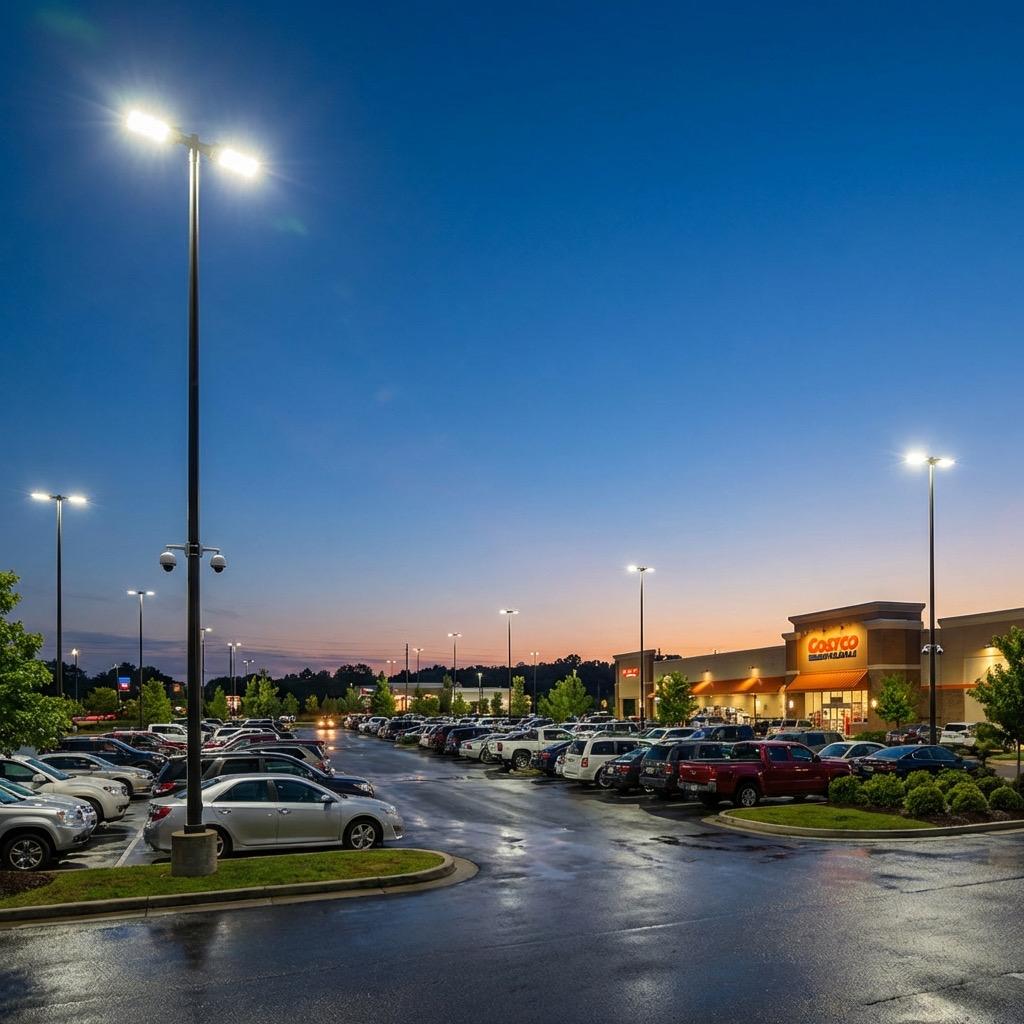
- Lighting: Adequate lighting improves safety and user experience.
- Weather Protection: In some locations, canopy coverage improves user comfort.
Networked vs. Non-Networked Chargers
Networked chargers connect to cloud management platforms and offer remote monitoring, payment processing, usage analytics, user access control, automatic software updates, and building management integration. They typically require monthly subscription fees of $10-50 per charger. Non-networked chargers are simpler and less expensive, working well for employee-only free charging, small installations, and locations without reliable connectivity.
Available Incentives and Revenue Models
Federal Tax Credit
The Alternative Fuel Vehicle Refueling Property Credit provides up to 30% of installation costs, capped at $100,000 per location for commercial properties.
Utility Programs
Dominion Energy offers rebates and special rate programs for commercial EV charging in Virginia. Programs vary but can cover significant portions of equipment and installation costs.
State and Local Incentives
Virginia offers additional incentives for EV infrastructure. Check the Database of State Incentives for Renewables and Efficiency (DSIRE) for current programs.
Revenue and Cost Recovery Models
Businesses use various approaches to recover EV charging costs:
- Free Charging: Offered as customer or employee amenity; costs absorbed as business expense
- Fee-Based Charging: Users pay per kWh or per hour to charge; can generate profit or recover costs
- Validated Charging: Free charging for customers who make purchases; encourages spending
- Tiered Access: Free for employees, paid for public; different rates for different user groups
Installation Process and Timeline
A typical commercial EV charging installation follows these steps:
- Site Assessment: Evaluate electrical capacity, parking layout, and installation requirements
- Design and Engineering: Develop electrical plans and determine equipment specifications
- Permitting: Submit plans and obtain required electrical permits
- Installation: Install electrical infrastructure, chargers, and any required upgrades
- Inspection: Pass required electrical inspections
- Activation: Configure networked chargers and train staff
Timeline varies from 4-12 weeks depending on project complexity and permit processing times in your Northern Virginia jurisdiction.
Choose AJ Long Electric for Commercial EV Charging
AJ Long Electric is a certified installer for major commercial EV charging brands. We have completed installations for retail centers, office buildings, hotels, and multi-family properties throughout Northern Virginia -- from Ashburn to Alexandria and everywhere in between. Our team handles everything from initial assessment through final activation, ensuring your EV charging installation meets your business goals and all code requirements.
Contact AJ Long Electric today for a free commercial EV charging consultation and site assessment.
Tags:

Written by
Matt Long
Master Electrician
Our team of licensed electricians brings over 40 years of combined experience serving Northern Virginia. We're committed to providing expert electrical solutions with a focus on safety, quality, and customer satisfaction.
Reviewed by AJ Long Electric Master Electricians · VA License #2705031092 · View Credentials