Two-EV households are becoming the norm in Northern Virginia rather than the exception. As one family member trades their gas commuter for a Tesla and the other picks up a Hyundai Ioniq 5 or Ford Mach-E, the question quickly shifts from whether to install a home charger to how to charge two vehicles efficiently from a single electrical panel. The good news is that several proven solutions exist, ranging from dual independent chargers to smart power sharing to simple scheduling strategies. This guide walks you through every option so you can choose the approach that fits your panel capacity, budget, and daily driving patterns.
Key Takeaways
- Two separate chargers on independent circuits provide the fastest charging but require 80-100 amps of available panel capacity.
- Power sharing systems like Tesla Wall Connector or smart panels split one circuit between two vehicles, halving the panel impact.
- Scheduled sequential charging uses one charger for both vehicles, requiring no additional panel capacity beyond a single circuit.
- Load management devices can dynamically balance two chargers within your panel's available capacity.
- A professional load calculation determines which approach your home can support without a panel upgrade.
The Growing Two-EV Household Challenge
Northern Virginia's two-income households, where both partners commute to jobs in Tysons, Reston, Arlington, or Washington DC, are prime candidates for two-EV ownership. The average household in Fairfax or Loudoun County drives two vehicles a combined 60-80 miles per day. Charging both vehicles at home every night requires planning, but it is entirely achievable with the right setup.
Understanding the Electrical Demand
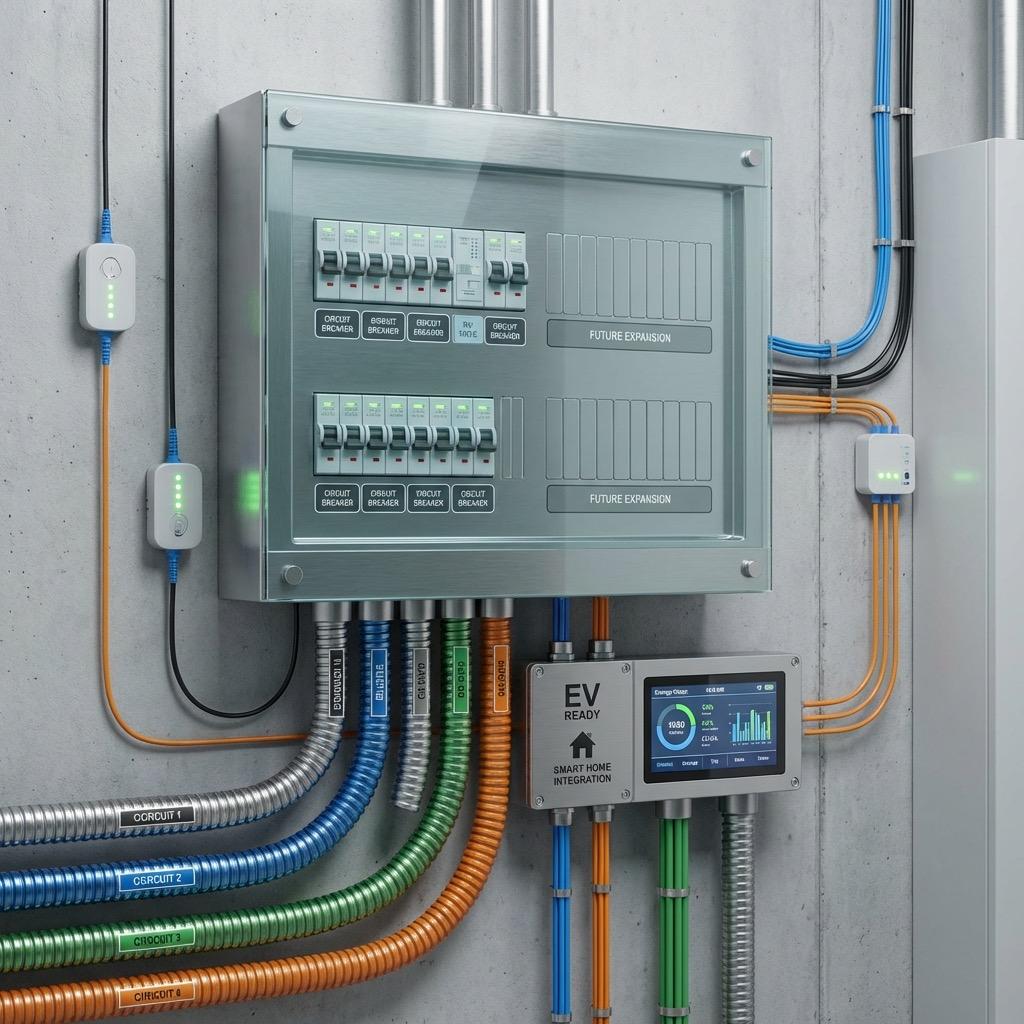
A single 48-amp EV charger draws 11.5 kW at 240 volts. Two such chargers running simultaneously draw 23 kW, roughly equivalent to running two central air conditioning systems at the same time. For a 200-amp panel, two 60-amp charger circuits consume 120 amps of capacity, leaving only 80 amps for everything else in the house. This is why most two-EV households need a smarter approach than simply doubling the infrastructure.
Option 1: Two Separate Chargers on Independent Circuits
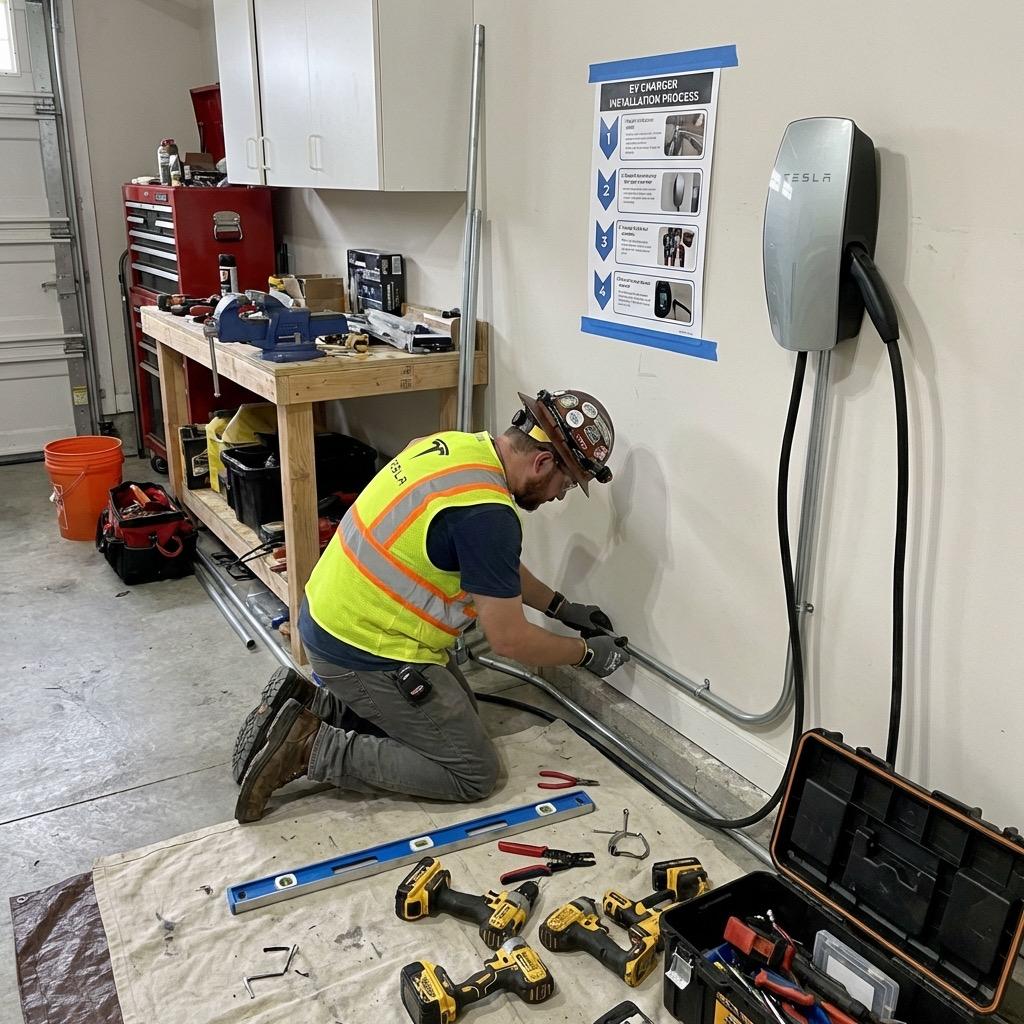
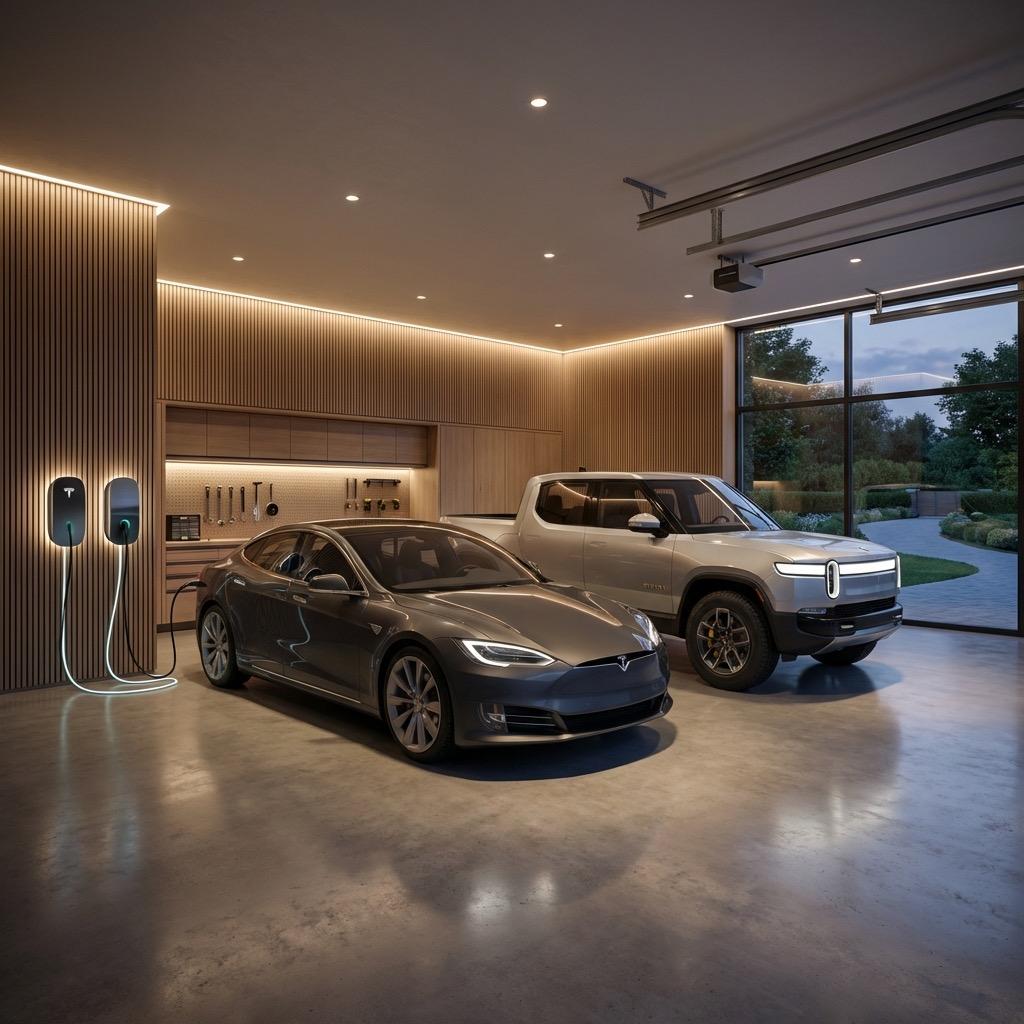
The most straightforward approach is installing two complete, independent charging setups, each with its own charger, circuit, and breaker.
Our licensed electricians have installed hundreds of EV chargers across Northern Virginia. We handle everything from panel evaluation to permit filing. Call (703) 997-0026 or request your free estimate online.
Advantages
Both vehicles charge at full speed simultaneously. There is no coordination, sharing, or compromise. Each vehicle gets a complete overnight charge regardless of when you plug in. This is the gold standard for convenience and is the approach we recommend when panel capacity allows.
Electrical Requirements
Two 50-amp circuits require 100 amps of combined panel capacity, plus two available breaker slots. Two 60-amp circuits require 120 amps. Homes with 200-amp service that are not heavily loaded with other major appliances can often support this configuration. A professional load calculation is essential to verify capacity before committing to dual independent circuits.
Cost
Installing two complete circuits typically costs $1,600-$4,000 total (both circuits), depending on run lengths and panel configuration. Add the cost of two charger units ($600-$1,400 for the pair), and total investment ranges from $2,200 to $5,400. If your panel needs an upgrade to support the additional load, add $2,000-$4,500 for the upgrade.
Best For
Homeowners with 200-amp panels that have adequate spare capacity and who want maximum charging speed with zero compromise. Common in newer construction throughout Loudoun County, Ashburn, South Riding, and newer Fairfax County developments.
Option 2: Power Sharing on a Single Circuit
Power sharing allows two chargers to operate on a single circuit by splitting the available power between them. When one vehicle is charging, it gets the full circuit capacity. When both are plugged in, each gets half.
Tesla Wall Connector Power Sharing
Tesla's Wall Connector is the most mature power sharing solution. Up to six Wall Connectors can be linked on a single circuit, automatically distributing power among connected vehicles. On a 60-amp circuit, two Wall Connectors each receive 24 amps when both are charging, or one gets the full 48 amps if only one vehicle is plugged in. This setup charges each vehicle at roughly half speed when simultaneous, but both vehicles still receive a complete overnight charge in most scenarios.
Smart Panel Solutions
Products like the Span Smart Panel or NeoCharge Smart Splitter can share a single 240V circuit between two chargers of any brand. The NeoCharge, for example, installs at a single NEMA 14-50 outlet and alternates power between two plug-in chargers, ensuring only one draws power at a time. These solutions cost $300-$500 for the sharing device itself.
Advantages
Power sharing requires only one circuit instead of two, reducing panel impact by 50%. Installation cost is lower because you are running one circuit, not two. For panel-constrained homes common in older Fairfax County and Arlington neighborhoods, this is often the most practical solution.
Limitations
Simultaneous charging is slower than independent circuits. If both vehicles need substantial charging, total time increases. For two vehicles that each need 40 kWh of charge nightly, power sharing extends total charging time from 8 hours (simultaneous) to roughly 12-14 hours (shared), which may push into morning hours.
Option 3: Scheduled Sequential Charging
The simplest and most affordable approach uses a single charger that charges one vehicle at a time on a schedule.
How It Works
Vehicle A plugs in from 6 PM to midnight. Vehicle B plugs in from midnight to 6 AM (either manually swapped or using the vehicle's built-in charge scheduling). Each vehicle gets 6 hours of full-speed Level 2 charging, which adds 150-240 miles of range depending on charger speed. For most daily commutes, this is more than sufficient.
Advantages
Zero additional electrical infrastructure beyond a single charger circuit. No panel upgrades, no additional circuits, no sharing hardware. This is the most budget-friendly approach, costing only the price of the single charger and its circuit installation.
Limitations
Requires manual cable swapping or careful scheduling. If one driver forgets to swap the cable at midnight, the second vehicle does not charge. Smart chargers with scheduling can help, and some EV owners use a simple shared calendar or phone alarm to manage the handoff. This approach works best for organized households with predictable routines.
Best For
Budget-conscious households, renters, or homeowners with severely limited panel capacity who want to avoid any electrical upgrades.
Option 4: Load Management with Dual Chargers
Load management devices monitor your home's total electrical consumption and dynamically adjust two chargers to stay within your panel's safe capacity.
How Load Management Works
A current transformer (CT) clamps around your main service wires and monitors total household draw in real time. When total consumption approaches your panel's limit, the load manager reduces one or both chargers. When household demand drops (AC cycles off, dryer finishes, etc.), charging speeds increase automatically. This allows two chargers to coexist on a panel that technically cannot support both at full speed simultaneously.
Products and Cost
Solutions like the Emporia Energy Vue with load management, the DCC-9 by DCC Technologies, or the Span smart electrical panel provide this functionality. Costs range from $200 for basic CT-based managers to $4,000+ for a full smart panel replacement. The mid-range options ($500-$1,000) provide excellent functionality for most two-EV households.
Best For
Homeowners who want two chargers but whose panels cannot support two full circuits simultaneously. This is a common situation in 150-amp panel homes throughout established Northern Virginia neighborhoods in Burke, Springfield, and Centreville.
Choosing the Right Approach for Your Home
The best solution depends on three factors: your panel capacity, your budget, and your daily charging needs. Here is a quick decision guide.
- 200-amp panel with room to spare: Two independent circuits for maximum speed and convenience.
- 200-amp panel, tight capacity: Power sharing or load management allows two chargers within limits.
- 150-amp panel: Power sharing on a single circuit or load management with reduced amperage chargers.
- 100-amp panel: Sequential scheduling with a single charger, or plan a panel upgrade to unlock better options.
Schedule Your Two-EV Charging Assessment
AJ Long Electric specializes in multi-vehicle charging solutions for Northern Virginia homes. Our electricians perform detailed load calculations, evaluate your panel's capacity for various configurations, and recommend the most cost-effective approach for charging two EVs. Whether that means dual circuits, power sharing, load management, or a panel upgrade, we handle the complete installation from assessment through inspection. Contact AJ Long Electric at (703) 481-3732 to discuss charging solutions for your two-EV household.
Tags:

Written by
Matt Long
Master Electrician
Our team of licensed electricians brings over 40 years of combined experience serving Northern Virginia. We're committed to providing expert electrical solutions with a focus on safety, quality, and customer satisfaction.
Reviewed by AJ Long Electric Master Electricians · VA License #2705031092 · View Credentials